Detailed Guide to Venus Flytrap Cultivation Methods and Techniques
The Venus flytrap is a very popular carnivorous plant, possessing a complete set of roots, stems, leaves, flowers, and seeds. Its leaves are the most important and prominent part, with the function of catching insects; the appearance features obvious trigger hairs and red sessile glands, and its look resembles a ferocious gaping bloody maw. As a potted plant, it is suitable for display on sunny windowsills and balconies, and can also be grown specifically in planting troughs; the Venus flytrap is known as the carnivorous plant of the natural world. Many people are quite at a loss about how to grow the Venus flytrap. Below is a secret guide to growing Venus flytraps compiled by the editor from the grower Jidi; please continue reading, fellow growers:
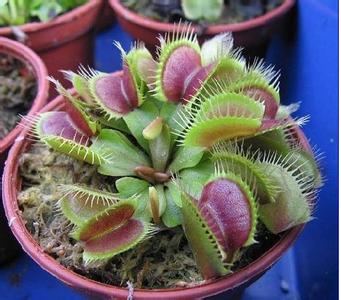
Secret 1: Use a deep pot
According to Jidi's several years of experience (perfectionists can ignore this), the roots of the Venus flytrap hardly develop horizontally; they go in just one direction, downward!!
A deep pot gives them room to develop!!! Once the roots are well developed, the Venus flytrap is also easier to grow to a large size.
And the advantages of a deep pot are not limited to this. As everyone knows, the moisture content of each layer of soil is different; the thicker the soil layer, the more layers there are with different moisture content. Because of its greater height, a deep pot increases the space for the roots to choose suitable moisture for themselves. Roots of different lengths can, according to their own needs, provide for the plant's requirements at different layers.
At the same time, it also increases the surface area of the pot wall for heat dissipation, which is especially helpful for getting the Venus flytrap through the summer. In this way, relatively stable moisture and soil-layer temperature are absolutely beneficial to the Venus flytrap's growth. (My hands are tired; this is truly a painstaking work!!!!)
Secret 2: Spread moss on the surface
Seeing this secret, surely someone will give a disdainful snort: What kind of secret is this? Don't rush; listen to me explain slowly. (First go make a cup of tea)……
To make a long story short! There are three benefits
One: moisture. After moss is planted, the area for water evaporation is certainly larger than the pot surface, and the air humidity provided around the plant is also greater.
At the same time, after rain, or just after watering, when the potting soil has too much moisture, it can also help absorb and release it. When the potting soil tends to dry out under the sun, it can also provide a bit of shade for the potting soil and retain a bit of moisture. Then someone asks, isn't using sphagnum the same? Fool! My Venus flytrap cultivation is all about rough, wild-style growing. Can delicate sphagnum compare with mountain-girl moss?
How to grow Venus flytraps at home, the most complete Venus flytrap cultivation techniques
As everyone knows, there are many astonishing plants in nature, and the Venus flytrap is one of them. In fact, carnivorous plants like the Venus flytrap are still relatively common in nature; their appearances are not very attractive, and together with their insect-eating trait, this makes many people not particularly like them. But their insect-catching ability is very strong, so sometimes people still keep one or two of them. So how should Venus flytraps be grown? Let us take a look together below.
Introduction to the Venus flytrap
The Venus flytrap, also called Venus's flytrap, insectivorous grass, insect-catching grass, fly hell, ground pearl, or insect-catching cage, etc., is a perennial herbaceous plant in the genus Dionaea of the family Droseraceae, and it is also a carnivorous plant. It is native to North America. Its shape is like a big open mouth, and the edges of its leaves have many regular eyelash-like teeth. With flies as its main food, it is known as the carnivorous animal of the natural world. The appearance of the Venus flytrap is still rather distinctive; some call it Venus's flytrap, and its ability to catch flies is very strong, so many people still like it. It is currently the most favored carnivorous plant in the country.
Venus flytrap cultivation techniques
1. Light
The Venus flytrap was originally a swamp plant, so its demand for sunlight is relatively high. When growing it at home, special attention must be paid to its lighting conditions; in fact, this is quite similar to general carnivorous plants. This is because they all rely on their own leaves to catch insects, and whether the leaves are healthy and whether their color is bright or dull are greatly related to light. So when growing it at home normally, you can place it by the balcony so it can fully enjoy the light and carry out photosynthesis. If the light is insufficient, you need to use a plant grow light to supplement it. However, note that the summer sun is too strong, so full-day exposure is not needed.
2. Water
The Venus flytrap actually does not have very high water requirements; you can use purified water, rainwater, or clean tap water for watering. When watering, you can use the tray method to regularly replenish water for the plant, but the water still should not be too much, especially in summer, when excessive water easily causes waterlogging and the plant's roots are prone to rotting.
3. Humidity
The Venus flytrap has relatively high requirements for air humidity, generally above 50 percent. If the air humidity around the plant is moderate, the plant can also grow more robustly, and this humidity is also related to the plant's insect-catching ability, so it is still very important. Usually, you can spray some water mist into the air around the plant to increase air humidity, but the humidity still should not be too high; above 50 percent is enough.
4. Temperature
The Venus flytrap is native to North America, and its temperature requirements are still relatively high. Its growing temperature is between 15°C and 35°C, and the suitable temperature is between 21 and 35°C. In winter, when the temperature is around 5°C, the plant will enter a dormant state. If the temperature is too low, the plant may be damaged by freezing.
5. Fertilizing
Usually this kind of carnivorous plant can catch insects on its own to feed, so under normal circumstances there is no need to add fertilizer. But sometimes when the plant's root system shows intolerance to salt and insufficient nutrients, you can apply some low-concentration liquid fertilizer to its leaves, once every two weeks.
Conclusion: Although the Venus flytrap does not look especially cute and beautiful, its ability to catch insects is excellent, so everyone can still grow some at home, and its cultivation is also relatively simple. Everyone can try growing some.
How to water Venus flytraps, Venus flytrap tray-watering maintenance techniques / divided into outdoor growing and enclosed growing
The Venus flytrap is a plant that can repel mosquitoes. Keeping it indoors can not only eliminate flies and insects at home, but also purify the air. But it is not easy to grow Venus flytraps well, and one thing that especially needs attention is watering. So how do you water Venus flytraps? Below are Venus flytrap tray-watering maintenance techniques and fertilizing methods. Follow the editor to take a look.
1. How to water Venus flytraps, the tray-watering method
Unlike other indoor potted plants, watering Venus flytraps is not done directly with a watering can, but by the tray-watering method, which was mentioned in the Venus flytrap growing methods. However, the tray-watering method has two problems: first, high summer temperatures easily cause root rot; second, over time minerals accumulate. To solve these two problems, let us take a look at Venus flytrap tray-watering maintenance techniques.
Venus flytrap tray-watering maintenance techniques
Before understanding Venus flytrap tray-watering maintenance techniques, it is necessary for us to know the Venus flytrap's growth habits. It is said that Venus flytraps originally grew in swamps, where they often endured long periods of intense sunlight. At this time the ground temperature would continuously rise, and a large amount of water would evaporate from underground to the surface. But while the water evaporated, because the underground temperature was lower than the surface, the cool moisture would carry away the heat from the plant's roots.
After the heat is carried away, root rot in Venus flytraps will not occur. After understanding this habit of the Venus flytrap, the tray-watering method needs to make use of this point. The method is to appropriately adjust the growing medium; just choose a medium that retains water, is breathable, and improves heat dissipation. The media are as follows:
1. Outdoor growing medium
Place coarse-grained Kanuma or foam blocks or sponge blocks in the bottom 1/4 of the pot, to absorb water while maintaining ventilation and breathability. On the upper layer, you can add 40% medium or fine-grained Akadama, or 20% peat soil mixed with Akadama; 100% pure sphagnum is also acceptable. This helps lock in water and maintain humidity.
Because during outdoor growing, water evaporates very quickly, you can add 60% medium and fine-grained mixed Kanuma, or 30% medium and fine-grained mixed Kanuma + 30% medium-grained Oya stone, with the water level about 1/4 of the pot. If the summer temperature is above 30°C, 50% shading is needed, and place it under soft scattered light.
2. Enclosed growing medium
Place coarse-grained Kanuma or foam blocks in the bottom 1/4 of the pot, to absorb water while maintaining ventilation and breathability. For the upper layer, you can use 100% pure sphagnum, or 40% medium or fine-grained Akadama, or 20% peat soil mixed with 20% Akadama to lock in water and maintain humidity.
During outdoor growing, water evaporates very quickly, so you can add 60% medium and fine-grained mixed Kanuma, or 30% medium and fine-grained mixed Kanuma plus 30% medium-grained Oya stone, with the water level below 1/4 of the pot. Similarly, if the summer temperature exceeds 30°C, the enclosed growing container must not be covered, keep the area above the container ventilated and breathable, and provide 50% shading, placing it in a soft, bright, scattered-light location.
The reason why the tray-watering method is used to water Venus flytraps has another explanation: a professional large-scale grower may have tens of thousands of pots in one greenhouse. By the time you watered them one by one, when would you ever finish? So they all use tray watering. After reading the above content, I believe everyone has some understanding of Venus flytrap tray-watering maintenance techniques. You can also grow them this way too~