What are the cultivation methods for Rieger begonia in northern China?
Rieger begonia dislikes heat; above 25°C it grows poorly. Above 28°C it may enter heat dormancy. In summer it can be placed in a shaded spot where the sun does not reach, and rain must also be avoided; too much water in the soil easily causes root rot. It prefers an acidic growing medium.
In Jilin, the highest temperature is only 30°C. Generally it is placed indoors on a sunny windowsill, and in winter it can get more sun. When the soil surface is dry, water it a little with rainwater or snowmelt (because the water and soil in the north mostly contain too much calcium and magnesium). But spray water frequently on the surrounding plants to create a humid environment. Occasionally add a small amount of homemade nutrient solution containing nitrogen, phosphorus, potassium and trace elements to the water.
Lesson learned: after the summer, a pot of pink-flowered plants brought indoors grew unusually luxuriantly. Because the top of the central stem was seen to be useless (several very strong branches had emerged from the lower part), cutting it off would help reduce the height and make it more attractive, so it was cut. But no disinfection or anti-rot treatment was done, and a few days later it was found to be rotting rapidly downward. The rotting part was hastily cut away, streptomycin was applied, and the whole plant was sprayed. But it was too late; more than half had rotted away, and it became a small seedling.
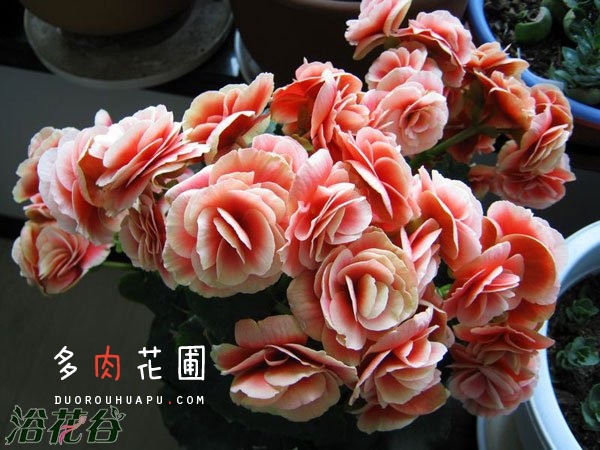
Points to note when keeping Rieger begonia in the north
Rieger begonia is a flower variety that is rather afraid of heat; if the temperature exceeds 25°C it will grow poorly. Because the climate difference between northern and southern China is quite large, how should Rieger begonia be grown in northern China? The editor will give an example from Jilin.
Rieger begonia (details)
In Jilin, the highest temperature is only 30°C. Generally it is placed indoors on a sunny windowsill, and in winter it can get more sun. When the soil surface is dry, water it a little with rainwater or snowmelt (because the water and soil in the north mostly contain too much calcium and magnesium). But spray water frequently on the surrounding plants to create a humid environment. Occasionally add a small amount of homemade nutrient solution containing nitrogen, phosphorus, potassium and trace elements to the water.
Lesson learned: after the summer, a pot of pink-flowered plants brought indoors grew unusually luxuriantly. Because the top of the central stem was seen to be useless (several very strong branches had emerged from the lower part), cutting it off would help reduce the height and make it more attractive, so it was cut. But no disinfection or anti-rot treatment was done, and a few days later it was found to be rotting rapidly downward. The rotting part was hastily cut away, streptomycin was applied, and the whole plant was sprayed. But it was too late; more than half had rotted away, and it became a small seedling.