Soaking onions in water and using it to water flowers can make them bloom more vividly
People who love growing flowers always run into some tricky problems while caring for their plants. Here I have collected some tips for growing flowers, and I hope they will be helpful to you flower lovers.
Aspirin: bringing plants back to life
Anyone who loves growing flowers will run into this problem: the plant stops growing halfway through. In this case, take the aspirin out of your medicine cabinet at home, dissolve one tablet in about 500ml of water, and after it dissolves, pour it into the plant's soil. Apply it once every two weeks, and the plant will come back to life, because aspirin can make the plant's growth hormones work again.
Onion: making roses more beautiful
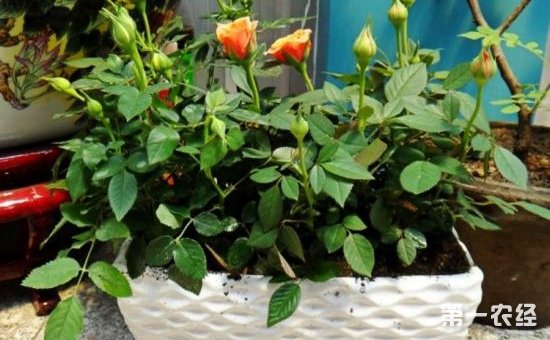
Image: potted plant
1. Onion water makes flowers grow better and better
Water soaked with onion can make plants bloom more brilliantly, with brighter colors. Cut a few slices of onion and soak them in clean water overnight. The next day, use this onion-soaked water to water the flowers, 1 to 2 times a week. Generally, results can be seen after about 1 month, and the flowers will grow more brilliantly.
2. Washing powder can quickly kill pests
The substances contained in washing powder itself can get rid of insects, and the washing powder solution can block the pests' respiratory system, causing them to suffocate and die. Dissolve one tablespoon of washing powder in 4 liters of water. Spray the branches and leaves of the plants once every 2 weeks, and be careful to spray them all. It can wipe out pests such as aphids. If the plants have no insect problems, there is no need to spray.
Image: potted plant
3. Dried pine needles at the bottom of the pot
Place dried needles, such as pine needles and fir leaves, at the bottom of the pot, because needles themselves have strong permeability and drainage capacity. Moreover, needles decompose slowly and will not dissolve and clog the drainage holes from being soaked in water. In addition, when it is time to repot, the needles at the bottom can be mixed into the new nutrient soil, which can increase fertility.
4. Water from boiling eggs for watering flowers
Many people are used to eating an egg in the morning, and the water from boiling the egg can be used to water flowers, because when the egg is boiled, calcium and other trace elements inside dissolve into the water. So using it directly to water flowers is very good, and it can supplement trace elements for the plants.
Image: potted plant
5. Reviving frozen flowers
In winter, sometimes there is no time to move the flowers indoors, and the plants get frostbitten. If you act quickly to deal with it, they can still be saved. Wrap the plant, pot and all, in three layers of highly absorbent waste newspaper. Be careful not to damage the branches and leaves when wrapping, and avoid direct sunlight. Leave it indoors like this for 1 day to let the potted flower's temperature gradually rise. After this treatment, the frozen flowers will slowly revive.
6. Burying in sand to relieve heat
In midsummer, when the temperature stays high, you can bury the plants, pot and all, in sand. Note that the pot must be fully buried, then water the sand once in the morning and once in the evening. The heat carried away by the evaporation of water in the sand can cool the plants down.
Image: potted plant
7. Fruit peels can make the soil acidic
Many potted plants prefer acidic soil, and when the soil is not acidic enough, fruit peels can be used to make it acidic. The method is very simple. When eating an apple, soak the peeled apple skin and core in cold water, then use the soaked water to water the flowers. This can gradually reduce the alkalinity of the potting soil.
8. Making climbing plants grow as fast as possible
After choosing the wall you want the plant to climb, you can spray a thin layer of liquid fertilizer on the wall in advance before the plant starts climbing. In order to seek nutrients, the plant will quickly grow toward the place with fertilizer.
Image: potted plant
9. Bath salt makes flowers bloom more abundantly and earlier
The trace element “magnesium” can promote flowering in plants, make the flowering period come earlier, and also make the flowers bloom more vigorously. Common bath salt actually contains magnesium sulfide. One tablespoon of bath salt is enough. Evenly sprinkle the bath salt on the ground at the roots of rose, Chinese rose, and other shrub plants. However, it can only be applied once a year, and colored bath salt cannot be used. Too much magnesium is also bad for plants.
[Editor's concluding remarks]Growing potted plants at home can actually be very simple. The article above introduced plant care tips for potted plants, and the plants will grow incredibly fast.
Choices for growing vegetables on the balcony and 29 methods for making homemade flower fertilizer for home gardening
If you have not followed me yet, please click this image ↑ the blue text to the right of the date above (Love Transmission Under the Sun) - to share different information with you!"Picking chrysanthemums by the eastern fence, I gaze leisurely at the southern mountains." The pastoral scenery described by the Eastern Jin dynasty pastoral poet Tao Yuanming makes many urban dwellers living among steel and concrete long for it endlessly. Although people resist the forest of concrete around them, everyone relies on the conveniences brought by the city. Everyone longs for pastoral life. Even if it is just a tiny space on their own balcony, rooftop, or terrace, people will always carve out a "private plot" to grow flowers and vegetables, watching these green lives sprout new buds, produce flower buds, and bear fruit. Although the process is somewhat hard and long, it is full of a natural, pure joy.
However, there is a certain amount of particularity and scientificity in choosing varieties for balcony vegetable growing. In addition to considering the balcony microclimate and personal hobbies, carefully selecting cultivated varieties to create the most beautiful balcony space and the best benefits is the key to considering and choosing varieties in balcony agriculture.
What vegetables should beginners choose?
Beginners can choose vegetables that are easy to grow or fast-growing vegetables. For example, bok choy and leaf lettuce are two fast-growing vegetables that can be planted all year round and grow relatively quickly, taking about five to six weeks to harvest. Bitter melon, scallions, ginger, and others have strong adaptability and a special smell of their own. For this very reason, insects do not like to approach them, and they can grow very well without pesticides or chemical fertilizers.
Special varieties for balcony agriculture
Vegetables: glass butter lettuce, colored lettuce, sweet potato tree, leaf lettuce, small bok choy, potato tomato, perilla, fragrant round onion, water celery, Gynura bicolor, bitter lettuce;
Melons and fruits: cherry tomato, netted melon, gift mini watermelon, fruit mini cucumber, kangua, giant pumpkin, ornamental pumpkin;
Fruit trees: golden branch grape, red-fleshed kiwifruit, peony pomegranate, nectarine, flat nectarine, large cherry, Bufona, calcium fruit, passion fruit, Chaenomeles fruit;
Landscaping types: fragrant rose, mini rose, vegetable hibiscus, frangipani, tofu tree;
Flower types: edible lily, edible cactus, edible aloe;
Climbing vine types: grape, honeysuckle, jiaogulan;
Medicinal types: ginseng, yew, Schisandra;
Seasoning types: colorful pepper, chives, fragrant scallion, ginger, garlic...
Which vegetables are most suitable for growing on the balcony
1. Short-cycle fast-growing vegetables: small rapeseed, green garlic, sprout vegetables, mustard greens, bok choy, leaf lettuce;
2. Vegetables with a long harvest period: tomato, chili, chives, coriander, cilantro, scallion, etc.;
3. Space-saving vegetables: carrot, radish, lettuce, scallion, ginger, cilantro;
4. Easy-to-grow vegetables: bitter melon, carrot, ginger, scallion, lettuce, baby bok choy;
5. Vegetables less prone to pests: scallion, chives, sweet potato leaves, ginseng herb, aloe, Swiss chard...
Choosing vegetables to grow according to orientation and season
South-facing balcony: a balcony with sufficient light, generally vegetables can be grown all year round, such as cucumber, tomato, kidney bean, green pepper, lettuce, chives, etc.;
East- and west-facing balconies: this type of balcony gets half-day sunlight, suitable for growing light-loving and shade-tolerant vegetables, such as onion, leaf lettuce, small rapeseed, chives, loofah, etc.;
North-facing balcony: this type of balcony has almost no sunlight, so only shade-tolerant vegetables can be chosen, such as lettuce, chives, asparagus, Chinese toon, water spinach, Malabar spinach, etc.;
Spring vegetables: most leafy vegetables can be planted, such as chili, lettuce, loofah, bitter melon, small scallion, cherry tomato, cherry radish, etc.;
Summer vegetables: summer is hotter, suitable for growing some crops with strong regeneration ability, drought resistance, and heat tolerance, such as small scallion, garlic sprouts, chives, etc.;
Autumn and winter vegetables: there are no very high requirements, and some leafy vegetables can be grown, such as lettuce, celery, baby bok choy, celtuce, etc....
29 methods for making homemade flower fertilizer for home gardening
In daily life, many flower-growing enthusiasts often worry about fertilizer for their flowers. In fact, there are many things that can be used as flower fertilizer. Many waste materials, after fermentation with a fermentation agent, are good fertilizers for flower growth. Kitchen scraps can be used to make high-quality flower fertilizer. These homemade fertilizers contain multiple nutrient elements and rich organic matter, have mild and lasting fertilizer effects, and can also improve the soil, help the soil form a granular structure, and coordinate the air and water in the soil, which is extremely beneficial to the growth and development of flowers. They can both solve environmental protection problems and allow value-added use. Good flower fertilizer can make flowers more brilliant and varied. Using household waste to make excellent flower fertilizer saves money and is environmentally friendly. These homemade fertilizers are all organic fertilizers, contain multiple nutrient elements needed by flowers and rich organic matter, have mild and lasting fertilizer effects, and can also improve the soil, help the soil form a granular structure, and coordinate the air and water in the soil, which is extremely beneficial to the growth and development of flowers. Several specific methods are introduced below:
1. Pour the waste oil from the range hood's oil collection box along the edge of the flower pot into the soil. It is suitable as flower fertilizer for hibiscus, jasmine, and drought lotus, etc.
2. Crush spoiled glucose powder and sprinkle it around the soil in the flower pot. After three days, yellow leaves turn green and growth becomes vigorous. This method is suitable for spider plant, crown of thorns, evergreen, and Monstera.
3. Fruit peels and rotten vegetable leaves. Mix them directly into two-thirds sandy soil, or put them into a small bucket, pot, jar, or other container and seal the opening tightly with mud to compost into humus soil. It can be used directly for planting flowers, and can also be used as a top-dressing flower fertilizer.
4. Chicken and duck feathers, pig bristles, hair, and livestock hooves and horns. Buried directly into the flower pot or soaked and composted, they are all very good phosphorus and potassium fertilizers, and the fertilizer effect can last for more than two years.
5. Chinese medicine residue. It is a clean flower fertilizer with high nutrient content. Mixed on the surface of the potting soil, it can improve the potting soil and keep it moist. If soaked and composted into fully decomposed fertilizer water, the fertilizer effect is even better.
6. Making nitrogen fertilizer. Nitrogen fertilizer is the main fertilizer that promotes the growth of flowers' roots, stems, and leaves. Take moldy or insect-damaged beans, peanuts, melon seeds, castor beans that cannot be eaten, leftover vegetable leaves, bean shells, melon and fruit peels, or pigeon manure and expired spoiled milk powder, crush them and boil them until soft, put them in a small jar, fill it with water, then seal it to ferment and decompose (if conditions permit, some insecticide can be sprinkled in). To make it decompose faster, it can be placed in sunlight to increase the temperature. When all these substances in the jar sink, the water turns black, and there is no bad smell (about 3-6 months), it indicates that fermentation and decomposition are complete. In summer, after 10 days, the upper layer of fertilizer water can be taken out and diluted with water for use. It can be used as top dressing or directly as base fertilizer. After use, immediately fill it with water again to continue composting. The raw material residue can be mixed into the flower soil.
7. Making phosphorus fertilizer. Pour sheep horns, pig trotters, bones, fish intestines and stomach, poultry manure, fish intestines, meat bones, fish bones, fish scales, crab shells, shrimp shells, hair, nails, livestock hooves and horns, and miscellaneous bones into a jar, add an appropriate amount of Jinbaobei fermentation agent (anaerobic type), then add a small amount of water, keep the humidity at 60%-70%, seal it, and after a period of rotting and fermentation, it can be diluted with water for use. It is a very good base fertilizer for potted flowers. If it is further soaked and fermented, it becomes a phosphorus-rich flower fertilizer. These are phosphorus-rich miscellaneous materials. After crushing these materials, evenly stir them into the flower soil, or put them in a container to ferment, and they become an ideal phosphorus fertilizer. Used diluted with water to water flowers, it will make the flowers brightly colored, glossy, and the fruits plump. The fertilizer effect can last for more than 2 years.
8. Eggshell flower fertilizer. Wash the egg white inside the eggshell clean, dry it in the sun, crush it, then put it in a grinding bowl and grind it into powder. It can be mixed and stirred evenly with potting soil at a ratio of 1 part eggshell powder to 3 parts potting soil, and used for potting flowers. It is also a long-acting phosphorus fertilizer. Generally, during the watering process after planting, the effective ingredients will leach out and be absorbed and used by the growing flowers. After planting flowers with eggshell powder, the blooms are large and brightly colored, and the fruits are large and plump. It is a completely organic phosphorus fertilizer.
9. Making potassium fertilizer. Leftover tea water, rice washing water and swill (best used after fermentation with Jinbaobei fermentation agent), plant ash water, and water from rinsing milk bottles are all excellent potassium fertilizers and can be used directly to water flowers. They all contain certain nutrients such as nitrogen, phosphorus, and potassium. Used to water flowers and trees, they can both maintain soil moisture and add nitrogen fertilizer nutrients to plants, promote well-developed root systems, and lush branches and leaves. They can be used directly to water flowers. Plant ash also contains potassium fertilizer and can be used as base fertilizer. Potassium fertilizer has a significant effect on improving flowers' resistance to lodging and resistance to pests and diseases.
10. Making complete compound fertilizer. Put the bones left after eating pork ribs, lamb ribs, beef ribs, etc. into a pressure cooker, steam them over heat for 30 minutes, then crush them into powder. Mix evenly with river sand at a ratio of 1 part bone powder to 3 parts river sand, use as base fertilizer for flowers, place it 3 cm at the bottom of the flower pot, cover it with a layer of soil, then plant the flowers. This bone powder is a complete compound fertilizer fully containing nitrogen, phosphorus, and potassium, and is beneficial to flower growth and blooming.
11. Making nitrogen fertilizer: Boil edible rapeseed cake, peanuts, beans or bean cake, rapeseed cake, sauce residue, etc. until soft and store them in a jar. Add an appropriate amount of Jinbaobei fermentation agent (anaerobic type), then pour in a small amount of water, keeping the humidity at 60%-70%. Seal and compost for about one week, then the fertilizer liquid can be taken out and diluted with water for use.
12. Nitrogen-phosphorus compound fertilizer. Take 0.5 kg of ammonium bicarbonate, 0.15 kg of potassium chloride, 0.025 kg of zinc sulfate, 2.5 kg of human feces and urine, 1 kg of cow feces and urine (or 5 kg of pig feces and urine), and 20 kg of red stone bone fine powder. Divide each into 5 equal parts, then spread one layer of red stone bone fine powder (4 kg), sprinkle the other fertilizers on top, pat firmly with a wooden board, and finally cover and seal with straw or plastic film. After 20-25 days, it becomes nitrogen-phosphorus compound fertilizer.
13. Humic acid ammonium phosphate. Take 1 kg of decomposed biogas residue, add 0.05 kg of phosphate rock powder, mix and stir evenly, then pile it up, coat the outside with a 3-5 cm thick layer of thin mud mixed with cow dung, then sprinkle a layer of fine soil on top, and seal for 40 days to make humic acid phosphorus fertilizer. Then turn the humic acid phosphorus fertilizer pile, break it up finely, pile it up again and coat it with thin mud, then make holes into the pile from around the top, and then inject ammonia water at a ratio of 1 kg of humic acid phosphorus fertilizer to 0.05 kg, while sealing the holes tightly with mud. After 8-10 days, when there is no smell outside the holes, it is successful. This compound fertilizer used as base fertilizer has an obvious effect.
14. For homemade flower fertilizer at home, the principle of "thin fertilizer, light application" should be grasped during use, with appropriate dilution and appropriate application. Excessive application must be avoided. When composting fertilizer, you must wait until the fertilizer water soaked out from inside turns black and is completely decomposed before pouring it out and diluting it with water (about 9 parts water to 1 part fertilizer water) for use. Raw fertilizer must not be used.
15. Green manure. Take a small amount of bone powder and plant ash, put them into a jar or pot, soak them in 2.5 kg of clean water, add 1 kg of vegetable leaves or tree leaves and green grass, and after 20-30 days of decomposition, remove the residue and it is ready to use. Later, add more vegetable leaves and water, and the composted fertilizer liquid can still continue to be used. This fertilizer liquid has high fertilizer efficiency and takes effect quickly. Tofu residue: Put tofu residue into a jar, add water and ferment for 7-10 days, then add 3/4 clean water and stir evenly. Used to water potted flowers, it takes effect quickly. Chinese medicine residue: Put Chinese medicine residue into a jar or bowl, mix in soil, add some water, and compost for a period of time. After the medicine residue becomes humus, cover it with a layer of soil. This fertilizer has the characteristics of promoting growth, strengthening stems and leaves, and good flowering. Castor seeds: Crush fresh castor seeds and bury them in the potting soil, letting the flowers absorb them naturally. Apply once every six months, and there is no need to apply other fertilizers. This fertilizer is used in small amounts and has a long effective period. It is clean and hygienic, and can be applied to flowers such as Chinese rose, jasmine, and Milan, and can also be used as base fertilizer. Snails: 0.5 kg of snails, crushed and put into a jar or bowl, add 2.5 kg of water, and seal the opening of the jar (bowl). Seal for half a month in summer and one month in winter. Open the seal, stir evenly, and pour it into the flower pot to soak the potting soil thoroughly. Results can be seen in one week. Bone powder: Soak leftover livestock bones, poultry bones, fish bones, etc. in water for a day and a night, wash off the salt, put them in a pressure cooker and steam for 20 minutes, then take them out and crush them into bone powder. After the bone powder is decomposed, mix it with half sandy garden soil and it becomes a complete nutritional base fertilizer. Chicken manure: Chicken manure contains relatively more trace elements and B vitamins. Used as base fertilizer, its fertility does not decline for one year; used as top dressing, its effective period is as long as 2-3 months. Flowers applied with chicken manure grow vigorously, have large flower shapes, and long flowering periods. Eggshells, miscellaneous bones, fish scales, etc.: After being soaked and fermented, they can become phosphorus-rich nutrients. Used as top dressing, they can make flower colors vivid. Feathers or pig bristles, etc., buried directly into the soil at the edge of the flower pot or soaked and composted into phosphorus fertilizer, their fertilizer effect can last as long as 2 years.
16. The picked vegetable leaves, leftover fruit peels, fish heads, chicken feathers, and other waste materials can be buried in a pit dug in the garden, one layer of waste and one layer of soil. After filling, water thoroughly once, then cover with soil and plastic film. After half a year of decomposition and fermentation, after various microbial communities have successively reproduced, dig it out and store it sealed in plastic bags for later use. When using, mix 1 part of the decomposed organic fertilizer with 3 parts garden soil evenly, then plant flowers and trees. The effect is very good.
17. Nitrogen, phosphorus, and potassium at home. During the growth period, flowers need large amounts of nitrogen, phosphorus, and potassium. Nitrogen fertilizer is the main fertilizer that promotes the growth of flowers' roots, stems, and leaves. Rotten beans, melon seeds, peanuts, etc., after fermentation, poured into the soil for growing flowers, are very good nitrogen fertilizer. Fish bones, eggshells, bones, etc. are common phosphorus fertilizers in life. Rice washing water, leftover tea water, etc. are very good potassium fertilizers in life. When taking Chinese medicine, the leftover residue after decocting the medicine is an excellent fertilizer for growing flowers. Because the nitrogen, phosphorus, potassium, and other elements needed for the growth of flowers and plants are almost all present in Chinese medicine. Put the Chinese medicine residue in a jar or a larger container, mix in some fresh soil, add some water, and compost for a period of time. After the medicine residue rots and becomes humus soil, it can be applied. Generally, it is placed in the middle of the flower pot, and the effect is better. Scallion skins are useful. When eating scallions at home, collect the peeled scallion skins and soak them for a few days, and they become a good flower fertilizer containing multiple trace elements. The method is very easy: cut one or two scallion skins into one-inch sections, soak them in 10 jin of hot water at about 40°C to 45°C, and after soaking for one week, the scallion skin juice can be used as flower fertilizer. Fruit can also nourish flowers. Leftover apple cores, peeled fruit skins, and tomato stems, chopped with a knife and buried in the flower pot, make the flowers bloom more vividly. Do not discard eggshells. Eggshells are not only full of organic phosphorus, but also rich in trace elements such as calcium, iron, zinc, and magnesium. First wash the egg white inside the eggshell clean, then dry it in the sun, crush it with your hands, then put it in a grinding bowl and grind it into powder, and it is ready to use. It can be used as base fertilizer, that is, when potting, take a small amount of eggshell powder and mix it into the soil. It can also be buried in the soil in a trench 2-3 weeks before flowering or fruiting. Waste water is useful at home. Rice washing water contains protein, starch, vitamins, etc. Used to water flowers, it will make the flowers more luxuriant. Water from washing milk bags and fish and meat can promote lush leaves and abundant flowers in flowers and trees. Water from boiling eggs, after cooling, used to water flowers, makes the flowers grow vigorously, the flower colors more vivid, and the flowering period longer. The waste water changed from the fish tank used to water flowers can increase soil nutrients and promote flower growth.
18. Chinese medicine residue is a good flower fertilizer. The leftover residue after decocting Chinese medicine is a very good fertilizer for growing flowers. Because most Chinese medicines are the roots, stems, leaves, flowers, fruits, and skins of plants, as well as the limbs, organs, and shells of birds and animals, and some minerals, they are rich in organic and inorganic substances. The nitrogen, phosphorus, and potassium fertilizers needed for plant growth are all present in Chinese medicine. Using Chinese medicine residue as fertilizer has many benefits for growing flowers and trees, and can improve soil permeability.
To use Chinese medicine residue as flower fertilizer, first put the Chinese medicine residue into a jar, bowl, or other container, mix in garden soil, add some water, and compost for a period of time. It can be used only after the medicine residue rots and becomes humus. Generally, the medicine residue is placed in the pot as base fertilizer, and can also be directly mixed into the cultivation soil. Of course, medicine residue fertilizer should not be added too much. Generally, the mixing ratio should not exceed one-tenth. Too much will instead affect the growth of flowers and trees.
19. When growing southern flowers in the north, mixing an appropriate amount of edible vinegar into the water when watering the potting soil can promote the absorption of trace elements such as phosphorus and iron and prevent yellowing of branches and leaves.
20. Spraying leaves and flower buds with about 40% vinegar solution can increase the accumulation of photosynthetic products, enlarge the flowers, make the leaves greener, and the flowers more vivid. 3. Potted flowers that have been applied with organic fertilizer will have a fishy odor indoors. If an appropriate amount of vinegar liquid is poured in, it can both eliminate the odor and sterilize and disinfect the soil. 4. Dip a cotton ball in some edible vinegar and wipe the leaves and flowers, which can make scale insects, red spiders, aphids, etc. restless, then sweep them off and destroy them. 5. If spraying alkaline pesticides (lime sulfur mixture, thiophanate, thiram, etc.) causes pesticide damage, spraying an appropriate amount of vinegar solution on the branches and leaves can reduce the damage. 6. When preparing or applying alkaline pesticides, wash hands and rinse utensils with vinegar water, which can remove residual pesticide and play a disinfecting role.
21. Homemade acidic soil
The acidic potting soil needed for growing southern flowers in the north can be made at home. In autumn, collect pine needles, willow leaves, and poplar leaves, put them alone or mixed into a large flower pot or black plastic bag, one layer of leaves and one layer of peat soil or garden soil, then add a little ferrous sulfate or ferric citrate, soak thoroughly with water, cover, and press firmly. After one autumn and winter of fermentation, acidic soil is made. For Milan, gardenia, osmanthus, four-season primrose, four-season begonia, cineraria, cyclamen, etc., willow leaf fertilizer is the most suitable. In daily care, a mixed liquid of ferrous sulfate, ferric citrate, and water can also be used as a supplement. In spring, prepare it at a ratio of 12:6:100, and in summer at a ratio of 6:4:100, then put it into a soft-pack plastic bottle, bury the bottle upside down in the soil, and twist the cap to the point of slight leakage, allowing the fertilizer liquid to slowly seep into the soil.
22. Tofu residue as fertilizer is good for growing flowers. Tofu residue is a superior fertilizer. It is not alkaline. Although it is the residue after grinding and extracting juice, it still contains a considerable portion of protein, multiple vitamins, carbohydrates, etc. After artificial treatment, it is most suitable for the growth of flower seedlings. The method for homemade tofu residue fertilizer is to put the tofu residue into a jar, add 10 times clean water and ferment it (about 10 days in summer and about 20 days in spring and autumn). Then add 10 times clean water and mix evenly, and use it to water various potted flowers. The effect is indeed quite good. Especially when used to water cactus family flowers such as epiphyllum, orchid cactus, Christmas cactus, Euphorbia neriifolia, cactus, and ball cactus, the effect is even better.
23. Homemade fertilizer for growing flowers
Spoiled glucose powder is a good flower fertilizer. Crush a small amount of spoiled glucose powder and mix it with clean water at a ratio of 1:100. Use it to water flowers and trees, and it can promote yellow leaves to turn green and make growth luxuriant. It is suitable for spider plant, crown of thorns, evergreen, and Monstera, etc.
Rice washing water and rotten tomatoes fermented as flower fertilizer. Put rice washing water and rotten tomatoes in a container, and after fermentation use them to water flowers and trees, which will make the branches and leaves luxuriant.
24. Use baking soda solution to water flowers. For home gardening, when the flowers are about to bloom, watering them with a baking soda solution at a concentration of one ten-thousandth will promote lush blooming. Use settled rice washing water to promote the growth of moss on bonsai rocks. Place the rock bonsai in a cool, damp place, and every day use settled rice washing water to water the places where you want moss to grow. Generally, after 15-20 days, green moss will grow.
25. Beer is also a good flower fertilizer
Beer has a good effect on growing flowers because beer contains a large amount of carbon dioxide, and carbon dioxide is an indispensable substance for the metabolism of various plants and flowers. Moreover, beer contains nutrients such as sugar, protein, amino acids, and phosphate, which are beneficial to flower growth.
26. Watering flowers. Watering flowers with an appropriate amount of beer can make the flowers grow vigorously, with green leaves and vivid flowers. It not only allows the flowers to get sufficient nutrients, but also absorbs them especially quickly. The specific method is to mix beer and water evenly at a ratio of 1:50 before use.
2. Spraying leaves. After mixing water and beer evenly at a ratio of 1:10, spray the leaves, and it can likewise achieve the effect of foliar fertilization.
27. Wiping leaves with beer. For foliage flowers and trees, absorbent cotton or a clean soft cloth can be dipped in beer and used to gently wipe the leaves. Because the leaves can directly absorb nutrients, the leaves of the flowers become greener and glossier, and the texture of the leaves also appears thicker.
28. For cut flowers. Pour 1/10 beer into a vase, and it can make the cut flowers more radiant and beautiful, and extend the viewing time by several days.
29. How to compost sesame paste residue and cake fertilizer
Usually, we call the residue after oil extraction from peanuts, sunflower seeds, sesame, and soybeans oil cake and sesame paste residue respectively. They are all nutrient-rich feed and also good raw materials for composting highly effective organic fertilizer. The general process of composting liquid fertilizer is as follows: after crushing the sesame paste residue or soybean cake, place it in a jar, add 10 times the amount of water, stir evenly, then cover tightly. In summer, it can ferment in more than half a month, soaking into a decomposed slurry-like fermented substance. When using, add water again to dilute 20-50 times according to the amount used, stir carefully and evenly, and then a dark tea-colored superior organic liquid fertilizer is made. When composting and applying sesame paste residue and soybean cake liquid fertilizer, the following points must be achieved: First, the liquid fertilizer applied must be fully decomposed; Second, the stock solution of sesame paste residue or cake after soaking and fermentation must be diluted with water at a certain ratio to reduce the concentration before it can be poured on flowers and trees. It should also be applied in a method of multiple small amounts; Third, because sesame paste residue or cake fertilizer is a quick-acting fertilizer with high fertilizer efficiency, avoid pouring the liquid fertilizer on the branches, leaves, flowers, and fruits of flowers and trees. If it is accidentally poured on them, rinse it off promptly with clean water.
[Old friends] After following, you can receive wonderful articles for free
Good things should be shared, and it may also help others. Success requires expanding your circle → (Moments).
Click the [upper right corner??? ] "Share to Moments" icon.
Text and images from the internet