Detailed Explanation of Key Techniques for Growing Figs in Containers
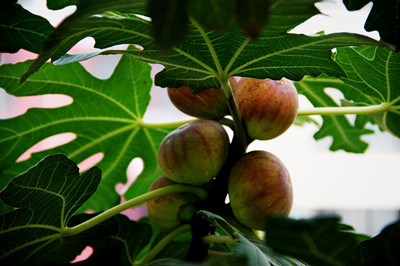
Figs originated along the Mediterranean coast of Europe and in Central Asia and were introduced to China during the Western Han Dynasty. **The Tarim Basin has a long history of fig cultivation, and the figs there are sweet, nutritious and known as the “Queen of Fruits.” Container-grown figs, with their graceful branches and leaves and beautiful tree shape, are lovely potted plants grown both for their foliage and their fruit.
Key Points for Growing Figs in Containers
1. Container
Figs have a fairly developed root system and need a larger container for cultivation. A large clay pot is generally used, and they also need a growing environment with more space. An open balcony, terrace or courtyard is quite suitable for their growth.
2. Soil
Figs are not demanding about soil, but when grown in containers it is best to use fertile, well-aerated soil. When planting or repotting, add fully decomposed cake fertilizer, chicken manure fertilizer and other organic fertilizers rich in carbon, phosphorus and potassium to the potting soil. This will make the fig's branches and leaves luxuriant and bring it into fruit early.
3. Watering
When watering container-grown figs, the amount of water can basically be determined by the progress of branch and leaf growth. In spring, when branches and leaves begin to sprout, water a little less and just keep the potting soil at a certain level of moisture. As the branches and leaves gradually grow and the temperature rises, the fig enters its fruiting stage, and at this point the amount of water should be increased, watering once in the morning and once in the evening to keep the potting soil moist. If watering is not timely, the branches and leaves can easily wilt and the fruit can drop. After entering the fruit-ripening stage in autumn, the amount of water should be reduced, since too much moisture will cause the fruit to split. On cloudy and rainy days, besides controlling watering, also take care to prevent water from accumulating in the pot, so as to avoid waterlogging damage.
4. Pruning
The new shoots of figs grow quickly, so pay attention to pruning and shaping in normal care, especially for container-grown figs. A trunk that is too tall not only affects their appearance but also makes routine care more troublesome. Therefore, container-grown figs must have their trunk limited to a certain height and must not be allowed to grow freely. The specific method is: when the trunk of a young plant reaches about 20 cm, cut off the leader shoot to encourage it to sprout branches. According to your own preferences, prune it into a certain shape to enhance its ornamental value.
5. Overwintering
Figs are not cold-hardy. Container-grown figs kept outdoors should be brought indoors promptly around the time of the first frost in late autumn. Those kept indoors should be placed in a sunny, well-ventilated spot such as a balcony or living room. In winter, figs enter dormancy and growth tends to stall. At this time, watering can be adjusted flexibly according to the indoor temperature. If the room temperature is relatively high, water a little more; if they are placed in a room at about 5 degrees Celsius, then control watering and keep the potting soil as dry as possible, so that they can safely get through the winter.
How to Grow Container Figs: Fig Cultivation Techniques / Plenty of Light Is Needed
The fig is a fairly common plant in people's lives, and people are also quite familiar with its effects and benefits, so many people want to grow it at home. So how do you grow container figs, and what points need attention in fig cultivation techniques? Below, the editor will walk you through it.
I. How to Grow Container Figs
If you want to know how to grow container figs, you first need to understand their growth habits. The fig is a plant that prefers a warm, humid environment and is fairly drought-tolerant, but it does not have much resistance to severe cold weather, so these points need attention. Below is a detailed explanation of fig cultivation techniques, which friends who want to grow them can read.
II. Fig Cultivation Techniques
1. Soil Selection
Soil selection is a fairly important part of growing container figs, and choosing the right soil will be more conducive to their growth. When it comes to soil selection, we can choose a mix of fertile garden soil and humus soil; the resulting soil will drain relatively well, and the fig will also be able to absorb nutrients better.
2. Light Requirements
In fig cultivation techniques, light is a fairly important part. The fig is a light-loving plant, so during cultivation you must maintain sufficient light; this way it will grow better, and this is something to keep in mind.
3. Watering Requirements
Water is indispensable during plant growth, and figs are no exception. Generally, in spring when branches and leaves first begin to grow, the amount of water can be relatively small, just keeping the soil at a certain level of moisture. As the fig gradually grows and reaches the fruiting stage, we need to appropriately increase the amount of water, basically watering every day. If the amount is insufficient, it will cause the branches and leaves to shrivel and the fruit to drop.
4. Pay Attention to Pruning
The shoots of figs grow fairly quickly, so during growth you need to pay attention to pruning, because if the branches and trunk of the fig are too tall, it will not only affect its beauty but also increase the difficulty of care, so pruning is a necessary step. Generally, when the branches and trunk of the fig grow to about 20 cm in length, the leader shoot needs to be cut off. This can encourage it to grow branches and also improve its ornamental value.
5. Environmental Requirements
In fig cultivation techniques, the choice of environment is also of paramount importance; growing in a suitable environment is more beneficial for figs. As the editor mentioned above, figs prefer a warm, humid environment, so when growing them indoors you can slightly increase the indoor humidity, which will be better for the fig's growth.
6. Pest and Disease Control
When growing container figs, if the method is wrong, problems such as pests and diseases are quite likely to appear. When these appear, we need to carry out timely control. For specific methods, you can refer to the article on fig pest and disease control; the editor will not go into too much detail here.
Planting and Cultivation Techniques for Container Fig Trees
The fig is a perennial tree with smooth branches, a graceful form, unique leaves, and sweet, delicious fruit that is extremely nutritious. Container-grown figs combine ornamental and tasting functions and have a distinctive appeal. Their cultivation techniques are as follows:
1. Container and Potting Soil
Well-aerated clay pots, porcelain pots, cement pots, wooden boxes and wooden buckets can all be used to grow figs, but the size should be appropriate. A diameter of 40 cm to 50 cm is best, and it should not be smaller than 30 cm. The height can be similar to the pot diameter, or slightly greater than the pot diameter. The potting soil should be loose, rich in organic matter, and good at retaining fertilizer and water and at aeration; humus soil from under mountain broadleaf forests is ideal.
2. Planting Method
Use strong one-year-old seedlings and plant them in the pot after leaf drop or before bud break in spring. Before planting, first fill the pot with more than half a pot of nutrient soil and press it firm. Water the seedling to be transplanted thoroughly first, and immediately after the water soaks in, transplant it into the pot with the soil ball, keeping as many roots as possible. Then add soil so that the roots are in close contact with the soil, with the soil surface level with the pot rim. After watering and settling, the soil surface should be 2 cm to 3 cm below the pot rim. You can also use the direct-stick method in the pot: in early spring before the sap flows, cut thick, sturdy one-year-old branches as cuttings, cut them into 20 cm segments, and stick them directly into the pot. Because fig branches root very easily, green branches with leaves also root easily from cuttings during the growing season. Layering is also suitable for container figs. From before bud break to the early growth period, press a one-year-old or perennial branch of an existing container fig or field-grown fig into another pot or bucket; the layer should be pressed about 10 cm into the potting soil.
3. Shaping and Pruning
Container figs can be shaped using the following two methods. The first is the open-center pruning and shaping method: after planting, cut the seedling trunk back leaving 3 to 4 buds at the base, and in the same year select 3 main branches growing in different directions. The fig is a light-loving tree species, so the main branches should be opened wide; you can use the branch-bending method to pull the main branches to 60 degrees to 70 degrees. In the second year, the mixed buds on each main branch will sprout and bear fruit. The length of the main branches should be controlled at about 40 cm, and overly vigorous main branches should be pinched promptly in summer. During winter pruning, remove weak fruiting branches and keep strong ones. The extension shoots of the 3 main branches should be cut back and renewed year by year to control the canopy and keep its size appropriate.
The second is the horizontal ring training method on the trunk: in the first year after planting, do not cut the trunk, and let it grow naturally. Because of its strong sprouting ability, in that year it can sprout and form multiple branches from bottom to top. During winter pruning, according to the distribution of the branches, select and keep about 10 branches in an alternating ring from bottom to top. After the branches extend and grow, use thin wire to bend them along the branch and tie them horizontally, so as to promote continuous fruiting. Be careful to thin out overly dense and overlapping branches. The upward-growing trunk extension shoot should be controlled at 1 m to 1.2 m in height, and pinched promptly when overly vigorous. After fruiting in the third year, the horizontal fruiting branches have already formed a complete ring around the trunk from bottom to top. Renewal pruning can be carried out every year to maintain fruiting capacity, avoid overlapping of the ring branches, and form a graceful tree shape.
4. Management
Container figs should have their vigorous growth controlled so that they produce moderate branches, so watering should not be too frequent. Second, fertilize reasonably to prevent excessive fertilization and fertilizer damage. Generally, during the growing season, apply once every half month a soaked and fermented bean cake water, animal hoof and horn water, or diluted urea solution. In late August in autumn, apply once a nitrogen-phosphorus-potassium compound fertilizer, or superphosphate, bone meal and plant ash, etc. Figs have very few pests and diseases and basically do not need spraying. Branches younger than 5 years old are prone to frost damage, so before winter begins, move the pot indoors or wrap the branches and trunk with straw to protect them from the cold through the winter.