Cultivation Methods and Precautions for the Chunlan 'Song Mei' Orchid
Songlan (Song Mei orchid) originates from central and southern China. It prefers cool, humid and well-ventilated conditions, and dislikes extreme heat, dryness and direct sunlight. It requires well-drained soil rich in humus and slightly acidic. In northern winters it should be cultivated in a greenhouse, with the minimum temperature not lower than 5°C. Song Mei is extremely easy to grow, but achieving fine flower quality requires considerable effort. Plants that are too weak or too heavily fertilized cannot produce true plum-petal (mei ban) flowers. Medium-sized plants readily produce true plum-petal flowers. For this reason, fertilization and watering must be appropriately controlled during cultivation. It is said that to produce plum-type narcissus (mei xing shui xian) flowers and double flowers, the plant must be grown into an exceptionally large, vigorous specimen, requiring increased water and fertilizer, and then the desired result can be achieved.
Propagation Techniques
Song Mei is mostly propagated by division. Once every 4-5 years. Division is usually carried out before new buds emerge, or after flowering and before the onset of winter. Before division, let the potting soil dry out, shake off the soil, and trim away old roots and some old leaves. When potting, cover the drainage hole with a small tile fragment, add a layer each of crushed brick and coarse sand, to a thickness of 1/5 of the pot; then place the divided plant with new buds facing outward and roots spread out in the pot, fill with soil and gently shake the pot so the soil settles tightly, lift the divided plant slightly, and add another layer of growing medium. Finally water it, place it in a shaded spot, and after 1-2 weeks move it to a semi-shaded location.
Management Techniques
For pot cultivation of Song Mei, plant 4-6 plants per pot; when planting, arrange the orchid plants evenly and distribute them reasonably, carefully filling in the soil. After potting, water thoroughly, place in a spot without direct sunlight and relatively sheltered from wind; after one week it can be moved under the shade of a balcony, then gradually exposed to light. The growing medium is usually a mix of leaf mold, sand and dried cow dung (4:1:1) or peat soil, sand and dried cow dung (3:1:1). Use oil residue and chicken manure as base fertilizer. For top dressing, use dilute manure water, once a week from May to August. If Song Mei produces too many flower scapes, they can be thinned; one scape per clump is sufficient. After flowering, which coincides with the windy season in the north, protect against dry wind attack with plastic film and water with an appropriate amount of fertilizer solution. Water less before repotting, when treating pests, and on cloudy or rainy days; water less when plants are small or leaves develop black spots. Song Mei is prone to quite a few pests and diseases, so prevention and control should be given attention.
After Song Mei has set flower buds, it should be kept quiet, given plenty of sunlight and moderate water; only then will the flowers open with a proud spring-like bearing, round and pleasing.
Cultivation Methods and Precautions for the Chunlan 'Song Mei' Orchid
Chunlan 'Song Mei' is a type of orchid; it is a unique plum-petal orchid that has been cultivated in China for several hundred years and is a fine variety among orchids. There are many points to note when cultivating Chunlan 'Song Mei'. Next, I will specifically explain them for everyone; friends who like growing Chunlan 'Song Mei' can take a careful look.
Cultivation Methods and Precautions for the Chunlan 'Song Mei' Orchid1. Pots and Potting Soil for Chunlan 'Song Mei'
When cultivating Chunlan 'Song Mei' normally, choose a tall clay tile pot; the pot should not be too large, as long as the roots can spread out in it. When choosing potting soil, it must meet requirements of air permeability, drainage and complete nutrients; the best choice is slightly acidic soil with high humus content.
2. Light Requirements of Chunlan 'Song Mei'
Chunlan 'Song Mei' has high sunlight requirements during its growth period. Early morning sunlight is most beneficial for its development and is also the main factor affecting its flowering. Therefore, it is best to place Chunlan 'Song Mei' in a spot with morning light; receiving two to three hours of sunlight daily is most beneficial for its growth and will also make it bloom every year.
3. Ventilation and Water Control During Cultivation of Chunlan 'Song Mei'
During cultivation, Chunlan 'Song Mei' must be kept in a ventilated environment. Especially when the weather is stuffy and hot in summer, move it to a cool, ventilated place. Timely ventilation can speed up Song Mei's photosynthesis and also reduce the occurrence of some pests and diseases. In addition, Chunlan 'Song Mei' has its own water requirements; it likes moist soil, but watering must not be excessive. Grasp the principle of watering when dry and watering thoroughly when you do. Moreover, watering should not be fixed to a particular time; it should be managed flexibly.
How to Grow Chunlan 'Song Mei': Cultivation Methods for Chunlan 'Song Mei'
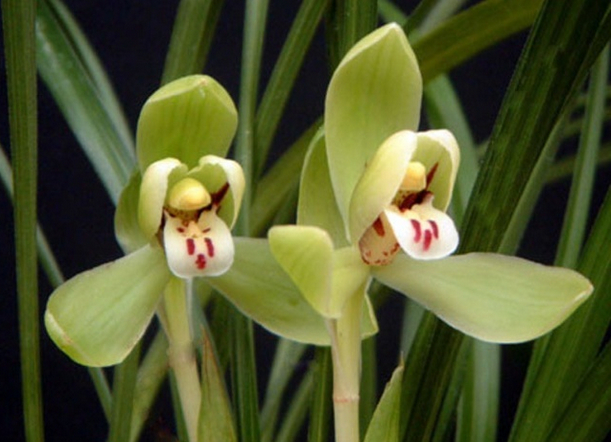
Song Mei is a traditional famous variety of Chinese Chunlan and the representative variety of plum-petal flowers, with the full name Song Jinxuan Mei. Because Song Mei's flower quality is unmatched and it stands first among Chunlan, it has been chosen as the head of the "Four Great Heavenly Kings" of Chunlan and praised as the "King of Chunlan", with extremely high ornamental value. Let's take a look together at the cultivation methods for Chunlan 'Song Mei'!
Growth Habits of Song Mei
Song Mei is a horticultural variety and should be planted in an environment with circulating air. It prefers shade and dislikes direct sunlight; it likes humidity and dislikes dryness; 15°C to 30°C is most suitable for growth. Above 35°C growth is poor. Severe cold below 5°C will affect its growth vigor, and at this time the orchid is often in a dormant state. If the temperature is too high combined with exposure to the sun, leaf scorching or withering can appear within one or two days. If the temperature is too low and it is not moved indoors in time, frost damage will occur. Chunlan 'Song Mei' has fleshy roots and is suitable for sandy loam rich in humus; drainage must be good, and leaf mold or mountain soil with more humus should be chosen. Slightly acidic loose soil or iron-containing soil is suitable, with a pH value of 5.5-6.5.
Propagation Methods of Song Mei
1. Division: After one or two years of cultivation, Song Mei can sprout many new shoots. When the number of plants reaches 6 or 7, division can be carried out, generally once every 2 or 3 years. In spring and autumn, select plants with 6 or 7 or more plants, take them out of the pot, gently tap the bottom of the pot, and tip out the orchid roots, taking care not to damage the new roots. Use a brush to brush away old soil from the roots, find places where the gaps between pseudobulbs are relatively large, carefully pry them apart, trim dead roots and rotten roots with scissors, then soak in 40% thiophanate-methyl or 800-fold chlorothalonil solution for 1 hour, rinse with clean water, and air-dry. When the roots turn white and soft, they can be planted.
2. Sowing: Song Mei seeds are extremely fine, containing only one incompletely developed embryo, with very low germination capacity. In addition, the seed coat does not easily absorb water, so sowing by conventional methods will not germinate; orchid fungi or artificial culture medium are needed to supply nutrients for germination. For sowing, it is best to choose fruit that has not yet split. After sterilizing the surface with 75% alcohol, take out the seeds, soak them in 10% sodium hypochlorite for 5-10 minutes, take them out and rinse 3 times with sterile water, then sow them in a culture bottle containing medium, and place in a dark culture room, maintaining the temperature at about 25°C. After they begin to sprout, move them into the light and they can form protocorms.
3. Tissue culture: First, from the roots of orchid plants cultivated for 2 or 3 years, cut 2-3 cm growth buds, rinse with running water for 20 minutes, and in a sterile tissue culture room at 22-25°C, remove the outermost 1-2 bract leaves and soak in sodium hypochlorite solution for 15 minutes to sterilize. Then peel and cut into 2-5 mm stem tips, inoculate them onto prepared medium, and move them to the culture site. After 3-4 months rhizomes are produced, continuously proliferate, then induce buds and roots. When the test-tube plantlets grow to 5-8 cm and have 2 or 3 roots, they can be transplanted.
Cultivation Methods for Song Mei
1. Growing medium: Preparing a growing medium with complete nutrition is the foundation for promoting healthy growth and flowering of Song Mei. The preparation of the medium should focus on air permeability, drainage and nutrients. You can use 25% finely washed peat, 20% (plant gold stone), 15% xiantu (immortals' soil), 10% willow bark, 15% snake wood, 5% mafan stone, and 10% brick granules. Using this medium to grow orchids allows them to establish in the pot quickly, grow healthily, flower well and have a strong fragrance.
2. Pot selection: For Song Mei, the best pot is a fired tall clay tile pot, or a tall sesame-sand pot produced in Yixing. The pot should not be too large; it is enough as long as the orchid roots can spread out in the pot. About 6 plants per pot is most suitable, and the orchid plants should include a combination of old, medium and young, so that flowers can be seen every year. Remember that new pots must be soaked in water (to remove alkalinity) for more than 2 days, and old pots must be washed clean and disinfected before use.
3. Light: Morning sunlight is most beneficial for Song Mei's growth, and the earlier the better; ideally, as soon as dawn appears, it can shine on the orchid plants. This is because morning light is the main factor affecting orchid growth and flowering, and orchids are most active in photosynthesis with sunlight before 10 a.m. So if conditions permit, it is best to place Song Mei in a spot with morning light, exposed to 2-3 hours daily, which is very beneficial for growth and makes it bloom every year.
4. Ventilation: A good ventilated environment is a necessary condition for growing Song Mei well, and it is very important to place Song Mei in a well-ventilated spot. Especially in stuffy hot summer weather, Song Mei must be placed in a cool, ventilated place. In the northern Henan region, as long as it can pass the summer safely, it can be said that orchid growing is already half successful. Ventilation can provide fresh air to the orchid plants, accelerate photosynthesis, reduce the occurrence of pests and diseases, and promote healthy growth of the orchid plants.
5. Watering: Watering is the key to success or failure in growing Song Mei. The ancients said, "To make friends, make friends with their hearts; to water flowers, water their roots," and "Orchids like rain but fear waterlogging, like moisture but dislike wetness, like dryness but fear parching."
① The amount of watering should be determined according to many factors such as the size of the pot, the growth condition of the orchid plants, the quality of ventilation conditions, the coarseness of the medium, and the temperature.
② Watering should not be fixed to a set time. Observe the dry and wet condition of the medium frequently, grasp the timing of watering, water when dry, and water thoroughly when you do.
③ The temperature of the water used for orchids should be as close as possible to the temperature inside the orchid pot; the temperature difference must not be too large, especially in summer and winter.
④ For year-round watering, use clean natural precipitation (rainwater, snow water). It is best not to use tap water, and polluted water must be strictly avoided.