Detailed Guide to the Cultivation Methods and Planting Techniques of Hollyhock Mallow
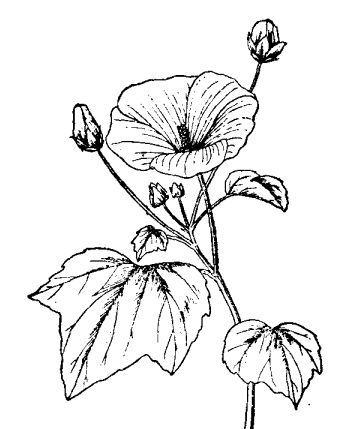
[Family and genus] Malvaceae, genus Lavatera. [Morphology] Annual herb, plant height 90--150 cm, much branched. Leaves alternate, leaf margins with irregular crenations, covered with fine soft hairs or nearly smooth, lower leaves nearly cordate, upper leaves angular. Flowers solitary in leaf axils, rose-red or red, about 10 cm in diameter, petals 5, clawed. Flowering period May-June. Seeds round-kidney-shaped, 1000-seed weight 6.8 grams.
[Varieties, forms and cultivars] There is a dwarf type, plant height 60--80 cm, flower diameter smaller, 6-8 cm, with a neat, rounded clump.
[Origin and distribution] Native to Spain and North Africa.
[Habits] Tolerates cold, but under the -10°C low temperature rarely seen in the Shanghai area, most plants freeze and die. Prefers sunny spots with good drainage, and has no strict requirements for soil.
[Propagation] Sow in open-ground seedbeds in September in autumn.
[Cultivation] After one transplanting of the seedlings, plant them out in the garden at the end of October and the beginning of November; they must grow into large seedlings before the severe cold arrives to strengthen their cold resistance. Management is simple, but in cases of severe low temperature, cover should be added.
[Seed collection] The seeds can be harvested when the sepals turn brown; generally, one can wait until most of the schizocarps are ripe and harvest them all at once, then dry them in the sun and thresh them.
[Uses] An excellent material for flowerbeds and flower borders; it can also be grown as a large potted plant, or used to green the gaps in tree beds.
High-yield Open-field Cultivation Techniques for Golden Flower Okra in Southern Regions
This plant, golden flower okra, is called "wild hibiscus" by people in many areas, and its image and appearance are indeed very beautiful. The following mainly discusses the key successful cultivation techniques for introducing southern golden flower okra in Songxi County.
I. Characteristics and Traits of Golden Flower Okra
1. Morphological characteristics
Golden flower okra is an annual herbaceous plant of the genus Abelmoschus in the family Malvaceae. It blooms from July to September each year, with 30-60 flowers per plant, corolla diameter 13-16 cm, each flower weighing about 6 g, solitary in the axils of the upper leaves, with a golden-yellow corolla; both the main stem and side branches flower and bear fruit, the fruit pods have 5 ridges, the outer surface of the fruit pod has white fuzz, and inside it wraps seed after seed, slightly smaller than mung beans and dark brown, shaped like a pig kidney, with 80-120 seeds per fruit pod.
2. Growth characteristics
Golden flower okra is drought-tolerant, barren-tolerant, high-temperature-tolerant, and cold-tolerant, has no strict requirements for soil, has strong ecological adaptability, grows vigorously, has strong disease resistance, and has good yield. After planting, it can grow normally when the temperature is above 18°C. For open-field cultivation in the south, direct sowing is done from April to early May; when the temperature is above 20°C, seedlings emerge in about 10 or more days, and in 60-70 days it can be marketed as a vegetable; the seeds of golden flower okra mature from the end of September to early October.
3. The value of golden flower okra
The flowers of golden flower okra are both medicinal and edible, with a bioflavonoid content as high as 6%, nearly a hundred times higher than that of ginkgo, soybean, and others currently widely used in bioflavonoid production, making it the highest known among plant resources at present. The complete protein, high polysaccharide gum, dietary fiber, and trace elements such as selenium, zinc, and iron it contains have significant effects in regulating the human endocrine system and immunity, enhancing the body's resistance, resisting fatigue and aging, fighting and preventing cancer, and lowering blood sugar and blood lipids.
The abundant natural estrogen contained in the flowers and fruits also has an excellent effect on prolonging women's youth and reducing or avoiding menopausal syndrome in middle-aged and elderly women. The fruit of golden flower okra can be marketed as a delicious vegetable; golden flower okra tea, golden flower okra wine, and golden flower okra series cosmetics processed from the flowers and leaves have even higher economic value, and growing golden flower okra has extremely high economic value and broad market prospects.
II. Cultivation Techniques
1. Land selection and bed preparation
Golden flower okra has a well-developed root system, so fields with deep plough layers, fertile soil, and convenient irrigation and drainage should be selected; low-lying, easily waterlogged plots are not suitable for planting. The cultivation site in Songxi County is located beside Zhaoshajia Reservoir in Huaqiao Township, where the soil plough layer is deep, fertility is above average, the soil is loose, sunlight is sufficient, irrigation and drainage are good, and the soil texture is sandy loam. Before planting, deeply plough and prepare the land into beds, with bed width 1.2 m, ditch width 20 cm, and bed height 15-20 cm.
2. Timely sowing
The whole growth period of golden flower okra is about 130 days. In the northern part of Fujian, the suitable sowing period is from late March to early May. In 2015, our sowing period was March 20-25. The seed germination rate of golden flower okra is relatively high. In order to further increase the germination rate, select plump, full seeds, soak them in warm water at 20-25°C for 12 hours before sowing, then wipe them dry, and germinate them at 25-30°C for 48 hours. When half of the seeds show white, they can be sown, with a seeding rate of about 500 g per mu.
3. Seedling-stage management
Use nutrient-pot seedling raising, choosing 72-cell plastic seedling trays with specifications of 25 cm*50 cm. First fill each cell with two-thirds nutrient soil, drench thoroughly with water, then sow, placing one seed per cell, cover with nutrient soil after sowing, then spray a small amount of water to keep the nutrient soil moist. Then cover with a layer of film; when about 70% of seedlings have emerged, remove the film. After sowing, use a small arch shed to keep warm; do not remove the film for the first 10 days, and for the next 20 days do not cover with film on clear days during the day.
4. Reasonable close planting
Plant out when the seedlings have grown to two to three leaves and one heart. Before planting, first prepare the land well, plough and sun the ridges, and apply enough base fertilizer. First use herbicide to control weeds, adopt double-row planting, with a planting density of row spacing 50 cm and plant spacing 30 cm, planting about 3100 plants per 667 sq m.
5. Field management
(1) Fertilization management: Fertilization is mainly based on base fertilizer, supplemented by topdressing. Apply 750 kg per mu of farmyard manure such as garden soil, and 25 kg of compound fertilizer with 15 each of N, P, and K. Topdressing is mainly farmyard manure; apply fertilizer once after each flower harvest, and the fertilizer requirement is relatively large during the full flowering period. Combine topdressing with irrigation; during heavy rain periods, pay attention to drainage to avoid the plants suffering from waterlogging.
(2) Water management: Golden flower okra plants are tall and need more water. After emergence and after final thinning, water once each. During the flowering and fruit-setting period, water frequently to keep the soil moist. Especially in July-August, when high temperatures coincide with the peak fruit-harvesting period, the water requirement is large, so water supply should be maintained even more. However, when there is too much rain, drain promptly to prevent seedling death caused by waterlogging.
(3) Cultivation, weeding, and earthing up: The root system of golden flower okra is particularly well developed. To promote its root growth, cultivate multiple times before budding. After budding, also cultivate appropriately after each topdressing and irrigation to prevent soil compaction. Combine cultivation with timely removal of weeds to avoid weed overgrowth. Before the plants close their rows, earth up to prevent lodging during windy and rainy periods.
(4) Plant management: Follow the principle of ventilation and light transmission. When the branches and leaves are too luxuriant, appropriately prune the side branches at the base and remove old leaves. If vegetative growth is too vigorous in the early stage, leaf twisting can be carried out, twisting the petioles into a curved, drooping shape to control vegetative growth; in the middle and late growth stages, promptly remove the old leaves at each node below the harvested tender fruits, which not only improves ventilation and light conditions and reduces nutrient consumption, but also prevents the spread of pests and diseases.
6. Pest and disease control
Golden flower okra has very few diseases, but relatively more insect pests. During the seedling stage and the flowering and fruiting stage, cutworms, aphids, and stem borers, as well as a small number of thrips and others, often cause damage. Pest and disease control is mainly based on agricultural control and physical control, implementing integrated control. Agricultural control measures mainly include crop rotation, cultivating strong seedlings, deep ploughing and fine cultivation, and scientific fertilization; physical control mainly uses light and color trapping and killing, and manual capture of pests. When damage is severe, chemical control can be used. When red spider mites occur, spray with 40% fenpropathrin-killing emulsifiable concentrate at 2000-3000 times dilution; when aphids occur, spray with 1.8% abamectin emulsifiable concentrate at 3000 times dilution. The use of pesticides is prohibited 20 days before harvest to ensure the food safety of golden flower okra.
7. Harvesting and storage
From sowing to the formation of the first tender fruit, golden flower okra takes about 50-60 days. After that, the entire harvesting period is about 3 months. Every part of golden flower okra is valuable, especially the flowers, which must be harvested in time, generally focusing on flowers that have just opened. When grown in Songxi County, fresh flowers can begin to be harvested in early June, and after harvesting they should be dried promptly. Seeds begin to be harvested in late August, and after harvesting they should be dried promptly for storage and seed saving.
The above are the key cultivation techniques for golden flower okra. Farmers and friends are welcome to come to Huinong Network to learn techniques.