Detailed Explanation of Mallow Cultivation and Planting Techniques
[Aliases] Small hollyhock, chessboard flower, potato-banana flower.
[Family and Genus] Malvaceae, Malva genus.
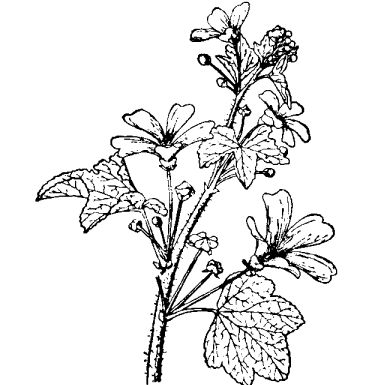
[Morphology] Biennial herb, plant height 60--100 cm, stems erect, branched, covered with coarse hairs. Leaves alternate, cordate-orbicular or reniform, diameter 7-13 cm, margins obtusely toothed, veins palmate, petioles 8-18 cm long. Flower diameter 2.5--4 cm, 5 petals, apex notched, purplish-red with pale longitudinal stripes. Several flowers clustered in leaf axils. Flowering period May to June. Seeds flat, round-reniform.
[Varieties, Forms and Cultivars] Large-flowered mallow: taller plant, reaching 120 cm, leaves more flattened, lobes more obtuse. Flowers larger, purplish-red, with a white-flowered form. (This article is selected from "Agricultural Encyclopedia"
[Origin and Distribution] Native to temperate Europe and Asia.
[Habits] Cold-resistant, self-seeding, not particular about soil.
[Propagation] Sow in open-field seedbeds in early September.
[Cultivation] Seedlings grow quickly; after one transplanting, plant out in the garden in early November, plant spacing 50-60 cm, easy to manage.
[Seed Collection] When most fruits on the plant have yellowed and ripened, cut the whole plant, dry and thresh. Ripe fruits can also be picked gradually.
[Uses] Flowers and leaves can be used medicinally, and are also a mucilage-rich demulcent. Can be used as background landscaping material, or for landscaping gaps.
[Appendix: Other Flowers of the Same Genus] Musk mallow: perennial herb, plant height 50-70 cm. Lower leaves round-reniform, upper leaves 5-lobed, lobes again 1-2 lobed or finely divided into linear small lobes. Flower diameter 4--5 cm, borne in leaf axils on the upper part of branches, rose-red, with a white-flowered variety. Native to Europe.
How to grow okra? Key points of okra cultivation and planting techniques
Image: Okra cultivation
[Common Questions] How to grow okra? Key points of okra cultivation and planting techniques
[Expert Answer]
1. Planting time: From early April to late August, sowing can be done in open fields in succession, and tender pods can be harvested in the same year; using large or small tunnel covers for seedling raising, sowing can be advanced to early March, and tender pods harvested earlier.
2. Land preparation and fertilization: Okra has strong adaptability to soil, but to obtain high yields, plots with fertile, loose soil, convenient drainage and irrigation, and sufficient sunlight must be selected, and continuous cropping with cotton and other Malvaceae crops must be avoided. Before sowing or planting out, plow the soil, make beds 1.4 m including ditches, bed width 1 m, ditch width about 40 cm, depth 25-30 cm. Open a ditch in the center of the bed for fertilization, apply 2000-3000 kg of decomposed barnyard manure per mu, 25-50 kg of calcium magnesium phosphate, 15-20 kg of nitrogen-phosphorus-potassium, and mix thoroughly with the soil, then level the bed surface.
3. Sowing: Direct seeding, after the last frost, sow 2 rows per bed, hole spacing 45-50 cm, sow 2-3 seeds per hole, keep one strong seedling per hole after emergence. To increase soil temperature and promote early emergence, early spring sowing can be covered with plastic film or small arch tunnels.
In the north, two cultivation forms are used: flat beds or high ridges, sowing in early to mid-May, and harvesting begins only in July.
4. Digging holes and applying base fertilizer
Dig 2 rows of holes per bed; for a bed width of 70 cm, set plant and row spacing at 50 cm × 40 cm, planting 2600 holes per mu; for a bed width of 100 cm, set plant and row spacing at 60 cm × 60 cm, planting 1700 holes per mu. Apply 200-300 g of dry farmyard manure and 30 g of nitrogen-phosphorus-potassium compound fertilizer per hole, and mix evenly with the soil in the hole (fertilizer must not be concentrated in the sowing hole to prevent seedling burn).
5. Sowing
Before sowing, soak seeds in warm water at 20°C-25°C for 12 hours, then wipe dry, and germinate at 25°C-30°C for 48 hours. When half the seeds have sprouted, they can be sown. In the previously prepared beds, dig holes at a row spacing of 80 cm and plant spacing of 50 cm, first water thoroughly, sow 2-3 seeds per hole, cover with 2-3 cm of soil, plant about 2000 holes per mu, using about 0.5 kg of seed.
Generally sown from late April to early May. Sow 3 seeds per hole in a triangle, with 5 cm between seeds, depth 2 cm, and water thoroughly after sowing. Seedlings emerge 5-7 days after sowing; when seedlings grow to 10 cm tall, begin thinning, keeping 2 seedlings per hole.
6. Field management
When the first true leaf unfolds, carry out the first thinning, removing diseased, damaged and weak seedlings; when the 2nd-3rd true leaves unfold, finalize the seedlings, keeping one strong seedling per hole. After finalizing, timely carry out intertillage and hoeing. Thereafter, frequently intertill and weed, and earth up to prevent lodging. Okra is a moisture-tolerant plant with tall plants and high water needs. After emergence and after finalizing seedlings, water once each; during flowering and fruiting, water frequently to keep the soil moist, especially in July-August when high temperatures coincide with the peak fruiting period and water demand is high. In addition, combined with watering, apply 15 kg of urea or 500-600 kg of human manure per mu in 3 applications at seedling finalization, fruiting and peak fruiting stages to promote high yield.
Okra plants have well-developed root systems and vigorous growth, with high fertilizer and water needs, especially during flowering; if lacking water or fertilizer, fruiting will be poor and yield reduced. After finalizing seedlings, topdress once, applying 2 g of nitrogen-phosphorus-potassium compound fertilizer in a ring per hole; if there is obvious fertilizer deficiency, topdress once every 10-15 days thereafter, with the amount depending on plant size, 5-10 g per hole. In dry seasons, increase irrigation to keep the soil moist.
Remove side branches. If water and fertilizer are sufficient, axillary buds on the lower part of okra plants easily grow into side branches. Side branches not only bear poor fruit but also easily cause excessive branches and leaves, affecting normal fruiting of the main stem. Therefore, once side branches appear, remove them promptly; young tender side branches can be stir-fried.
[Editor's Commentary] Okra seeds and mucilage have unique health benefits, and its nutritional value is very high. It is a vegetable that has been highly popular in recent years. Many vegetable growers must want to know whether okra is easy to grow and how to cultivate and manage it. The above is "Okra Cultivation and Planting Techniques" compiled for you by the First Agricultural Economics editor. This article is introduced here, hoping to be of help to you. See you in the next article!
Key Points of Hibiscus syriacus Cultivation Techniques: How to Grow Hibiscus syriacus?
Hibiscus syriacus, also called rose of Sharon, desert rose, etc., is a very common garden shrub flower; it belongs to the order Malvales, family Malvaceae, native to eastern Asia, with showy flowers, widely planted as an ornamental plant. So how should Hibiscus syriacus be planted? And what are its uses? Below, the editor will introduce it to everyone.
I. Planting Methods of Hibiscus syriacus
1. Soil: Hibiscus syriacus has strong adaptability and is not strict about soil. It can grow normally in barren gravelly soil or slightly alkaline soil, but deep, fertile, loose soil is best.
2. Watering: During the growth period of Hibiscus syriacus, keep the soil moist. In long periods of drought without rain, irrigation should be noted; when there is too much rain, drainage should be done to prevent waterlogging.
3. Sunlight: Hibiscus syriacus likes light and tolerates partial shade. During the growth period, provide sufficient light, but it is not suited to overly intense light; when sunlight is too strong, shade it.
II. Uses of Hibiscus syriacus
1. Ornamental. Hibiscus syriacus blooms in summer and autumn. When in bloom, the whole tree is full of flowers, with colors including white, purple, cream yellow, and light red, spreading out in colorful profusion, greeting the rosy clouds and bathing in the sun, fluttering in the wind, brilliant and beautiful, with a very good ornamental effect.
2、Air purification. Hibiscus syriacus is called a "natural detoxifier." Ecologists once collected leaves of nine plants with strong pollution resistance for analysis and found that Hibiscus syriacus leaves had the highest chlorine content and the highest amount of chlorine adhering to the leaves. It has strong resistance to sulfur dioxide, and sulfur dioxide causes little harm to the mesophyll cells of Hibiscus syriacus; the dust retention of Hibiscus syriacus leaves ranks third among 18 plants, so people often plant Hibiscus syriacus as a helper for environmental protection.
The above is the introduction to Hibiscus syriacus cultivation techniques provided by Duorou Huapu for everyone. We hope it can be of help to you. Welcome to continue following Duorou Huapu to learn more key points of flower cultivation techniques.