A Detailed Guide to the Propagation Methods, Cultivation Techniques and Uses of Grape Hyacinth
[Alternative names] Grape lily, blue bottle flower, grape musk hyacinth.
[Family and genus] Liliaceae, genus Muscari.
[Morphology] Perennial herb, bulb spherical, tunic white. Leaves basal, linear, slightly succulent, dark green, margins often rolled inward, 10—30 cm long, 0.6 cm wide. The flower scape emerges from the leaf cluster, 10--30 cm tall, the raceme densely bears flowers on the upper part of the scape, the pedicels droop; the flowers are small, bright blue. Flowering period from mid-March to early May.
[Varieties, forms and cultivars] There are cultivars with white flowers, flesh-pink flowers and pale blue flowers, etc.
[Origin and distribution] Native to southern Europe.
[Habits] Prefers deep, fertile sandy soil and requires good drainage. Tolerates semi-shade and cold. It can overwinter outdoors in East China and North China without protection.
[Propagation] Plant the daughter bulbs in autumn.
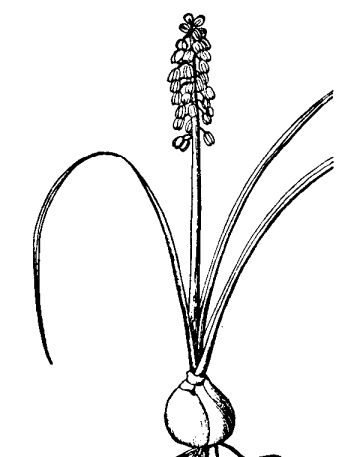
[Cultivation] This species is robust and highly adaptable, and its cultivation and management are simple, the same as for ordinary autumn-planted bulbs.
[Uses] The plant is short, and the flowering period is early and long; it is suitable as a groundcover flower under trees, or for natural clump planting in flower borders and lawns. It can also be grown in pots for ornament or used as a cut flower.
Grape Hyacinth Muscari botryoides Mill Grape Hyacinth Illustrated Guide: How to Grow Grape Hyacinth / How to Propagate Grape Hyacinth
Grape Hyacinth ProfileGrape Hyacinth Muscari botryoides Mill
Grape Hyacinth Cultivation Methods and Precautions Introduction to Grape Hyacinth
Grape Hyacinth (Latin name: Muscari botryoides Mill), also known as blue bottle flower, grape lily, grape musk hyacinth, blue bottle flower, grape narcissus, is an excellent flowering groundcover introduced from Europe, a perennial herbaceous plant of the genus Muscari in the Liliaceae family. The small bulb is ovate; the leaves are velvety lanceolate, clustered, and the plant is short. The flower scape is 15 to 20 cm tall, with 10 to 20 small urn-shaped flowers clustered at the top; the whole inflorescence is like a string of blue-purple grapes, elegant and refined.
Grape Hyacinth is an excellent perennial herbaceous flowering groundcover plant introduced from Europe, a small flowering bulb plant. Grape Hyacinth is a relatively ornamental perennial flower; its plants are low and neat, the inflorescence is dignified, the flower posture is beautiful, and the colors are brilliant. Set off by the smooth, fresh green leaves, it is quiet and elegant, and is a famous perennial flower that blooms in early spring. Grape Hyacinth is an excellent flowering plant with a very good ornamental effect; arranged in the home it also appears very fresh and light, filling the home with a sense of liveliness. If you also like Grape Hyacinth, then you can try planting it.
Morphological Characteristics of Grape Hyacinth
It is a small bulb flower of the genus Muscari in the Liliaceae family. The tunicate bulb is ovate, white. Leaves basal, semi-cylindrical linear, succulent, dark green, margins often rolled inward, 15-30 cm long, about 0.6 cm wide. Plant height 15~30 cm, with a bulb underground covered by a white tunic, bulb diameter 1~3 cm, about 1.5 cm tall. Flowering period March~May. The flower scape is upright, 15--20 cm tall, with 14-25 small spherical flowers clustered at the top; the flower stem emerges from the leaf cluster, cylindrical, about 15 cm long, densely bearing many small bell-like flowers, the pedicels droop, and the flowers are greenish purple, pale blue, blue-purple, with white powder, etc. Most of the small flowers are densely borne and drooping, the corolla is small urn-shaped with a constricted tip, the flowers are blue or white at the tip, and there are also white, flesh-colored, pale blue and double-flowered cultivars. Common cultivars include white-flowered cultivars, pale blue-flowered cultivars and flesh-colored cultivars.
Ecological Habits of Grape Hyacinth
Native to Central Europe, more widely cultivated in the Netherlands. It likes a warm, cool climate and a humid environment with plenty of sunshine. It likes light and also tolerates shade, and its cold resistance is relatively strong. The suitable growth temperature is 15°C to 30°C, and it is suitable for growing in sandy loam rich in humus, loose, fertile and well-drained. It goes dormant in summer, the leaves remain evergreen in winter, and its cold resistance is relatively strong; in the Beijing area only the leaf tips turn yellow and dry.
Its cold resistance is relatively strong, and it can be cultivated outdoors and overwinter in East China and North China in China. In early summer it likes coolness, and also tolerates semi-shade. It likes fertile, loose and well-drained leaf mold. The bulb has the habit of dormancy in summer, sprouting and emerging from the soil in late September, with the flowering period in March-April. In May the aboveground part withers and enters the dormant period.
When the bulbs of Grape Hyacinth are harvested (at the end of June), flower bud differentiation has already begun in the bulbs. This differs from bulb flowers such as tulips and narcissi; the bulbs of tulips and narcissi are in a dormant state when harvested, and only after dormancy is broken can the terminal buds of the bulbs begin leaf bud differentiation and flower bud differentiation. By comparison, the flower bud differentiation time of Grape Hyacinth is relatively early, that is, before the bulbs are harvested, while the aboveground plants have not yet withered, leaf bud and flower bud differentiation have already begun in the bulbs.
Cultivation Techniques of Grape Hyacinth Cultivation Points
Imported foreign bulbs can be selected for autumn and winter cultivation. The soil is best as leaf mold or sandy loam, and after planting keep the soil moist. After the leaves grow, a diluted solution of nitrogen, phosphorus and potassium can be applied to promote development. When the flower buds grow in spring, move to a place with 60%-70% sunshine so that the flower stem elongates rapidly. Grape Hyacinth is highly adaptable and easy to cultivate and manage; it can be transplanted at any time and can also be used for winter forcing cultivation.
Grape Hyacinth likes a warm and cool climate, likes light and also tolerates semi-shade, requires soil rich in humus, loose, fertile and well-drained, and its cold resistance is also relatively strong.
For ground planting, choose fertile, well-drained loam and apply sufficient base fertilizer before planting; the planting depth is 6-8 cm. For pot planting use a 15 cm pot, planting 5-7 bulbs per pot, or a 10 cm pot with 3-5 bulbs, with a planting depth of 3-4 cm. After sprouting in early spring, pay attention to topdressing; in drought, water in time, and stop watering after the flowers fade. It is best for the bulbs to enter dormancy when relatively dry; freshly dug bulbs are first stored at 20-25°C, after October the storage temperature drops to 15-18`C, and in winter 8-10°C is suitable.
Planting Points
1. Planting depth: the stem tip can be visible.
2. Watering amount: after planting in moist substrate soil, water more, then water less or not at all.
3. In winter a temperature-controlled cold storage is needed.
4. No need to fertilize it; the watering amount should be small; the temperature should be controlled at 14-15 degrees; the humidity 60%-80%. Sufficient sunlight is needed.
Making Miniature Potted Landscapes:
Material Selection
According to the concept, first choose a curio cabinet of suitable size and style. Second, according to the size of the compartments in the curio cabinet, choose suitable small pots, most commonly small purple clay pots. Third, choose several daughter bulbs with flower buds broken off from 10-bulb or 20-bulb main bulbs.
Carving
According to the concept and the different sizes and heights of the compartments in the curio cabinet, carve the leaves and pedicels with varying degrees of severity. The carving method is the same as for ordinary narcissus potted landscapes, mostly deep carving or relatively heavy carving.
Maintenance
The maintenance method is basically the same as for ordinary narcissus potted landscapes. The difference is that the temperature of the maintenance site should be appropriately lower. The average daytime temperature is about 10°C, and the lowest nighttime temperature is about 4°C; in the Beijing area, after about 45 days of water culture it can bloom.
Styling
During the maintenance process preliminary styling has already been carried out. When some flower buds open, according to the concept, organize the leaves, flowers and root system once, cut off overly dense or poorly growing leaves, and appropriately adjust the positions of the flowers. Remove the absorbent cotton covering the roots to reveal the snow-white root system.
Cultivation Methods of Grape Hyacinth Home Cultivation
After buying the bulbs home, plant them in a suitably sized flower pot. To increase ornamentality, several plants can be planted in one pot. The potting soil should preferably be loose, breathable sandy soil or ordinary flower cultivation soil, and soilless media such as expanded clay and stones can also be used. After planting, water thoroughly and place in a sunny place for maintenance; water frequently and do not let the potting soil dry out. After the inflorescence emerges, move to a semi-shaded place so that the inflorescence can grow rapidly. During cultivation, the temperature is best maintained at 15°C to 20°C. Once it exceeds 25°C, the plant will grow slowly, making the inflorescence trapped in the leaf cluster unable to extend.
Since the bulbs store sufficient nutrients to meet their flowering needs, generally no additional fertilization is needed during cultivation, but to make the flowers large and colorful, a 0.5% potassium dihydrogen phosphate solution can be sprayed on the plants about once every 10 days. When flowering, move to a cool, low-temperature place to prolong the flowering period.
Cultivation Methods
1. Soil: Grape Hyacinth is highly adaptable and easy to cultivate and manage; it can be transplanted at any time, and likes fertile, loose and well-drained leaf mold.
2. Watering: after planting Grape Hyacinth keep the soil moist; in drought, water in time, and stop watering after the flowers fade.
3. Light: Grape Hyacinth likes a sunny environment and also tolerates semi-shade. When the flower buds grow in spring, move to a place with 60%-70% sunshine so that the flower stem elongates rapidly.
4. Temperature: Grape Hyacinth has relatively strong cold resistance; the suitable germination temperature is 20-25 9C, and it can be cultivated outdoors and overwinter in East China and North China in China.
5. Fertilization: after Grape Hyacinth sprouts in early spring, pay attention to topdressing. After the leaves grow, a diluted solution of nitrogen, phosphorus and potassium can be applied to promote development.
6. Pests and diseases: common smut (mainly harming flowers), southern root-knot nematode disease, and stem nematode damage. For smut, spray with 1000 times dilution of 50% thiophanate wettable powder; for nematodes, 15-20 times dilution of 80% dichloropropane emulsifiable concentrate can be used for hole irrigation to kill them.
7. Dormancy: the bulb has the habit of dormancy in summer; in May the aboveground part withers and enters the dormant period. It is best for the bulbs to enter dormancy when relatively dry; freshly dug bulbs are first stored at 20-25°C, after October the storage temperature drops to 15-18`C, and in winter 8-10°C is suitable.
Precautions
1. Planting depth: the stem tip can be visible.
2. Watering amount: after planting in moist substrate soil, water more, then water less or not at all.
3. Natural cold treatment: in areas where the winter temperature is particularly low, a temperature-controlled cold storage is needed.
4. Method of natural cold treatment: bury the flower pot in the soil, covering the buds with about 5 cm of soil.
5. Frost protection: the flower pots buried in the soil for natural cold treatment must be in good contact with the soil, and a layer of straw (at least 10 cm thick) must be covered on the surface. During frost, plastic film or blister film must also be covered, and then additional straw covered. After the frost period, remove the plastic film and the extra straw.
6. Fertilization: not needed.
7. Greenhouse temperature: 14-15°C; relative humidity 60-80%.
8. Watering amount: little, but do not let the soil dry out.
9. Control leaf growth: by watering less and providing sufficient light.
Propagation Methods of Grape Hyacinth
Grape Hyacinth is generally propagated by sowing or by dividing and planting small bulbs. After the seeds are harvested, they can be sown directly outdoors in autumn, germinating in April of the following year, and the seedlings bloom after 3 years. Dividing and planting bulbs can be done after the leaves wither in summer; they take root in autumn and grow leaves before winter.
Grape Hyacinth is highly adaptable and easy to cultivate and manage; it can be transplanted at any time and can also be used for winter forcing cultivation. At the end of August put the bulbs into a freezer at 6°C to 8°C for cold storage for 50 days, then take them out and place them in a cool room with ventilation. In early December plant them in flower pots for chrysanthemums, placing 8 to 12 bulbs per pot. Maintain at 15°C to 25°C, and they can bloom at New Year's Day and Spring Festival, and can be used as indoor hanging pot flowers. It can be a good groundcover flower under trees, and is also suitable for potted ornament as indoor hanging pot flowers.
Commonly propagated by bulb division and sowing.
The bulbs have strong division capacity, with a propagation coefficient of 10. Divide the bulbs in mid-September, with a planting depth of 2-3 times the bulb height, dividing the bulbs once every 2-3 years. Sowing propagation can be done in spring or autumn; the suitable germination temperature is 20-25°C, germinating 30-50 days after sowing. After growing for 1 year, dig out the dormant small bulbs and plant them separately; the seedlings can only bloom after 3 years of cultivation to become seed bulbs.
Disease Control of Grape Hyacinth
Common Pests and Diseases
Smut (mainly harming flowers), southern root-knot nematode disease, and stem nematode damage. For smut, spray with 1000 times dilution of 50% thiophanate wettable powder; for nematodes, 15-20 times dilution of 80% dichloropropane emulsifiable concentrate can be used for hole irrigation to kill them.
1. Yellow rot: affected plants produce water-soaked lesions around the leaf veins, later turning yellow or brown. The affected bulbs are filled with yellow slime inside and rot.
Control methods:
① Select robust seed bulbs.
② Before planting, use formalin solution for soil disinfection.
③ When disease occurs, spray with 1000 times dilution of 50% carbendazim.
2. Sclerotinia disease invades through the bulb. Affected leaves show yellow streaks or round spots.
Control methods:
① Select robust, plump, disease-free seed bulbs.
② Before planting, disinfect the soil with pentachloronitrobenzene at 0.2% of the pot soil weight, mix it thoroughly and evenly with the pot soil, and then plant.
③ When diseased plants are found, promptly pull them out and burn them or bury them deeply.
Cultivar Classification of Grape Hyacinth
Grape Hyacinth belongs to the genus Muscari, with about 40-50 species, mainly distributed in the Mediterranean and southwestern Asia; there are no wild species distributed in China. The number of Grape Hyacinth cultivars has not been reported at home or abroad. At present there are 4 institutions in China that have reported introductions: the School of Agriculture and Biology of Shanghai Jiao Tong University, the College of Horticulture of Northwest A&F University, Xi'an Botanical Garden and Guangdong Fashion Flowers. The cultivars include: Muscari armeniacum (Armeniacum), blue-purple; American Blue Spike (Armeniacum Blue Spike), blue; White Grape Hyacinth (Botryoides Album), white; Comosum, pink; Comosum Plumosum, pink-purple; Dark Eyes, blue.
Purple Grape
Purple Grape (Cantat), a purple-flower cultivar, has relatively tall plants and bears purple-blue grape-bunch-shaped flowers, but the flower tips are white, with blue and white alternating, very beautiful.
Heavenly Blue
Heavenly Blue (Heavenly Blue), a purple-flower cultivar, has dwarf plants and bears sky-blue grape-like small flowers, just like a string of ripe grapes, elegant and beautiful.
Valerie Finis
Valerie Finis (Valerie Finis), a purple-flower cultivar, has densely borne grape-like small flowers; the flowers are pale blue and slightly silver-reflective, producing a dreamlike color.
Dark Blue
Dark Blue (Neglectum), a purple-flower cultivar, is characterized by flowers that are sky-blue when first open and later turn deep purple-blue, forming a two-colored inflorescence, plus the flower tips have a white ring, with obvious color contrast.
White Grape
White Grape (Album), a white-flower cultivar, is characterized by a short plant form, small white flowers densely borne in grape-bunch shape, very fragrant.
White Beauty
White Beauty (White Beauty), a white cultivar, is characterized by linear, succulent leaves and pure white grape-like small flowers densely borne in strings, forming a sharp contrast with the dark green flower stems and green leaves.
Blue Spike
A cultivar of Grape Hyacinth. Compared with the relatively distinct petal shape of other cultivars, Blue Spike has no obvious petals and can be said to be very different from the grape shape of Grape Hyacinth. Its flowers are very small grains gathered together, looking like spike-shaped flowers such as foxtail grass, hence the name Blue Spike. Although the flowers do not look as beautiful as other grape hyacinths, it is still a special ornamental flower.
Distribution Area of Grape Hyacinth
Grape Hyacinth is native to central Europe in France, Germany and southern Poland, and was later introduced to North China in China; it is cultivated in Hebei, Jiangsu, Sichuan and other provinces.
Differences Between Grape Hyacinth and Hyacinth
Similarities:
Although Hyacinth and Grape Hyacinth are both perennial bulb flowers of the Liliaceae family, and their morphology and habits are somewhat similar, they are not different cultivars of the same plant. Botanically the two are not the same genus, and each has a series of cultivars. As ornamental flowers, they both have low plants, colorful and rich inflorescences, and strongly fragrant flowers. Under artificial cultivation conditions they can also bloom at New Year's Day and Spring Festival, and are suitable for placing on desks, windowsills and other places for ornament, fashionable and novel, and can also increase the festive atmosphere. In addition, landscaping departments can also plant them in large areas in the ground to arrange spring flower beds, brilliantly colorful, very beautiful.
Hyacinth and Grape Hyacinth are both distributed in southern Europe and along the Mediterranean coast, and like an environment with plenty of sunshine, warm and humid winters, and cool summers. Under normal circumstances, after early June each year the plants enter the dormant period and the aboveground part withers; the bulbs can be dug out and stored in an environment of about 25°C for 30 days to allow the flower buds to fully differentiate, avoiding excessively high temperatures, otherwise the formation of flower buds is affected. After flower bud differentiation, the bulbs need to be stored in an environment below 12°C for 60 days to fully develop; only bulbs that have undergone such low-temperature treatment can bloom normally. But ordinary households find it very difficult to meet this condition, so home cultivation is like cultivating Chinese narcissus, buying commercial bulbs at the flower market.
Comparing the two, both are relatively easy to plant, but Hyacinth bulbs are larger than Grape Hyacinth bulbs, and the flowers are also much larger. Hyacinth flowers are large and fragrant, while Grape Hyacinth flowers are like clusters of small bells. After Hyacinth bulbs are planted, they degrade severely the next year, and it is difficult to produce the previous state when planted again. Grape Hyacinth small bulbs grow rapidly, can bloom the next year, and rebloom more beautifully. So more and more flower enthusiasts are willing to choose Grape Hyacinth.
Differences:
Although both are perennial bulb flowers and have many similarities in morphology and habits, in fact they are two different species, with great differences in planting and ornamental value.
Hyacinth is also called foreign narcissus or colorful narcissus. It likes a warm, humid winter, a cool and slightly dry summer, and an environment with plenty of sunshine or semi-shade. It likes fertilizer and is suitable for fertile, well-drained sandy loam; it avoids overly wet or heavy clay soil. Hyacinth bulbs have the habit of summer dormancy, take root in autumn and winter, sprout new buds in early spring, bloom in March, and the plants wither in early June. During the growth of Hyacinth, the root system grows best when the bulb is at a low temperature of 2-6°C. The suitable temperature for bud break is 5-10°C, the suitable temperature for leaf growth is 5-12°C, and 15-18°C is most favorable during the bud and flowering stage. The storage temperature of the bulb is 20-28°C, with 25°C being optimal, most ideal for flower bud differentiation. It can tolerate short-term frost.
Grape Hyacinth, also known as blue bottle flower, grape lily, grape musk hyacinth, blue bottle flower, grape narcissus, is an excellent flowering groundcover introduced from Europe, a perennial herbaceous plant of the genus Muscari in the Liliaceae family. The small bulb is ovate; the leaves are velvety lanceolate, clustered, and the plant is short. The flower scape is 15 to 20 cm tall, with 10 to 20 small urn-shaped flowers clustered at the top; the whole inflorescence is like a string of blue-purple grapes, elegant and refined. Flowering period April to May. Flower colors: blue-purple, white, pink. The bulb is approximately spherical, covered by a white tunic; leaves basal, linear-lanceolate, dark green, 10 cm to 20 cm long; the raceme is about 10 cm long, the small flowers are slightly drooping, the flowers are grape-grain-shaped, and the whole inflorescence is like a string of grapes. Flower colors include white, blue-purple, light blue, etc. The normal flowering period is March to May, and under artificial cultivation conditions it can open as early as December.
1. Grape Hyacinth and Hyacinth are both cool-season flowers, but they are two different types of plants. Although in habits they both have the habit of growing in autumn, flowering in winter and spring, and going dormant in midsummer, there are differences in maintenance.
From the plant form, Grape Hyacinth is much more miniature than Hyacinth, with a relatively short plant form; from the plant morphology and leaves, it is similar to crocus.
2. Compared with Hyacinth, Grape Hyacinth cannot have its maintenance methods copied from the other's experience; it must be done according to the actual situation.
For example, Grape Hyacinth cannot be put in a dark room; its bulbs must be fully buried, with the sprouting part facing up, and lightly covered with soil (1-3 cm); it is only suitable for pot planting and ground planting. Apart from this, the other maintenance methods are similar to those for Hyacinth: for example, sowing should be chosen when the daily maximum temperature continues below 20 degrees.
3. Comparing the two, Grape Hyacinth and Hyacinth are both relatively easy to plant, but Hyacinth bulbs are larger than Grape Hyacinth bulbs, and the flowers are also much larger.
Hyacinth flowers are large and fragrant, while Grape Hyacinth flowers are like clusters of small bells. After Hyacinth bulbs are planted, they degrade severely the next year, and it is difficult to produce the previous state when planted again. Grape Hyacinth small bulbs grow rapidly, can bloom the next year, and rebloom more beautifully.
4. Grape Hyacinth is a Liliaceae plant, while Hyacinth is a Hyacinthaceae plant. Grape Hyacinth is a Muscari plant, while Hyacinth is a Hyacinthus plant. Grape Hyacinth flowers are round and bulging, hanging down, while Hyacinth flowers bloom one by one.
Landscape Uses of Grape Hyacinth
Grape Hyacinth has a low plant cluster and blue-purple spherical inflorescences, exquisite and lovely. Use it to arrange perennial mixed flower borders or embellish beside rockeries; it is emerald green and smooth, simple and elegant. Potted plants placed on windowsills, balconies or living rooms have a special charm.
The flowering period is early and its flowering time is relatively long. It is mostly used to arrange perennial mixed flower borders or embellish beside rockeries, and can also be used as potted plants or fresh cut flowers. Because Grape Hyacinth has a low plant cluster, bright flower colors, a long flowering period, and also a relatively long green-leaf period, it is an excellent groundcover plant for landscaping. It is often used as ground cover under sparse forests or for block, belt and edging planting in flower borders and lawns, and is also used in rock gardens as embellishing clump planting; home flower potting also has a good ornamental effect. Grape Hyacinth can be used as groundcover under trees, and can also be used for flower bed edging or arranging flower borders, with a distinctive charm.
Ornamental Value
Applied in landscape flower borders and courtyards
The most eye-catching thing about Grape Hyacinth in the garden is its pure blue. It can be planted densely in patches, and can also serve as a blending material for other bulb flowers. Densely planting blue Grape Hyacinth among tulips of various colors, white narcissi and yellow fritillaries can naturally form an overall landscape of different bulb flowers.
Use in garden ground cover
Ground cover plants are required to be low-growing, able to cover the ground, and easy to maintain, and they must also have highly ornamental foliage, flowers, and fruit. Modern garden ground covers show a trend toward color and beautification, and flowering ground covers are an important choice. Because grape hyacinth is short in stature, blooms early, and has a long flowering period, it can be grown continuously for more than 1 year without needing to be dug up. It is an excellent understory ground cover flower, best planted under trees and on slopes, and can therefore be widely used as a ground cover plant.
Garden value
Grape hyacinth can be used for mass planting, ribbon planting, and edging in lawns, and is also used in rock gardens as dotted clump planting; it also has a good ornamental effect as a potted houseplant. In addition, grape hyacinth is a relatively shade-tolerant perennial flower that can be widely used under elevated bridges, on shady slopes, under large trees, and other places with weaker light, where it performs well.
As a perennial flower, grape hyacinth has the advantages of a relatively long flowering period, strong adaptability, and extensive management. Moreover, when grown as vegetation, the bulbs do not need to be dug up every year after summer dormancy, and it has few pests and diseases. Once introduced, it can be cultivated for many years, making it more convenient than perennial flowers such as tulips and lilies. Used in landscaping, it gives one-time investment with many years of greening effect.
Applications in gardens
With the rapid development of urban gardenization, people pay more and more attention to environmental requirements, and greening work has also emerged from the previous mistaken approach of large lawns, adapting to local conditions and returning to nature. Whether it is factory-area greening or central city squares and road greening, all have developed into a combination of trees, shrubs, and grass, effectively enhancing the function of urban green space. Because perennial flowers are diverse in type, highly adaptable, easy to cultivate, and simple to manage, they are widely used in cut flower and potted flower production and landscaping in countries around the world. Grape hyacinth is a highly ornamental perennial flower. Its plants are low and neat, its inflorescence is dignified, its flower posture is beautiful, and its colors are brilliant. Set off by smooth, fresh green leaves, it is quiet and elegant, and is a famous perennial flower that blooms in early spring.
The applications of grape hyacinth in gardens include the following ways:
A. Application in garden flower borders and courtyards
Perennial flowers are one of the main plant materials for creating garden flower borders. They are not only simple to plant, labor-saving to maintain, and do not need frequent replacement, but they also reflect seasonal changes. More importantly, perennial flowers can bring rich colors to flower borders. At present, some common perennial flowers have been applied in flower borders and have achieved very good landscaping effects. Perennial flowers can not only be widely used in flower borders, but are also excellent plant materials for courtyard planting. In the garden, the most eye-catching feature of grape hyacinth is its pure blue. It can be densely planted in masses, and can also serve as a blending material for other bulbous flowers. Densely planting blue grape hyacinths among tulips of various colors, white narcissus, and yellow fritillaries can naturally form different bulbous flowers into an integrated landscape.
B. Application in garden ground cover
Ground cover plants are required to be low-growing, able to cover the ground, and easy to maintain, and they must also have highly ornamental foliage, flowers, and fruit. Modern garden ground covers show a trend toward color and beautification, and flowering ground covers are an important choice. Because grape hyacinth is short in stature, blooms early, and has a long flowering period, it can be grown continuously for more than 1 year without needing to be dug up. It is an excellent understory ground cover flower, best planted under trees and on slopes, and can therefore be widely used as a ground cover plant.
C. Other garden applications
Grape hyacinth can be used for mass planting, ribbon planting, and edging in lawns, and is also used in rock gardens as dotted clump planting; it also has a good ornamental effect as a potted houseplant. In addition, grape hyacinth is a relatively shade-tolerant perennial flower that can be widely used under elevated bridges, on shady slopes, under large trees, and other places with weaker light, where it performs well.
Advantages of grape hyacinth in garden applications:
As an excellent early spring flower, grape hyacinth has high application value. Research on early spring flowers has always been a concern of urban landscaping workers and related parties. Common early spring flower species are scarce and need to be produced in greenhouses, with relatively high costs. As an early spring flower, grape hyacinth blooms from March to April, and with its excellent cold resistance, it can be produced in the open field. Its production cost is lower than that of other early spring flowers, giving it a certain advantage.
As a perennial flower, grape hyacinth has the following advantages: many types, strong adaptability, easy cultivation, strong group function, great environmental benefits, one-time planting, and many years of benefit. According to reports, the longest planting time so far has reached more than 14 years. It is easy to manage and, compared with traditional flowers, has lower production costs, and is deeply loved by garden workers.
Grape hyacinth prefers a warm and cool climate, likes light and also tolerates partial shade, and requires soil rich in humus, loose and fertile, and well drained. Its cold resistance is also relatively strong. In North China, in winter only part of the leaf tips above ground wither, and it can overwinter in the open field. It is often used as a ground cover plant and can be planted under trees or in shady areas, with special application functions and very high garden promotion value. The underground bulbs of grape hyacinth have strong division ability. Each year, 1 to 3 new bulbs can grow from the base of the mother bulb. Using them for propagation is simple, and after separation they can bloom in 1 to 2 years.
Problems of grape hyacinth in garden applications:
At present, the source of grape hyacinth bulbs in China is still imported foreign bulbs, and a large amount of foreign exchange is still spent every year importing bulbs. Moreover, imported bulbs generally have problems with growth adaptability and bulb degeneration. Therefore, if grape hyacinth is to be used in large quantities in gardens, domestic production of bulbs is imperative.
Although grape hyacinth has many flower colors, it lacks the traditionally eye-catching and festive red, which limits its application in gardens. It is necessary to breed new varieties, but grape hyacinth flower buds are relatively small, and the flowers point downward, which creates certain difficulties for artificial pollination and hybridization work. Researchers need to develop breeding methods with broad prospects.
The cultural background of grape hyacinth
Grape hyacinth is crystal clear, yet it has a poignant love story like that of hyacinth. Just like the sorrow in its flower language, it makes people unable to help but sigh over it. It is also because of these sad stories that more people become infatuated with the beauty of grape hyacinth.
It is said that long, long ago, the Emperor of Heaven and the gods of all paths truly existed on Earth, and they lived in the sky above our heads. In the heavens lived a beautiful fairy named Chuanling. When she visited the human world, she fell in love with the king of the human world, and they promised to be together forever. But the Emperor of Heaven could never allow a fairy to fall in love with a mortal, so the Emperor of Heaven had Yue Lao arrange a wife for the king of the human world. Not long after, the king obeyed the will of heaven and fell in love with that woman, forgetting the oath he had once made with the fairy Chuanling, and forgetting his promise to her. When she saw this, although the fairy Chuanling did not believe it, she also bitterly mocked herself in her heart, and was likewise so helpless. Therefore, in order to see all this clearly, the fairy Chuanling descended to the mortal world and entered the cycle of reincarnation. From then on, the fate of the fairy Chuanling continued through one reincarnation after another, only to see clearly whether the king was truly so unfaithful, until now...
The flower language of grape hyacinth
Sorrow, jealousy, melancholic love (having won my love, you will surely be happy).
Grape hyacinth is fresh and alluring, crystal clear, yet it carries a poignant love story. Two people who loved each other could not be together because of their identities, and in the end one person's giving up made this love finally come to an end. The flower language of grape hyacinth represents sorrow, jealousy, and melancholic love (having won my love, you will surely be happy). It is also because of these sad stories that more people become infatuated with the beauty of grape hyacinth.
Grape hyacinth pictures
Hyacinth Hyacinthus orientalis L Hyacinth illustrated guide: how to grow hyacinth / how to propagate hyacinth
Hyacinth profileHyacinth Hyacinthus orientalis L
Aliases: foreign narcissus, Western narcissus, five-color narcissus, shiyangjin
Classification: bulb flower
Family and genus: Plantae, Angiosperms, Monocotyledons, Asparagales, Hyacinthaceae, Hyacinthus
Full bloom period: spring
Hyacinth is a perennial herbaceous plant in the genus Hyacinthus of the family Hyacinthaceae, with bulbs. It originally belonged to Liliaceae, but has now been elevated to the type genus of the new family Hyacinthaceae, and hyacinth has also been moved from the original Liliales to the newly established Asparagales. Its flowers are rich in color, including red, blue, white, and many other colors. Cultivation is mainly by bulb division propagation. After long-term hybridization and propagation cultivation, hyacinth has gradually produced some special double-flowered varieties. Hyacinth is native to the Mediterranean and South Africa, and its scientific name comes from the beautiful youth Hyacinthus in Greek mythology, who was favored by the sun god Apollo and accidentally killed by the discus he threw (Hyacint...
Hyacinth cultivation methods and precautions Hyacinth introduction
Hyacinth is a perennial herbaceous plant in the genus Hyacinthus of the family Hyacinthaceae, with bulbs. It originally belonged to Liliaceae, but has now been elevated to the type genus of the new family Hyacinthaceae, and hyacinth has also been moved from the original Liliales to the newly established Asparagales. Its flowers are rich in color, including red, blue, white, and many other colors. Cultivation is mainly by bulb division propagation. After long-term hybridization and propagation cultivation, hyacinth has gradually produced some special double-flowered varieties. Hyacinth is native to the Mediterranean and South Africa, and its scientific name comes from the beautiful youth Hyacinthus in Greek mythology, who was favored by the sun god Apollo and accidentally killed by the discus he threw. Its flower language is: sorrowful love, eternal remembrance, and so on.
In Greek mythology, the beautiful youth Hyacinthus, who was favored by the sun god Apollo (Απλλων) and accidentally killed by the discus he threw, was killed by a scheme of Zephyrus, the god of the west wind. From the pool of Hyacinthus's blood grew a beautiful flower, and Apollo named this flower after the youth - hyacinth υκινθο (Hyacinthus orientalis).
It is native to the eastern coast of the Mediterranean in southern Europe and the region of the Anatolian Peninsula, and is currently the most fragrant species among the discovered flowering plants. There are extremely many cultivated varieties, and the Netherlands now has the most in the world. Like tulips, it is an extremely important foreign trade commodity. It is cultivated in various places in China. And light blue is the ancestor of all hyacinth colors.
There are about more than 130 horticultural varieties of hyacinth worldwide, mainly divided into two categories: "Dutch species" and "Roman species." The former belongs to the authentic varieties, and the vast majority of each plant grows only 1 flower scape, with a robust build and larger flowers. The latter are mostly variant hybrids, and each plant can bear two or three flower scapes, with a delicate and weak build and finer flowers. Most consumers prefer to buy Dutch hyacinths.
Morphological characteristics of hyacinth
Perennial bulbous herbaceous plant, bulb oval, with a membranous outer skin, and the skin color is positively correlated with flower color. Before blooming, it looks like garlic. Leaves 4 to 8, narrowly lanceolate, fleshy, with concave grooves on the surface, green and glossy. Flower stem fleshy, 15 cm to 45 cm long, raceme terminal, 10 to 20 small flowers densely borne on the upper part, horizontal or drooping, funnel-shaped, perianth tubular, upper part four-cleft, recurved, in colors such as purple, rose red, pink, yellow, white, and blue, fragrant, capsule. Natural flowering period March to April. There are more than 2,000 horticultural varieties, roughly divided according to flower color into seven color series: blue, pink, white, purple, yellow, scarlet, and red.
Ecological habits of hyacinth
Native to the Mediterranean coast and the region of Asia Minor, it likes a sunny and relatively humid environment, and requires well-drained and fertile sandy loam. It is relatively cold resistant. In areas where winter is relatively warm, it roots in autumn, new shoots emerge in early spring, blooms in March, fruit ripens in late May, and the aboveground part withers in early June and enters dormancy. Flower bud differentiation occurs during dormancy, with an optimum differentiation temperature of about 25°C, and the differentiation process lasts about 1 month. After flower bud differentiation and before elongation growth, there must be a low-temperature stage of about two months, and the air temperature must not exceed 13°C. Commercial bulbs have already differentiated flower buds. Other names: foreign narcissus, Western narcissus, five-color narcissus, shiyangjin.
Family and genus: Hyacinthaceae (Liliaceae), Hyacinthus.
Hyacinth is native to Europe, Africa, and other places, so it is also called foreign narcissus. Like Chinese narcissus, it belongs to Liliaceae and is a perennial bulbous herbaceous plant. Its flowers are red, yellow, white, blue, purple, and other colors, so it is also called "five-color narcissus." Its flowering period is March to April, and it can be grown in the ground, in pots, or in water.
Hyacinth likes sunlight and is cold resistant. It is suitable for growing in a cool and humid environment and in loose, fertile sandy soil, and avoids waterlogging.
Hyacinth variety classification Common varieties
Pink-flowered Anna Marie (AnnaMarie) ---- early-flowering variety,
Lady Derby (LadyDerby) ---- mid-flowering variety, Anna Marie
Marconi (Marconi) ---- late-flowering variety,
Pink Pearl (PinkPearl) ---- early-flowering variety,
Fondante and Queen of the Pinks (QueenofthePinks) ---- late-flowering varieties.
Red-flowered Amsterdam (Amsterdam) and Jan Bos (JanBos) ---- very early-flowering varieties.
White-flowered Carnegie (Carnegie) ---- late-flowering variety,
L'Innocence (LInnocence) ---- early-flowering variety,
White Pearl (WhitePearl) ---- early-flowering variety.
Blue-flowered Atlantic (Atlantic), Blue Giant (BlueGiant) large-flowered ---- early-flowering variety,
Blue Jacket (BlueJacket) ---- late-flowering variety,
Blue Star (BlueStar) and Delft Blue (DelftBlue) ---- early-flowering varieties. City of Haarlem
Dark blue-flowered Marie (Marie) ---- late-flowering variety,
Ostara (Ostara) ---- early-flowering variety.
Purple-flowered Amethyst (Amethyst) ---- late-flowering variety,
Anna Lisa (Lisa) ---- early-flowering variety,
Violet Pearl (VioletPearl). Orange-flowered Gipsy Queen (GipsyQueen). Yellow-flowered City of Haarlem (CityofHaarlem) ---- late-flowering variety.
Other varieties
Besides the common varieties above, there are some other hyacinth varieties, rarely cultivated in China:
Red-flowered Vuurbaak (Vuurbaak) ---- late-flowering variety,
Red Magic (Red Magic) with a white center ---- late-flowering variety,
Red Rocket (Red Rocket) ---- mid-flowering variety,
Mulberry Rose (Mulberry Rose) ---- late-flowering variety,
Pink-flowered Candy Cane (Candy Cane)
After long-term hybridization and propagation cultivation, hyacinth has gradually produced some special double-flowered varieties, basically not cultivated in China. Common varieties include:
Pink-flowered Rosette (Rosette)
Rose of Naples (Rose of Naples)
Pink Royale (Pink Royale)
Red-flowered Hollyhock (Hollyhock)
Red Diamond (Red Diamond)
Light pink-flowered Annabelle (Annabelle), Chestnut Flower (Chestnut Flower)
Light blue-flowered General Kohler (General Kohler)
Dark blue-flowered Isabelle (Isabelle), Double King Codro (Double King Codro)
Blue-flowered Dreadnought (Dreadnought)
White-flowered Ben Nevis (Ben Nevis)
And the now basically extinct light pink L'Honneur-D'Amsterdam and yellow Yellow Ophir (Yellow Ophir)
Hyacinth cultivation techniques Purchase and cultivation
When purchasing bulbs, pay attention to selecting ones with bright skin color, firm texture, and no disease spots or insect holes. Usually the color of the seed coat can basically indicate what color flower it will produce. For example, if the outer skin is purplish red, it will produce purplish red flowers; if it is white, it will produce white flowers. However, some varieties bred through hybridization have more complex colors, and sometimes they cannot be distinguished clearly, so it is best to ask the seller clearly before buying. After purchasing the bulbs, in order to break their dormancy period, first put them in the lowest compartment of the refrigerator for cold storage for about one month, so that they can bloom smoothly later. But when taking them out of the refrigerator, it is best to move them to a cool place for seven or eight days before sowing.
Cultivation
Many people grow hyacinth in a specially made glass bottle shaped like a gourd. On top, you can enjoy the hyacinth flower cluster, and below, you can see a bundle of thick white hyacinth roots. This scene of both flowers and roots flourishing together is rarely seen with hyacinth flowers and plants except for tropical orchids. Hyacinth is also called foreign narcissus or five-color narcissus. Hyacinth is relatively tolerant of low cold but afraid of heat. Hyacinth likes a cool environment with humid air and sufficient sunlight. Hyacinth is suitable for growing in well-drained sandy loam, and grows poorly in heavily clayey soil.
During the growth period, it needs continuous watering. If left in the soil, after the flowering period the flower stem should be cut off and the leaves allowed to wither naturally. Fertilizer needs to be applied each year, but some varieties will produce fewer and fewer flowers after being planted for several years. If it is to be stored after the flowering period, it needs to be pulled out. After the leaves dry naturally, cut off the leaves, preferably place them in a breathable bag with wood shavings, and keep them in a dry, ventilated, cool place.
Hyacinth likes a cool environment with humid air and sufficient sunlight. It is relatively tolerant of low cold but afraid of heat. It is suitable for growing in well-drained sandy loam, and grows poorly in heavily clayey soil. Hyacinth bulbs can bloom only after growing to 19 cm. It blooms each year from March to April.
It can also be grown in water like narcissus. For water cultivation of hyacinth, in December place the bulb in a wide-mouthed glass bottle with a grid, and add a little charcoal to help prevent rot and disinfect. The bulb only needs to be soaked to the bottom of the bulb, then placed in a dark place with the bottle covered with black cloth. After about more than 20 days of germination in a fully dark environment, place it outdoors to receive sunlight. At first, expose it to sunlight for 1 to 2 hours per day, then gradually increase to 7 to 8 hours. In most cases, under good weather conditions, it can bloom by the Spring Festival. After hyacinth blooms, if the bulb is well preserved, it can still bloom the next year, but the flowers will be smaller and the flower scape will also shrink. This is mainly because the bulb has degenerated. Therefore, for hyacinth cultivation, it is better to buy new bulbs after planting for one year.
Scientific cultivation of grape hyacinth
Grape hyacinth flowers are like strings of purple grapes, very beautiful. It has strong cold resistance and can overwinter in the open field even in North China. In cultivation, attention should be paid to:
① The culture soil should be well-drained, deep, fertile sandy loam.
② Propagate with daughter bulbs. Every 2 to 3 years, dig up the mother plant and take well-grown daughter bulbs as propagation material. Planting can be done from September to October, and they can bloom in April of the following year.
③ Before planting, sufficient base fertilizer must be applied. During the growth period, apply liquid fertilizer with relatively complete nutrients 1 to 2 times, and also pay attention to watering to promote growth. After the flowers fade, reduce watering and apply liquid fertilizer 1 to 2 times, which is beneficial to the growth of underground bulbs. In summer, grape hyacinth is in dormancy, so stop fertilizing and control watering to prevent root rot. In winter, cut off the aboveground part and water thoroughly to let it overwinter.
Cut flower production
1. Introduction
Many treatments for hyacinth cut flower production are similar to those for potted hyacinth. The following description of hyacinth cut flower production only discusses the differences between these two methods.
2. Cultivation steps
The best containers for planting bulbs are trays or boxes 16 to 18 cm deep. This depth is important because it can ensure a bulb planting depth of about 8 cm. Then, as the plants grow taller, the leaves can grow more closely around the stem. The distance between boxes in the rooting room should be somewhat larger than for potted hyacinth, because cut flower varieties need to be provided with a longer low-temperature period, and the shoots will grow taller.
The planting medium is best sand or potting soil or garden soil with a high sand content.
The planting density of cut flower hyacinth is shown in Table 4:
3. Moving indoors
The biggest difference between potted hyacinth and cut flower hyacinth lies in the length of the low-temperature period. Cut flower hyacinth requires long stems, and reaching this standard requires a longer low-temperature period. A long low-temperature period can make the stems longer. Table 5 provides the low-temperature period required for cut flower hyacinth.
After the recommended cold treatment ends, the bulbs in the boxes should be moved out of the rooting room or outdoor soil. If the bulbs are moved out of outdoor soil, they must be covered with plastic film for 24 hours after planting. This can prevent the leaf tips from drying out. Water immediately after planting.
4. Greenhouse climate
Throughout the entire cultivation period, the suitable cultivation temperature for cut flower hyacinth in the greenhouse is 18 to 20°C, so that the flower stems can grow longer. The greenhouse cultivation period takes about 20 days to 10 days, mainly depending on the planting depth and the temperature in the substrate during the greenhouse cultivation period.
Water regularly during planting to keep the moisture of the cultivation substrate at a normal level. If the cultivation substrate is entirely or partly composed of sand, careful management can avoid drying out. Never forget to regularly check the moisture content.
5. Water exudation and hollow stems
When the inflorescence begins to color and the small flowers separate from the flower stem, cut flower hyacinth can be harvested. The flowers are lifted out of the box together with the bulbs. Then the most important thing is to place the hyacinths as soon as possible in a cold storage kept at a constant 2°C, so that the product can be kept at a low temperature during packaging.
Next is handling the bulbs. The outermost scales close to the stem must be peeled off. This work can be done by hand or mechanically with a "hyacinth bulb cutting machine." Keeping the root plate at the base of the stem can make the flowers bloom more vibrantly in the vase and extend the vase life. Importantly, neither retailers nor customers should cut off the root plate at the base of the stem.
After cutting the bulbs, an important task is to wash the stems with water, which prevents bacteria from growing and provides a clean product. Then grade according to stem length so that each bunch has the same stem length. Unlike other flowers, hyacinth cannot be cut further to reach a certain length, because doing so would cut off the root plate at the base. After grading, hyacinths are tied into bunches of 5 stems each. Store dry (at most 3 days). To achieve better quality, they can also be placed in clean water, and if possible a small piece of chloramine T can be added per 4 liters of water.
If the flowers must be stored, they can only be stored short-term (at most 3 days) in a 2°C cold storage. Finally, two points for consumers to note:
- Do not cut off the root plate at the very base,
- Rinse the flower stems clean with water before placing them in a clean vase.
Cultivation methods
1. Ecological habits of hyacinth
Hyacinth likes a warm and humid winter, a cool and slightly dry summer, and a sunny or semi-shady environment. It likes fertilizer and is suitable for fertile, well-drained sandy loam, and avoids overly wet or heavy clay soil. [3]
Hyacinth bulbs have a summer dormancy habit: they root in autumn and winter, sprout new shoots in early spring, bloom in March, the above-ground plants wither in early June, and below ground they begin dormancy, resuming growth by February.
II. How to Grow Hyacinths in Soil
1. For the growing medium, a mixed substrate of peat and perlite can be used;
2. Select healthy, robust bulbs and plant them in loose growing medium;
3. The top 1/3 of the bulb should be exposed above the potting soil, as this is more favorable for bulb root growth;
4. Keep the potting soil moist and place the plant in a spot with ample sunlight, and note that the temperature for forcing blooms is generally around 5-10°C. During the growing process, be sure to provide the light and water that hyacinths need for normal growth and development.
III. How to Grow Hyacinths in Water
Around December, place the bulb in a wide-mouthed glass jar with a grid, and add a little charcoal to help prevent rot and disinfect;
The hyacinth bulb only needs to be immersed up to its base, then place it in a dark place and cover the jar with black cloth. After about 20-plus days, once it has sprouted in a fully dark environment, move it outdoors to receive sunlight.
At first, expose it to 1-2 hours of light per day, then gradually increase to 7-8 hours. Hyacinths generally bloom in spring; if the bulbs are stored well, they can still bloom the following year, but the flowers will be smaller and the flower stems will also shrink. This is mainly because the bulbs have become degenerated. Therefore, for hyacinth cultivation it is better to buy new bulbs after one year of planting.
Ecological Characteristics Under Artificial Cultivation
Hyacinths prefer a warm, humid winter and a cool, slightly dry summer, in an environment with ample sunlight or semi-shade. They like fertilizer and are suited to fertile, well-drained sandy loam; avoid overly wet or heavy clay soil.
Hyacinth bulbs have a summer dormancy habit: they root in autumn and winter, sprout new shoots in early spring, bloom in March, and the plants wither in early June.
Planting and Spread
The Netherlands is the main production area for hyacinths. In the 18th century, hyacinth cultivation was very popular, and at that time more than two thousand varieties had already been recorded. By 1596, Britain had already used hyacinths for garden cultivation.
From the 18th century onward, they were widely cultivated in Europe and breeding had already begun. To this day, the Netherlands, France, Britain and Germany have industrialized hyacinth production. Among them, the Netherlands has the largest output and sells its products worldwide.
In 1995, the output value of potted hyacinths was 12.2 million USD, ranking nineteenth in Dutch potted flower production. The Dutch company Phytonova is a major base for hyacinth breeding, production and trade. To this day, hyacinths have been widely cultivated around the world, and demand has risen year by year. Hyacinth cultivation in China began at the end of the 19th century, mainly in large coastal cities, and was not widespread.
Starting in the 1950s, only a small amount was cultivated in botanical gardens and parks around the country, for flowerbed display. It was not until after the 1980s that hyacinths saw greater development across the country, being widely used in spring flower exhibitions and potted plant sales. To this day, hyacinth cultivation has begun to enter homes and public places for indoor decoration and display, with demand increasing year by year. However, China has not yet been able to propagate its own seeds and still needs to introduce them from abroad.
Potted hyacinths prefer a warm, humid winter and a cool, slightly dry summer, in an environment with ample sunlight or semi-shade. They like fertilizer and are suited to fertile, well-drained sandy loam; avoid overly wet or heavy clay soil. During the growth process of hyacinths, the root system grows best when the bulb is at a low temperature of 2-6°C. The suitable temperature for bud sprouting is 5-10°C, the suitable temperature for leaf growth is 5-12°C, and 15-18°C is most favorable for the bud stage and flowering period. The storage temperature for bulbs is 20-28°C, with 25°C being the most suitable, ideal for flower bud differentiation. They can tolerate short periods of frost.
Cultivation Techniques
For pot cultivation, choose loose, well-drained soil, apply sufficient base fertilizer, and plant the bulbs into pots in October, with 1 bulb per small pot and 3-4 bulbs per large pot, then cover with soil. The planting depth is 5-8 cm. After planting, keep the soil moist, and also pay attention to adding phosphorus and potassium fertilizer. They will bloom after about 120 days; apply fertilizer once before and once after flowering. After the plants wither in June, dig out the bulbs, dry them, and store them indoors at a temperature not exceeding 28°C.
For hyacinths, it is best to choose well-drained, not-too-dry sandy loam, neutral to slightly alkaline. Sufficient base fertilizer should be applied before planting, and for field cultivation, avoid continuous cropping. Cultivation methods include open-field cultivation, pot cultivation, forcing cultivation and water culture.
Open-Field Cultivation
This is suitable from October to November, and choosing well-drained soil is the most important condition. Apply sufficient base fertilizer before planting, add a thin layer of sand on top, then arrange the bulbs with a spacing of 15 cm-18 cm, and cover with 5 cm-8 cm of soil. Also cover with grass to keep the soil loose and moist. Generally no other management is done before flowering. After flowering, if seeds are not to be collected, the flower stems should be cut off to promote bulb development, and the cut should be as high on the flower stem as possible. In early June, the bulbs can be dug out, spread out, graded and stored in a cold storage facility; the summer temperature should not exceed 28°C.
Pot Cultivation
Use a mixture of loam, leaf mold and fine sand as the growing medium. Generally, plant one bulb in a pot with a 10 cm diameter, and 2-3 bulbs in a pot with a 15 cm diameter, then bury the pot in the ground and cover it with 10 cm-15 cm of soil. After 7-8 weeks, when the shoots have grown to more than 10 cm, remove the covering soil to let sunlight reach them. Generally planted in October-November and blooming in March.
Water Culture
For hyacinth water culture, the water level must leave a 1-2 cm space below the basal plate of the bulb, so that the roots can breathe. It is strictly forbidden to fill the water so full that it covers the bottom of the bulb. In December, place the bulb in a wide-mouthed glass jar with a grid, and add a little charcoal to help disinfect and prevent rot. The hyacinth bulb only needs to be immersed up to its base. Then place it in a dark place and cover the jar with black cloth. If using clear water, change the water once every 7 days; if using a hydroponic nutrient solution, replace the nutrient solution every 10-15 days depending on how cloudy it becomes. Either way, keep the water in the jar clean. Hyacinths can be grown in a specially made gourd-shaped glass jar, where the flower cluster can be viewed in the upper section.
During hyacinth water culture, do not place it in direct sunlight before the bulb sprouts. After sprouting, place it in a bright, well-ventilated spot with sunlight to benefit its growth. At first, give it one to two hours of light per day, then gradually increase to seven to eight hours. If the weather does not change much, it may bloom by the Spring Festival, and in the lower section you can see a cluster of thick white roots. This scene of both flowers and roots flourishing together is hard to see in other flowers and plants except for orchids.
Key Points for Hyacinth Water Culture:
1. There must be a 2-3 mm gap between the bulb and the water surface.
2. During the shading period, the temperature is best kept at 9-10 degrees, so the roots will grow very quickly.
3. At flowering time, the temperature is best kept above 17 degrees.
Hyacinths can be forced in water culture just like Chinese narcissus. Select large, plump bulbs, place them in a shallow basin and fix them with pebbles, pour in clear water, with the water level limited so that it does not touch the bottom of the bulb. Place in a dark, cool spot at a room temperature of 5-10°C. Darkness helps rooting, and roots can grow out in about 1 month. After the root system has grown fully, move it to a bright place without direct light, with the temperature controlled at 10-13°C, change the water once every 2-3 days, and keep the water clean. After the leaves grow out, gradually increase the light. After budding, it can receive direct sunlight, but be careful to frequently change the direction of light exposure so that the leaves and flower stems grow robustly and upright and do not lean to one side. Gradually raise the temperature to about 20°C, and change the water once every 3-4 days until the flowers fade. Then cut off the flower stems, take out the bulbs and plant them in pots so the bulbs can become plump. When the leaves wither, dig out the bulbs and store them well; in autumn they can be planted again in pots to restore their vigor, and they are not suitable for water culture again.
Forcing Cultivation
After late July, treat the bulbs at a low temperature of 8°C for 70-75 days, then pot them in early October and cultivate them in a greenhouse, and they can be made to bloom at the end of the year. Because the forcing sensitivity of cultivated varieties varies greatly, varieties suitable for forcing should be selected when carrying out forcing cultivation.
Four Essentials of Cultivation: Bulb Selection
The nutrients needed for hyacinths to bloom mainly come from the nutrients stored in the bulb leaves. As long as you choose bulbs with undamaged skins, fleshy scales that are not excessively shriveled, and that are relatively hard, heavy and plump, they will produce abundant, beautiful flowers.
Soil Requirements
The soil is required to be fertile, high in organic matter, with good aggregate structure, and a pH of 6-7; the growing medium can be prepared in the ratio of 5 parts leaf mold : 3 parts garden soil : 1.5 parts coarse sand : 0.5 part bone meal. Before planting, chemical agents such as formalin can be used; at a soil temperature of 10-15°C, apply the chemical to the soil surface and immediately cover with plastic film. After 3 days of warm weather, remove the film, let it air for 1 day, then plant and keep the soil moist.
Light
Hyacinths need only more than 5000 Lx to maintain normal physiological activity. Too weak light will lead to weak, spindly plants, overly long stems, small buds, early flower fading, and yellowing leaves; an incandescent lamp can be used at about 1 meter away for supplemental light. But too strong light can also cause scorching of leaves and petals or shorten the flowering period.
Temperature and Humidity Regulation
If the temperature is too high, even above 35°C, flower bud differentiation will be inhibited, deformed growth will occur, and the rate of blind flowers will increase; if the temperature is too low, the flower buds will suffer frost damage.
Soil humidity should be kept between 60-70%. If too high, root respiration is inhibited and rot easily occurs; if too low, the above-ground parts wilt and may even die. Air humidity should be kept at around 80%, and humidity can be increased by misting and sprinkling water on the ground, or reduced by methods such as ventilation.
Propagation Methods of Hyacinths
Bulb division propagation is the main method; seed propagation is used in breeding, and bulb propagation can also be used. After the mother bulb is planted for 1 year, it produces 1-2 daughter bulbs, and some varieties can produce more than ten daughter bulbs. This can be used for bulb division propagation; daughter bulbs need 3 years to bloom. For seed propagation, sow in autumn; they germinate only in February of the following year, and seedlings bloom after 4-5 years of cultivation.
Bulb Division Propagation
After digging up the bulbs in June, separate the large bulbs from the daughter bulbs. "Large bulbs planted in autumn can bloom in early spring the following year, while daughter bulbs need 3 years of cultivation to bloom. Because the natural bulb division rate of hyacinths is low, generally the mother plant can produce only 1-2 daughter bulbs after one year of planting. To increase the propagation coefficient, a scoring operation can be performed on large bulbs during the summer dormancy period to stimulate them to produce daughter bulbs.
The method is as follows: in August, when the flower buds have already formed, first evenly scoop out part of the basal plate at the bottom of the bulb so that the wound at the basal plate is concave, then make one vertical and one horizontal cut from bottom to top, forming a cross-shaped cut, deep enough to reach the bud core inside the bulb. At this time, mucus will flow out; apply 0.1% mercuric chloride solution to disinfect it, then expose it to the hot sun for 1-2 hours, and then spread it flat indoors. First keep the room temperature at about 21°C to allow callus tissue to form. When the base of the scales swells, gradually raise the temperature to 30°C with a relative humidity of 85%, and in about three months many small bulbs will form. The small bulbs induced in this way bloom after 3-4 years of cultivation.
Seed Propagation
This is mostly used when breeding new varieties. Sow in autumn into the growing medium in a cold frame, cover with 1 cm of soil, and they germinate in late January to early February of the following year. The small bulbs cultivated from seedlings bloom after 4-5 years. Under ordinary storage conditions, the germination capacity of the seeds can be maintained for 3 years.
Disease Control of Hyacinths
Rot-causing sclerotia harm seedlings and bulbs, petal color-breaking mosaic disease harms flowers, and stem nematode disease harms the above-ground parts. When storing bulbs, remove injured or diseased bulbs, and keep the storage room ventilated.
Disease control for hyacinths should be based on strengthened management, adopting the principles of active prevention and integrated control. Because hyacinths have a relatively short growing period in the greenhouse, diseases are the main problem. Common hyacinth diseases include sprout rot, soft rot, sclerotinia disease and viral disease. Strictly disinfect the substrate before planting, clean and disinfect the bulbs, and during the growing period spray once every 7 days with a 1000-fold dilution of Tuzet or chlorothalonil, used alternately, which can inhibit the spread of pathogens to a certain extent. Strictly control the amount of watering, strengthen ventilation management, control the relative air humidity in the environment, and promptly remove central infected plants, which can greatly reduce the disease incidence.
Gray Mold
In the early stage of the disease, the tips of infected leaves change color, and the leaves shrivel and rot. Under cold, damp conditions, the flowers also rot. In the late stage of the disease, gray mold layers and black sclerotia are produced on the diseased parts. The pathogen overwinters as sclerotia in diseased residues and soil. When conditions are suitable, it produces conidia, which spread with wind and rain to cause infection and damage. Low temperature and high humidity favor the occurrence of the disease.
Control Methods
① Reduce sources of infection: promptly remove diseased flowers and leaves and destroy them centrally.
② Chemical control: in the early stage of the disease, spray with 1:1:100 Bordeaux mixture, or 65% zineb wettable powder at 500-800 times dilution, or 50% benlate wettable powder at 1000 times dilution, or Banxiuqing at 800-**** times dilution for spray control.
Root Gall Disease
Hyacinth root swelling disease is also called root gall disease. The root system is normal when it first appears; when it extends to a certain extent, small white galls are produced, growth weakens, and sometimes small flower dry rot occurs, affecting growth and development. In severe cases, the whole plant dies.
Control Methods:
(1) During storage, strictly disinfect and sterilize, pay attention to strengthening ventilation, check frequently, turn frequently, and promptly pick out diseased plants and burn them centrally.
(2) Strictly disinfect and sterilize the soil, do not practice continuous cropping, and do not reuse cultivation soil.
(3) During cultivation, promptly remove diseased plants and carry out insect and sterilization treatment of the soil.
(4) Strict quarantine, do not allow diseased bulbs or plants to enter the nursery.
Uses and Functions of Hyacinths: Wedding Flowers
In Britain, blue hyacinths have always been an indispensable part of bridal bouquets or corsages at weddings, representing the purity of the newlyweds and the hope of bringing happiness.
Cultural Background and Legends of Hyacinths
Legend has it that the handsome young man Hyacinthus and the sun god Apollo were good friends, while the west wind god Zephyrus also liked Hyacinthus very much and was often jealous because of this, but Hyacinthus always preferred Apollo and often played with him. One day, when they were happily throwing the discus on the grassland, Zephyrus, who happened to be hiding in the bushes, discovered them and felt very unhappy, wanting to play a trick on them.
When Apollo threw the discus toward Hyacinthus, the jealous west wind god secretly blew hard from the side, and actually struck the heavy discus onto Hyacinthus's forehead. In an instant, blood poured out like a stream, and the handsome young man thus lost his life. In his panic and grief, Apollo sadly held up his lifeless friend, sighing "Ai! Ai!" and saw blood continuously gushing from Hyacinthus's wound, falling to the ground and flowing into the grass.
Not long after, strings of purple flowers actually bloomed among the grass. To express his apology, Apollo used the name of the beautiful young man as the flower's name, which we directly translate as "hyacinth." Since then, purple hyacinths have been regarded by later generations as the representative of "jealousy"; in Greek, Ai and Aei (meaning "forever") are synonymous, so hyacinths also symbolize "eternal remembrance," which is why Europeans and Americans often carve hyacinth patterns on the tombstones of relatives, to show "everlasting remembrance."
The Flower Language of Hyacinths
The flower language and symbolic meaning of hyacinths: as long as you ignite the fire of life, you can share a rich life together. [10]
Previously, many horticulturists successively cultivated new varieties of garden hyacinths, probably because hyacinth flowers are especially eye-catching? Its flower language is - attention.
The blue hyacinth is the ancestor of all hyacinths, so its flower language is - life.
Hyacinth flower language: victory, competition, joy, affection, happiness, deep passion, admiration, stubbornness, life, pride, eternal remembrance.
Purple hyacinth: sadness, jealousy, melancholy love (if you gain my love, you will surely be happy), apology (sorry, please forgive me), regret.
Light purple hyacinth: gentle temperament, romantic feelings. Sadness.
White hyacinth: tranquility, quiet love (love that one dares not reveal), secret crush.
Red hyacinth: thank you, love that moves me (your love fills my heart).
Peach-red hyacinth: passion.
Blue hyacinth: constancy, chastity, as happy as if seeing you, noble and rich.
Deep blue hyacinth: somewhat melancholy because of love.
Yellow hyacinth: happiness, perfect harmony, very happy to be with you.
Pink hyacinth: admiration, romance.
January 4
Birthday flower: White Hyacinth
Flower language: Frolicking through life.
Flower divination: You give people a fresh and gentle feeling. You appear easygoing and lively on the outside, but privately you have your own principles and are quite competitive; you will not easily agree with others' opinions, you are very independent in doing things, and you are skilled in interpersonal relationships. Do not be too playful; a careless remark may bring you fatal harm.
Flower motto: Love is everywhere, it is just a matter of how much you can grasp in passing.
January 16
Birthday flower: Yellow Hyacinth
Flower language: Competition, native to the Mediterranean, the hyacinth
The hyacinth native to the Mediterranean
Flower divination: You have an enterprising personality, constantly spurring yourself on and striving for progress. You handle matters with plans and strategy, calmly meeting challenges, and you are a very good leader. But on the path of love, you cannot be so rigid; being first does not necessarily bring benefits. An occasional concession will make your partner feel that you are more warm and human.
Flower motto: You have an enterprising side and also an emotional side. Light purple flowers will always make your heart tremble.
February 6
Birthday flower: Blue Hyacinth
Flower language: Life
The blue hyacinth is one of the representative potted plants deeply loved by Europeans. Through continuous variety improvement, there are also hyacinths in colors such as white and yellow, but the most primitive variety is blue. In other words, the blue hyacinth is the ancestor of all hyacinths, so its flower language is - life. People born under the blessing of this flower are full of vitality in life. Of course, they also attract a lot of attention from the opposite sex, and their romantic luck is quite good!
April 6
Birthday flower: Common Hyacinth
Flower language: Rest
The so-called "lily of the valley" or "lily among thorns" in the Bible may be the hyacinth. Native to the Middle East, it blooms everywhere in deserts and wastelands, bringing tired travelers a deep sense of warmth and comfort. Therefore, its flower language is - rest. People born under the blessing of this flower are broad-minded and can bring spiritual comfort to those who come into contact with them. Sometimes a lover also needs to lean on your shoulder and rest for a moment; at such times, please comfort them well.
November 8
Birthday flower: Common Hyacinth
Flower language: Stubborn
This flower was chosen to honor a Christian who died in the 4th century for defying the emperor's order and refusing to carve portraits of pagans. He was a stonemason, so the hyacinth is also called the "stonemason's flower." The spirit it represents is being very persistent and stubborn about one's beliefs. Therefore, the flower language of the hyacinth is - stubborn. People born under the blessing of this flower are attached to their own beliefs and aesthetic views, even in love. Once they like someone, even if the people around them try to dissuade them, they will definitely push forward without regard for anything. For someone like you, you must carefully choose an honest partner!
Colorful Hyacinths
November 9
Birthday flower: Common Hyacinth
Flower language: Attention
Previously, many horticulturists successively cultivated new varieties of garden hyacinths. This is probably because hyacinth flowers are especially eye-catching? Therefore, its flower language is - attention. People born under the blessing of this flower are quite eye-catching, whether for better or worse; this is probably because you are generous? However, it may be impossible to produce true love. If you want to set aside a story-like love, you must slightly hide your naturally generous personality in order to test true feelings!
November 12
Birthday flower: Common Hyacinth
Flower language: Moral. The hyacinth was dedicated to a saint of the 4th century who, in order to build a monastery in Turkey, wrote many papers related to elevating moral concepts. Therefore, the flower language of the hyacinth is - moral. People born under the blessing of this flower are people with a cleanliness obsession and morals. Although your taste is noble, you must pay special attention in love! If you do not date much when young, once you fall madly in love it will be easy to get hurt. To prevent such an unfortunate outcome, dating more is also a necessary process in life. [11]
Joy, competition, betting, games, sorrow, sad love, eternal remembrance
Hyacinth Photo Collection
Hyacinth photo gallery (16 photos) In addition, hyacinths of different colors have different flower meanings [12]:
White: cute in a reserved way, humble love, pure and light, love that dares not be revealed, secret crush, lively and cute.
Yellow: represents thanking you, I am very happy. Happy because I have you.
Red: your love fills my heart, I accept your sincerity. Thank you.
Blue: noble and rich. Represents melancholy love.
Purple: sorrowful, melancholy love. Jealousy, apology, regret. (Having my love, you will surely be happy and joyful)
Lavender: gentle temperament, romantic feelings.
Pink: admiration, romance, representing elegant and light fragrance.
Peach: represents passion, hoping to win the heart of the beloved.
The flower meaning of the hyacinth is "as long as you ignite the fire of life, you can share a rich life together."
These words exactly express the hyacinth's beautiful appearance and inner meaning.
After the hyacinth's flowering period ends, if you want it to bloom again, you need to cut off the previously dying flowers. Therefore, the hyacinth also represents -- reborn love. Forget the sorrows of the past and begin a brand-new love.
Hyacinth pictures