Cultivation, seed collection and propagation methods of coleus
[Aliases] Five-colored grass, foreign perilla, painted nettle.
[Family and genus] Lamiaceae, Coleus genus.
[Morphology] Tender perennial herb or subshrub, often grown as an annual. Plant height 30-50 cm, few branches, stems four-angled. Leaves opposite, rhombic-ovate, thin in texture, up to more than 15 cm long, with deep coarse teeth, long pointed, in different colors such as yellow, red and purple. Verticillasters numerous, arranged into panicles up to more than 30 cm long, flowers small, blue or light purple. Flowering in summer and autumn. Nutlets smooth, 1000-seed weight 0.15 g.
[Varieties, forms and cultivars] The main leaf colors of the varieties include green ground, with the midrib and its two sides yellow, and the rest of the leaf surface with yellow blotches; deep red, dark brown or light brown with pale yellow-green margins; rose-red ground with
yellow halo, outer side green; bright red ground with yellow halo, outer side green, etc. Curly-leaved variety (var.
verschaffeltii Lem.) leaves red-purple, plants relatively robust, more branches, leaf margins appear wrinkled and creped when viewed.
[Origin and distribution] Native to Indonesia.
[Habits] Prefers warm, sunny and moist fertile soil, minimum overwintering temperature 2-30°C, can self-sow in a cold room.
[Propagation] By sowing or cuttings. Sowing can be done indoors in pots in February-March, germinating evenly. For cuttings, after the weather turns cool in autumn, cut off the stems or upper parts of branches, trim off some leaves, about 6-8 cm long, insert into an indoor sand bed, cover with glass, maintain humidity and temperature. If using the middle two nodes of the stem, leaving some leaves on the upper node, or taking only one node with some leaves, it can also be used as a cutting. The sand bed is best slightly lower than ground level; after November, provide appropriate heating, and the rooting rate can reach 95%.
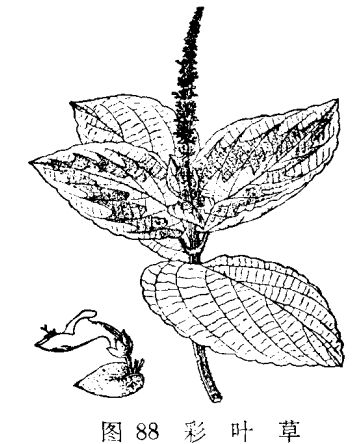
[Cultivation] After the cotyledons of sown seedlings unfold, transplant once in a flat pot, then pot into 3-inch pots. After cuttings root, pot into 4-inch pots. Use 3 parts loam, 1 part leaf mold, with an appropriate amount of sand added for the potting soil. Young seedlings should be pinched to encourage branching and form clumps; generally 5-6 inch pots can be used for growing and viewing. If you want to grow large plants, continue repotting into 8-10 inch pots, and they can be trained into a round-headed or conical shape; for the latter, the main branch must not be pinched, and bamboo stakes should be used for support. Plants kept for seed must not be placed outdoors in summer, to avoid damage from heavy rain and strong wind, and should be shaded when sunlight is intense. If used for flower beds, the 3-inch pot seedlings can be topped and then planted in the ground at a spacing of 25 cm, and inflorescences should be removed as soon as they form. (This article is excerpted from the complete book "Rural Breeding Industry")
[Seed collection] The nutlets can fall off when mature, so when most of the calyces on the inflorescence turn yellow, pick the entire inflorescence, dry it and thresh the seeds.
[Uses] An excellent potted foliage plant, it can also be used for summer and autumn flower beds; the colors are vivid and very beautiful. In addition, branches and leaves can be cut for use as cut flowers or to decorate flower baskets and wreaths.
Coleus cultivation and propagation
Coleus is a plant of the genus Solenostemon in the Lamiaceae family, also called variegated-leaved foreign perilla and painted nettle. Coleus leaves are bright and vivid, with extremely varied leaf colors; the leaf surface may be green, red, yellow, dark red, purple, etc., and has spots of various colors such as yellow, red and purple, with different shades, appearing as irregular blotches. Most coleus currently cultivated are excellent hybrids of various colors, hence called hybrid coleus. Coleus is an excellent foliage plant, can be grown in pots for viewing, and can also be arranged in flower beds; the branches and leaves can be used as cut flower material, with relatively high ornamental value.
Growth habits
Coleus is native to Indonesia, likes warmth, is not cold-tolerant, and the suitable growth temperature is 20°C-25°C; it likes sufficient sunlight; it likes loose, fertile, well-drained soil; it likes moisture and dislikes waterlogging. It was originally a perennial herb or subshrub, but in most areas of China it cannot overwinter outdoors, so it is often cultivated as an annual.
Propagation
Because plug seedling raising saves seeds, is easy to manage, produces robust growth, has a short recovery period, a high seedling rate, a short production cycle and high seedling efficiency, in recent years coleus propagation has mostly used the plug seedling method. According to the propagation material, it can be divided into two types: plug sowing seedling raising and plug cutting seedling raising.
Plug sowing seedling raising method
(1) Seeds: It is advisable to choose seeds that are plump, highly vigorous and have a high germination rate. Before sowing, disinfection treatment is needed: put the seeds into warm water at 50°C-60°C and stir for 20-30 minutes. Soak in water for a period, skim off the shriveled seeds, then rinse clean with clear water, filter off the water, and air-dry for use. They can also be soaked in 40% formalin solution, 0.5% potassium permanganate solution or 0.3%-1.0% copper sulfate solution, then rinsed and air-dried before use.
(2) Substrate: The basic requirements for the substrate are sterility, no insect eggs, no debris and no weed seeds, with good water retention and air permeability. Substrates such as peat soil, coconut coir, perlite and vermiculite can be selected; peat soil and vermiculite are commonly used, mixed at 2:1 and sieved before use. Before sowing, the seedling substrate is best disinfected once with a 600-1000 times solution of carbendazim or chlorothalonil. Note that inorganic fertilizer must never be mixed into the sowing substrate, otherwise it will cause failure to emerge or death after emergence.
(3) Plug trays: Plug tray specifications include 288-cell, 200-cell, 128-cell and 50-cell. Because coleus seeds weigh 3300 seeds per gram and the seeds are relatively small, 288-cell or 200-cell plug trays are commonly used. If used plug trays are to be reused, they must be cleaned, disinfected and dried before use; commonly use 600 times solution carbendazim, 800-1000 times solution of fungicides such as thiophanate-methyl for washing or spraying, then rinse 2-3 times with clear water.
(4) Sowing: First fill the cells with substrate, try to fill each cell evenly, and press gently so that the middle of the substrate is slightly lower than the surroundings. The substrate should not be filled too full; it should be slightly lower than the height of the cell so that the outline of each cell is clearly visible. The day before sowing, wet the substrate to the point of just being thoroughly watered, that is, water seeps out from the bottom of the cells. When wetting, use automatic intermittent spraying or manual repeated spraying so that water slowly penetrates the substrate. Then carefully place the seeds into the cells, 1 seed per cell, and the seed must fall in the exact center of the cell. The seeds are light-loving, so no soil covering is needed after sowing. Outdoor sowing is often carried out in March-April, while greenhouse sowing is mostly carried out in spring, summer and autumn.
(5) Watering: After sowing, spray water promptly until water seeps out from the bottom of the plug tray. In the early stage after sowing, soil moisture can be somewhat higher to ensure the seeds absorb water and swell; later, water should not be excessive, and moist soil is sufficient.
(6) Germination promotion: After the plug tray is moved into the greenhouse for germination promotion, the greenhouse should be properly shaded, and the interior should be kept in a state of high temperature and high humidity. Under conditions of 21°C-24°C, germination occurs in 10-14 days; when the young shoots emerge, they can be moved out of the greenhouse.
(7) Transplanting: When the seedlings grow to the 2-4 leaf stage, they need to be transplanted once. When transplanting, dig up the seedlings with roots and transplant them into shallow pots, with a density such that the leaves do not touch each other. When the seedlings grow to 6-8 leaves, transplant them again into small pots with a diameter of 10 cm, and retain 2-4 leaves for pinching. In July, when the seedlings are larger, change pots once more, and add a small amount of soybean cake as base fertilizer at the bottom of the pot.
Plug cutting seedling raising method
(1) Cuttings: Choose tender branches that are free of pests and diseases, moderately mature and vigorous. At 1-0.5 cm above the leaf bud, with the cut sloping toward the bud, use a sharp knife (or scissors) to cut a branch segment containing 2 or more axillary buds and about 5-7 cm long as the cutting.
(2) Plug tray: A plug tray 54 cm long, 28 cm wide and 5 cm high, with cell diameter 3 cm or 2 cm and depth 5 cm, can be selected.
(3) Substrate: Choose a loose and airy substrate, such as peat and perlite (3:1), leaf mold and sawdust (1:1), or peat and garden soil (1:1).
(4) Cutting: Greenhouse plug cutting can be carried out from March to October, and in open fields mostly from April to September. The cutting density should be such that leaves do not cover each other and do not affect photosynthesis; the cutting depth is 2 cm, and it should not be too deep, so as not to affect rooting. After cutting, place the plug tray under a shade net with 70% shading, at a temperature of 25°C-32°C, in a small environment with a gentle breeze.
(5) Watering: After cutting, determine the watering time and frequency according to weather conditions. On sunny days, spray water onto the substrate surface every 2 hours; on cloudy or rainy days, spray less or not at all, keeping air humidity at about 90%, and be careful that the substrate does not become waterlogged. About 10 days after cutting, new roots grow; gradually reduce the frequency of spraying, and after half a month transplant or plant out and enter normal management.
Cultivation management
Water management. Coleus leaves are large and thin, and if the soil is too dry the leaf color tends to fade, so during the growth period attention should be paid to watering and spraying the leaf surface; especially in the high-temperature period in summer, watering and leaf-surface spraying should be combined to increase air humidity. However, the potting soil must not be too wet, otherwise the plant is prone to leggy growth, resulting in overly long internodes and affecting plant shape. Long-term waterlogging can also easily cause root rot and leaf drop. In winter, watering should be controlled, with the temperature maintained at 15°C, ensuring a suitable balance of dry and wet.
Fertilizer management. Coleus likes fertilizer; after each pinching, apply once cake fertilizer water or human and animal manure. During the growth period, apply 1-2 times of dilute phosphorus and potassium fertilizer, which can promote short internodes, dense branches, hard stems and bright leaf color. Absolutely avoid applying excessive nitrogen fertilizer, otherwise the leaves tend to become dull.
Light management. Coleus is a light-loving plant, and under full sun the leaf color is more vivid, so generally no shading is used; however, in summer high temperatures, direct sunlight should be avoided. High temperature and strong light will destroy pigments, cause chlorophyll to increase, and make the plant's colors less distinct or even greenish, affecting ornamental value. Therefore, in summer high temperatures appropriate shading should be provided, while in other seasons shading must not be used, because dim light makes the leaf color grayish and dark.
Temperature management. Coleus is not strongly cold-tolerant, and the suitable growth temperature is 20°C-25°C. In winter growth is slow, and the overwintering temperature requirement is above 15°C; below 10°C the leaves turn yellow and fall off, and growth stops. If the winter temperature remains below 5°C for a long time, the aboveground stems and leaves will become water-soaked, and in severe cases the plant will die.
Pruning and shaping. If you want to cultivate a plant with a full shape, then pinch to promote side branch growth. If you want to cultivate a tree-like plant shape, then there is no need to pinch. After inflorescences appear, if seeds are not being collected, remove them promptly to avoid consuming nutrients and affecting plant shape. For mother plants kept for seed, reduce the number of pinchings so that they complete flowering and fruiting before winter begins.
Coleus Coleus illustrated guide: how to grow coleus / how to propagate coleus
Coleus profileColeus
Coleus cultivation methods and precautions Coleus introduction
Perennial herbaceous plant, foliage flower. Often used for flower beds, venues and theaters to arrange patterns, and can also be used as supporting foliage for flower baskets and bouquets. Propagation methods are sowing and cuttings; it likes warmth, is cold-tolerant and highly adaptable; pay attention to pest and disease control.
Species name: Coleus
Alias: colorful-leaf amaranth
Category: colorful coleus
Annual herbaceous plant -- foliage type
Water: Likes moisture; in summer water sufficiently, otherwise wilting easily occurs. Also spray the leaf surface frequently to maintain a certain air humidity.
Fertilizer: Apply more phosphorus fertilizer to keep the leaf surface vivid. Avoid applying excessive nitrogen, otherwise the leaf surface becomes dull.
Soil: Requires loose and fertile soil; ordinary garden soil is generally sufficient.
Temperature: Likes warmth, relatively strong cold tolerance, suitable growth temperature 15-25°C, overwintering temperature about 10°C, and when it drops to 5°C it is prone to frost damage.
Light: Likes sunlight, but avoid exposure to scorching sun.
Flower language: hopeless love.
Morphological characteristics of coleus
Perennial herbaceous plant; old plants can grow into a subshrub form, but the plant shape is unattractive and the ornamental value is low, so it is mostly cultivated as a biennial or annual. Plant height 50-80 cm; cultivated seedlings are mostly controlled below 30 cm. The whole plant is hairy, the stem is four-angled, and the base is woody. Simple leaves opposite, ovate, apex long acuminate, margin with blunt teeth, leaves can be 15 cm long, leaf surface green, with vivid markings in pale yellow, peach red, vermilion, purple, etc. Terminal racemes, flowers small, light blue or light purple. Nutlets smooth and glossy. There are extremely many coleus varieties and cultivars; five-colored coleus (Var. verschaffeltii) leaves have markings in pale yellow, peach red, vermilion, dark red, etc., and the growth is robust. Yellow-green leaf type coleus (Chartreuse Type) is small and yellow-green, dwarf and with many branches. Fringed type (Fringed Type) has split and wavy leaf margins. Large-leaved type (Large-Leaved Type) has large ovate leaves and tall plants.
Ecological habits of coleus
A warmth-loving plant with strong adaptability; winter temperature should not be lower than 10°C; in summer high temperatures provide slight shading; likes sufficient sunlight, and sufficient light can make the leaf color vivid.
Distribution area of coleus
Coleus is a flower with very strong adaptability. It can also be seen in many places in China, especially more commonly in the south. It is often cultivated in gardens in various parts of China. The main breeding bases include Jiangsu, Zhejiang, Anhui and other places.
Variety classification of coleus
According to propagation methods, coleus can be divided into two types. 1. Seed propagation type: sowing propagation can maintain the excellent traits of the variety. This type has the following 5 leaf-type cultivars:
[Large-leaved type] (large-leaved type), with large ovate leaves, tall plants, few branches, and uneven leaf surface.
[Rainbow type] (Rainbow type), leaves small, long elliptic, apex pointed, leaf surface smooth, leaf colors include red, orange-red, yellow-green, white ground with green spots, etc.
[Fringed type] (Fringed type), leaf margins split and wavy, with great variation in splits and waves, and many leaf colors as well.
[Willow-leaved type] (Willow-leaved type), leaves slender, willow-shaped, leaf margins with irregular splits and serrations.
[Yellow-green leaf type] (Chartreuse type), leaves small, yellow-green, resistant to sunscald, plants dwarf and much branched. Vegetative propagation type: some that are non-twining, low-twining, or cannot yet maintain cultivar traits by sowing propagation. A common horticultural variety is five-colored coleus (var. verschaffeltii), whose leaves have markings in pale yellow, peach red, vermilion, dark red, etc. In addition, among the same genus, those with relatively high ornamental value include small-striped grass (C. pumilus), native to the Philippines and Sri Lanka. Plant height 15-20 cm, perennial herb, stems prostrate. Leaves opposite, rhombic, 2-3 cm long, leaf surface dark brown, margins green, underside pale. Flowers blue-green, panicles 10-12 cm long. Clustered coleus (C. thyrsoideus), subshrub, plant height 80-100 cm, leaves bright green, heart-shaped ovate. Margins with coarse serrations. Flowers bright blue, verticillasters, with 3-10 flowers, arranged in spikes. Flowering from November to December, grown in pots in winter for flowers.
Cultivation techniques of coleus
The genus Coleus has about 150 species, produced in tropical and subtropical regions of Asia, Africa and Oceania. Common cultivars for pot flower cultivation include: Red Rainbow, Velvet Red, Dwarf Peach Red and other cultivars. It likes a warm and humid climate, soft and sufficient sunlight, and fresh air environmental conditions; the suitable indoor temperature in winter is 20°C to 25°C, and the minimum overwintering temperature must not be lower than 10°C; if the temperature is too low, leaves turn yellow and fall off, and below 5°C the plant dies. Pot cultivation requires a sandy culture soil rich in humus, loose and fertile, with good drainage and air permeability. Regarding water demand, the potting soil and environment should be kept moderately moist regularly; avoid drought and prevent waterlogging, so as to prevent leaf dehydration and loss of color, and root infection with soft rot. Soft and sufficient light makes the leaf color strikingly vivid, but avoid direct strong sunlight under clear summer skies, which makes the leaf surface rough and lose gloss. In shaded environmental conditions, the leaf color is also not vivid.
Coleus likes sandy loam rich in humus and well drained. When potting, apply bone meal or compound fertilizer as base fertilizer, and during the growth period apply an organic liquid fertilizer once every 10-15 days (stop application during midsummer). In the seedling stage, pinch several times to promote side branches and make the plant shape full. After flowering, keep 2-3 nodes on some lower branches and cut off the rest, so that new branches regrow. The suitable growth temperature for coleus is about 20°C; move it indoors around Cold Dew, and the winter room temperature should not be lower than 10°C. At this time watering should follow the principle of watering when dry and withholding when wet, keeping the potting soil moist, otherwise root rot easily occurs.
Coleus is also called "laolaibian", a perennial herbaceous flower. Plant height 30-50 cm, few branches. Leaves opposite, rhombic-ovate, thin in texture, can be more than 15 cm long, margins with deep coarse teeth, leaf surface green, with vivid markings in yellow, red, purple, etc., hence the name coleus.
Common cultivars for pot flower cultivation include: Red Rainbow, Velvet Red, Dwarf Peach Red and other cultivars.
Coleus likes warmth; propagation can use the pot sowing method and the cutting method. Sowing at 18-25°C, seedlings emerge in 1-2 weeks. Cuttings are divided into soil cuttings and water cuttings. For water cuttings, use half a cup of cooled boiled water; select the upper-middle 2-3 nodes of fully grown branches as cuttings, remove the lower leaves, place in water, and when white water roots grow to 5-10 mm they can be planted into pots. In spring and autumn it takes 5-7 days; in summer it generally roots in one day.
The daily management of coleus is relatively simple; just pay attention to timely pinching to promote new branches, form a full spherical shape, and grow into a clump. Inflorescences should be removed as soon as they form, so as not to affect the leaf viewing effect.
Coleus is an excellent potted foliage flower, and can also be applied to flower beds in summer and autumn; the colors are vivid and very beautiful. At the same time, branches and leaves can be cut for cut flowers, or as accessories for flower baskets; it can also be planted in the same pot with spiderwort, making good material for decorating living rooms and studies.
Pest and disease control of coleus
In the seedling stage, damping-off easily occurs, so attention should be paid to disinfecting the sowing soil. During the growth period, leaf spot disease is harmful; spray with 500 times solution of 50% thiophanate wettable powder. When cultivated indoors, it is prone to damage by scale insects, red spiders and whiteflies, which can be controlled by spraying 1000 times solution of 40% omethoate emulsifiable concentrate. Seedling damping-off is a disease often encountered in sowing propagation of cineraria; it is often seen that seedlings with emerald green leaves then lodge and die, or rot or dry up. This disease is mainly caused by Pythium aphanidermatum and Rhizoctonia solani; the pathogen overwinters in soil or diseased residues and is spread by seeds or water droplets. For control methods, see damping-off control of impatiens. In the seedling stage, pinching should be carried out according to the designed plant shape. If you want to cultivate a clustered and full cylindrical shape, the main stem of the seedling must be pinched; if you want to cultivate a conical shape, the main stem is not pinched but the side branches are pinched several times; if seeds are not being collected, the inflorescences should be pinched promptly.
Propagation methods of coleus: collecting seeds
Coleus is native to Java Island, Indonesia, and is a perennial herbaceous plant of the Coleus genus in the Lamiaceae family. Those currently cultivated in green spaces or homes are all horticultural varieties after artificial modification. When potted, horticultural varieties are about 30 cm tall, with opposite, ovate or round leaves, and on the green leaf background there are colorful markings of purple, pink, red, pale yellow, orange, etc.
Coleus comes from the tropics, so it likes warmth and is not cold-tolerant; the overwintering temperature should not be lower than 5°C, and the suitable growth temperature is 20-25°C. It likes a sunny environment, can also tolerate semi-shade, and avoids exposure to scorching sun. It can be placed indoors for a short period, and requires planting in loose, fertile, well-drained soil. If only for ornamental use, it needs pinching several times during the growth period to promote branching and make the form full. If seeds are to be harvested, it is best not to pinch.
In the Shanghai area, coleus flowers in August-September. Before flowering, first select plants with vivid colors for seed retention; at flowering, artificial pollination should be carried out by dipping a brush in pollen and brushing the stigma, then bag them with paper bags for isolation to prevent hybridization and degeneration. In the early flowering stage, some phosphorus and potassium fertilizer should be applied to ensure nutritional needs during seed setting.
Generally, after flowering and fertilization, as long as there is sufficient sunlight and no pest or disease damage, coleus can set seeds. One month after seed set the seeds mature, and they can be harvested separately by plant, dried and stored for sowing the following year. Because coleus seeds are tiny, they should be dried with pods when harvested. It should be noted that self-harvested seeds will certainly show some degeneration and variation after sowing the next year, and inferior plants should be eliminated from the seedling stage.
Propagation methods
Usually sowing propagation can maintain the excellent traits of the variety. For some that cannot yet maintain cultivar traits by sowing propagation, cutting propagation is needed.
Under conditions with a high-temperature greenhouse, pot sowing can be done in all four seasons; generally it is carried out in a greenhouse in March. Mix fully decomposed humus soil and plain sandy soil in equal parts, put into a seedling pot; soak the seedling pot containing fine sandy soil in water until thoroughly wet, then sow according to the sowing method for small seeds, cover with a little thin soil, cover with a glass plate or plastic film, keep the potting soil moist, and manage water and care. The suitable germination temperature is 25°C to 30°C, germinating in about 10 days. After emergence, thin out once to twice, then divide seedlings and pot them. Sown seedlings have different leaf colors, and at this time superior ones can be selected and inferior ones eliminated.
Cuttings can be carried out in all four seasons and root very easily. Softwood cuttings can also be made in combination with pinching and pruning of the plant; cut fully grown plump branches, cut about 10 cm, insert into clean disinfected river sand, and the part inserted into the soil must often have leaf nodes to root. After cutting, maintain under light shade and keep the potting soil moist. When the temperature is relatively high, rooting is faster; during this period absolutely avoid overly wet potting soil, so as not to cause root rot. Roots and survival are achieved in about 15 days. Water cuttings can also be used; use half a cup of cooled boiled water, select the upper-middle 2-3 nodes of fully grown branches as cuttings, remove the lower leaves, place in water, and when white water roots grow to 5-10 mm they can be planted into pots. [1]
Pot cultivation method
Coleus is better potted in small sizes. Generally, when seedlings are potted into a cylindrical pot with an inner diameter of 10 cm, after 20 to 30 days of care, when the plant height reaches 15 cm they can be placed for viewing. For indoor placement, choose a south window with relatively strong diffused light, keep the potting soil moderately dry and wet, the air fresh and the environment clean. For outdoor care, place in lightly shaded conditions when summer arrives. Apply dilute liquid fertilizer 3 times throughout the year. If the main stem grows too tall, pinch it promptly. If seeds are not being collected, it is best to remove the flower spikes at the initial stage of formation, because after spikes form the plant shape mostly becomes loose and loses form, reducing the ornamental effect. In early October, move into a medium- or high-temperature greenhouse for overwintering; during this period old plants can be heavily pruned for renewal, and at the same time repotting can be combined with soil changing. The maximum pot inner diameter used is 14 cm; larger pots are inconvenient to place.
After coleus nutlets mature, they easily fall off naturally, and they also fear being beaten by storms, so when the sepals turn yellow the flower spikes should be gently cut off one by one for threshing. Although some seeds that fall to the ground can sprout and emerge, because they cannot tolerate cold, they cannot play a role in self-sowing and reproduction.
Water cutting propagation
1. Preparing containers for coleus: The cutting container can be a wide-mouthed bottle, or a mineral water bottle with the upper part cut off and the lower part kept, filled with clear water for later use. The container must be clean, and the water must also be clean in quality; it is also best to store water in a large cola bottle for more than one day for use in cutting and subsequent management.
2. Cutting the cuttings: When the main branch or side branches after pinching have 4 nodes or are about 10 cm long, choose those with thick sturdy stems, keep only 1 to 2 nodes of opposite leaves at the base, cut off the upper part, and make the cut smooth without crushed or torn wounds. Then, cut off the lowest pair of leaves of the cutting, and gather every 3 to 5 cuttings neatly at the base, loosely tying them together with white thread for water cutting.
3. Water cutting management: Generally it is best for the cuttings to enter the water 3 cm to 4 cm from the bottle mouth. After that, place them in a location with diffused light, note to change the clear water once every 2 to 3 days (using stored water), and note to top up daily the water level in the bottle that has dropped due to evaporation. Generally under conditions of 18°C to 25°C, white roots can be seen growing in 7 to 10 days.
4. Potting in time: The adventitious roots of coleus, besides easily growing at the nodes, will also sprout from the straight thick stem, which provides conditions for the cuttings to take shape as early as possible. When multiple adventitious roots 1 cm to 2 cm are seen at the base of the cuttings, they can be potted or planted out in time. Note that operations should be careful and not damage the root system; generally after another 10 days or so of care in a shaded place, normal management can begin.
Propagation techniques
The soil used for sowing coleus seeds is peat soil
1. Mixed soil with fine sand; broadcast sowing is sufficient. Coleus seeds are light-loving seeds, so no soil covering is needed after sowing. The suitable germination temperature is 20-25°C; keep the substrate moist, and they germinate in 8-10 days. Cuttings can be done in all four seasons, rooting in about 1 week at 20°C, and water cuttings also root very easily. When sown seedlings grow 1 pair of true leaves, pot them; the potting soil is peat soil.
2. River sand, with sufficient base fertilizer added; during the growth period, topdress frequently, including superphosphate and bone meal. Keep the temperature above 20°C. In the seedling stage, whether to pinch depends on the cultivation purpose. If you want to cultivate a plant with a full shape, then pinch off the main stem to promote side branch growth. If you want to cultivate a conical plant shape, then there is no need to pinch off the main stem. Coleus has strong adaptability and is relatively simple to manage; the temperature adaptation range is 10-30°C; below 10°C the plant stops growing, and below 5°C the plant dies.
Coleus is a light-loving plant; sufficient light can make the leaf color vivid, but in summer high temperatures direct sunlight should be avoided. High temperature and strong light will destroy pigments, cause chlorophyll to increase, and make the plant's colors less distinct or even greenish, affecting ornamental value. Therefore, in summer high temperatures appropriate shading should be provided. In other seasons shading must not be used, because dim light makes the leaf color grayish and dark. Coleus leaves are large and thin, so water supply should be ensured; when the soil is dry the color on the leaf surface fades, especially in summer the potting soil should be kept moist, and at the same time the ground and leaf surface should be sprayed frequently to increase air humidity, but waterlogging must not occur, as waterlogging easily causes root rot and leaf drop.
In winter, control watering, maintain the greenhouse temperature at 15°C, and ensure a clear dry-wet cycle with a short cycle. The fertilizer requirement is not high; in the growing season apply 1-2 times per month a dilute fertilizer mainly based on nitrogen fertilizer. After inflorescences appear, if seeds are not being collected, remove them promptly to avoid consuming nutrients and also making the plant shape loose, affecting ornamental value. If seeds are to be collected, harvest when the inflorescences turn from green to yellow.
Uses and functions of coleus: ornamental applications
Coleus has vivid colors, very many varieties and is easy to propagate. It is a widely used foliage flower; besides being displayed as a small foliage flower, it can also be arranged in pattern flower beds, and can also be used as supporting foliage for flower baskets and bouquets.
Indoor display is mostly with small and medium-sized potted plants; choose light-colored, smooth-textured decorative pots to set off the gorgeous leaf color of coleus. To make the plant shape beautiful, the unopened inflorescences are often cut off and placed on low tables and windowsills for appreciation. Courtyard cultivation can be used as flower beds or plant edging. Several pots of coleus can also be grouped into patterns to decorate venues and theater front halls, forming rich clusters of flowers.
Flower language of coleus
Flower language of coleus: hopeless love
Coleus pictures