Where is the main producing area of Phlox? Detailed explanation of planting methods
[Aliases] Grass oleander, foreign plum blossom, bellflower pink.
[Family and genus] Polemoniaceae, genus Phlox.
[Morphology] Annual herb, plant height 15-45 cm. Stems erect, much branched, with glandular hairs. Basal leaves opposite, others occasionally alternate, broadly ovate, oblong to lanceolate. Cyme terminal, corolla salverform, diameter 2-2.5 cm, lobes 5, rounded, the original species is rose red. Flowering period May-June. Capsule elliptic or nearly round. Seeds obovate or elliptic, convex on the back, flat on the ventral side. Thousand-seed weight 1.55 grams.
[Varieties, forms and cultivars] Divided by flower color: (1) Single color: white, goose yellow, various shades of red-purple, as well as light purple and deep purple. (2) Bicolor: including inner and outer bicolor, tube and limb bicolor, throat with spots, limb with stripes, limb with a white five-pointed star-shaped patch in the middle, etc. (3) Tricolor: such as rose red with a yellow center in the white base, or purple-red with white stars and blue dots, etc.
Divided by petal type: (1) Round-petal type (var. rotundata): corolla lobes large and broad, making the outline nearly round; (2) Star-petal type (var. stellaris, var. cuspidata): corolla lobe margins again three-toothed, the middle tooth 5 times the length of the lateral teeth; (3) Fringed-petal type (var. fimbriata): corolla lobe margins again finely toothed; (4) Radiate type (var. radiata): corolla lobes lanceolate-oblong, apex acute.
In addition, there are also dwarf type (var. nana) and large-flowered type (var. gigantea).
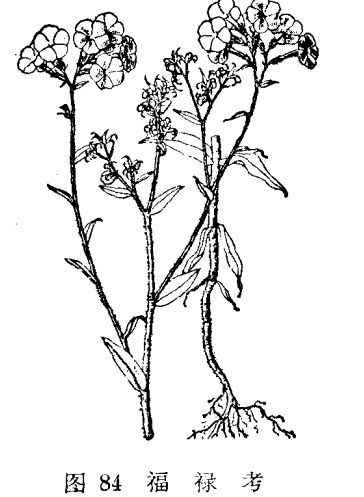
[Origin and distribution] Native to southern North America, now widely cultivated in various countries.
[Habits]
Cold tolerance is not very strong; it prefers a mild climate and dislikes intense heat. In the Shanghai area it can basically overwinter in the open ground. It prefers well-drained, light soil and is not drought-tolerant.
[Propagation] Sow in the open seedbed or in pots in early September of autumn; the optimum germination temperature is 15-20°C. Germination is uniform. At high temperatures, it remains dormant and does not germinate.
[Cultivation] Seedlings grow slowly. Although they can overwinter in the open ground, the seedlings are too small and difficult to manage, so the usual practice is to pot them (4-5 inch pots) and overwinter them in a cold frame - in late March of the following spring, remove from pots and plant out, with a spacing of 30 cm, and 20 cm for dwarf types. If sown in a greenhouse in early spring, they can also bloom in September-October, but due to poor growth in the intense summer heat, the clumps are small and poorly developed, with low ornamental value.
[Seed collection] The capsules mature unevenly and can split open when ripe, scattering seeds. Collecting them one by one would take too much labor; when most of the capsules in the entire inflorescence turn yellow, pick them off at the peduncle, dry them and thresh the seeds.
[Uses] As material for flower beds and flower borders, and also as spring indoor potted flowers.
Introduction to the morphology and growth habits of moss phlox, and methods for treating its diseases
Many people may have seen moss phlox, but do not know it very well. Many are deeply attracted by its beauty; its petals are like cherry blossoms, and its colors are rich and varied, making it loved by many. Today, I will introduce to you the morphology and growth habits of moss phlox, as well as methods for treating its diseases.It is a perennial herb in the Polemoniaceae family, genus Phlox, native to North America, with a plant height of10-15cm, cold-tolerant-40degrees or so, extremely drought-tolerant, at-12degrees it still remains evergreen, blooming in spring and autumn; in Liaoning in early April; in Beijing it blooms in late March. When in bloom it is like a pink carpet, and is known as the "flowering lawn" and "colorful carpet". In Japan it is called "ground-covering cherry" and is as famous as cherry blossoms. It is mostly used for patterns, lettering, or interplanted with lawn; the color contrast is vivid and strong, and the effect is excellent. It is the best groundcover plant to replace traditional lawns.
Morphological characteristics
It is a perennial evergreen, cold-tolerant herbaceous perennial flower. The flowers are purple-red, white, pink, etc. The old stems are semi-lignified, plant height8-10cm, branches and leaves dense, growing prostrate on the ground. Leaves needle-like, clustered, leathery, about1.3cm long. In spring the leaf color is bright green, in summer and autumn dark green, and after frost in winter it turns gray-green. Leaves and flowers open at the same time. Whenever the flowering season comes, the abundant flowers cover all the stems and leaves, forming a sea of flowers, with a hundred beauties competing in fragrance, elegant and lovely. Leaves alternate, basal leaves opposite, broadly ovate, oblong or subulate, length2to7.5cm, apex acute or abruptly pointed, base gradually narrowed or slightly clasping the stem, margin entire, upper surface pubescent, lower surface pubescent only on the veins, leaves sessile, cyme terminal, with short pubescence; bracts and bracteoles linear; calyx tubular, lobes linear, outside pubescent; corolla salverform, diameter2to2.5cm, lobes rounded, stamens not exserted, flowers goblet-shaped, fragrant, petals5in number, obcordate, with deep notches, petal base with a dark red ring, flower diameter2cm. Flowering period5-12month, first full bloom periodApril-May, second flowering periodAugust-September, extending to12month when scattered small flowers continue to open. Polemoniaceae, genus Phlox. Meadow-like perennial herb. Height15cm, leaves opposite, linear to subulate, length1-2.5cmor so. Clump-forming, evergreen. Flowers numerous and densely borne, terminal cyme, purple-red, white, violet or pink. Flower diameter2cm, corolla lobes shallowly notched.
Growth and ecological habits
It likes sunlight but can also grow in slight shade, and dislikes waterlogging. This flower grows vigorously and is not choosy about soil. It likes sunny, high, dry places, but calcareous soil is most suitable for its growth, and it can also grow and bloom in semi-shade. It also has the characteristics of being simple to plant, highly adaptable, drought-tolerant, cold-tolerant, and tolerant of saline-alkali soil. It likes light and dislikes hot, rainy summers. It can grow normally when planted in full sun or semi-shade. It is not very strict about soil requirements, but grows better in fertile, moist, well-drained soil. Origin and distribution: this flower is native to New York State, North Carolina, and Michigan in the United States. It was introduced to Europe in 1732 and is now cultivated all over the world.
Landscape uses
It is a perennial evergreen herbaceous perennial flower, and a unique variety in the Phlox line. In recent years, moss phlox has received much attention in landscaping. It not only has a high coverage rate but also strong ornamental value. It is an excellent groundcover flower and can replace traditional lawns, making it a good groundcover plant. It can be planted on a large scale on flat ground, slopes, or hanging over walls, and can also be planted in flower boxes in front of windows. Moss phlox is favored by the public for its long flowering period and long green period (330-360 days). Especially when it blooms in early spring, it is a riot of flowers, festive and delightful. It is most suitable for courtyard flower beds or planting in rock gardens; the group ornamental effect is excellent. It can be used as groundcover decorative material to dot lawns or grown in hanging baskets. Used for flower beds, flower borders, and groundcover.
Symptoms:Phlox leaf blight. The main feature of this disease is that the lower leaves of the plant first turn yellow and wither, then gradually develop upward until the entire branch dies. The disease occurs severely on old plants, but does not affect seedlings and newly rooted cuttings
Pathogen and disease pattern: The pathogen of Phlox leaf blight is a non-biological factor, that is, this disease is a non-infectious physiological disease. The cause is that when new branches sprout from old stems in spring, they cannot get enough water supply, causing the lower leaves to wither and die first.
Control methods:Targeting the cause, when old stems sprout new branches in spring, increase sprinkler irrigation to raise soil moisture and air humidity, so as to reduce plant transpiration and alleviate the disease, but generally it cannot return to normal.
The above is my summary of the morphology and growth habits of moss phlox, as well as methods for treating its diseases. I hope it can be helpful to the many flower lovers, and please continue to follow Duorou Huapu to learn more about flower care knowledge.
Phlox paniculata Phlox paniculata illustration: how to grow Phlox paniculata / how to propagate Phlox paniculata
Phlox paniculata profilePhlox paniculata
Cultivation methods and precautions for Phlox paniculata. Introduction to Phlox paniculata
Phlox paniculata is a perennial herbaceous perennial flower, plant height 15-20 cm, covered with short pubescence, stems much branched after growing. Leaves alternate, long elliptic, upper leaves clasping the stem. Cyme terminal, flowers with a relatively slender tube, corolla shallowly five-lobed. Flower colors include white, yellow, pink, red-purple, variegated and bicolor, with pink and rose pink being the most common. Flowering period June-September. Capsule elliptic or nearly round, brown. Seeds obovate or elliptic, convex on the back, flat on the ventral side, thousand-seed weight 1.55 g.
Phlox paniculata plants are relatively short, with diverse flower colors and elegant posture. They can be used for flower beds, flower clusters, and courtyard cultivation, and can also be potted as display flowers, with three plants per pot to ensure a full plant shape.
The flowering period of Phlox paniculata coincides with summer, when other flowers bloom less, so it can be used to arrange flower beds and flower borders, and can also be dotted in lawns. It is an excellent perennial garden flower, and can also be used as a potted plant or cut flower.
Morphological characteristics of Phlox paniculata
It is a perennial herbaceous perennial flower, plant height 15-20 cm, covered with short pubescence, stems much branched after growing. Leaves alternate, long elliptic, upper leaves clasping the stem. Cyme terminal, flowers with a relatively slender tube, corolla shallowly five-lobed. Flower colors include white, yellow, pink, red-purple, variegated and bicolor, with pink and rose pink being the most common. Flowering period June-September. Capsule elliptic or nearly round, brown. Seeds obovate or elliptic, convex on the back, flat on the ventral side, thousand-seed weight 1.55 g.
Ecological habits of Phlox paniculata
Phlox paniculata likes well-drained sandy loam and a moist environment. Cold-tolerant, avoids intense sun, avoids waterlogging and saline-alkali. It grows most vigorously in light shade, especially in sheltered or west-side backgrounds, or when mixed with flowers slightly taller than it, such as coneflowers, which is more conducive to its flowering
Cultivation techniques for Phlox paniculata
1 For open-field cultivation, choose land that is sheltered from wind, sunny, and well-drained. When preparing the soil, apply barnyard manure or compost as base fertilizer; for chemical fertilizer, diammonium phosphate has the best effect. Transplant from early May to mid-May, with a plant spacing of 40-45 cm, and plant slightly 1-2 cm deeper than the original depth. Water frequently during the growing period to keep the soil surface moist. In the peak growing season from June to July, topdress 1-3 times with human feces or cake fertilizer. In Northeast China, some varieties should have straw or soil covering the roots to protect them for overwintering. In mid-November, water once with freezing water, and in early spring water once with "greening water".
2 For potted plants, repot once after new buds sprout each spring. When repotting, change the soil: mix 3 parts garden soil, 3 parts deer manure, and 1 part stove ash. A small amount of diammonium phosphate can be applied at the bottom of the pot as base fertilizer, and water thoroughly after repotting. When new buds grow to 6-7 cm, according to the size of the pot, select and retain some robust buds and cut off the excess. Generally, a pot with a diameter of 20 cm can retain 4-5 buds. During the growing period, topdress in time; decomposed human feces and urine, soybean cake water, or chemical fertilizer solution can be used, topdressing once every 2-3 weeks. Pay attention to watering, keep the soil loose and moist, and pay attention to adjusting phototropism so that the plants are robust and upright.
Disease control of Phlox paniculata
Phlox has relatively few pests and diseases, with occasional occurrence of leaf spot and aphids.
When leaf spot occurs, spray 50% carbendazim 1000x solution for control.
When aphids occur, they can be brushed off with a brush dipped in dilute laundry detergent solution; when the occurrence is heavy, spray 40% omethoate emulsifiable concentrate 1500x solution.
Propagation methods of Phlox paniculata
Phlox paniculata can be propagated by sowing, division, and cuttings.
1. Seed propagation: in northern regions, sow and overwinter in a cold frame, paying attention to frost protection; spring sowing should be early, the flowering period is shorter than autumn sowing, and many die in the rainy season
2. Division propagation: before May, break off the tillers from the roots of the mother plant by hand, plant every 3 to 5 buds together, and pay attention to watering. Open-field plantings can be divided once every 3 to 5 years.
3. Cutting propagation: when new buds grow to about 5 cm in spring, break off the buds and insert them into a seedbed or shallow pot filled with plain sand, cover with plastic film, and place in an indoor spot without direct sunlight. If the propagation quantity is not too large, cuttings can be taken under a shade net shed. At a temperature of about 20°C, spray the leaves and seedbed with a medicinal solution (1000x 40% omethoate + 1000x carbendazim solution) to kill insects and sterilize; they will root in one month.
Cultivar classification of Phlox paniculata
1. Dwarf type
Plant height 30-50 cm, leaves ovate-lanceolate, leaves and stems slightly purple, leaf surface smooth, whole plant hairless, flowers large, cold-tolerant. Can overwinter in the open ground in Jilin Province.
2. Tall type
Plant height 50-70 cm, leaves oblong-lanceolate, whole plant hairy, flowers small, not very cold-tolerant. In Jilin Province it can overwinter with soil mounded up.
Distribution area of Phlox paniculata
Origin: southern North America
Suitable areas: |North China|East China|Northwest China
Roles and uses of Phlox paniculata
Plants are relatively short, with diverse flower colors and elegant posture. They can be used for flower beds, flower clusters, and courtyard cultivation, and can also be potted as display flowers, with three plants per pot to ensure a full plant shape.
The flowering period of Phlox paniculata coincides with summer, when other flowers bloom less, so it can be used to arrange flower beds and flower borders, and can also be dotted in lawns. It is an excellent perennial garden flower, and can also be used as a potted plant or cut flower.
Landscape uses of Phlox paniculata
Can be used as flower bed flowers, flower border flowers, lawn and groundcover
In addition, it can also be chosen as cut flowers, groundcover, and potted plants
Phlox paniculata pictures