How to Grow and Care for Potted Lemons
The lemon is an evergreen small tree of the genus Citrus in the family Rutaceae. The leaves are relatively small, oblong-elliptic, with fine serrations along the margins. The flowers are solitary, opening throughout all four seasons, with a rich fragrance. The fruit is oblong-elliptic or oval, ripening in autumn and winter. The rind is yellow, the flesh is extremely sour with a strong aroma, the juice contains citric acid, and the rind can be used to extract lemon oil.
The main techniques for potted lemons are as follows: Raising seedlings and potting up. In the south, where cultivation is on a large scale, grafting propagation should be used; in the north, where cultivation is limited, cuttings are mainly used, or grafted seedlings can be purchased for growing. The lemon's root system has high demands for water, nutrients and soil, so the potting mix should be prepared as a slightly acidic growing medium that drains and breathes well while retaining water and nutrients. Potting up and repotting can be done after autumn or in early spring, flexibly according to the local climate.
Light and temperature. The lemon is a light-loving plant, yet overly intense sunlight leads to poor growth and development. At midday the plant generally needs to be moved to a spot with an average annual growing temperature above 15°C; the optimal growing temperature is 23°C to 29°C, growth stops above 35°C, and frost damage occurs at -2°C. In summer, lemons generally do not need cooling; move them indoors before Frost's Descent and back outside after Qingming, and they can overwinter safely.
Watering and fertilizing. Lemons need a fair amount of water during growth and development, but too much water also easily causes root rot. Generally speaking, spring is the period of shoot growth and leaf expansion, bud formation and flowering, so water moderately. Summer has strong light and high temperatures, so more water is needed. But it must be timely and measured, otherwise fruit drop will occur. Autumn is the period of autumn shoot growth and rapid fruit enlargement, so sufficient water is essential. Late autumn and winter are the flower bud differentiation period, so the potting soil should be on the dry side. Lemons rather like fertilizer; besides applying enough base fertilizer when potting up and repotting, during the growing season one should stick to the principle of light, frequent applications. The number of applications and the amount applied must be determined by growth vigor and phenological stage. For liquid fertilizer, well-fermented cake fertilizer water is good, with a cake-to-water ratio of 1:200. In the north, where the soil tends to be alkaline, ferrous sulfate can be added to the fertilizer solution to make a slightly acidic nutrient solution.
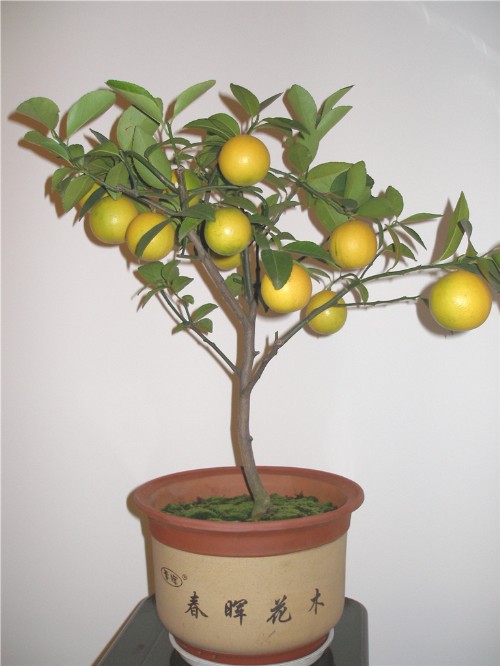
Pruning. Pruning is generally divided into winter pruning and summer pruning. Winter pruning should follow the principle of "thin out the dense, keep the sparse; remove the weak, keep the strong," cutting out dead branches, shortening weak branches, and removing useless water sprouts. Summer pruning on non-fruiting trees mainly involves shortening overly long shoots; on fruiting trees, rub out summer shoots and shorten declining branches on the upper outer part of the canopy. Promoting flowers and retaining fruit. The lemon is by nature a species that flowers and fruits in all four seasons, whereas potted lemons in the north mostly flower and fruit in spring. Therefore, after autumn shoots stop growing, water must be controlled. Wait until the two sides of the leaves begin to curl inward, then water moderately to promote flower bud differentiation. Pay attention to fertilizing in the pot and spraying fertilizer on the leaves to cultivate strong fruiting mother branches.
How to grow lemons from lemon seeds? Methods, steps and tips for potted lemons
Mention lemons and surely none of us are unfamiliar with them; the lemon is a great choice of fruit for detoxing and beautifying. Not only is it sweet and sour and tasty, it also has excellent health benefits, which is why it is so widely loved. So, do you know how to grow lemons from lemon seeds? Today, the editor will explain it to you in detail.
1. First, select fully naturally ripened lemon fruit. Lemon fruit that has not fully ripened naturally has a relatively low seed germination rate, and the seedlings are not very easy to keep alive after sprouting.
2. After taking the lemon seeds out of the fruit, select the plumper, larger and intact ones; pick as many seeds as you can, to prevent some of them from failing to germinate.
3. Rub off the film on the lemon seeds with your hands, taking care not to damage the sprouting point of the seed, which is the pointed part of the seed. You can also remove the outer shell of the seed, but usually this is not needed and not recommended, because the sprouting point is more easily damaged when removing the shell.
4. Soak the lemon seeds in clean water and move them to a warm, dark place to force sprouting; soak for about a week, and during this time remember to change the water once a day. There is also a lazier method: skip the soaking and just plant the lemon seeds directly in a flower pot.
5. After soaking for a week, you can plant the lemon seeds in a flower pot, then just remember to water a little every day to keep the soil moist. The seeds can be planted a little more densely; the soil should be fertile, loose and breathable.
6. After about another week, you should be able to see the lemon seeds turn into seedlings pushing out of the soil. After the seedlings have grown for a while, you can thin out the weaker ones; if you like a denser look, keep more of them, and if you do not like it too dense, keep fewer, and if you hope to get fruit later, keep only one.
That is all I have learned about lemons today. I hope fellow gardeners will find this article helpful. To learn more about lemons, please keep following Duorou Huapu, and we will bring you more related knowledge!
Growing Herbs | Tips for Growing Lemon Verbena in Home Pots
Lemon verbena, also known as mosquito plant and perfume tree, belongs to the Verbenaceae family. Its whole body gives off a strong lemon-like fragrance, which is how it got the name "lemon verbena." It has strong health benefits and is also an excellent variety for growing in home pots. Lemon verbena helps promote digestion, relieve nausea and flatulence, and has a calming and relaxing effect; when drunk during a fever caused by a cold, it not only aids recovery but also soothes discomfort in the throat and nose. It has a stress-reducing effect and can make people feel relaxed and fall asleep in a soothing atmosphere! Mixed with herbal tea, besides healthy detoxing, lightening the body and slimming, it can also calm the mind and relieve stress, making it the best match for office workers and night owls. Lemon verbena essential oil has a mild calming effect and can help with sleep. It is also famous for dispelling feelings of depression, because it regulates and soothes the parasympathetic nervous system. Enough chit-chat; below are some points to note for pot growing:1. Growing environment requirements for lemon verbena1. Planting season: suitable for spring and autumn cultivation
2. Temperature requirements: likes warmth, not cold-tolerant
3. Light requirements: likes ample sunlight, full sun
4. Humidity requirements: not tolerant of waterlogging
5. Soil requirements: loose, fertile, well-drained sandy loam
6. Common pests and diseases: red spider mite
2. Growing tips for lemon verbena
1. Mixing soil and sowing
For potted lemon verbena, peat soil can be mixed with perlite, river sand and an appropriate amount of organic fertilizer to make a growing medium. Scatter the seeds evenly over the soil, cover with a thin layer of soil, and water thoroughly.
2. Raising seedlings and transplanting
After the seedlings emerge, maintain good ventilation and keep the temperature at around 20°C. When the seedlings reach 3-5 cm tall, they can be moved from the seedling box into flower pots.
3. Watering
Lemon verbena dislikes waterlogging; water again when the potting soil dries out, and drain promptly after watering to avoid water accumulating in the bottom of the pot. When watering, be careful not to pour water directly on the leaves and flowers.
4. Pruning
Lemon verbena grows quickly and needs frequent pruning to encourage new branches. Dead and yellowing branches and leaves should be cut away promptly to maintain good ventilation and reduce disease.
5. Harvesting tender stems and leaves
In spring and summer the plant grows vigorously, and fresh leaves and tender shoots can be harvested; harvesting can be done together with pruning. The harvested fresh leaves are best for brewing tea, and can also be dried and stored.
6. Propagation
Lemon verbena can also be propagated by cuttings. In spring and autumn, cut healthy branches and insert them into a well-drained cutting medium, keep them shaded while they are cared for, and once the branches have rooted, transplant them into flower pots.
3. Little reminders for growing herbs
Although lemon verbena is a full-sun plant, it also needs appropriate shading during the high temperatures of summer, to avoid scorching in the sun.
In winter, pay attention to cold protection; eggshells and dry grass can be placed in the pot to keep out the cold.