How to Manage Potted Flowers During the Rainy Season? A Full Guide to Practical Care Methods
1. Prevent waterlogging. For potted flowers placed in the open air, water easily accumulates in the pots after rain. If it is not drained promptly, the soil moisture becomes saturated, causing insufficient air and severe oxygen deficiency, which is extremely harmful to the root growth of the flowers. This is especially true for some varieties that are more afraid of waterlogging, such as cacti, dahlia, bird of paradise (Strelitzia), clivia, evergreen (Rohdea japonica), wax begonia (Begonia semperflorens), as well as asparagus fern, camellia, osmanthus, chrysanthemum, and so on. Without hindering their growth, the pot can be tilted slightly before the rain. For generally less waterlogging-sensitive varieties, the accumulated water in the pot can be poured out after a shower. If waterlogging damage occurs, first place the potted plant in a shady spot, avoiding direct sunlight. After it recovers, gradually move it to a suitable spot for normal care.
2. Prevent rain exposure. For some flowers, such as begonia, fuchsia, cyclamen, gloxinia, and African daisy (Gerbera), some plants enter dormancy or semi-dormancy in summer, and the potting soil must not be too wet; some leaf surfaces or flower buds are very sensitive to moisture, and water must not accumulate on the leaves. If they are often exposed to rain, root rot and leaf drop easily occur. Therefore, when it rains, place them in a rain-sheltered spot or provide appropriate cover.
3. Prevent lodging. Some tall varieties or those with hollow and brittle stems, such as dahlia, chrysanthemum, gladiolus, and tuberose, are prone to lodging and breaking in storms. Therefore, before heavy rain, move the potted plants to a wind-and-rain-sheltered spot, and set up supports in advance to tie and secure the flower branches.
4. Prevent stagnant air. In the rainy season, the temperature is high and the air humidity is also high. If ventilation is poor, plants are very susceptible to pests and diseases, and flowering may also be delayed, affecting pollination and fruiting. Therefore, ventilation should be strengthened. If flowers are found to be affected by aphids, red spider mites, or to show powdery mildew, black spot, and other pests and diseases, ventilation measures should be taken promptly, and appropriate methods should be used for control.
5. Prevent heat and humidity. For potted flowers and trees hit by storms in hot weather, it is best to water once with clean water after the weather clears, in order to regulate the temperature of the surface soil and the air and reduce the adverse effects of damp heat on the plants.
6. Prevent excessive vegetative growth. In the rainy season, the air humidity is high, and combined with continuous cloudy days and poor light, this often causes potted flowers to grow excessively in branches and leaves. Therefore, for some herbaceous and woody flowers, the frequency and amount of watering can be controlled (commonly known as withholding water) to promote sturdy branches.
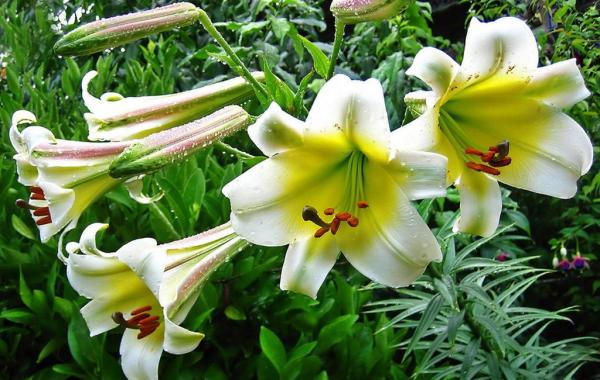
Potted Flower Management During the Rainy Season
1. Prevent waterlogging. For potted flowers placed in the open air, water easily accumulates in the pots after rain. If it is not drained promptly, the soil moisture becomes saturated, causing insufficient air and severe oxygen deficiency, which is extremely harmful to the root growth of the flowers. Especially for some varieties that are more afraid of waterlogging, such as cacti, dahlia, bird of paradise (Strelitzia), clivia, evergreen (Rohdea japonica), wax begonia (Begonia semperflorens), as well as asparagus fern, camellia, osmanthus, chrysanthemum, and so on, without hindering their growth, the pot can be tilted slightly before the rain. For generally less waterlogging-sensitive varieties, the accumulated water in the pot can be poured out after a shower. If waterlogging damage occurs, first place the potted plant in a shady spot, avoiding direct sunlight. After it recovers, gradually move it to a suitable spot for normal care.2. Prevent rain exposure. For some flowers, such as begonia, fuchsia, cyclamen, gloxinia, and African daisy (Gerbera), some plants enter dormancy or semi-dormancy in summer, and the potting soil must not be too wet; some leaf surfaces or flower buds are very sensitive to moisture, and water must not accumulate on the leaves. If they are often exposed to rain, root rot and leaf drop easily occur. Therefore, when it rains, place them in a rain-sheltered spot or provide appropriate cover.
3. Prevent lodging. Some tall varieties or those with hollow and brittle stems, such as dahlia, chrysanthemum, gladiolus, and tuberose, are prone to lodging and breaking in storms. Therefore, before heavy rain, move the potted plants to a wind-and-rain-sheltered spot, and set up supports in advance to tie and secure the flower branches.
4. Prevent stagnant air. In the rainy season, the temperature is high and the air humidity is also high. If ventilation is poor, plants are very susceptible to pests and diseases, and flowering may also be delayed, affecting pollination and fruiting. Therefore, ventilation should be strengthened. If flowers are found to be affected by aphids, red spider mites, or to show powdery mildew, black spot, and other pests and diseases, ventilation measures should be taken promptly, and appropriate methods should be used for control.
5. Prevent heat and humidity. For potted flowers and trees hit by storms in hot weather, it is best to water once with clean water after the weather clears, in order to regulate the temperature of the surface soil and the air and reduce the adverse effects of damp heat on the plants.
6. Prevent excessive vegetative growth. In the rainy season, the air humidity is high, and combined with continuous cloudy days and poor light, this often causes potted flowers to grow excessively in branches and leaves. Therefore, for some herbaceous and woody flowers, the frequency and amount of watering can be controlled (commonly known as withholding water) to promote sturdy branches.
Potted Flower Management During the Rainy Season
Prevent waterlogging: When water accumulates in the pot after rain and is not drained promptly, the soil moisture becomes saturated, causing insufficient air and severe oxygen deficiency, which is extremely harmful to the root growth of the flowers. This is especially true for some varieties that are more afraid of waterlogging, such as cacti, dahlia, daphne, crinum lily, monstera, evergreen (Rohdea japonica), gloxinia, white orchid (Michelia alba), orchid, as well as asparagus fern, osmanthus, chrysanthemum, and so on. They are highly prone to plant wilting, yellowing leaves, or root rot, and in severe cases the entire plant may die. 2. Prevent rain exposure: Some flowers, such as begonia, fuchsia, cyclamen, geranium, and lily, enter dormancy or semi-dormancy in summer, and the potting soil must not be too wet. If exposed to rain, root or bulb rot easily occurs and causes leaf drop. After clivia is exposed to rain, the rainwater carries bacteria and dust into the leaf center, and under conditions of high temperature and poor ventilation, lesions easily form, with the leaves beginning to rot from the base. Some cactus balls with a sunken top or with fuzz and long hairs are also prone to stem and leaf rot after rain. Therefore, when it rains, place the plants in a rain-sheltered spot. 3. Prevent lodging: Some tall varieties or those with hollow and brittle stems, such as dahlia, chrysanthemum, gladiolus, and oleander, are prone to lodging and breaking in storms, so supports need to be set up in advance to tie and secure the branch tips or flower branches. 4. Prevent stagnant air: In the rainy season, the temperature is high and the air humidity is also high. If ventilation is poor, plants are very susceptible to pest damage, and flowering may also be delayed, affecting pollination and fruiting. Therefore, when there is continuous rain and the air humidity is too high, ventilation should be strengthened; appropriately increase the spacing between potted plants, and prune certain flowers by removing overly dense branches, parallel branches, crossing branches, drooping branches, and overlapping branches, so as to facilitate ventilation and light penetration for the potted plants. 5. Prevent damp heat: For potted flowers and trees hit by storms in hot weather, it is best to water once with clean water after the weather clears, in order to regulate the temperature of the surface soil and the air and reduce the adverse effects of damp heat on the plants. 6. Prevent excessive vegetative growth: In the rainy season, the air humidity is too high, which often causes flowers to grow excessively in branches and leaves, resulting in weak growth and poor flowering. Therefore, the frequency and amount of watering should be controlled to promote sturdy branches and abundant flowering and avoid excessive vegetative growth. 7. Prevent pests and diseases: The rainy season climate is damp and hot. Among insect pests, red spider mites cause serious damage. You can spray 800 times diluted dicofol or 200 times diluted propargite, or apply 15% aldicarb as a soil treatment (bury 1 gram in a flower pot with a diameter of 20 cm). Among diseases, powdery mildew and black spot are typical. You can spray 700-1000 times diluted carbendazim or triadimefon solution for control.