A Detailed Guide to the Cultivation Methods and Care Techniques of Lavender Pinnata
Lavender pinnata
Scientific name: lavandula pinnata
Aliases: Love Grass, Lavender Herb, Vegetable Lavender.
Family and genus: Lamiaceae, Lavandula.
Morphological characteristics: perennial herb, plant height about 50 cm; the whole plant is densely covered with white down; leaves opposite, 2-pinnately compound leaves, leaflets linear or oblanceolate; leaves deeply divided into feather-like segments. Flower stalks long, flower spikes about 10 cm, purplish red; the upper lip of the small flowers is relatively large, and at the base of the flower spike another pair of branched flower spikes grows, forming a three-forked shape, flowering all year round.
Ecological habits: heat-tolerant, cold-tolerant, likes sunny and well-ventilated environments, and grows poorly in shaded places. The cultivation soil is best as sandy loam rich in organic matter. Drainage must be good. Generally placed in a ventilated place; in summer, being indoors or in a stuffy, humid place carries the risk of sudden death.
Cultivation management: can be propagated by sowing or cuttings. Most are propagated mainly by cuttings. Cutting propagation can be carried out all year round. Usually cut about 5 cm of the top branches, and roots will form after 7-10 days. It can be planted in courtyards as ground cover plants, and can also be planted in containers as potted plants.
Uses: it is the pure ornamental variety with the longest flowering period, used for cut flowers, pressed flowers, garden cultivation and aromatherapy. In courtyards it is used as ground cover plants, or planted in flower borders, flower belts, and flower clusters, and can also be potted on balconies.
Is Lavender pinnata poisonous?
Is rainy-night lavender poisonous?
Lavender pinnata (Lavendula pinnat), native to the Canary Islands, is extremely similar to Canary lavender; the two are close relatives, but this species has a more compact flower form and darker color. It is now commonly cultivated in various places.
I. Morphological characteristics
Plant height: the plant height of Lavender pinnata is 30-100 cm. Flowering period: it flowers all year round, but the main flowering period is concentrated from November to May and June of the following year; when summer is too hot, flowering stops and it goes dormant.
Fragrance: the fragrance of Lavender pinnata is similar to a mixture of geranium and rosemary, relatively strong, but with a heavy mixed odor. The leaves are fragrant, while the flowers have no fragrance.
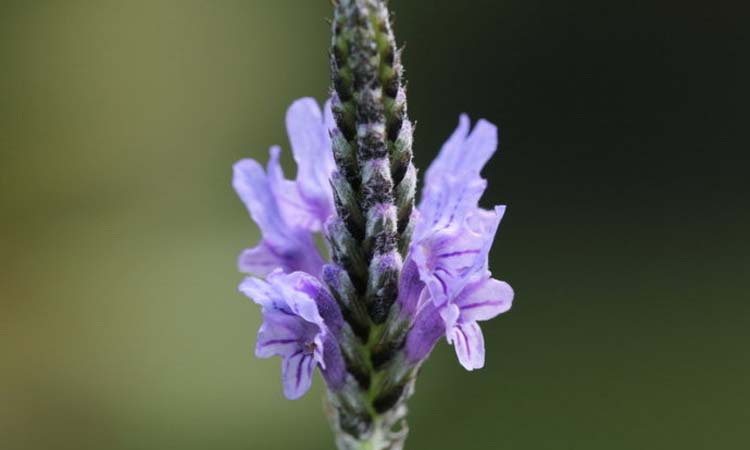
Leaves and flowers: the leaf shape of Lavender pinnata is a 2-pinnately deeply divided leaf, with a relatively faint fragrance; leaves opposite, the leaf surface is covered with a powdery substance, and the leaf color is grayish green. The plant is spreading, a lush shrub, with dark purple tubular small flowers, having dark-colored veins, the upper lip more developed than the lower lip, with 2 lips.
Flowering period: the main flowering period of Lavender pinnata is concentrated from November to May and June of the following year; when summer is too hot, flowering stops and it goes dormant. Under suitable, warm conditions it can flower all year round.
II. Ecological habits
Lavender pinnata likes sunlight, is heat-tolerant, drought-tolerant, extremely cold-tolerant, tolerant of barren soil, and resistant to salt and alkali. The cultivation site needs sufficient sunlight and good ventilation. Time required from sowing to flowering (or harvest): 18-20 weeks. Lavender is suitable for cultivation in large containers. However, when potted, to prevent excessive moisture, ceramic pots or smaller plastic pots can be chosen; large pots should not be used unless it has already grown to a considerable size.
Lavender pinnata cannot endure heat and humidity. If waterlogged for a long time, the roots rot and it dies. When planting outdoors, be careful not to let rain directly fall on the plant. After May, it needs to be moved to a place without direct sunlight, and ventilation should be increased to lower the ambient temperature and keep it cool, so that it can safely pass the hot summer.
Cultivation methods of Lavender pinnata
Lavender pinnata is a perennial small shrub, generally usable for about 10 years, with a rough variety, easy to cultivate, likes sunlight, heat-tolerant, drought-tolerant, extremely cold-tolerant, tolerant of barren soil, and resistant to salt and alkali. The cultivation site needs sufficient sunlight and good ventilation. Time required from sowing to flowering (or harvest): 18-20 weeks. Lavender is suitable for cultivation in large containers. However, when potted, to prevent excessive moisture, ceramic pots or smaller plastic pots can be chosen; large pots should not be used unless it has already grown to a considerable size.
Lavender cannot endure heat and humidity. If waterlogged for a long time, the roots rot and it dies. When planting outdoors, be careful not to let rain directly fall on the plant. After May, it needs to be moved to a place without direct sunlight, and ventilation should be increased to lower the ambient temperature and keep it cool, so that it can safely pass the hot summer. Pay attention to sunlight, water, temperature, and patience.
1. Soil
Lavender pinnata is suitable for slightly alkaline or neutral sandy soil. Special attention must be paid to choosing a well-drained medium; you can use 1/3 perlite, 1/3 vermiculite, and 1/3 peat moss mixed together. If cultivating in open ground, pay attention to soil drainage; the soil can be piled up into ridges before planting.
2. Watering
Lavender pinnata does not like water to remain around the roots for long. After one thorough watering, water should be given again only when the soil is dry, with the surface growing medium dry and the interior moist as the standard, and with slight leaf wilting as the main indicator. Water in the morning, avoid sunlight, and do not splash water on the leaves and flowers, otherwise they easily rot and breed pests and diseases. A continuously humid environment will leave the roots without enough air to breathe, causing poor growth, or even sudden death of the whole plant; this is often where lavender cultivation fails.
3. Light
Lavender pinnata is a full-sun plant and needs sufficient sunlight and a suitably humid environment. An environment with full sun is better; half sun can also allow growth, but flowering is sparser. In summer, at least 50% of sunlight should be shaded, and ventilation should be increased to lower the ambient temperature; although growth will weaken in this way, it will not die. In winter, lavender can grow well on flat ground and should be cultivated under full sun.
4. Temperature
Lavender pinnata is semi-heat-tolerant, prefers coolness, and likes warm winters and cool summers. The suitable growth temperature is 15-25°C, and it can grow at 5-30°C. Limiting temperature: above 35°C; if long-term above 38-40°C, the top stems and leaves turn yellow and wither. In northern winters, when it is below 0°C for a long time, it begins dormancy; during dormancy, mature seedlings can withstand low temperatures of -20 to -25°C.
5. Fertilizing
For fertilizing Lavender pinnata, bone meal can be placed in the potting soil as a base fertilizer (once every three months). For small seedlings, Hyponex No. 2 (20-20-20) can be applied; after it becomes a mature plant, apply a fertilizer with higher phosphorus such as Hyponex No. 3 (20-30-20). Apply dilute fertilizer.
6. Pruning
The flowers of Lavender pinnata have the richest essential oil content. When using it, the flowers or flower spikes are the main part. To facilitate harvest, in the early cultivation stage some small flower spikes may as well be leveled entirely with large scissors; the newly grown flower spikes will be uniform in height, which is conducive to harvesting in one go. Some varieties can reach 90 cm in height; this method is also used to keep the plant low and promote more branching and flowering, increasing the harvest. After flowering is finished, pruning must be carried out; the plant can be pruned to 2/3 of its original size, and the plant shape will be more compact and favorable for growth. Pruning should be done in cool seasons such as spring and autumn; generally prune in spring, as pruning in autumn will affect cold resistance. When pruning, be careful not to cut into the lignified parts, so as to avoid weakening and death of the plant.
Propagation methods of Lavender pinnata
1. Cutting propagation
Lavender pinnata is generally propagated by cuttings. It can also be propagated by sowing in spring, and can flower in about two to three months.
2. Management methods
It is relatively heat-tolerant by nature, and drainage and sunlight must be good. Too much light easily causes lignification, but this is less obvious than in other varieties. Its cold resistance is semi-cold-resistant; below minus 5°C in winter it needs protection, and it is not tolerant of snow accumulation. Generally placed in a ventilated place; in summer, being indoors or in a stuffy, humid place carries the risk of sudden death.
Disease control of Lavender pinnata
Lavender pinnata rarely suffers from pests.
The main disease of Lavender pinnata is root rot, with the highest incidence under high temperature and waterlogged conditions. Control method: drench the roots with an 800-fold solution of carbendazim or chlorothalonil, once a month, especially from June to October. Be careful to prevent waterlogging and keep the air dry.
Cultivation methods of Lavender pinnata
Lavender pinnata
Scientific name: Lavandula pinnata
Aliases: Love Grass, Lavender Herb, Vegetable Lavender.
Family and genus: Lamiaceae, Lavandula.
Morphological characteristics: perennial herb, plant height about 50 cm; the whole plant is densely covered with white down; leaves opposite, 2-pinnately compound leaves, leaflets linear or oblanceolate; leaves deeply divided into feather-like segments. Flower stalks long, flower spikes about 10 cm, purplish red; the upper lip of the small flowers is relatively large, and at the base of the flower spike another pair of branched flower spikes grows, forming a three-forked shape, flowering all year round.
Ecological habits: heat-tolerant, cold-tolerant, likes sunny and well-ventilated environments, and grows poorly in shaded places. The cultivation soil is best as sandy loam rich in organic matter. Drainage must be good. Generally placed in a ventilated place; in summer, being indoors or in a stuffy, humid place carries the risk of sudden death.
Cultivation management: can be propagated by sowing or cuttings. Most are propagated mainly by cuttings. Cutting propagation can be carried out all year round. Usually cut about 5 cm of the top branches, and roots will form after 7-10 days. It can be planted in courtyards as ground cover plants, and can also be planted in containers as potted plants.
Uses: it is the pure ornamental variety with the longest flowering period, used for cut flowers, pressed flowers, garden cultivation and aromatherapy. In courtyards it is used as ground cover plants, or planted in flower borders, flower belts, and flower clusters, and can also be potted on balconies.