How to Grow Lemon Basil? A Detailed Guide to Cultivation Methods
Lemon Basil
Scientific name: ocimum spp.
Alias: Qi Li Xiang.
Family and genus: Lamiaceae, Ocimum.
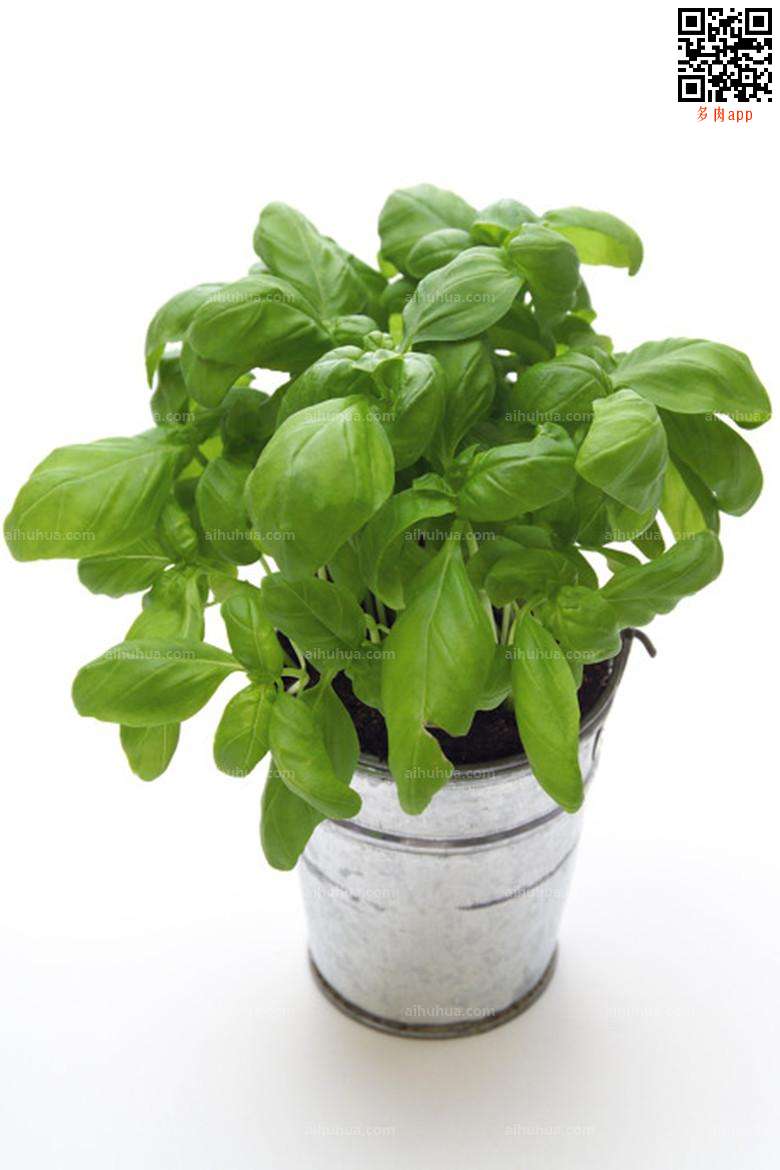
Morphological characteristics: plant height 30-60 cm, the whole plant sparsely covered with soft hairs, stems erect, much branched, obtusely four-angled. Leaves opposite, ovate, slightly notched, stems and leaves green. Flowers arranged in layered whorls on the flower stem, each layer with 2 bracts and 6 flowers, forming verticillasters, corolla labiate, flowers white. The whole plant has a strong lemon aroma.
Ecological habits: prefers warmth, tolerates heat and loves light, does not tolerate waterlogging, not strict about soil requirements, but soil that is fertile and well-drained is preferable for planting.
Cultivation management: in South China and other areas, sowing can be done at any time in spring, summer and autumn; in North China, generally seedlings are raised and sown directly in greenhouses in late March, and transplanted in late April to early May, or sown directly in mid-April; for small-scale cultivation, cuttings can also be used for propagation, with 25°C being the most suitable for rooting. Seeds can germinate at 15°C, the optimal growth temperature is 16-28°C, and the growth period is about 70 days.
Uses: it is a treasure for courtyard and balcony greening, beautification and fragrance. Its stems and leaves can be used as a spicy seasoning, and can also be used to make essences, perfumes, etc. The leaf juice can also repel mosquitoes and refresh the mind.
Basil Cultivation Methods and Precautions, An Introduction to Basil
Basil is an aromatic plant used both as medicine and food, with a taste similar to fennel, a compact whole plant, emerald green leaves, bright-colored flowers and overflowing fragrance. It is native to tropical Asia, is very sensitive to cold, and grows best in hot and dry environments. It has a strong, pungent, fragrant odor; most common types have the whole plant sparsely covered with soft hairs; the same species, varieties or cultivars differ slightly in botanical characteristics, with a height of 20-80 cm, smooth or basically smooth erect annual herbaceous plants, and some are perennials. Some become beautiful bonsai with slight pruning and can be grown in pots for ornamental viewing.
Basil has the functions of dispersing wind and moving qi, resolving dampness and promoting digestion, invigorating blood and detoxifying. It is used for the treatment of exogenous headache, abdominal distension with qi stagnation, stomachache, diarrhea, irregular menstruation, traumatic injuries, snake and insect bites, skin damp sores, and itching from urticaria.
Morphological Characteristics of Basil: Stem
Basil has a conical main root and dense fibrous roots growing from it. The stem is erect, obtusely four-angled, slightly grooved in the upper part, hairless at the base, covered with recurved fine soft hairs in the upper part, green, often tinged with red, much branched.
Leaf
The leaves of basil are ovate to ovate-oblong, 2.5-5 cm long, 1-2.5 cm wide, apex slightly obtuse or acute, base gradually narrowed, margin irregularly toothed or nearly entire, nearly hairless on both surfaces, with glandular dots beneath, lateral veins 3-4 pairs, flat above and more or less distinct beneath with the midrib; petiole elongated, about 1.5 cm long, nearly flat, more or less narrowly winged toward the leaf base, covered with fine soft hairs.
Inflorescence
Basil has terminal racemes on stems and branches, all parts covered with fine soft hairs, usually 10-20 cm long, composed of numerous verticillasters with 6 flowers in opposite pairs, the lower verticillasters distant, up to 2 cm apart from each other, the upper verticillasters close together; bracts small, oblanceolate, 5-8 mm long, shorter than the verticillasters, apex acute, base gradually narrowed, sessile, margin ciliate, often colored; pedicels obvious, about 3 mm long at flowering, elongated at fruiting, about 5 mm long, apex obviously recurved.
Calyx campanulate, 4 mm long, 3.5 mm wide, covered with short soft hairs outside, sparsely soft-hairy inside at the throat, calyx tube about 2 mm long, calyx teeth 5, bilabiate, upper lip 3-toothed, middle tooth broadest, 2 mm long, 3 mm wide, nearly round, concave, with a short pointed tip, margin decurrent to the calyx tube, lateral teeth broadly ovate, 1.5 mm long, apex acute, lower lip 2-toothed, lanceolate, 2 mm long, with spiny pointed tips, margins of all teeth ciliate, calyx persistent at fruiting, obviously enlarged, up to 8 mm long, 6 mm wide, obviously declined, veins prominent.
Corolla
The corolla of basil is pale purple, or the upper lip white and the lower lip purplish red, extending beyond the calyx, about 6 mm long, covered with fine soft hairs outside on the lips, hairless inside, corolla tube included, about 3 mm long, more or less enlarged at the throat, limb bilabiate, upper lip broad, 3 mm long, 4.5 mm wide, 4-lobed, lobes nearly equal, nearly round, often wavy-crisped, lower lip oblong, 3 mm long, 1.2 mm wide, declined, entire, nearly flat.
Stamens 4, separate, slightly exceeding the corolla, inserted in the middle of the corolla tube, filaments filiform, the posterior pair with tooth-like appendages at the base, covered with fine soft hairs, anthers ovate, merging into 1 locule. Style exceeding the stamens, apex equally 2-cleft. Disk flat-topped, with 4 teeth, teeth not exceeding the ovary.
The flowering period of basil is usually July to September.
Fruit
The nutlets of basil are ovoid, 2.5 mm long, 1 mm wide, dark brown, with glandular pits, and 1 white hilum at the base.
The fruiting period of basil is September to December.
Ecological Habits of Basil
Basil prefers a warm and humid climate, is not cold-tolerant, tolerates drought, does not tolerate waterlogging, and well-drained, fertile sandy loam or humus loam is best.
Cultivation Techniques of Basil: Site Selection
Basil is a deep-rooted plant, and its roots can penetrate 50-100 cm into the soil, so well-drained, fertile and loose sandy loam should be selected. Apply sufficient base fertilizer before planting, level and harrow fine, and make flat beds or high beds of about 130 cm.
Seedling Raising
Because the frost-free period is relatively short, for open-field cultivation and production, if seeds are to be harvested, seedlings must be raised in a greenhouse or plastic tunnel. If only tender stems and leaves are used for food, seedlings can be raised or direct sowing can be done. The seedling period is generally sown in mid-to-late April.
Put the seeds into a gauze bag, shake off the water forcefully, cover well with a wet towel or gauze, keep warm and moist, and place at about 25°C for germination. During germination, rinse once a day with clean water, drain well; if the seed quantity is large, turn 1-2 times a day to balance the temperature and make germination uniform. In the early stage of germination, the temperature can be slightly higher to promote sprouting; when the sprouts are about to emerge (the seeds are about to open), the temperature should be lowered by 3-5°C to make the sprouts thick and uniform. After the sprouts have emerged uniformly, if special weather occurs, move the sprouts to a place at 5-10°C to control sprout growth and wait for sowing.
Planting Time
In the south, sow in March to April; in the north, sow in late April to May. Sowing should be done on a sunny morning; put nutrient soil into a sowing tray, water thoroughly with hot or warm water, and after the water seeps down, spread 1 layer of medicated soil, evenly sow the germinated seeds in the tray, cover with 1 cm of medicated soil, and cover with plastic film to keep warm and moist. For drilling, open shallow furrows at a row spacing of about 35 cm; for hole sowing, open shallow holes at a hole spacing of 25 cm, evenly scatter into the furrows or holes, cover with a thin layer of soil, and keep the soil moist; use 0.2-0.3 kg of seeds per mu. Seedling raising and transplanting can also be used; in the north, seedlings can be raised in cold frames in March, and when the seedlings are 10-15 cm tall, transplant them with soil to the field. After transplanting, firm the soil and water.
Field Management
When the seedlings are 6-10 cm tall, thin and fill in the seedlings; for hole sowing, keep 2-3 plants per hole; for drilling, keep 1 plant about every 10 cm. Generally cultivate and weed 2 times; the first time is 10-20 days after emergence, shallowly hoeing the surface soil. The second time is from early May to early June, before the seedlings close the rows; after each cultivation, apply human and livestock manure water. Seedlings are afraid of drought, so water promptly.
Harvesting and Processing
The stems and leaves of basil are harvested in July to August; cut the whole plant, remove fine roots and impurities, and sun-dry. Harvest after the plants are 20 cm tall and have closed the rows; select the tender front ends of shoots that have not bolted, 5-10 cm long, and harvest once every 7-15 days. For essential oil extraction, harvest when the inflorescences have fully emerged; in the Hainan area, generally 3-4 harvests can be made a year. When harvesting, use a sickle to cut the plant part 20-25 cm above the ground, avoiding shaking the root system so as not to affect regeneration ability, then strengthen fertilizer and water management to promote new stems and leaves to sprout again. After harvesting, process as soon as possible to avoid the wounds and leaves turning brown and yellow, which affects the quality of the essential oil.
Disease and Pest Control of Basil: Pest Control
In terms of pests, the main ones are aphids, Japanese beetles, thrips, leaf miners, snails and slugs. In organic cultivation, water can be sprayed to drive away aphids, and Japanese beetles can be picked off by hand and thrown into soapy water. As for slugs and snails, small beer containers can be used to trap and kill them, or copper strips can be tied 5 cm from the base of the plant (10 cm is even better); because the copper strips react with slug mucus, the invading insects retreat.
Disease Control
In terms of diseases, sweet basil varieties are highly susceptible to fungal wilt (Fusarium oxysporum). The pathogen invades through the vascular bundles of the roots, hindering plant growth and causing leaf wilt. The pathogen can lie dormant in the soil for many years. In general field cultivation, fungal-resistant F1 hybrid varieties such as Nufar can be selected; as for Ocimum americanum and clove basil, they are resistant to fungal wilt. In addition, high humidity and poor drainage also make plants more susceptible to fungal leaf spot.
Interplanting basil with asparagus, peppers, tomatoes and most vegetables can increase the growth and flavor of these crops, but it cannot be interplanted with cabbage and beans. In addition, it should also be kept away from Rutaceae plants. Because of its special odor, it can repel whiteflies and hawk moth larvae. Slugs also do not like the smell of basil. In organic cultivation in Taiwan, China, basil is also used as a repellent crop to reduce pests.
Herbs contain special odors, and these odors themselves have a repellent effect on some pests, but some pests will still eat the leaves; for example, some basil varieties may have cutworms, and at this time it is better to spend a little effort to pick them off by hand, or use insect-proof netting to cover and isolate. For disease control, prevention is better than cure; the method is not to use previously cultivated old soil to grow herbs, because the hidden pathogens inside will become a source of infection; another method is to cultivate herbs in a suitable environment or season, so that the plants are strong and naturally resistant to disease invasion. Remember that fresh herbs are eaten raw or only briefly heated when used, so if they contain pesticide residues, it will have adverse effects on health. Or use diluted detergent.
Variety Classification of Basil
There are many varieties and cultivars in the genus Ocimum, such as variegated basil, clove basil, Czech basil, German sweet basil, etc.
Sweet Basil
It is an annual herbaceous plant in the genus Ocimum whose tender stems and leaves are eaten; it is dwarf, the most widely cultivated, and also relatively common in China, forming compact plant clumps, plant height 25-30 cm, leaves bright green, 2.5-2.7 cm long, flowers white, flower stems relatively long, with more layers.
Variegated Basil
Plant height and other characteristics are the same; the difference is that the stems are dark purple to brown, the flowers are purple, and the leaves have purple spots.
Clove Basil
Terminal panicle, corolla white. Clove basil is a raw material plant for extracting eugenol, used to prepare perfumes and floral water, and as a canned food preservative and spice, and used in dental disinfectants.
Dwarf Basil
This variety is relatively short, densely grown, with stronger branching than Sweet basil, very small leaves, white flowers, and seeds not greatly different from other varieties.
Green Basil (Greenbushbasil)
This variety has a green plant and is more suitable for growing in flower pots; because of its fresh and bright emerald green color and special aromatic scent, it is very popular. The flowers are mostly clustered, and the whole plant grows close to the ground; the number of flowers is large, forming very small flower clusters, and the flower color ranges from rose to white, forming a sharp contrast with the dark green color of the leaves. It is mostly used as a garden plant.
Compact Bush Basil (Compactbushbasil)
The most obvious characteristic of this variety is that it can form a large number of branches, and the whole plant is very dense, shaped like a dense, emerald green spherical plant body. It is more suitable as an ornamental plant than ordinary bush basil, can be planted in flower pots or placed in vases, and is an excellent green herbaceous garden plant.
Lemon Basil (O.b.var.citriodorum)
Annual, flowers white, leaves green, leaves with lemon fragrance, generally used when making sauces and chicken.
Holy Basil (O.cimum sanctum)
Base woody, flowers white or pink, leaves hairy, leaf margins toothed, with a spicy fragrance.
Purple Basil (Purple Ruffles)
Stems and leaves dark purplish red, leaves folded upward along the midrib, leaf blades curled and wrinkled. Generally used to soak in alcohol to make tonics, with aphrodisiac effects.
Purple Opal Basil (PurpleOpal basil)
Flowers pink, stems and leaves dark purplish red, leaves with clove odor. Generally used for food (the basic ingredient for making green sauce) and for processing and extracting essential oil.
Anise Basil (Anise)
Stems black, leaf veins purple, leaves green, elliptical to ovate, with anise odor.
Morpha Basil (Morpha)
Stems purple, leaves green, with a mixed spice flavor. Generally used as a seasoning for Malaysian and Indian dishes.
Cinnamon Basil (Cinnamon)
Also called cinnamon basil, stems purple and leaves green, leaf surface smooth, with cinnamon fragrance.
Curly Leaf Basil (O.b.var.crispum)
Also called lettuce basil. Leaf blades huge, leaves green, surface wrinkled. Generally used for food; the flower heads can be used to extract essential oil. This variety has relatively large leaves, curled and wavy, 5-10 cm long, dwarf, flowers densely grown, flowering period slightly later than other varieties.
Bush Basil (Ocimum basilicum var.minimum)
Also called Greek basil. Plant shape round and compact, leaves small, ovate, with a rich spicy clove odor.
Distribution Region of Basil
Basil is native to tropical regions of Africa, the Americas and Asia.
In China, basil is mainly distributed in **, Jilin, Hebei, Henan, Zhejiang, Jiangsu, Anhui, Jiangxi, Hubei, Hunan, Guangdong, Guangxi, Fujian, Taiwan, China, Guizhou, Yunnan and Sichuan; it is mostly cultivated, and in some southern provinces and regions it has escaped into the wild.
Basil also occurs in warm regions from Africa to Asia.
Medicinal or Dietary Therapeutic Value of Basil
The medical information and health dietary therapy information on Huahua Net is for reference only and cannot be used as a basis for diagnosis or medical treatment. Any health problem should be consulted with professional medical staff, and treatment for any disease should follow a doctor's advice.
Ultimate flower-care mission: to love yourself, start from reality, and strictly follow a doctor's advice. For illness, do not be careless, do not delay, do not give up hope, face it bravely, warm the silent world with love, and care for the flower field in your heart with your heart.
Basil leaves are elliptical and pointed, and the flowers are purple-white. Distilling its leaves and flowers yields a transparent, colorless essential oil whose fragrance is much like a combination of clove and pine needles. It is a huge family. Different species of basil are named for their characteristics or unique aromas. Much research on basil focuses on spice extraction and component analysis. It is mainly used in Italian, French and Greek cuisine, and is also often used in Eastern Indian and Thai cooking. In China, basil is generally cultivated as a vegetable, and as a new type of specialty vegetable it has great room for development. Basil has special fragrance characteristics (generally it gives off a clove-like fragrance, and some are slightly minty, slightly sweet or a little spicy; the fragrance differs by variety).
Edible Value
The tender leaves are edible and can also be brewed as tea, with wind-dispelling, aromatic, stomach-strengthening and diaphoretic effects. They can be used as a seasoning for pizza, pasta sauce, sausages, soups, tomato juice, dressings and salads. Many Italian chefs commonly use basil to replace oregano. It is also a commonly used seasoning in Thai cooking. Dried basil can be combined with lavender, mint, marjoram and lemon verbena, 3 tablespoons in total, to make a stress-relieving herbal tea.
Basil is very suitable for pairing with tomatoes; whether cooking dishes, simmering soup or making sauce, the flavor is very unique. It can be used as a seasoning for pizza, pasta sauce, sausages, soups, tomato juice, dressings and salads. Basil can also be mixed with oregano, thyme and sage and added to hot dogs, sausages, sauces or pizza sauce for a very rich taste.
Nutritional Recipes
Basil Stewed Chicken
Ingredients: 100 g basil, 1 large chicken leg
Seasonings: 1 teaspoon salt, appropriate amount of rice wine
Method: Soak the basil in water for 10 minutes first, then scrub off the dirt on the outside with a brush; wash the large chicken leg, cut into pieces, and blanch to remove blood water.
Add 4 bowls of clean water to a pot and bring to a boil, then put in the basil and cook for 20 minutes; add another bowl of water and the chicken leg pieces and bring to a boil, then continue cooking over medium-low heat for 20 minutes; remove the basil.
Add salt and wine to season.
Medicinal effects: Basil is a plant of the Lamiaceae family, and its root is commonly known as "nine-layer pagoda head"; it has the functions of aromatic stomach-strengthening, wind-dispelling and pain-relieving, blood-moving and blood-invigorating, and promoting development.
This medicinal diet can promote the growth and development of young girls. Besides stewing with chicken as a tonic, ribs, lean meat or thigh bones and other meats containing large amounts of calcium and protein can also be used for stewing as a tonic.
Basil Eggplant
Ingredients: 1 eggplant, 4 slices ginger, half a bowl basil, 1 chili pepper
Auxiliary ingredients: 2 tablespoons soy sauce, 1 small teaspoon sugar
Method: Wash the eggplant, cut off the stem end, then use a small peeler to peel off the skin at intervals, so that the eggplant develops a purple-and-white striped pattern, then cut into small segments and set aside.
Heat half a pot of oil to about 70% hot, put in the eggplant segments and fry until soft, then remove and drain the oil.
Heat another oil pot, add 2 tablespoons of oil, first stir-fry the ginger slices and sliced chili pepper until fragrant, then add soy sauce, sugar, 2 tablespoons of water and the fried soft eggplant segments and stir-fry together for a moment; before removing from the heat, add the washed basil, mix well, and then serve.
Green Sauce
Ingredients: 500 g sweet basil leaves, 7-10 cloves garlic peeled, 15 g pine nuts, half a can of squid, 250 ml extra virgin olive oil, 1 small teaspoon salt
Method: Put all ingredients into a blender and blend into a paste.
Take an appropriate amount of green sauce and mix well with cooked Italian macaroni; according to preference, Parmesan cheese powder can be added.
Medicinal Value
The whole plant is used as medicine; it treats headache, migraine, earache, sinusitis, bronchitis, expelling phlegm, colds, asthma, hiccups, bloating, stomach pain, gastric spasm, gastrointestinal bloating, indigestion, enteritis and diarrhea, excessive uric acid, muscle soreness, loose skin, chest pain, traumatic injuries, blood stasis and swelling, rheumatoid arthritis, childhood fever, nephritis, snake bites; decoct and wash for eczema and dermatitis, facial acne, pimples, epilepsy, irregular menstruation, insufficient milk secretion, breast congestion and inflammation, stimulating mood, reducing stress, reducing depression and restlessness, aphrodisiac, tonic, antibacterial, insect bites. It has effects such as relieving summer heat, detoxifying, relieving pain and strengthening the stomach, boosting strength and adding essence, and promoting blood circulation. The stems and leaves are obstetric medicines and can improve blood circulation before childbirth; the seeds are called Guangmingzi, mainly used for eye cataracts, and have also been tried for contraception.
Usage and dosage: 3-5 qian; for external use, an appropriate amount, pound fresh product and apply, or decoct in water and wash the affected area.
Supplementary Medicinal Formulas
① Treat cough and hiccups: four liang of ginger (pounded), add two liang of basil leaves, one qian-bi of pepper powder, four liang of salt and flour, wrap and make into baked cakes, roast until cooked, eat on an empty stomach. (Waitai)
② Treat malnutrition with red and eroded skin below the nose: two qian of basil leaves (burned to ash), five fen of verdigris, two zi of calomel. Grind the above into fine powder and mix evenly; depending on the size of the sore, apply dry. (Xiao'er Yao Zheng Zhi Jue, Lanxiang San)
③ Treat venomous snake bites: pound Qiancengta, maoshexiang, xuejianchou and qixingjian and apply. (Lingnan Caiyao Lu)
Pharmacological Effects
Disperses wind and moves qi, resolves dampness and promotes digestion, invigorates blood, detoxifies.
Basil
Treats exogenous headache, abdominal distension with qi stagnation, abdominal pain, diarrhea, irregular menstruation, traumatic injuries, snake and insect bites, skin damp sores, and itching from urticaria.
Qianjin Shizhi: eliminates retained water, dissipates toxic qi.
"Jiayou Bencao" (Jiayou Materia Medica): Regulates the middle burner and aids digestion, dispels foul qi, eliminates water qi, suitable for raw consumption. It also treats rotten sores at the tooth roots, and using it as ash is very effective.
It also stirs wind, triggers beriberi, and for hiccups, taking half a ge of its juice brings relief; in winter, use the dried form and decoct it.
"Lingnan Caiyao Lu" (Record of Medicinal Herb Collection in Lingnan): Treats venomous snake bites, and can also be used as a poultice for traumatic injuries.
"Xiandai Shiyong Zhongyao" (Modern Practical Chinese Materia Medica): It is a good obstetric medicine, can improve blood circulation before and after childbirth, and treats gastric spasms and kidney disease.
"Zhongguo Yaozhi" (Chinese Medicinal Plant Records): Has the effect of relieving summer heat and reducing fever.
"Nanjing Minjian Yaocao" (Nanjing Folk Medicinal Herbs): The leaves decocted with Danshen (Salvia miltiorrhiza) and taken as water can promote menstruation and invigorate blood.
"Guangxi Zhongyao Zhi" (Guangxi Chinese Materia Medica Records): Releases the exterior, disperses wind-heat.
Treats externally contracted headache, fever and cough, skin rashes with itching.
"Zhongguo Yaozhi Tujian" (Illustrated Chinese Medicinal Plants): The rubbed juice can treat pterygium of the eye.
"Guangdong Zhongyao" II (Guangdong Chinese Materia Medica II): Relieves pain and reduces swelling.
Treats wind-toxin sores and rheumatic swelling.
Guangzhou Military Region "Changyong Zhongcaoyao Shouce" (Handbook of Commonly Used Chinese Herbal Medicines): Dispels wind and reduces swelling, dissipates blood stasis and relieves pain.
Treats gastrointestinal bloating, indigestion, stomach pain, enteritis and diarrhea, externally contracted wind-cold, headache, chest pain, traumatic blood stasis and swelling, rheumatic arthralgia, eczema and dermatitis.
Chemical Composition of Basil Whole Herb Components
The whole herb contains volatile oil, from which 17 components were isolated and identified: eugenol, geraniol, linalool, methyl chavicol, ocimene, 1,8-cineole, limonene, △3-carene, α-pinene, bicyclosesquiphellandrene, 1-epi-bicyclosesquiphellandrene, eugenol methyl ether, methyl cinnamate, 3-hexen-1-ol, 3-octanone, anethole and furfural. The whole herb contains total flavonoid glycosides 0.6%-1.1%, with the aglycones mainly being quercetin and kaempferol, caffeic acid, chlorogenic acid, polyphenolic compounds, rutin, isoquercitrin, rosmarinic acid.
Leaves Contain Multiple Types of Components
Flavonoids: quercetin, isoquercetin, quercetin-3-O-diglucoside, rutin, kaempferol, kaempferol-3-O-rutinoside, eriodictyol, eriodictyol-7-glucoside and 6,8-di-C-glucosyl apigenin.
Coumarins: aesculin.
Other components: caffeic acid and p-coumaric acid, ursolic acid and β-sitosterol.
Flowers contain ursolic acid, oleanolic acid and β-sitosterol.
Macroscopic Identification of Basil Macroscopic Identification
Stem is square-column shaped, of varying lengths, 1-4mm in diameter, surface purple or yellow-purple, with longitudinal groove lines, covered with soft hairs; texture hard, fractured
cross-section fibrous, yellow-white, with white pith in the center. Leaves mostly fallen off or broken; when intact and flattened, ovate or ovate-lanceolate
Basil
in shape, 2.5-5cm long, 1-2.5cm wide, apex obtuse or pointed, base gradually narrowed, margin with irregular teeth or nearly entire, both surfaces nearly hairless, with glandular dots beneath; petiole about 1.5cm long, covered with puberulent hairs. False raceme slightly hairy, corolla fallen off; bracts needle-shaped inverted, persistent calyx bell-shaped, yellow-brown, membranous, with reticulate veins, covered with soft hairs outside, throat covered with soft hairs inside. Persistent calyx contains small nutlets. After rubbing, it has a strong aroma, pungent taste, with a cooling sensation.
Those with thin stems and no roots are considered superior.
Microscopic Identification
Stem Transverse Section
Square or circular in the lower transverse section. Epidermal cells in 1 layer, with cuticle outside, and epidermal or basal remnants visible. Collenchyma present beneath the epidermis at the angles. Vascular bundles arranged in a ring. Phloem fibers present outside the phloem, arranged in interrupted rings, fiber cell walls lignified. Cambium continuous in a ring. Xylem wider and thicker at the angles; secondary xylem cells all lignified. Pith broad.
Leaf Epidermal Characteristics
Upper epidermal cell anticlinal walls wavy-curved. Lower epidermal cells shaped like the upper epidermis, both upper and lower epidermis have stomata, mostly diacytic type. Non-glandular hairs straight or curved, 38-1560μm long, apex pointed, walls with warty dots. There are two types of glandular hairs: one with a single-celled stalk and a head of 2 (or 1) cells; the other is scale-like glandular hair, with a single-celled stalk and a head usually of 4 cells.
Basil's Effects and Uses Refreshing Effect
Basil essential oil is extracted from leaves and flower heads, and is a colorless essential oil. Its scent is cooling, with a strong stimulating effect on the nervous system; when used during fatigue, it immediately invigorates the spirit, and has therapeutic effects on poor concentration, long-term mental distraction, listlessness, and confusion; it helps increase memory. Very sweet and slightly pungent.
To restore a depleted mind, use basil in a 20:1 ratio with carrier oil for a full-body massage, which can rapidly restore a depleted mind and spirit.
Pure essential oil aromatherapy: helps with concentration, such as for students studying intently. Drop it on a handkerchief, apply to the face and breathe in, which can quickly eliminate headaches, especially headaches caused by depression.
Paired with lemon balm, it is the famous "joy combination."
Paired with geranium, using the fragrance and therapeutic effects of the same warm series, it has quite a strong protective effect, with remarkable results for a traumatized body and mind.
Paired with neroli, it belongs to the finest formula for physical and mental assistance and care.
Beauty Effects
Has a moisturizing effect on dry, water-deficient, aging, rough, and wrinkled skin, and can also be used for dark circles and eye bags caused by frequent overtime and long-term computer use. Firms the skin and balances oil secretion. However, in excess it can make the skin overly taut or irritate the skin.
Basil's Cultural Background Historical Background
Basil originated in India, West Asia and other places; Indians regard it as a sacred herb, a grace bestowed upon humanity by the gods. In India, basil is regarded as a sacred object, and when swearing in court, one must swear by it. Secondly, in India it is also believed that wearing basil leaves can ward off evil.
Traces of "basil" are commonly seen in European and American myths and stories. In ancient Roman times, basil was called "basilescus," which derives from the meaning of the fire-breathing dragon "basilescus," so legend has it that one must wear basil on the chest to break the spell and defeat this monster. In traditional European and American medicine (folk therapy), basil is used as an antidote for snake venom or poisonous spider bites. It is said that after Jesus Christ was resurrected, basil grew all around his tomb, which not only represents basil's own divinity but also emphasizes the toughness of its vitality.
Central and South American countries regard basil as an auspicious plant for protecting the safety of one's family and property; in Mexico, lovers also present basil to each other, representing admiration. The holy water used in Orthodox ceremonies is prepared with basil. The Greek word for basil represents royalty or king, and it is said that at that time the fragrant oil used by the Greek king at religious ceremonies was made from basil essential oil, hence it was called the "king's fragrant herb." In Romania, basil represents a more romantic meaning: when a boy accepts a sprig of basil from a girl, it indicates that they are officially engaged to each other.
Basil was introduced to China from India, and "basil" is a transliteration of the Indian word. China already had records of its cultivation and processing in the Northern Wei dynasty's "Qimin Yaoshu" (Essential Techniques for the Peasantry). Basil has a four-angled stem, much branched; leaves opposite, ovate; flowers in whorls at each layer, corolla labiate, white or purple, leaf color emerald green or red-purple, flower clusters bright, and with a fragrant aroma; it is an excellent groundcover material for planting in courtyard flower borders and at the edges of tree beds.
Documentary Records
"Bencao Huiyan" (Collected Discourses on Materia Medica): Enters the hand and foot taiyin, hand and foot yangming meridians. "Qianjin Shizhi" (Thousand Golden Prescriptions for Dietary Therapy): Taste bitter, pungent and astringent, warm and neutral, non-toxic.
"Qianjin Shizhi": Should not be consumed long-term, as it astringes the various qi of the nutritive and defensive levels.
"Jiayou Bencao": Taste pungent, warm, slightly toxic.
"Jiayou Bencao": Should not be consumed in excess; eating too much obstructs the joints, astringes the nutritive and defensive levels, and causes blood vessels to stop flowing.
"Gangmu" (Compendium of Materia Medica): According to Luo Tianyi, orchid fragrance is pungent in taste and warm in nature, and can harmonize blood and moisten dryness.
Yet Zhang Yuxi said that eating too much astringes the nutritive and defensive levels and causes blood vessels to stop flowing—why is that? Also, Li Dongyuan's Shen Gong Wan for treating toothache and bad breath uses orchid fragrance, saying that if unavailable, use huoxiang (Agastache rugosa) as a substitute; this merely takes advantage of its ability to remove foul qi.
Therefore "Yinshan Zhengyao" (Principles of Correct Diet) says that eating it with various vegetables, its pungent fragrant taste can dispel fishy odors—all express this same idea.
"Jiayou Bencao": In the second year of Jiayou (1057), at the very beginning of the establishment of the Bureau for Revising Medical Books, the earliest task undertaken was to revise the "Kaibao Bencao"; the main participants included Taichang Shaoqing and Zhijixianyuan Zhang Yuxi, Zhifang Yuanwailang and Mige Jiaoli Lin Yi, Dianzhongji and Mige Jiaoli Zhang Dong, Dianzhongji and Guange Jiaoli Su Song, medical officials Qin Zongyou, Zhu Youzhang, and Taizijinshe Chen Jian, among others. Finally, Guanglu Sizheng Gao Baoheng was responsible for review and proofreading.
"Lingnan Caiyao Lu": authored by Xiao Budan of Nanhai, Guangdong
"Xiandai Shiyong Zhongyao": edited by Ye Juquan
"Nanjing Minjian Yaocao": Zhou Taiyan, 1956
"Guangxi Zhongyao Zhi": edited by the Health Department of Guangxi Zhuang Autonomous Region, 1963
"Gangmu": compiled by the Lou family medical lineage, handed down through generations, comprehensively and excellently compiled
"Bencao Huiyan": written by Ni Zhumo, Ming dynasty
"Quanzhou Bencao": published by the Quanzhou City Health Bureau, 1962
"Fujian Zhongcaoyao": printed and issued by the Fujian Provincial Institute of Materia Medica, 1970
"Taiping Shenghui Fang" (Taiping Holy Benevolent Prescriptions): abbreviated as "Shenghui Fang," 100 volumes. Published in the third year of Chunhua
"Bencao Bidou" (Easy Reading of Materia Medica): written by Zhang Bingcheng, Qing dynasty. Published in 1957
Basil Images