How to grow Dianthus? These cultivation methods you need to master
Dianthus
Scientific name: dianthus chinensis l
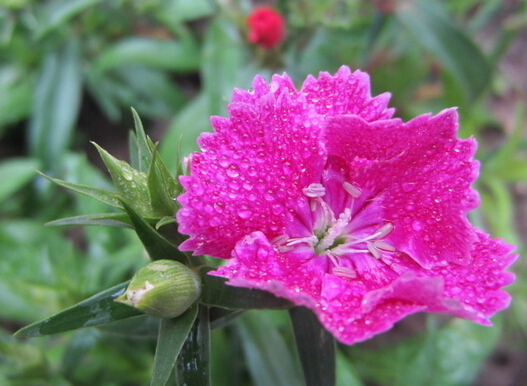
Morphological characteristics: Dianthus family, Dianthus genus, plant height 30-50cm, stems erect or slightly prostrate at the base. Leaves simple, opposite, linear-lanceolate, clasping at the base. Flowers solitary or several in a cyme; white to pink, slightly fragrant. Flowering period May-September.
How to grow Dianthus
Habits: Dianthus is distributed in northeast, north, northwest China and the Yangtze River basin. Dianthus species are highly cold-tolerant, prefer cool climates, and like fertilizer, but can also grow and bloom in poor, thin soil. They require dry conditions, full sunlight and good ventilation. They dislike waterlogging and clay soil.
How to grow Dianthus
Propagation and cultivation: Seed sowing, cuttings and division are commonly used. Seed sowing is generally carried out in September. The optimum temperature for seed germination is 21°C-22°C, with sprouting in about 5 days. From sowing to reaching full height takes about 9-11 weeks, and sufficient water and fertilizer should be given during the growing period. Cuttings are taken from October to late February to March of the following year; during the period of lush foliage, cut tender shoots 5-6cm long as cuttings, and roots form in 15-20 days after insertion. Division propagation is mostly done after flowering using old plants, and can be carried out in autumn or early spring. If divided in April, pay attention to drainage in summer; if divided in September, division propagation is mostly done after flowering using old plants, and can be carried out in autumn or early spring. If divided in April, pay attention to drainage in summer, and strengthen fertilizer and water management after September, so that they can bloom again in early October.
How to grow Dianthus
Potted Dianthus requires sufficient base fertilizer, with 2-3 plants per pot. When seedlings grow to 15cm tall, remove the terminal buds to promote branching, and afterwards pay attention to appropriately removing axillary buds, otherwise too many branches will disperse nutrients and result in small flowers; appropriately removing axillary buds concentrates nutrients and can promote large, brightly colored flowers. During the growing period, place in a sunny, well-ventilated spot for care, keep the potting soil moist, and apply a diluted decomposed liquid fertilizer about every 10 days. In summer, pay attention to drainage and loosening the soil.
How to grow Dianthus
Dianthus is one of China's traditional famous flowers, and many flower lovers want to grow it, but often want to grow it yet fail to grow it well. So how do you grow Dianthus? This article tells flower lovers how to grow Dianthus from the most basic starting point. Let's take a look below at what the cultivation methods for Dianthus are really like.
1. Basic information about Dianthus:
Dianthus is a perennial herbaceous plant, but is generally cultivated as an annual or biennial. In the north it is sown in autumn and blooms the following spring. In the south it is sown in spring and blooms in summer and autumn. Plant height 30-40cm, flower colors include purple-red, bright red, pink, purple-red, pure white, red and variegated; single petals 5 or double, with serrated tips, slightly fragrant; flowering period April-October, concentrated in April-May.
There are many kinds of Dianthus, with more than 300 species in the same genus. Commonly cultivated varieties include Dianthus barbatus, Dianthus chinensis, Dianthus chinensis, Dianthus plumarius, dwarf Dianthus and fringed-petal Dianthus, etc. In addition, there is a variety introduced from Europe called carnation, also known as kangnaixin, with the yellow ones being more precious.
How to grow Dianthus
2. Potted care of Dianthus:
The suitable growing temperature for potted Dianthus is 15-20°C; in winter it should be placed in a greenhouse, with the temperature kept above 12°C. During the growing period it requires sufficient light and should be placed in a sunny spot; in summer, diffused light is preferable, avoiding scorching sun exposure. When temperatures are high, shade and cool it down. It requires fertile, loose, well-drained loam or sandy loam containing lime; it dislikes waterlogging and likes fertilizer. Sufficient base fertilizer is required, with 2-3 plants per pot. When seedlings grow to 15cm tall, remove the terminal buds to promote branching, and afterwards pay attention to appropriately removing axillary buds, otherwise too many branches will disperse nutrients and result in small flowers; appropriately removing axillary buds concentrates nutrients and can promote large, brightly colored flowers.
During the growing period, potted Dianthus should be placed in a sunny, well-ventilated spot for care, keep the potting soil moist, and apply a diluted decomposed liquid fertilizer about every 10 days. If there is too much rain in summer, pay attention to drainage and loosening the soil. Before flowering, promptly remove some axillary buds to mainly ensure the terminal buds bloom. In winter, water less; if the temperature is kept at 5-8 degrees, it will bloom continuously through winter and spring.
3. Propagation of Dianthus: Dianthus commonly uses seed sowing, cuttings and division for propagation.
How to grow Dianthus
Dianthus is one of China's traditional famous flowers, and many flower lovers want to grow it, but often want to grow it yet fail to grow it well. So how do you grow Dianthus? This article tells flower lovers how to grow Dianthus from the most basic starting point. Let's take a look below at what the cultivation methods for Dianthus are really like.1. Basic information about Dianthus:
Dianthus is a perennial herbaceous plant, but is generally cultivated as an annual or biennial. In the north it is sown in autumn and blooms the following spring. In the south it is sown in spring and blooms in summer and autumn. Plant height 30-40cm, flower colors include purple-red, bright red, pink, purple-red, pure white, red and variegated; single petals 5 or double, with serrated tips, slightly fragrant; flowering period April-October, concentrated in April-May.
There are many kinds of Dianthus, with more than 300 species in the same genus. Commonly cultivated varieties include Dianthus barbatus, Dianthus chinensis, Dianthus chinensis, Dianthus plumarius, dwarf Dianthus and fringed-petal Dianthus, etc. In addition, there is a variety introduced from Europe called carnation, also known as kangnaixin, with the yellow ones being more precious.
2. Potted care of Dianthus:
The suitable growing temperature for potted Dianthus is 15-20°C; in winter it should be placed in a greenhouse, with the temperature kept above 12°C. During the growing period it requires sufficient light and should be placed in a sunny spot; in summer, diffused light is preferable, avoiding scorching sun exposure. When temperatures are high, shade and cool it down. It requires fertile, loose, well-drained loam or sandy loam containing lime; it dislikes waterlogging and likes fertilizer. Sufficient base fertilizer is required, with 2-3 plants per pot. When seedlings grow to 15cm tall, remove the terminal buds to promote branching, and afterwards pay attention to appropriately removing axillary buds, otherwise too many branches will disperse nutrients and result in small flowers; appropriately removing axillary buds concentrates nutrients and can promote large, brightly colored flowers.
During the growing period, potted Dianthus should be placed in a sunny, well-ventilated spot for care, keep the potting soil moist, and apply a diluted decomposed liquid fertilizer about every 10 days. If there is too much rain in summer, pay attention to drainage and loosening the soil. Before flowering, promptly remove some axillary buds to mainly ensure the terminal buds bloom. In winter, water less; if the temperature is kept at 5-8 degrees, it will bloom continuously through winter and spring.
3. Propagation of Dianthus: Dianthus commonly uses seed sowing, cuttings and division for propagation.