How to grow Delphinium grandiflorum? A guide to its cultivation methods
Delphinium grandiflorum
Scientific name: delphinium grandiflorum
Aliases: dove flower, baibu grass
Family and genus: Ranunculaceae
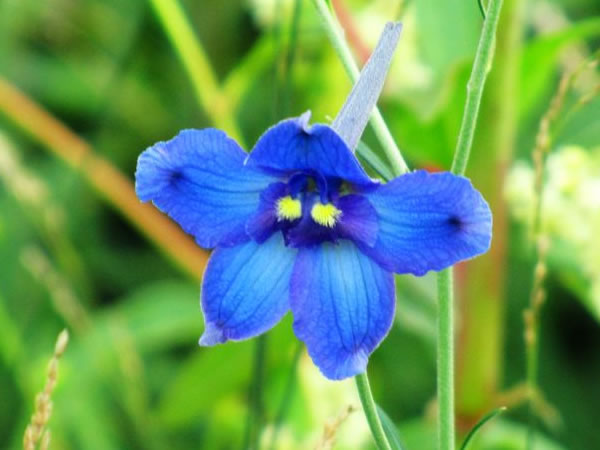
Morphological features: perennial herb, plant height 30-80 cm. Stems upright, much branched, stems and petioles covered with recurved appressed soft hairs. Leaves alternate, palmately 3-parted. Raceme terminal, sepals petal-like, blue, spur straight, petals and staminodes blue.
Ecological habits: grows on mountain slopes, grasslands, and fixed sand dunes. Prefers a cool, airy, sunny, dry environment and well-drained sandy loam. Drought-tolerant plant, light-loving plant. Sun-loving, tolerant of partial shade, very robust, drought-tolerant, cold-tolerant, prefers a cool climate, dislikes heat. Cultivated in the southwestern region.
Bloom period: May to July.
Flower language: tranquility, lightness, justice, freedom.
Landscape uses: flower clusters, flower beds, flower borders, cut flowers.
Medicinal value: the whole plant and seeds can be used as medicine to treat toothache. The juice soaked from stems and leaves can kill insects.
I. Cultivation methods for Delphinium grandiflorum
1. Environment: When planting Delphinium grandiflorum, choose a spot with higher elevation and ample sunlight. When preparing the soil, make the ground into a slightly sloped surface to facilitate drainage and prevent water accumulation in the beds during rain or irrigation from adversely affecting its growth. When preparing the soil, deep plowing is needed to make the soil loose and breathable.
2. Fertilization: Apply topdressing at different phenological stages. Before planting Delphinium grandiflorum, apply organic fertilizer and add an appropriate amount of compound fertilizer as a base fertilizer; during the peak vegetative growth stage, add nitrogen fertilizer. At this time the Delphinium grandiflorum plant grows rapidly, and timely nutrient supplementation can make the leaves large and deep green; during the flowering period, timely supplementation of phosphorus and potassium fertilizer can increase the number of flowers and extend the flowering period, thereby enhancing the ornamental value of Delphinium grandiflorum.
3. Watering: Delphinium grandiflorum is drought-tolerant and dislikes waterlogging. When watering, water thoroughly in one go, avoiding overly dry soil, but there must be no water accumulation; during the flowering period, water appropriately more to keep the soil moist, which can extend the viewing period of the flowers; avoid watering at noon to prevent the plant from wilting.
4. Management: Delphinium grandiflorum dislikes heat and should be avoided from direct sun exposure. In summer when temperatures are high, for small-area planting, a shade shed can be built, or it can be planted under tall trees. Cultivate and weed. Weed and loosen the soil in time so that Delphinium grandiflorum grows robustly and its ornamental quality is improved.
II. Differences between larkspur and Delphinium grandiflorum
Larkspur belongs to the Ranunculaceae family, genus Consolida, aliases: qianniao grass, radish flower. Annual or biennial herb, plant height 60-100 cm. Leaves alternate, palmately finely divided, raceme terminal, ovary composed of 1 carpel, follicle, seeds brown, flowering growth period May-July, fruit ripens July-August, seed lifespan 4 years.
Larkspur picture
Delphinium grandiflorum belongs to the Ranunculaceae family, genus Delphinium, aliases: dove flower, large-flowered larkspur. Perennial herbaceous perennial, plant height 35-65 cm. Leaves alternate, palmately 3-parted, raceme terminal, ovary composed of 3 carpels, follicle, seeds black-brown, flowering growth period June-September, fruit ripens August-October, seed lifespan 1 year.
Delphinium grandiflorum picture
Difference one: Both belong to Ranunculaceae, but their genera and species are different. Larkspur belongs to genus Consolida, species larkspur; Delphinium grandiflorum belongs to genus Delphinium, species Delphinium grandiflorum.
Difference two: The larkspur plant type is relatively taller, with flowers densely clustered into the plant form. Delphinium grandiflorum is relatively shorter and smaller, and its flowers are also smaller and looser.
The above isDelphinium grandiflorum cultivation methodsandthe differences between larkspur and Delphinium grandiflorumintroduced. We hope it helps everyone, so that while distinguishing larkspur from Delphinium grandiflorum, you can better grow Delphinium grandiflorum.
Larkspur Delphinium grandiflorum larkspur gallery: how to grow larkspur / how to propagate larkspur
Larkspur profileLarkspur Delphinium grandiflorum
Larkspur cultivation methods and precautions, an introduction to larkspur
Larkspur is an annual or biennial herbaceous flower of the genus Consolida in the Ranunculaceae family. The larkspur plant is upright, with a plant height of 30 cm to 100 cm, and some varieties can reach 120 cm. Its stems and leaves have sparse fine hairs, and the leaves are alternate, palmately deeply lobed to fully lobed, with linear lobes; the basal leaves have long petioles, and the upper leaves are sessile.
The inflorescence of larkspur is a terminal raceme or spike, with small flowers about 2.5 cm to 4.0 cm in diameter, 5 sepals, violet-blue or pink, with a long spur on the upper sepal, 2 petals, connate, the same color as the sepals, the outer sepals also petal-like, the same color as the petals, with the outermost one elongated into a narrow ellipse.
The flowering period of larkspur is from May to August. Its flowers are rich in color, including blue, light blue, white, pink, flesh pink, etc., and most varieties also have eye spots on the petals. At present, landscape technicians have bred many hybrid varieties, such as Delphinium belladonna, Delphinium elatum, etc., not only with richer flower colors, but also with many changes in flower shape, gradually expanding the larkspur family.
The larkspur plant is upright, with slender emerald green leaves, and the flowers are dense and gorgeous. Seen from afar, they are like little birds playing among the branches, offering a unique charm.
Morphological features of larkspur
Larkspur is an annual herb, less than 1 m tall, slightly hairy. Branches few and ascending. Basal leaves with long petioles, 3-parted almost to the base, the lobes further divided into many linear small lobes; upper leaves sessile, also with many linear lobes. Raceme very long, thinly covered with small soft hairs; pedicels ascending, 1.5-4 cm long, with a pair of bracteoles at or below the middle; flowers blue, blue-purple to pale red or white, often double, 2-4 cm in diameter when open; sepals 5, broad and slightly obtuse, the posterior one elongated into a spur, the spur curved upward, about as long as the other parts of the flower, the spurs of the upper pair of petals fitting into it; carpel 1, sometimes many in double flowers.
Larkspur follicle about 1-2 cm long, hairy, with a pointed beak at the tip. Flowering period May to August. Perennial herb, 35-65 cm tall. The whole plant covered with soft hairs. Stems sparsely branched. Leaves alternate, palmately deeply lobed, basal leaves and lower stem leaves with long petioles; leaf blade round-reniform, three-parted, 2.2-6 cm long, 4-8 cm wide, lobes finely divided, small lobes linear, 0.6-2.5 mm wide.
Raceme with 3-15 flowers, axis and pedicels with recurved fine soft hairs; flowers zygomorphic; bracteoles linear or subulate; sepals 5, petal-like, blue or purple-blue, 1.5-1.8 cm long, the upper one with a spur, apex often slightly concave; petals 2, smaller, with a spur, the spur protruding into the sepal spur; staminodes 2, limb broadly obovate, slightly concave, with yellow beard hairs; stamens many; carpels 3, free. At full bloom, it is even more like a flock of small blue birds descending from the sky, very moving, with 3 follicles clustered together.
Larkspur flowering period August-September, fruiting period September-October.
Ecological habits of larkspur
The wild original species of larkspur is mainly produced in the temperate zones of the Northern Hemisphere. It likes a growing environment with ample sunlight, good ventilation, and smooth drainage, and is suitable for growing in fertile sandy soil rich in organic matter. Its cold tolerance and drought tolerance are both relatively strong, but it is not tolerant of high temperatures, so in high-temperature summer areas, it should be moved to a cool place for cultivation.
Larkspur likes a cool climate, with the optimum daytime temperature of 20°C-25°C and nighttime temperature of 13°C-15°C. Before flowering, apply an appropriate amount of nitrogen fertilizer, and after flowering begins, apply phosphorus and potassium fertilizer. Larkspur grown for cut flowers has tall inflorescences, so attention should be paid to preventing the plants from lodging; nets can be stretched between plants to fix them and prevent lodging. Larkspur fears waterlogging most, so attention should be paid to drainage on rainy days.
Because the fruit ripening period of larkspur is inconsistent, and the fruit naturally splits after ripening, the seeds are easily lost, so they should be harvested in time
Distribution area of larkspur
Larkspur is native to China and Siberia, altitude: 700 m. Its horticultural domestication began in the 17th century. With its upright plant, elegant leaves, full inflorescences, and dense flowers, it has become a "beauty" in European gardens and is widely used in gardens.
At present, larkspur is cultivated in all provinces of China, and there are even wild species of larkspur in places such as Hebei. Under the trend of strongly advocating the use of native flowers in landscaping and beautification, it is believed that this beautiful flower will be used more widely.
Cultivation techniques of larkspur: transplanting
Seedbed preparation: choose a plot with good light and drainage and a soil pH of 6.0-6.5. Applying organic matter to the soil will help improve soil structure and increase yield.
Spacing: 20 cm. Cultivation net support is needed.
Fertilizer and watering: The suitable soluble salt content is 1.0 to 1.4. Using a balanced ratio of calcium nitrate fertilizer helps promote sturdy plants. Maintain appropriate humidity to avoid plant wilting that damages the root system and ultimately reduces cut flower quality.
Long-day: Long-day conditions help promote flowering, resulting in relatively shorter plants.
Larkspur can be propagated by division, cuttings, or sowing.
The suitable temperature for its seed germination is about 15°C, and the soil temperature needs to be kept below 20°C. Generally, germination occurs about two weeks after sowing. For autumn sowing, choose late August to early September. First sow the seeds into an open-field seedbed, and before winter move the seedlings into a cold frame or cold room to overwinter. After the weather warms in spring, move them outdoors for final planting. In southern regions, direct sowing in the open field can also be done in early spring, followed by thinning after emergence, keeping the seedling spacing at 25 cm-50 cm. Generally, final planting can be done when the seedlings have grown 4-7 true leaves. Cutting propagation is generally chosen in spring. When the new shoots grow to more than 15 cm, cut cuttings and insert them into sand. Division propagation can be done in both spring and autumn.
Cultivation temperature: 15-20 degrees; growth temperature: 15-24 degrees.
Advance cold treatment:
After sowing the seeds into plug trays, cover with a small amount of vermiculite. The substrate is required to have suitable dryness and moisture and be free of pathogens, with a pH of 5.5-6.3. Water thoroughly with chlorpyrifos diluted in water to prevent the occurrence of pests and diseases. Place the seedling trays in dark, low-temperature conditions of about 10 degrees for 15-20 days. Be careful to keep the seedling tray substrate moist, and it can be covered with plastic film.
Stage one:
Move the seedling trays to a bright greenhouse, maintaining 20 degrees during the day and 15 degrees at night for 12 hours each. To maximize the germination rate, try to keep the daytime temperature no higher than 25 degrees and the nighttime temperature no higher than 20 degrees.
Stage two:
When the seeds begin to germinate, use a balanced Ca-containing nitrogen fertilizer diluted to 75-100 ppm for application. Place the seedling trays in a cool, light-transmitting greenhouse, maintaining the temperature at 15-18°C, and pay attention to air circulation. High temperatures during the seedling stage (above 25°C) will cause premature flowering and result in poor cut flower quality. Low temperatures (below 10 degrees) will instead cause the plants to form rosettes, which can be broken by increasing day length from winter to spring.
Stage three:
When the soluble salt content in the soil is 0.8-1 and the pH is 5.5-6.3, true leaves begin to form. Maintain the temperature at 15-18°C, and at the same time provide a good air environment to prevent disease. The leaves and root system of larkspur are both susceptible to disease infection, so good environmental conditions and water quality in the early stage are very important.
Stage four: (29-35 days) At this stage the seedlings will reach transplant size and have 3 true leaves. Larkspur has a taproot system, and delaying transplanting will reduce plant and flower quality.
Dietary or medicinal value of larkspur
The medical information and health dietary information on Huhua.com is for reference only and cannot be used as a basis for diagnosis or medical treatment. Any health issues should be consulted with professional medical staff, and treatment for any disease should follow a doctor's advice.
Ultimate flower-protecting mission: Love yourself, start from reality, and strictly follow a doctor's advice. For illness, do not be careless, do not delay, do not give up hope, face it bravely, use love to warm the silent world, and use your heart to care for the flower field within.
Traditional Chinese medicine
Note: The Chinese herbal medicine larkspur and the aforementioned plant belong to the same genus but are different species.
Aliases: cat-eye flower, dove flower, large-flowered larkspur, chicken-claw lotus, soil coptis [Jilin]
Source: Delphinium grandiflorum, a plant of the genus Delphinium in the Ranunculaceae family
L., used as medicine with roots, whole plant, and seeds. In summer, collect the whole plant, remove soil, cut into sections, and dry in the sun; in autumn, collect roots and seeds, and dry in the sun.
Nature, flavor, and meridians: bitter, warm. Highly toxic.
Functions and indications: purge fire and relieve pain, kill insects. Root: toothache. Whole plant: kill lice.
Usage and dosage: For external use, decoct an appropriate amount in water for washing, or make into a tincture for use.
(Note) The whole plant is toxic, with the seeds being the most toxic. It mainly contains alkaloids. Accidental ingestion can cause nervous system poisoning. After poisoning, symptoms include difficulty breathing, circulatory disturbance, muscle and nerve paralysis, or spasms. Take care when using.
The above is excerpted from: "Compilation of National Chinese Herbal Medicines"
The whole plant and seeds can be used as medicine to treat toothache. The juice soaked from stems and leaves can kill insects.
Root and seeds: Larkspur, annual herb, less than 1 m tall, slightly hairy. Branches few and ascending. Basal leaves with long petioles, 3-parted almost to the base, the lobes further divided into many linear small lobes; upper leaves sessile, also with many linear lobes. Raceme very long, thinly covered with small soft hairs; pedicels ascending, 1.5-4 cm long, with a pair of bracteoles at or below the middle; flowers blue, blue-purple to pale red or white, often double, 2-4 cm in diameter when open; sepals 5, broad and slightly obtuse, the posterior one elongated into a spur, the spur curved upward, about as long as the other parts of the flower, the spurs of the upper pair of petals fitting into it; carpel 1, sometimes many in double flowers. Follicle about 1-2 cm long, hairy, with a pointed beak at the tip. Flowering period April. Mostly cultivated in gardens. Native to southern Europe, cultivated in China. Generally collected in July-August.
[Functions and indications] Seeds: taken internally, with effects similar to aconite, can treat asthma and edema. Root: mainly treats abdominal pain.
Medicinal selected prescriptions
① To treat wind-heat toothache: Larkspur 5 fen to 1 qian. Decoct in water for gargling, do not swallow. ("Handbook of Commonly Used Chinese Herbal Medicines in Northeast China")
② To treat scabies and tinea: Larkspur combined with Sophora flavescens, grind into powder and apply. ("Handbook of Chinese Herbal Medicine Treatment on the Plateau")
③ To treat head lice: Fresh chicken-claw lotus whole plant, mash, soak in water and wash the head. ("Jilin Chinese Herbal Medicines").
Components
Using atmospheric pressure column chromatography and thin-layer chromatography, 7 compounds were isolated from Delphinium grandiflorum L., and the structures of 6 of them were identified using physicochemical properties and spectral analysis, namely: (1) 7-dimethoxy-5-hydroxyflavone
(2) 1-O-demethyltalatisamine
(3) methyllycaconitine
(4) delphamine
(5) delphocurine
(6) delphinine
Literature searches confirmed that compounds 1 and 2 were both isolated from this plant for the first time.
Collection
There are many kinds of Chinese medicinal materials, and the medicinal parts differ, so their optimal harvest times are also different. The so-called optimal harvest period is defined in terms of the quality of the Chinese medicinal materials. The quality of Chinese medicinal materials depends on the content of active ingredients and is closely related to the place of origin, variety, cultivation techniques, and the harvest years, season, time, and method. To ensure the quality and yield of Chinese medicinal materials, most should be harvested in time after maturity. Maturity of Chinese medicinal materials means that the medicinal part has reached the medicinal standard and meets the requirements of the national pharmacopoeia. The quality of medicinal materials includes internal quality and external appearance, so the optimal harvest period for Chinese medicinal materials should be when the active ingredient content is highest and the external appearance, such as shape, color, texture, and size, is best, so as to obtain high-quality medicinal materials and achieve better benefits.
Now, based on predecessors' experience, combined with the factors affecting the properties and quality of medicinal materials and the laws of nutrient storage and loss during the growth and development of medicinal plants, the optimal harvest periods of Chinese medicinal materials are briefly described below according to the different medicinal parts.
I. Varieties of Chinese medicinal materials used as medicine with roots and rhizomes
Such Chinese medicinal materials are generally better in quality when the roots and rhizomes are firm, the roots are straight, with few branches, and sufficient powderiness. The harvest season is mostly in autumn, winter, or early spring, during the dormant period after growth has stopped and flowers and leaves have withered, or before germination in early spring. For most varieties, harvesting before germination in spring is the most suitable period, because in early spring the medicinal plant is preparing to sprout, and the large amount of nutrients stored in the rhizome has not yet decomposed or has just begun to decompose, so the active ingredient content is highest, the nutrients are richest, and the quality is best. But there are exceptions, such as Astragalus membranaceus, Aconitum kusnezoffii, Coptis chinensis, and Codonopsis pilosula, which are harvested in autumn, while Pseudostellaria heterophylla, Pinellia ternata, and Aconitum carmichaelii are dug and harvested in summer for high active ingredient content and good quality.
II. Varieties of Chinese medicinal materials used as medicine with flowers
Flower-type Chinese medicinal materials are mostly harvested when the flower buds are still closed, giving better quality. If the flowers have already fully opened, the petals are prone to scattering, breaking, losing color, and losing fragrance, seriously affecting quality. For example, Lonicera japonica should be harvested in summer and autumn when the bud heads are plump and turn from green to yellow; Syzygium aromaticum in autumn when the buds turn from green to red; Magnolia biondii in late winter and early spring when the flowers have not yet opened; Rosa rugosa in late spring and early summer when the flowers are about to open; Sophora japonica in summer when the buds form. These are the most suitable harvest times, with high active ingredient content and good quality. But some flower-type Chinese medicinal materials need to be harvested when the flowers are open, such as Rosa chinensis in spring and summer when the flowers are slightly open, Rhododendron molle in April-May when the flowers bloom, Datura metel in spring and summer when the flowers first open, Chrysanthemum morifolium in autumn and winter when the flowers are in full bloom, and Carthamus tinctorius in summer when the flowers turn from yellow to red. These are the most suitable harvest periods.
III. Varieties of Chinese medicinal materials used as medicine with fruits and seeds
Fruit-type Chinese medicinal materials are better harvested when naturally mature or nearly mature; seed-type Chinese medicinal materials should be harvested when the seeds are fully developed and mature, plump, and high in active ingredient content. Such as Cannabis sativa fruit, Aristolochia debilis, Kochia scoparia fruit, Celosia argentea seed, Schisandra chinensis, Vaccaria hispanica, Myristica fragrans, Raphanus sativus seed, Rubus idaeus, Chaenomeles speciosa, Crataegus pinnatifida, Trichosanthes kirilowii, bitter apricot seed, Prunus japonica seed, Prunus mume, Rosa laevigata, Astragalus complanatus, Cassia obtusifolia, Psoralea corylifolia, Trigonella foenum-graecum, Citrus aurantium, Evodia rutaecarpa, Croton tiglium, Ziziphus jujuba seed, Sterculia lychnophora, Hydnocarpus anthelminticus, Quisqualis indica, Terminalia chebula, Foeniculum vulgare, Cnidium monnieri, Cornus officinalis, Forsythia suspensa, Ligustrum lucidum, Strychnos nux-vomica, Cuscuta chinensis, Pharbitis nil, Hyoscyamus niger, Lycium barbarum, Arctium lappa, Coix lacryma-jobi, Amomum villosum, Amomum tsao-ko, Alpinia oxyphylla, etc. For varieties with inconsistent maturity, harvest as they ripen, in batches. Such as Impatiens balsamina, Euphorbia lathyris, etc.
IV. Varieties of Chinese medicinal materials used as medicine with leaves
Leaf-type Chinese medicinal materials should be harvested when the plant is growing most vigorously, before the flowers open or when the flowers are in full bloom. At this time the plant has fully grown, photosynthesis is vigorous, and the active ingredient content is highest. Such as Isatis indigotica leaf, Perilla frutescens leaf, Senna alexandrina leaf, Clerodendrum trichotomum leaf, Artemisia argyi, etc.
The fruit ripening period is inconsistent, and after ripening they naturally split, so they should be harvested in time. Generally in June, harvest the already ripe seeds 1-2 times first, and in July select the best and harvest all, dry in the sun, and thresh. Rinse the whole plant, cut into sections, and dry in the sun.
Biological identification
Root long cylindrical, 2-7 cm long, 1-3 mm in diameter; surface dark brown, with obvious transverse wrinkles; broken surface yellow. Stem surface brownish-yellow, ridged, fracture surface
hollow. Leaves wrinkled, yellow-green, after moistening and flattening reniform-pentagonal, 0.8-1.4 cm long, 0.7-2.3 cm wide, 3-parted, central lobe broadly rhombic, lateral lobes nearly fan-shaped, once to twice finely divided, small lobes narrowly ovate; petiole. Flowers solitary on branch
tips, bracteoles leaf-like or elliptical; pedicels pubescent; sepals 5, blue-purple, broadly elliptical, spur cylindrical-subulate, about as long as the sepals; staminodes 2, petal-like, black-brown, 2-lobed, covered with yellow beard hairs; ovary hairy. Follicle about 1.8 cm long. Seeds obconical-tetrahedral. Slight odor, bitter taste.
Functions and uses of larkspur: landscape value
Larkspur has unique flower shapes and elegant colors. It can be planted in clusters, planted in flower beds and flower borders, and used as cut flowers. Tall-stemmed flower varieties are also good material for cut flowers.
Industrial use
The whole larkspur plant is toxic, and the seed oil can be used industrially.
Landscape uses of larkspur
Larkspur flowers resemble flying birds, with large inflorescences in strings, and bright flower colors including blue, purple, white, pink, etc. Dwarf varieties are suitable for pot cultivation or flower bed arrangements. In gardens, larkspur is suitable for flower borders or cluster planting in green spaces.
Cultural background of larkspur: folk legends
Legend one
Ajax, a hero of England, was furious because he received too few spoils of war. He stabbed and slashed randomly at the flowers and plants in the courtyard with his sword. When he regained his senses, he felt ashamed of this behavior and committed suicide. After the blood he shed dripped to the ground, beautiful larkspurs grew. It is said that the English initials of Ajax's name, A·I·A, also appeared on the flowers.
Legend two
A legend full of blood and tears circulates among the people of southern Europe. In ancient times, a clan was persecuted and fled in all directions, but all of them tragically met their end. Their souls turned into swallows (some say larkspurs) and flew back to their homeland, hiding among the slender grass stems and branches. Later, these swallows turned into beautiful flowers that bloom in their native land year after year, longing for "justice" and "freedom" to be restored to them.
★ Strict warning: this plant is highly toxic, and accidental ingestion may cause death or serious illness!
The flower meaning of larkspur
The flower meaning of larkspur is "purity, justice, freedom," and it also carries the meanings of "lightness, beauty, fragility, brevity." Different flower colors also have different connotations.
Blue flowers represent "melancholy"
Purple flowers represent "admiration, gentleness"
Pink flowers represent "poetic charm"
White flowers represent "elegant simplicity."
Larkspur pictures