What varieties of indoor foliage plants are there and what are their characteristics
Indoor foliage plants refer to a category of plants that are mainly grown for their leaves as the key ornamental feature and are suitable for relatively long-term display and enjoyment indoors. Indoor foliage plants are mainly shade-loving foliage plants, and also include some species grown for both leaves and flowers or both leaves and fruit. Among them, some trailing vine flowers such as pothos are also often used as indoor foliage plants. These plants have the following characteristics:
1. Most originate from the lower layers of tropical forests, so they like ample diffused light and fear direct light; they like warm to high temperatures and high-humidity environments.
2. Long ornamental period and many species, but the families and genera are very concentrated, mainly belonging to Araceae, Agavaceae, Marantaceae, Arecaceae, Bromeliaceae, etc. Classification:
According to differences in shade tolerance, they are divided into 4 categories:
Shade-tolerant indoor foliage plants: such as ferns, Aspidistra elatior, Peperomia species, Spathiphyllum, Aglaonema modestum, etc. Suitable for placement indoors near windows without direct light or relatively far from windows with direct light.
Semi-shade-tolerant indoor foliage plants: such as Maranta species, Philodendron species, pothos, Pilea cadierei, Monstera deliciosa, Asparagus setaceus, Dypsis lutescens, Chlorophytum comosum, Rhapis excelsa, etc. Suitable for places with light but no direct light, such as indoors around 1.5~2.5m from a south-facing window.
Day-neutral indoor foliage plants: such as Caryota mitis, Schefflera arboricola, Pachira aquatica, Dracaena fragrans, Schefflera actinophylla, Clerodendrum thomsoniae, Cordyline fruticosa, Saintpaulia, etc. Suitable for places with some direct sunlight, such as indoors near east-facing and west-facing windows and more than 0.8m from a south-facing window.
Sun-loving indoor foliage plants: such as Ficus benjamina, Ficus elastica, Codiaeum variegatum, Neoregelia, etc. Suitable for atriums with skylights, or indoors about 0.5~0.8m from a south-facing window.
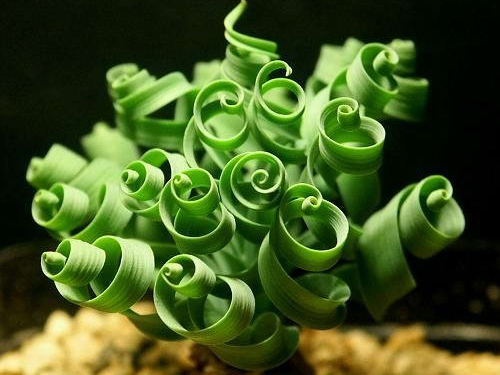
What indoor foliage plants are there? Characteristics of indoor foliage plants
As for indoor foliage plants, there really are indeed many. Some foliage plants with good symbolism, easy to keep alive, and able to absorb harmful substances from the air are widely grown in daily life and have become what we call common plants. What are indoor foliage plants? Let us take a look together below.
What indoor foliage plants are there
1. Calathea roseopicta
Calathea roseopicta, also known as red-backed prayer plant and purple-backed maranta, is a perennial evergreen herbaceous foliage plant of the genus Calathea in the Marantaceae family. Calathea roseopicta is one of the most widely cultivated species in the Marantaceae family. Its branches and leaves grow densely and the plant form is full; the leaf surface is deep green and glossy, while the leaf underside is purplish red, forming a striking contrast, making it an excellent shade-loving indoor foliage plant. Used to decorate bedrooms, living rooms, offices and other places, it appears quiet and dignified.
2. Calathea zebrina
Calathea zebrina, also known as velvet calathea, zebra plant and velvet leaf calathea, is a perennial evergreen herbaceous foliage plant of the genus Calathea in the Marantaceae family. Calathea zebrina has broad leaves, a soft leaf surface, and a mottled and gorgeous luster, and is extremely rich in a soft and elastic beauty, with a very good ornamental effect. It is a world-famous shade-loving foliage plant. Potted plants are very suitable for decorating studies, living rooms or indoor gardens, etc. In a bright room, it can grow well without direct sunlight and can be enjoyed for a relatively long time. Its leaves can also be used as foliage in flower arrangements.
3. Variegated shell ginger
Variegated shell ginger, also known as variegated galangal, is a perennial herbaceous foliage plant of the genus Alpinia in the Zingiberaceae family. Variegated shell ginger has brilliant and very charming leaf color; its flowers are graceful and the floral fragrance is pure, making it a very ornamental indoor foliage and flowering plant. It is often planted in small and medium pots and placed in relatively bright places such as living rooms, offices and hallways, and can also be used as a decorative plant in indoor gardens.
4. Aspidistra elatior
Aspidistra elatior has upright and neat leaf shapes, deep green and glossy leaf color, and a graceful posture that is elegant yet dignified; at the same time, it grows vigorously, has strong adaptability and is extremely shade-tolerant, making it an excellent shade-loving foliage plant for indoor greening decoration. It is suitable for arrangement and placement in homes and offices. It can be enjoyed on its own; it can also be arranged together with other flowering plants to set off the brightness and beauty of other flowers. In addition, it is also an excellent foliage material for modern flower arrangements.
5. Sansevieria trifasciata
Sansevieria trifasciata, also known as snake plant and thousand-year plant, is a perennial herbaceous foliage plant of the genus Sansevieria in the Liliaceae family. The leaves are firm and upright, and the leaf surface has gray-white and dark green alternating tiger-tail-like horizontal band markings, with a resolute posture that is peculiar and interesting; it has many varieties, and the plant form and leaf color vary greatly, exquisite and unique; it has strong adaptability to the environment and is a tenacious plant, widely cultivated and used, and is a common indoor potted foliage plant. Suitable for arranging and decorating studies, living rooms, office reception places and other places, and can be enjoyed for a relatively long time.
6. Yucca elephantipes
Yucca elephantipes, also known as giant yucca, elephant's foot yucca and spineless yucca, is a foliage plant of the genus Yucca in the Liliaceae family. Yucca elephantipes has a neat plant form, thick stems, and firm and emerald green leaves, extremely rich in a masculine and upright temperament. It has strong adaptability, vigorous vitality and simple cultivation and management. At the same time, it is a plant with a relatively strong ability to absorb various harmful gases, and is an ideal material for indoor and outdoor greening decoration. As a small or medium potted plant, placing it in meeting rooms, halls, corridors and passageways can create a dignified and serious atmosphere; young potted plants placed on bookshelves and office desks are also very popular.
Finally, it must be said that indoor foliage plants are decorative plants that many people especially like, especially when placed in offices and yards. They are both beautiful and environmentally friendly, truly can't be better.
What indoor foliage plants are there, and the characteristics and classification of indoor foliage plants
Indoor foliage plants refer to a category of plants that are mainly grown for their leaves as the key ornamental feature and are suitable for relatively long-term display and enjoyment indoors. Indoor foliage plants are mainly shade-loving foliage plants, and also include some species grown for both leaves and flowers or both leaves and fruit. Among them, some trailing vine flowers such as pothos are also often used as indoor foliage plants. These plants have the following characteristics: 1. Most originate from the lower layers of tropical forests, so they like ample diffused light and fear direct light; they like warm to high temperatures and high-humidity environments. 2. Long ornamental period and many species, but the families and genera are very concentrated, mainly belonging to Araceae, Agavaceae, Marantaceae, Arecaceae, Bromeliaceae, etc. Classification: According to differences in shade tolerance, they are divided into 4 categories: Shade-tolerant indoor foliage plants: such as ferns, Aspidistra elatior, Peperomia species, Spathiphyllum, Aglaonema modestum, etc. Suitable for placement indoors near windows without direct light or relatively far from windows with direct light. Semi-shade-tolerant indoor foliage plants: such as Maranta species, Philodendron species, pothos, Pilea cadierei, Monstera deliciosa, Asparagus setaceus, Dypsis lutescens, Chlorophytum comosum, Rhapis excelsa, etc. Suitable for places with light but no direct light, such as indoors around 1.5~2.5m from a south-facing window. Day-neutral indoor foliage plants: such as Caryota mitis, Schefflera arboricola, Pachira aquatica, Dracaena fragrans, Schefflera actinophylla, Clerodendrum thomsoniae, Cordyline fruticosa, Saintpaulia, etc. Suitable for places with some direct sunlight, such as indoors near east-facing and west-facing windows and more than 0.8m from a south-facing window. Sun-loving indoor foliage plants: such as Ficus benjamina, Ficus elastica, Codiaeum variegatum, Neoregelia, etc. Suitable for atriums with skylights, or indoors about 0.5~0.8m from a south-facing window.Cultivation methods:
(1) Adaptation process Foliage plants bought back from the flower market need a process of gradually adapting to the indoor environment. First place it on a windowsill or balcony with better light and good ventilation, and after about ten days to half a month, move it indoors for display. (2) Light and growing environment ① Places with better light such as windowsills and doorways are suitable for foliage plants with thinner leaves or markings, such as Codiaeum variegatum, Caladium bicolor, variegated Bougainvillea, Asparagus densiflorus, Syngonium podophyllum, variegated Schefflera arboricola, etc. ② Plants with thick leaves and deep green leaf color are usually more shade-tolerant and can be placed in places with weaker light, such as Dracaena fragrans, Pachira aquatica, Monstera deliciosa, Epipremnum aureum, Spathiphyllum, Dypsis lutescens, Aglaonema species, etc. Keeping plants indoors for a long time is always unfavorable to their growth, so they must be regularly placed outdoors for care so that they grow better. (3) Water management In the high-temperature summer season, water once every 2~3 days. But it should be controlled flexibly according to the actual situation; if the leaves are found to have drooped or softened, water should be replenished in time. In winter, plant growth is slow and evaporation is low, so watering once a week is enough, at noon, and not in the evening; otherwise, as the temperature drops at night, leaves touched by water may be frostbitten, affecting the ornamental effect.
(4) Fertilizer management Fertilizers can be divided into two major categories: one is organic fertilizer (including chicken and pigeon manure, fish bone meal, soybean cake, plant ash, etc.), whose effect is relatively slow but whose effective period is long, generally used as base fertilizer, and can be applied adequately in early spring each year when repotting, which is beneficial to the long-term growth of plants. The other category is chemical fertilizer, which is absorbed quickly by plants and is generally applied during the growing period, but it must not be applied too frequently or too concentrated, otherwise it will cause fertilizer damage, so it should be applied in small amounts more often. Be careful not to place it too close to the roots.