How to grow Philodendron bipinnatifidum and Philodendron 'Golden Diamond'? A complete guide to care methods
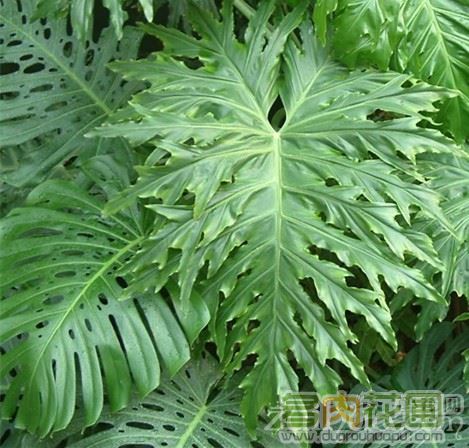
Philodendron bipinnatifidum, also known as spring taro and Golden Diamond. It is a perennial evergreen herbaceous plant of the genus Philodendron in the Araceae family. The stem is short and clustered, the leaves are huge, the entire leaf is deeply pinnately lobed, and leathery in texture. Generally, potted specimens are smaller. The leaves are deep green, smooth and glossy.
It likes warm, humid environments, tolerates shade, and fears direct strong sunlight. It prefers loose, fertile sandy loam. For potting, you can use a growing medium made of leaf mold or peat soil plus a small amount of river sand. During the growing season, keep the potting soil moist at all times. Do not apply too much fertilizer; generally apply dilute cake fertilizer water 1~2 times per month, or apply a slow-release granular fertilizer once every 1~2 months. If too much fertilizer is applied, the leaf stalks will become slender and weak, bending and drooping, which affects the ornamental effect.
In autumn and spring, it can be placed indoors near a south-facing window. After the weather warms up in spring, place it outdoors under tree shade or in other shaded spots. In summer, avoid direct sunlight, and pay attention to sprinkling water on the ground around the flower pot and misting the leaves every day to increase air humidity. In winter, place it indoors in a spot with ample light, control watering, stop fertilizing, and keep the room temperature at preferably above 10°C.
Cultivation techniques
1.Potting soil
You can choose a clay pot for planting, and place it inside another pot on the outside; this is both attractive and breathable. Since Philodendron bipinnatifidum likes fertile, loose, well-drained, slightly acidic soil, for home cultivation you can mix leaf mold, peat soil, garden soil, etc. with a small amount of river sand. Depending on the plant's growth, repot once every 2 years or so in spring.
2. Light
Spring taro likes warmth, tolerates shade, is not cold-tolerant, and avoids direct strong sunlight. In the hot summer, it should be kept in a shaded place for care. In winter, it can be placed in a spot with ample sunlight.
3. Temperature
The suitable growing temperature is 20°C~30°C; it begins to grow at around 10°C; the overwintering temperature is preferably greater than 8°C.
4.Watering
Spring taro likes humid environments. Usually you can water it with some rice-washing water, and during the growing period pay attention to keeping the potting soil moist. In summer, you can mist the leaves or around the flower pot every day to maintain a fresh and humid microclimate. Watering should be flexible: in the dry seasons of spring and summer, keep the soil moist, while in autumn and winter, water only when dry and let it dry out between waterings.
5.Fertilizing
It likes fertilizer. During the peak growing season of Golden Diamond from May to September, apply fertilizer water 1-2 times per month. Avoid applying too much nitrogen fertilizer alone, otherwise the leaf stalks will become slender and weak and difficult to stand upright, which affects the ornamental effect. In other seasons, also apply as little fertilizer as possible.
6. Overwintering
The overwintering temperature should not be lower than 5°C. In winter, as the temperature gradually drops, reduce the frequency of watering. Although spring taro likes warmth and humidity, it has strong adaptability to the dry indoor environment of northern winters. When potting or repotting, place some hoof and horn pieces or oil residue at the bottom of the pot as base fertilizer, and afterward apply liquid fertilizer once a month (such as dilute cake fertilizer water, etc.). In winter, apply little or no fertilizer.
Propagation methods
Propagation can be done by division or cuttings. Generally, vigorous plants can produce tillers at the base; after they take root, they can be removed and planted separately. Alternatively, cut off the upper part of the plant and root it as a cutting to form a new plant; the base of the old plant will sprout several young shoots, and these young shoots can be used for propagation.
Precautions
1. During the growing season, appropriately apply some light fertilizer, but not too much
2. Usually mist the leaves more often, and in winter appropriately control watering. But do not water too frequently.
3. Outdoor care should place it in a shaded spot; it can grow in any indoor position, but a bright spot is better. As long as the room temperature stays above 8°C, it can overwinter safely
4. Winter management should control moisture, watering when the potting soil is dry. For mature plants, before moving them out each year, replace with loose, fertile nutrient soil, and place hoof and horn pieces or oil residue in the pot as base fertilizer. In late April, move the flower pot outdoors to a sheltered, sunny spot for care. In summer, avoid heat and direct strong sunlight, and take shading measures
5. Philodendron bipinnatifidum has a high water demand. In summer, water thoroughly twice a day, mist the leaves frequently, clean the leaf surfaces, and maintain a fresh and humid microclimate. Usually water with rice-washing water or mild chicken or fish blood water to increase soil fertility and prevent the potting soil from compacting. Philodendron bipinnatifidum grows quickly; with proper water, fertilizer, light and temperature, it can grow 375 leaves in a year
The above is the cultivation methods and precautions for Philodendron bipinnatifidum that I have compiled. I hope it can be helpful to you. Please continue to follow Succulent Garden to learn more about flowers.
How to grow Golden Diamond and precautions: secret tips for Golden Diamond care
Home decor and arrangements cannot do without green plants. Arranging green plants in the home can both embellish and beautify the home and improve indoor air quality. Golden Diamond is a very common indoor foliage plant, with broad and unusual leaves that are very beautiful and have a good decorative effect on home arrangements. So what should be noted in the cultivation method of Golden Diamond? Let me tell you:
(This article comes from a website, for more please visit(This article comes from a website, for more please visitBasic information about Golden Diamond:
(This article comes from a website, for more please visitGolden Diamond (Latin scientific name: Philodendron selloum Koch), also called spring feather, spring taro, lacy tree philodendron, etc., is a perennial evergreen herbaceous plant that is relatively shade-tolerant. Golden Diamond plants are dense, with broad and unusual leaves and emerald green foliage. It is now a very common foliage plant for indoor homes or public places. The plants come in large and small sizes; generally the small ones are placed on desks, windowsills, etc., while larger plants are placed in relatively spacious places such as living rooms.
(This article comes from a website, for more please visit(This article comes from a website, for more please visitHow to grow Golden Diamond:
(This article comes from a website, for more please visit1. Soil:Golden Diamond is not strict about soil for cultivation. Sandy loam rich in humus and with good drainage is better. For potting, generally a mix of peat and perlite is used.
(This article comes from a website, for more please visit2. Watering:Golden Diamond originates from tropical rainforests and likes humid environments. Moreover, Golden Diamond's leaves are broad and thin and have a relatively large demand for water, so during the growth cycle the potting soil needs to be kept moist, especially during high-temperature summer periods when it cannot lack water. However, it also cannot be overwatered; water accumulating in the potting soil can easily cause root rot and death of the Golden Diamond plant.
(This article comes from a website, for more please visit3. Sunlight:Golden Diamond likes semi-shaded environments and is not strict about light, but it cannot tolerate long-term shaded environments, otherwise the leaf color of Golden Diamond will become lighter, the leaf stalks will lengthen, and the leaves will droop, reducing its ornamental value; nor can Golden Diamond be exposed to direct strong light, otherwise the leaves will easily develop dry leaf tips, scorched leaf margins, whitened leaf color and loss of luster. Therefore, Golden Diamond is best cared for in a semi-shaded environment or one with ample diffused light.
(This article comes from a website, for more please visit4. Fertilizing:During the vigorous growth period, Golden Diamond needs sufficient fertilizer, preferably mainly nitrogen fertilizer. At the same time, note that too much fertilizer cannot be applied at one time; it is best to apply thin fertilizer frequently. After entering autumn, pay attention to controlling the amount of fertilizer to facilitate overwintering. When the temperature is below 20°C, stop fertilizing.
(This article comes from a website, for more please visit5. Pests and diseases:Common diseases of Golden Diamond include leaf spot, anthracnose, etc. Generally, wettable powders such as carbendazim, thiophanate-methyl, and zineb are used for control, with relatively obvious effects. Pests mainly include red spider mites, scale insects, etc. Insecticides can be sprayed for control, and at the same time the care environment management should be strengthened.
(This article comes from a website, for more please visit6. Pruning:After being grown for a period of time, Golden Diamond will begin to show yellow, withered, scorched and other leaves. Then you need to check. If it is not caused by disease but simply normal metabolism, then the old leaves need to be pruned in time to reduce the loss of nutrients in the plant.
(This article comes from a website, for more please visit(This article comes from a website, for more please visitPrecautions for growing Golden Diamond:
(This article comes from a website, for more please visit1、Golden Diamond likes a warm climate. During cultivation, the temperature needs to be maintained at around 20°C and cannot be lower than 10°C. It should also avoid being hit by heating, air conditioning and cold winds.
(This article comes from a website, for more please visit2、Golden Diamond originates from tropical rainforests and has a relatively large demand for water. Generally, the air humidity needs to be maintained between 50~75%. Below 50%, leaves easily turn yellow and dry at the edges. Air humidity can be increased by misting and sprinkling water.
3、Golden Diamond is best watered when the surface of the potting soil is dry. During high-temperature summer periods, it can be kept moist. In winter, if the ambient temperature is below 15°C, watering needs to alternate between dry and wet.
4、Golden Diamond likes light, but also avoids direct strong light. The care environment is best in a semi-shaded place or one with ample diffused light. It cannot be kept in a shaded environment for a long time, otherwise the leaves easily turn yellow. Light also cannot be too strong, lest the leaves whiten and lose luster.
5、Golden Diamond should be fertilized according to the principle of thin fertilizer applied frequently, and mainly with nitrogen fertilizer.
(This article comes from a website, for more please visit(This article comes from a website, for more please visitThe flower language of Golden Diamond:
(This article comes from a website, for more please visitWith luxuriant branches and leaves, Golden Diamond gives people a feeling of prosperity, and Golden Diamond has extremely strong vitality, with emerald green leaves symbolizing vigorous vitality. Therefore, its flower language is many children and much fortune.
(This article comes from a website, for more please visitPropagation of Golden Diamond:
(This article comes from a website, for more please visitThe propagation methods of Philodendron bipinnatifidum mostly use cuttings, sowing, and division. At home, it is best to use cuttings and division, as the operations are relatively simpler.
(This article comes from a website, for more please visitPropagation by cuttings:Propagation by cuttings is suitable from May to September. Cut off a sturdy stem with a relatively long branch, insert it directly into clean river sand and place it in a semi-shaded spot, maintain relatively high air humidity, and keep the temperature at around 25°C. It will root in 20-25 days.
(This article comes from a website, for more please visitPropagation by division:Propagation by division requires that when small plantlets have grown at the base of the old plant, carefully separate the small plantlets from the old plant, trying not to damage the old plant or its roots. You can also choose to pinch off the side shoots; this can both dwarf the plant and produce more side shoots. When the newly grown side shoots are about 15 cm, cut them off with aerial roots and plant them separately.
(This article comes from a website, for more please visitThat is all for sharing the cultivation methods and precautions of Golden Diamond. Golden Diamond is a very good foliage plant. Whether indoors in the living room or study, or outdoors in the courtyard or on the balcony, the arrangement of Golden Diamond will have a good beautifying effect. For more home flower information, please follow the Flowers Channel's Flowers section.
(This article comes from a website, for more please visitRelated recommendations:
How to grow azaleas and when azaleas bloom
(This article comes from a website, for more please visit