Why does Aglaia odorata sometimes fail to bloom or drop its buds
Aglaia odorata loves light. If the pot is kept in too shady a spot during its growth and development, the branches will grow leggy, flower bud differentiation will be affected, and it will bloom little or not at all. Insufficient light, temperatures that are too low, or applying too much nitrogen fertilizer and not enough phosphorus fertilizer are also a main reason why Aglaia odorata fails to bloom, blooms little, or has a faint fragrance. Sometimes Aglaia odorata sets quite a few flower buds, but before they open they shrivel, wither and drop off one by one. This is often caused by dry air, poor ventilation, insufficient light and other such factors.
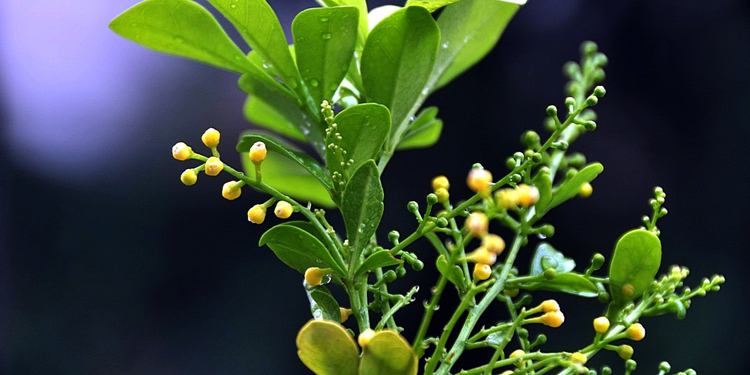
Aglaia odorata flower picture
I. Introduction to Aglaia odorata
Aglaia odorata (Latin name: Aglaia odorata Lour), also known as four-season Aglaia and small-flowered Aglaia, is an evergreen shrub or small tree of the Meliaceae family and the genus Aglaia; it adapts to warm, humid climate conditions, and mature plants need plenty of sunlight. Its branches and leaves are dense, the foliage is verdant and glossy, and it blooms several times within a year, most profusely in summer and autumn. When in bloom it gives off a delicate fragrance that fills the air, with a scent like that of an orchid. The tips of the small branches often bear star-shaped rusty-colored scales;
The pinnately compound leaves are alternate; the flowers are yellow, extremely fragrant, and about 2 mm in diameter. The pedicels of the bisexual flowers are slightly short and thick, the calyx is 5-lobed, and there are 5 petals, oblong; the berry is nearly spherical, 10-12 mm long, and the flowering period is between summer and autumn.
In southern courtyards, Aglaia odorata is also an excellent landscape tree.
Aglaia odorata flower picture
II. When does Aglaia odorata bloom
Aglaia odorata blooms from June to October each year, and can bloom 5 times a year, with each flowering lasting about 1 week. Aglaia odorata is very easy to grow, but if you are not careful when growing it, it can easily fail to bloom.
Aglaia odorata likes fertilizer and is suited to growing in warm, sunny places. The optimum growing temperature is 20°C-25°C. If it is placed in a shady spot in summer and at the same time given a large amount of nitrogen fertilizer, it will fail to bloom, bloom little, or have a faint fragrance. Therefore, during the growth and development period of Aglaia odorata, it needs to be kept outdoors in a spot with plenty of sunlight and given some phosphorus fertilizer as appropriate; this helps the flower buds of the plant to form and will make the flowers of Aglaia odorata more numerous, golden yellow in color, and delicately fragrant.
Aglaia odorata likes moisture, but watering too much during its flowering period can easily cause the flowers and buds to drop; watering too little will cause the leaf edges to dry up and the buds to wither. Therefore, when growing it you must pay attention to controlling the amount of water. Since Aglaia odorata can bloom 5 times a year, to ensure that it blooms abundantly and keeps lush foliage each time, you should promptly topdress it 2-3 times with fully decomposed dilute liquid fertilizer after each flowering.
Aglaia odorata flower picture
III. Main varieties of Aglaia odorata
1. Aglaia odorata
Aglaia odorata (the original variety), a shrub or small tree; the stem has many branchlets, and the tips of the young branches are covered with star-shaped rusty-colored scales. The leaves are 5-12 (-16) cm long, the leaf rachis and petiole have narrow wings, and there are 3-5 leaflets; the leaflets are opposite, thickly papery, 2-7 (-11) cm long and 1-3.5 (-5) cm wide, with the topmost one the largest and the lower ones much smaller than the top one, the apex blunt, the base wedge-shaped, both surfaces hairless, with about 8 lateral veins on each side, extremely fine, and both these and the reticulate veins slightly raised on both surfaces.
The panicle is axillary, 5-10 cm long, slightly loose and hairless; the flowers are fragrant, about 2 mm in diameter; the pedicels of the male flowers are slender, 1.5-3 mm long, while those of the bisexual flowers are slightly short and thick; the calyx is 5-lobed, the lobes round; the petals number 5, yellow, oblong or nearly round, 1.5-2 mm long, the apex round and truncate; the staminal tube is slightly shorter than the petals, obovate or nearly bell-shaped, hairless on the outside, the apex entire or with rounded teeth, with 5 anthers, ovate, included; the ovary is ovate, densely covered with yellow coarse hairs.
2. Aglaia odorata var. microphyllina
The main difference between this variety and Aglaia odorata (the original variety) is that the leaves usually have 5-7 leaflets, sometimes 9, narrowly long-elliptic or narrowly oblanceolate long-elliptic, under 4 cm long and 8-15 mm wide.
Produced in Hainan; it grows in open forests or shrub forests in low-altitude mountainous areas. It is cultivated in the southern provinces and regions of our country.
3. Four-season Aglaia
It blooms in all four seasons, most profusely in summer. For home pot culture it is best to choose the common Aglaia odorata, which has a long flowering period, dense inflorescences, and a fragrance like that of a secluded orchid, and is relatively commonly cultivated. Under home cultivation conditions, generally as long as the lowest indoor temperature in winter can be kept no lower than 5°C, it can overwinter safely; even if some leaves drop from the branch tips, after pruning and repotting in early spring and strengthening water and fertilizer management, it will quickly send out new leaves and bloom again. Or, on nights of particularly cold weather, wrap the plant with two layers of plastic bags for insulation, and after the temperature rises again at noon the next day, open the bags to let air in. If conditions permit, you can also install an electric heater indoors to warm the Aglaia odorata placed indoors, with especially good results. [8]
4. Taiwan Aglaia
The leaves are relatively large and the flowers slightly small, and its flowers often open along with the growth of new branches.
A medium-sized evergreen tree, with a diameter at breast height of up to 30 cm; the bark is reddish-brown, thin, and peeling; the branchlets, petioles, leaf rachis and inflorescences are all densely covered with silvery or pale yellow star-shaped scales. There are 7-11 leaflets, thinly leathery, opposite, obovate or obovate-elliptic, 4-8 cm long and 1.5-3 cm wide, the apex blunt or rounded, the base wedge-shaped, the upper surface densely covered with silvery scales and the underside densely covered with pale yellow scales, the midvein on the upper surface slightly sunken and on the underside raised, with 5-6 lateral veins on each side, extremely fine, inconspicuous on both surfaces; the petiolules are 5-10 mm long.
The panicle is axillary, about 15 cm long, densely covered with yellowish-brown scales; the flowers are about 2 mm in diameter; the calyx is 5-lobed, the lobes nearly round, the outside covered with pale yellow scales; the petals number 5, oblong, imbricate, about 1.2 mm long and about 1 mm wide, concave, the apex rounded, the outside covered with pale yellow scales; the staminal tube is spherical, with 5 shallow lobes at the apex, and there are 5 anthers; the ovary is ovate.
The berry is spherical, 1-1.4 cm in diameter, with sparse scales or none. The flowering period is September.
Produced in Taiwan, China; it grows in the coastal areas and islands of the south or southeast. It is distributed in the Philippines.
5. Large-leaf Aglaia
Large-leaf Aglaia (A. elliptifolia), an evergreen large shrub, whose young branches are often covered with brown star-shaped scales, with relatively large leaves. It belongs with "Aglaia odorata" (Aglaia odorata) to the same Meliaceae evergreen shrub; in plant taxonomy it is regarded as a type variety of "Aglaia odorata"; its individual flowers are slightly larger than those of "Aglaia odorata" and slightly lighter in color; it does not bloom as frequently as "Aglaia odorata"; its floral fragrance is the same as that of "Aglaia odorata", though slightly fainter; its cold resistance is stronger than that of "Aglaia odorata"; some also call it "zhulan"; but to avoid confusion with the Chloranthaceae plant zhulan, it is usually specifically called "woody zhulan".
Aglaia odorata flower picture
IV. The value of Aglaia odorata
1. Edible value: Aglaia odorata is a flower plant that people love, and when the flowers open the fragrance is striking. As an edible flower, it can be used to extract essence. Such as Aglaia odorata flower tea.
2. Ornamental value: Potted Aglaia odorata can be displayed in the living room, study and porch, fresh and elegant, soothing to body and mind. In southern courtyards, Aglaia odorata is also an excellent landscape tree.
3. Medicinal value:
[Nature and flavor] The flavor is pungent and sweet, and its nature is neutral.
[Meridian entry] It enters the lung, stomach and liver meridians.
[Functions and indications] Relieves depression and soothes the middle, promotes childbirth, sobering up from alcohol, clears the lungs, refreshes the head and eyes, and quenches thirst. It treats distension and discomfort in the chest and diaphragm, the early stage of dysphagia, cough and dizziness.
Aglaia odorata flower picture
V. The symbolic story of Aglaia odorata
Aglaia odorata is a symbol of bravery and passion. There is also a legend about this: in an ancient legend, there was a flower that for half of the year would bloom with red flowers, and for the other half of the year would bloom with blue flowers. When the sun rose, it would burst forth with fiery red radiance, and when the moonlight shone everywhere, its light would be shrouded in a faint blue halo. It was so magical that people gave it the title of the flower of warriors, and it became a byword for bravery and striving upward; before going off to battle, warriors would all wear it to show their courage, and its name was passed down from generation to generation. But one day, people found that it had changed: on the same stem, both blue and red flowers had opened at the same time, and these two flowers shone together in the sunlight and rippled together in the moonlight, equally profound and deeply affectionate. So people began to argue about which was the true flower of bravery, but every time warriors went off to battle, they would still wear it, only some liked to wear the blue flower and some liked to wear the red flower. And the flowers of these two colors always appeared together in the sunlight and moonlight, on the heads of brave warriors, and in any place that needed courage and passion. This flower is called Aglaia odorata.
Is Aglaia odorata suitable for growing indoors? When should Aglaia odorata be brought indoors
Fresh and fragrant, plain yellow and elegantly understated, Aglaia odorata is an elegant feng shui plant that decorates the home environment and makes the home more full of life. So is Aglaia odorata suitable for growing indoors? Aglaia odorata is a kind of evergreen tree, with many leaves growing in clusters, flower scapes standing like jade, and a plain and elegant appearance; together with plum, narcissus and chrysanthemum it is called one of the "four gentlemen among flowers". Now let's take a look at content related to Aglaia odorata together with the editor of wed114 wedding website.
Aglaia odorata flower picture
I. Is Aglaia odorata suitable for growing indoors
Aglaia odorata is non-toxic and can be placed indoors temporarily for viewing, but it cannot be kept indoors for the long term. This is because Aglaia odorata is one of the typical sun-loving flowers, and only in an environment with sufficient light, sufficient fertilizer and good ventilation can it grow robustly and bloom frequently, abundantly and fragrantly, while indoors these conditions are not present.
Placing Aglaia odorata indoors will not only make its growth poor and prevent it from blooming, but will also lead to the emergence of pests and diseases, and may even put it at risk of death. Of course, moving Aglaia odorata indoors for a short time for viewing and then moving it out in good time is still fine.
A more feasible method is to place Aglaia odorata outside a south-facing window, so that it can both receive the moisture of rain and dew and get sufficient sunlight; looking out from indoors, you can enjoy the beautiful tree shape of Aglaia odorata, and when it blooms you can also smell wave after wave of floral fragrance. This both fits the growing conditions of Aglaia odorata and satisfies people's desire to love and admire flowers, so it can be said to be the best of both worlds. Don't you agree?
Aglaia odorata flower picture
II. The feng shui and household role of Aglaia odorata
Aglaia odorata is a symbol of bravery and passion. Plant Aglaia odorata on the balcony of the bedroom at home, so that every day as soon as you get up you can see the sparkling Aglaia odorata, keeping you full of energy all day and defeating all kinds of setbacks!
Most older people have already retired from their jobs and no longer pursue too many fame and gains. At this time, you might as well grow potted jasmine or Aglaia odorata. Jasmine and Aglaia odorata are striking in fragrance and can be used to scent tea. The branches and leaves of Aglaia odorata can treat bruises and injuries, and the leaves and flowers of jasmine can be used as medicine to treat colds and enteritis, so growing these two kinds of potted plants is both beautiful and health-promoting.
In an ancient legend, there was a flower that for half of the year would bloom with red flowers, and for the other half of the year would bloom with blue flowers. When the sun rose, it would burst forth with fiery red radiance, and when the moonlight shone everywhere, its light would be shrouded in a faint blue halo. It was so magical that people gave it the title of the flower of warriors, and it became a byword for bravery and striving upward; before going off to battle, warriors would all wear it to show their courage, and its name was passed down from generation to generation.
Aglaia odorata flower picture
III. How to grow Aglaia odorata best
Aglaia odorata likes moisture, and during the growing period it should be watered appropriately. If watered too much, it easily leads to root rot and yellowing and dropping of leaves; if watered too much during the flowering period, it easily causes flowers and buds to drop; if watered too little, it will again cause the leaf edges to dry up and the buds to wither. Therefore, when summer temperatures are high, in addition to watering 1-2 times a day, you should also often spray and wash the branches and leaves with clean water and sprinkle water on the ground where it is placed, to raise the air humidity.
1. The temperature should be suitable
Aglaia odorata likes warmth, and the higher the temperature, the more fragrant the flowers it produces. Generally speaking, at temperatures above 30°C and under sufficient sunlight, the flowers it produces are strongly fragrant; conversely, in an environment below 30°C, if it is also in a shaded spot with insufficient light, the flowers it produces are not as fragrant as when the temperature is high. To grow Aglaia odorata well, the suitable temperature range is between 20°C and 35°C, and during the period from June to October it can bloom as many as 5 times.
2. Light should be sufficient
Aglaia odorata should be placed in a sunny spot in all four seasons. If Aglaia odorata is placed in a courtyard or on a balcony with plenty of light and good ventilation, with more than 8 to 12 hours of light per day, the plant's leaves will be deep green, the branches will grow thick and strong, it will bloom many times, the flowers will be bright yellow, and the fragrance will also be relatively rich. If Aglaia odorata is kept in an environment with insufficient sunlight and shade, the plant's branches and leaves will grow leggy and weak, the number of times it blooms will decrease, and the fragrance will be faint.
3. Fertilization should be reasonable
Aglaia odorata has a strong capacity for flowering and blooms many times, so nutrients must be supplemented in good time. Each time Aglaia odorata finishes blooming, nutrients should be promptly replenished; insufficient fertilizer is the main reason why Aglaia odorata only grows leaves without blooming or drops leaves and buds. Therefore, when the temperature rises, Aglaia odorata should be moved outdoors for care, and after a week the soil should be loosened and some dilute nitrogen fertilizer applied; 10% to 20% decomposed cake fertilizer water or human waste may be used, and thereafter a liquid fertilizer should be applied about once every 10 days to promote the growth of its branches and leaves.
Aglaia odorata flower picture
IV. The value of Aglaia odorata
1. Edible value: Aglaia odorata is a flower plant that people love, and when the flowers open the fragrance is striking. As an edible flower, it can be used to extract essence. Such as Aglaia odorata flower tea.
2. Ornamental value: Potted Aglaia odorata can be displayed in the living room, study and porch, fresh and elegant, soothing to body and mind. In southern courtyards, Aglaia odorata is also an excellent landscape tree.
3. Medicinal value:
[Nature and flavor] The flavor is pungent and sweet, and its nature is neutral.
[Meridian entry] It enters the lung, stomach and liver meridians.
[Functions and indications] Relieves depression and soothes the middle, promotes childbirth, sobering up from alcohol, clears the lungs, refreshes the head and eyes, and quenches thirst. It treats distension and discomfort in the chest and diaphragm, the early stage of dysphagia, cough and dizziness.