How to grow dwarf dahlia? Detailed planting methods and care tips
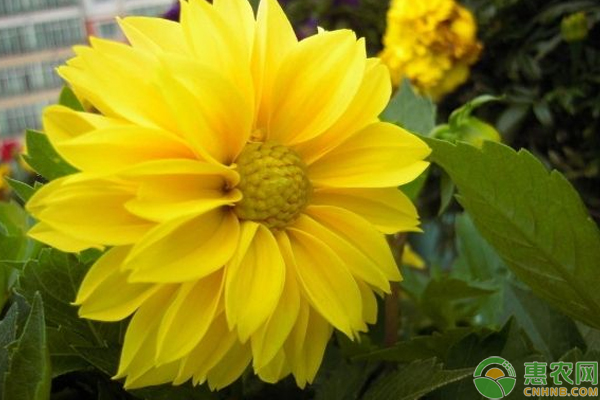
Dwarf dahlia is a perennial herbaceous plant of the Asteraceae family and belongs to the same genus as the dahlia. It resembles the dahlia in shape, only with a shorter plant, more branches, and more flower heads. It is mostly single-petaled small flowers, and each plant can bear several flowers that open at the same time. Flower colors include scarlet, purplish red, peach red, orange red, blue, purple, black, white, yellow, and mixed colors, among other varieties. It can bloom continuously for 4 to 5 months.
It likes sunlight. It dislikes heavy clay soil and prefers loose, fertile, sandy soil. It has strong adaptability and can also grow well under high summer temperatures.
Sowing, division, and cuttings are all possible, with sowing propagation being the most common. To maintain the superior characteristics of the variety, artificial pollination is best used. In the north, sowing is generally carried out from April to May. Plant out after two true leaves appear. From sowing to flowering takes about two and a half months.
To adjust the flowering period, sowing can be done in stages; as long as the temperature is suitable, it can bloom continuously all year round. For example, if sown in a warm indoor spot in early February, flowers can be seen around "May Day"; if sown directly in the open field in early July, it will bloom around National Day. The cultivation method of dwarf dahlia is basically the same as that of potted dahlia. When transplanting seedlings, bring the original soil ball to avoid damaging the tuberous roots and affecting survival.
Dwarf dahlia propagation techniques
Propagation methods Dwarf dahlia propagation has relatively high temperature requirements. To ensure effective propagation the following year, the flower seeds of dwarf dahlia should be scientifically stored at the end of October, kept in a warm and humid environment. At present, two main methods are used: bulb division propagation and division propagation. First, bulb division propagation of dwarf dahlia involves planting the flower's bulbs or corms, tubers, and so on into the soil layer; after these bulbs or corms grow for 1 year, small bulbs grow around them, and the small bulbs can then be dug out. Second, division propagation can be carried out in early spring: first take the mother plant out of the pot, then disinfect it, and place the dwarf dahlia in a shaded place for care.
Sowing and seedling raising Sowing and seedling raising is an important part of dwarf dahlia propagation. When propagating dwarf dahlia, the propagation quantity must be well controlled, the amount of soil must be well managed, and the ground temperature should also be properly controlled to ensure the seed germination temperature is around 25°C, while seedling growth should be between 22 and 28°C. Second, scientific seed containers should be used to ensure ventilation in the seedling room, and nitrogen, phosphorus, and potassium fertilizers should be added according to different growth conditions to ensure proper topdressing during the flowering period.
Dwarf dahlia management strategies
For flowers planted on a large scale in a region, only by managing according to the growth characteristics of dwarf dahlia can the problems arising during its growth be solved. Dwarf dahlia likes fertilizer, so the fertilization interval can be appropriately shortened, usually applying fertilizer once every 15 days, mainly potassium dihydrogen phosphate fertilizer. At present, when fertilizing dwarf dahlia, the amount of fertilizer is often poorly controlled, and large-scale fertilization fails to fully consider the regional environmental conditions, with the problem that too much water makes the plot prone to rotting.
The potting soil is based on garden soil and fine sand, and a drainage layer should also be made at the bottom of the pot. To improve the effectiveness of potted dwarf dahlia, a drainage layer should also be added; usually when the seedlings are 20 cm tall, repot twice, and each time new leaf mold can be added.
the ornamental quality of the dahlia, and it also affects the pest and disease resistance of dwarf dahlia. When pruning dwarf dahlia, the principle of "remove the weak and keep the strong" should be adopted, cutting off side buds and keeping the main branches. Pruning of dwarf dahlia should be done during the wilting season, and pruning can be carried out according to the standard of leaving a height of 20 cm, with water properly controlled during pruning.
There are powdery mildew, viral disease, and brown spot disease. First, formulate a pest and disease control plan and truly adopt targeted control measures to comprehensively improve the effectiveness of pest and disease control. Second, focus on prevention, carrying out control by effectively preventing pathogens from overwintering and eliminating environments that breed pathogens. Third, according to changes in the local environment, effectively do the preparatory work for preventing local diseases.
The dwarf dahlia's flower form is as beautiful as a chrysanthemum, and it can be used for garden planting, potting, and so on, with very good ornamental value. Everyone can plant it according to the cultivation methods shared by the editor.
Dwarf dahlia propagation and cultivation
Flower name: Dwarf dahlia
Dwarf dahlia aliases: Xiao Li Ju, Xiao Li Hua
Scientific name: Dahlia pinnate cv.
English name: Dwarf Dahlia
Family and genus: Asteraceae, Dahlia genus
Dwarf dahlia (scientific name: Dahlia pinnate cv.), also known as Xiao Li Ju and Xiao Li Hua, belongs to the Asteraceae family, Dahlia genus, and is a perennial bulbous herbaceous plant. It has a low plant height and a long flowering period, is an excellent groundcover plant, can also be used in flower beds, flower borders, and other places, and can also be potted for ornamental use or used as cut flowers.
Morphological characteristics
The morphology of dwarf dahlia is similar to that of dahlia. It is a dwarf-type cultivar group among dahlia varieties, but the plant is relatively short, with a height of only 20 to 60 cm, much branched, with capitulum inflorescences. Several flowers can grow on one peduncle, the flower stem is 5 to 7 cm, and the flower colors include deep red, purplish red, pink, yellow, white, and many other colors. The flower shapes are rich in variation, and there are single-petaled and double-petaled types. In a suitable environment, it can bloom all year round. It has the characteristics of a low plant and a long flowering period.
Dwarf dahlia is a perennial herbaceous plant with persistent roots of the Asteraceae family, Dahlia genus. Its morphology is similar to that of dahlia, but the plant is relatively short, with a height of only 20 to 60 cm, much branched, with capitulum inflorescences. Several flowers can grow on one peduncle, the flower stem is 5 to 7 cm, and the flower colors include deep red, purplish red, pink, yellow, white, and many other colors. The flower shapes are rich in variation, and there are single-petaled and double-petaled types. In a suitable environment, it can bloom all year round. It has the characteristics of a low plant, a long flowering period, and bright and rich flower colors. It is an excellent groundcover plant, can also be used in flower beds, flower borders, and other places, and can also be potted for ornamental use or used as cut flowers.
Perennial herb. It is actually a dwarf-type cultivar group among dahlia varieties. The dwarf dahlia plant is low, 20 cm-60 cm tall; the stem is much branched, and the flowers are numerous and small. The flower diameter is 5 cm-7 cm; the tuberous roots are also relatively small. The flower shape variation is not as rich as that of dahlia; however, the flower colors are bright and varied, and the flowering period is longer, blooming continuously from June until frost, with very strong seed-setting ability.
Growth habits
It likes sunlight and prefers a mild climate. The suitable growth temperature is 10 to 25°C. It fears both heat and cold; at 0°C the tuberous roots freeze, and in summer high-temperature and rainy areas the plant growth stagnates and enters a semi-dormant state. It is neither tolerant of drought nor, even more, of waterlogging, and dislikes heavy clay. After being waterlogged, the tuberous roots rot. It requires loose, fertile, and well-drained sandy loam, and should not be planted in low-lying waterlogged places.
Dwarf dahlia is native to Mexico and likes a cool, dry, and sunny environment. It fears waterlogging and is suitable for growing in loose, fertile, well-drained and air-permeable sandy soil, and should not be planted in low-lying waterlogged places. The suitable growth temperature is 12°C to 25°C. When the seedlings are about 15 cm tall, pinch once to promote side branches and form a full plant shape. During the growth period, apply a fully decomposed dilute liquid fertilizer about once every 15 days. Its cold tolerance is somewhat poor. In northern regions, the tubers can be dug out of the soil at the end of October, dried for 2 to 3 days, and then stored in sand indoors, with the temperature preferably maintained at around 5°C.
Dwarf dahlia is native to the highlands of Mexico at an altitude of 1500 meters. It likes sunlight and prefers a mild climate. The suitable growth temperature is 10-25°C. It fears both heat and cold; at 0°C the tuberous roots freeze, and in summer high-temperature and rainy areas the plant growth stagnates and enters a semi-dormant state. It is neither tolerant of drought nor, even more, of waterlogging, and dislikes heavy clay. After being waterlogged, the tuberous roots rot. It requires loose, fertile, and well-drained sandy loam.
Bulb division propagation
The underground parts of the flower include bulbs or corms, tubers, tuberous roots, and so on. After these bulbs or corms, tubers, tuberous roots, and so on grow underground for one year, small bulbs grow around them. Simply separate these small bulbs and plant them; the operation is simple and management is convenient. Just note that when planting, do not plant the small bulbs too deep: usually the thickness of the covering soil should not exceed one times the bulb diameter.
Division propagation
It is best to do this in early spring (February, March) after the soil thaws. Take the mother plant out of the flower pot, shake off excess potting soil, separate the intertwined root system as much as possible, and cut it open into two or more plants with a sharp knife. Each divided plant must carry a considerable root system, and its leaves should be properly pruned to help survival.
Before potting, soak the divided small plants in a 1500 times dilution of chlorothalonil solution for five minutes, then take them out and dry them in the shade before potting. You can also use chlorothalonil to drench the roots immediately after potting. After dividing and potting, drench the roots or water thoroughly once. Because its root system is greatly damaged and its water absorption capacity is very weak, it takes about 3 to 4 weeks to recover and sprout new roots. Therefore, within 3 to 4 weeks after division, watering should be controlled to avoid root rot, but the transpiration of its leaves is not affected. To maintain the water balance of the leaves, spray the leaf surface 1 to 3 times a day (spray more when the temperature is high, and spray less or not at all when the temperature is low). Do not apply fertilizer during this period either. After division, also be careful of excessively strong sunlight; it can be kept in a shade shed for care.
Cutting propagation
After the terminal buds, axillary buds, and basal shoots of dwarf dahlia sprout, they can all be cut to take root, and basal shoot seedlings have vigorous growth and strong pest and disease resistance. Generally in early March, plant the tubers in a plain sand pot, keep them moist, and place them at room temperature above 15°C to promote sprouting. When the basal shoots grow 2 true leaves, break them off from the tuberous roots, insert them into plain sand to promote rooting, spray water 2 to 3 times a day, and they can take root in just over 20 days.
Cultivation management
Transplanting
When potting small seedlings, first place coarse-grained substrate or ceramsite 2 to 2 cm thick at the bottom of the pot as a drainage layer, sprinkle a layer of fully decomposed organic fertilizer on top as base fertilizer, about 1 to 1 cm thick, then cover with another layer of substrate about 1 to 1 cm thick, and then place the plant in, so as to separate the fertilizer from the root system and avoid burning the roots. The substrate used for potting can be one of the following. Vegetable garden soil: furnace slag = 3:1; or garden soil: medium-coarse river sand: sawdust (mushroom residue) = 4:1:2; or one of paddy soil, pond mud, and leaf mold. Or peat + perlite + ceramsite = 2 parts + 2 parts + 1 part; vegetable garden soil + furnace slag = 3 parts + 1 part; peat + furnace slag + ceramsite = 2 parts + 2 parts + 1 part; sawdust + vermiculite + medium-coarse river sand = 2 parts + 2 parts + 1 part. After potting, water thoroughly once and keep it in a slightly shaded environment for one week. When transplanting small seedlings, first dig the planting hole, sprinkle a layer of organic fertilizer at the bottom of the planting hole as bottom fertilizer (base fertilizer), about 4 to 6 cm thick, then cover with a layer of soil and place the seedling in, so as to separate the fertilizer from the root system and avoid burning the roots. After placing the seedling in, backfill the soil, cover the root system, and firm the soil with your foot, then water thoroughly once.
Fertilizer and water management
Dwarf dahlia does not have high fertilizer and water requirements, and it also fears random fertilization, concentrated fertilizer, and one-sided application of nitrogen, phosphorus, and potassium fertilizers. It requires following the fertilization (watering) principle of "light fertilizer applied frequently, small amounts with more applications, and complete nutrition":
Spring, summer, and autumn
Spring and autumn are its peak growth seasons. On sunny days or during high temperatures, the interval should be shorter; on rainy days or during low temperatures, the interval should be longer or no watering should be done.
Summer is the season of slow growth, so fertilizer and water should be properly controlled. Water in the early morning or evening when the temperature is low, and also spray the plant frequently. Try to schedule watering in the early morning when the temperature is relatively low.
Fertilizer and water management both follow the cycle of "Hyponex" -- "Hyponex" -- clear water -- "Hyponex" -- "Hyponex" -- clear water (at the very least, ensure two "Hyponex" applications per week). The interval is about: 1 to 4 days for outdoor care; 2 to 6 days for indoor care.
Winter
During the winter dormant period, the main task is to control fertilizer and water well. Fertilizer and water management follows the cycle of "Hyponex" -- clear water -- clear water -- "Hyponex" -- clear water -- clear water, with an interval of about 7 to 10 days. Try to schedule watering at noon on sunny days when the temperature is relatively high.
Propagation and cultivation
Sow seeds by spot sowing or drilling in a flower pot or seedbed, lightly cover with about 0.3 cm of soil, maintain humidity and about 70% sunlight, and they will germinate after 6-8 days. Transplant when there are 5-7 true leaves. Plant spacing 20-30 cm. The cultivation soil is best as fertile sandy loam, and both drainage and sunlight need to be good. Potted plants dislike waterlogging, otherwise the bulbs rot easily. Water once a day in summer and once every 3-5 days in winter. During the growth period, compound fertilizer can be applied.
Dwarf dahlia has a short plant shape and rich flower colors, including scarlet, purplish red, dark red, yellow, blue, purple, white, and mixed colors, among various other varieties. The flowering period is relatively long, usually able to bloom for 4-5 months, suitable for home potted ornamental viewing. From sowing to flowering takes about 60 days. By sowing in stages, as long as the temperature is suitable, there are flowers to enjoy all year round.
In northern regions, sow in a warm indoor spot in early February, and flowers can be seen by "May Day"; sow in the open field in early July, and flowers will bloom in full around National Day. Dwarf dahlia and dahlia belong to the same genus. Its traits are similar to dahlia, only the plant is shorter, with a plant height of about 20 cm to 40 cm, more branches, and more flower heads, mostly single-petaled small and medium-sized flowers. Each plant can bear several flowers that open at the same time. Dwarf dahlia likes a cool and mild climate and likes sunlight.
Propagation: Sowing is mostly used, but seeds set by artificial controlled pollination are best. Division and cutting propagation can also be used. Because dwarf dahlia is naturally pollinated, the seeds are prone to variation. To maintain the superior characteristics of the seeds, artificial pollination is best used.
In the north, sowing is generally mostly carried out in early May. Sow seeds by spot sowing or drilling in a flower pot or seedbed, lightly cover with about 0.3 cm of soil. The suitable germination temperature is 15-20°C. Maintain humidity and about 70% sunlight, and they will germinate after 6-8 days. Plant out after two leaves appear. The suitable growth temperature is 18-25°C. Transplant when there are 5-7 true leaves. When transplanting seedlings, bring the original soil ball to avoid damaging the tuberous roots and help survival. Plant spacing 20-30 cm.
Management: Dwarf dahlia likes a cool and mild climate and likes sunlight. It dislikes heavy clay soil and prefers loose, fertile sandy loam. It has strong adaptability and can also grow well under high summer temperatures. The cultivation soil is best as fertile sandy loam, and both drainage and sunlight need to be good. Potted plants dislike waterlogging, otherwise the bulbs rot easily. During the growth period, water and fertilize reasonably, and at the same time provide sufficient light so that it grows robustly with abundant flowers and lush leaves. Water once a day in summer and once every 3-5 days in winter. During the growth period, compound fertilizer can be applied.
Adjusting the flowering period: The flowering period varies from place to place, and it can generally bloom continuously for 4 to 5 months. It is relatively tolerant of heat and is not very sensitive to day length. It is native to the Americas, likes a cool and mild climate, likes sunlight, dislikes heavy clay soil, and is suitable for cultivation in loose, fertile sandy loam. It has strong adaptability and can also grow well under high summer temperatures. In northern regions, sow from April to May, and transplant and plant out after 2 true leaves appear. From sowing to flowering takes about 2 and a half months. To adjust the flowering period, sow in stages, so that as long as the temperature is suitable, it can bloom continuously all year round. For example, if sown in a greenhouse in early February, it can bloom around "May Day". If sown in the open field in early July, it can bloom around National Day. If sown in October, it can be sown in pots or in the open field. When the temperature drops to around 15°C, move it into a greenhouse, or build a double-layer plastic insulation shed, maintain a suitable growth temperature of about 10°C to 25°C, artificially provide 6 to 10 hours of light, and maintain a day-night temperature difference of above 5°C. Note that a quick-acting liquid fertilizer balanced in nitrogen, phosphorus, and potassium should be applied as topdressing. Remember that nitrogen fertilizer must not be excessive, otherwise it will cause the plant to lodge. If you want to dwarf it, you can control its height by pinching and removing the growing tips, or when it grows to about 15 cm tall, spray the leaves once or twice with 0.05% to 0.1% chlormequat.
Disease control
Powdery mildew harms leaves, peduncles, and flower buds. At first, nearly circular white powdery spots appear, which expand into mottled white powdery layers; the leaves become distorted and withered. The pathogen overwinters in diseased residues and spreads through airflow. The disease is severe from September to October. In the early stage of the disease, 2% antifungal antibiotic 120 water agent at 100-200 times dilution or 40% sulfur-multi suspension concentrate at 800 times dilution can be used, spraying once every 10 days, for 2 to 3 consecutive sprays.
After brown spot disease infects the leaves, small light yellow spots first appear, then expand and sink, and finally form nearly circular lesions with a grayish white center and dark brown edges, with concentric rings, 1 to 5 mm in diameter, and a light black moldy substance is produced on the surface. The pathogen overwinters in diseased leaf residues. The disease is severe from June to August. It can be controlled with 1% Bordeaux mixture or 75% chlorothalonil at 600 times dilution.
Viral disease shows symptoms such as mosaic, chlorosis, and dwarfing. The viral agents are dahlia mosaic virus, cucumber mosaic virus, tomato spotted wilt virus, tobacco streak virus, and so on. Leafhoppers and aphids transmit the virus. For control, virus-free propagation materials can be selected, and virus-transmitting insects should be controlled.
The dwarf dahlia stem borer moth larva is pale yellow or pale red, with 2 to 3 generations per year. The larval damage period is from June to August. 50% fenitrothion at 1000 times dilution can be sprayed. If the insect bores into the stem, omethoate at 100-200 times dilution can be injected.
Ornamental value
The flower colors are brilliant and dazzling, and the forms are varied. The flowering period is also long, and it is one of the world's famous flowers. The plant type is short, the flower colors are colorful, and the full flowering period coincides with National Day, making it most suitable for home potting.