How to grow gardenia? An introduction to the correct cultivation methods
Gardenia, also known as zhizi and huangzhizi, is an evergreen shrub in the order Gentianales, family Rubiaceae, genus Gardenia. Gardenia has luxuriant branches and leaves, foliage that stays green all year round, and fragrant, elegant flowers, making it an important ornamental garden plant.
Gardenia likes a warm, humid environment with plenty of light and good ventilation, but dislikes intense direct sunlight. It is suited to living in slightly shaded spots, tolerates partial shade, fears waterlogging, and is relatively cold-tolerant. It is best planted in loose, fertile, well-drained, slightly clayey acidic soil; it is a typical acid-loving flower.
The correct cultivation methods can not only keep a gardenia alive but also help it thrive. Generally, growing flowers comes down to a few aspects: soil, fertilizer, water and environment. Let us go through the cultivation methods for gardenia one by one.
First, soil. Garden enthusiasts all know that gardenia is a typical acid-loving flower, and many enthusiasts in the north have locally alkaline soil and water, so extra care is needed in cultivation. It is best not to use ordinary garden soil. You can mix your own soil with 40% garden soil, 15% coarse sand, 30% barnyard manure soil and 15% leaf mold, or use a special nutrient soil.
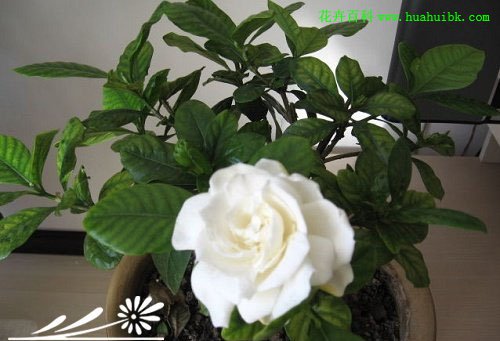
Next, water. As we said, gardenia is a typical acid-loving flower, so watering directly with tap water does nothing to improve the soil's pH. For watering, you can use rainwater or fermented rice-washing water; if using tap water, let it stand for 2 to 3 days before use. During the growing season, water once every 7 to 10 days with water containing 0.2% ferrous sulfate (black alum), or apply alum fertilizer water once (the two can be alternated). This not only prevents the soil from becoming alkaline but also replenishes iron in the soil, which not only prevents leaves from turning yellow but also makes the leaves glossy green and the flowers larger.
Gardenia cultivation methods_Pruning and care of gardenia
Gardenia is also known as huangzhizi, jinzhizi, yinzhizi and shanzhihua. Family Rubiaceae, an evergreen shrub all year round, a woody flowering plant. It grows over 1 m tall, with opposite leaves or whorls of 3 leaves, short petioles, leathery blades, obovate or oblong-obovate, acuminate at the apex, slightly blunt-tipped, glossy on the surface, with short hairs clustered only in the vein axils beneath, and sheath-like stipules. The flowers are large, white, fragrant, with short stalks, borne singly at the tips of branches. The flowering period is fairly long, blooming continuously from May to June. Do you know how to cultivate and care for gardenia? Take a look with the editor.
1. The living environment for gardenia cultivation
For potting soil for gardenia, you can use mountain soil, or a mix of 4 parts leaf mold (peat), 4 parts vegetable garden soil and 2 parts river sand. It is best if the plant retains soil when potted. In the early potting period, keep the soil moist, pay attention to shading, do not fertilize for now, and let it recover for 10 to 15 days. Then gradually place it in a spot with plenty of sunlight. Repotting is usually done in April to May.
Soil requirements
Gardenia likes to grow in a slightly acidic soil environment, so when choosing soil for gardenia, be careful to select slightly acidic soil for cultivation
Suitable growing temperature requirements
In terms of gardenia's growing temperature requirements, the optimal growing temperature is 16°C-18°C, but note that temperatures that are too high or too low are both unfavorable for gardenia's growth requirements
Sufficient moisture
Gardenia likes a warm, humid and sunny environment, so its water needs and air humidity are also very important. During gardenia's growing period, be careful to appropriately increase the amount of watering
Sufficient light duration
During gardenia's growing period, also pay attention to appropriate light requirements; gardenia is a plant that loves light
2. Temperature requirements for gardenia cultivation
The suitable growing temperature for gardenia is 20-28%. From late spring to early autumn, when the weather is hot, pay attention to shading, preventing high temperatures and preventing direct sunlight, and speed up air circulation, otherwise the leaves easily turn yellow. Field-planted gardenia is transplanted in March to April, and the soil ball should be kept when transplanting. From late spring to early autumn there is plenty of sunlight, so it needs appropriate spraying to lower the temperature and increase humidity. Potted gardenia can overwinter outdoors in the south. In the Huang-Huai River basin, move it into a greenhouse in mid-October, keeping the room temperature at 5-12°C; if it exceeds 15°C, it will affect dormancy and the next year's growth. In winter, place it in a spot with plenty of sunlight, good air circulation and suitable temperature.
3. Watering methods for gardenia cultivation
In winter, pay attention to controlling watering; it is better to keep it on the dry side. The lower the temperature, the less you should water, so that the body cell concentration increases, which helps resist the cold. Low temperatures or overly wet potting soil can easily cause leaf drop, or even death.
Water gardenia by the principle of watering when dry and stopping when wet. If the soil is too wet, the roots suffocate from lack of oxygen and die, and the above-ground parts show yellow leaves and dropped buds. Especially after gardenia buds appear, watering must be controlled even more. Generally, water once every 2 to 3 days in spring and autumn, 1 to 2 times a day in summer, and once every 5 to 7 days in winter. In addition, in summer apply alum fertilizer water once every half month. Usually also spray water on the leaves frequently to remove dust, which is good for plant growth.
4. Fertilization methods for gardenia cultivation
Gardenia likes fertilizer. When potted, besides applying organic fertilizer as a base fertilizer when repotting, it should also be top-dressed frequently during the growing period, with thin fertilizer applied frequently being preferable. During the growing period, apply organic liquid fertilizer about once every 10 days, preferably cake fertilizer water at 10%-15% concentration; after buds appear, apply 2 to 3 additional applications of quick-acting phosphorus fertilizer, such as 0.5% superphosphate. Do not fertilize past autumn; fertilizing after autumn causes rapid growth of autumn branches, which are prone to frost damage. During the growing period, along with fertilizing and watering, pour 0.2% ferrous sulfate water once every 15 to 20 days or so to prevent leaf yellowing.
5. Shaping and pruning methods for gardenia cultivation
Cutting off the top shoots of gardenia promotes branching and helps it bloom more. Gardenia mostly branches in threes, often forming crossing, overlapping branches that seriously affect ventilation and light penetration, causing weak, disordered branches, so timely pruning is needed to form an attractive plant shape. Gardenia is an evergreen shrub with thick leaves and large flowers, and the main branches should be few rather than many. First, cultivate an upright trunk, and branches can grow from the trunk. Flower buds form every April, so when removing some branches on the trunk in April-May, be careful to retain the flower buds. After the flowers fade in June, prune them off promptly; this reduces nutrient consumption and promotes new branches. When new branches grow to 2 to 3 nodes, carry out the first pinching, removing some axillary buds to avoid too many branches growing in a messy, crowded way. In August, pinch the three-forked branches to build the canopy; after 2 to 3 years, a dignified and beautiful potted gardenia can be formed.
6. Points to note in gardenia cultivation
(1) Gardenia likes fertilizer but fears concentrated fertilizer. Generally, before buds appear, top-dress twice with cake fertilizer water rich in phosphorus and potassium; after buds appear, stop fertilizing. If too much fertilizer is applied, it easily burns the roots and causes bud drop. During the growing period, apply decomposed cake fertilizer water or manure water once every half month, and add 1%-2% ferrous sulfate to prevent the soil from becoming alkaline.
(2) Gardenia likes partial shade and fears direct strong light, requiring about 50% shade density. If exposed to the sun, the leaves turn yellow and white until they fall off, so in summer it must be kept in a shaded spot or a place with scattered light for care. Let it receive light in the morning and evening to prevent the leaves from turning yellow.
Below is an introduction to common gardenia cultivation problems:
How does gardenia overwinter?
According to gardenia's growth habits, in winter it enters dormancy. During dormancy, it does not matter if gardenia's leaves all fall off or if it stops growing. When gardenia overwinters, it is best to put it in the coldest room, where it can see scattered light, with the temperature not exceeding 12°C, and 6-10°C being most suitable. Water once a month, or according to the dry and wet conditions at home, watering again once the potting soil has dried through. Note that in winter you should not let the gardenia freeze. In short, when gardenia overwinters, it can neither be placed in a place with too high a temperature nor be allowed to freeze; it can neither be placed in a place with plenty of sunlight nor be kept completely away from sunlight; it can neither be watered too much nor be allowed to dry to death. If gardenia continues to grow in winter, it will only waste nutrients in vain and affect the next year's flowering. The correct method is to let gardenia remain in a natural dormant state in winter. Wait until April of the next year, cut off all the old branches 2 cm above where the gardenia forks, then move it outdoors to let it take wind and sun. If your home cannot provide conditions for the gardenia room, put it in a place farther from the window and keep it ventilated.
Question: How should gardenia be raised?
Answer: I have a gardenia at home. It likes moisture and diffused light. If you are in the north, you must apply ferrous sulfate. In the south, it is very easy to grow.
Question: How can gardenia be kept from dropping leaves and make its flowers fragrant?
Answer: Collect the orange peels you eat every year and ferment them together with soil. Use this soil for repotting the next year, and your gardenia is sure to be glossy green. At the same time, you can also use soaked orange peel water for watering. This method is simple, works in both the north and south, and takes effect very quickly! My gardenia looked half-dead this year too, but after this method the leaves became larger, thicker and greener, and I expect flowers next year! If you try it and find it useful, just quietly enjoy it! I only learned this recipe this year too. There is an old lady neighbor whose gardenia is grown especially well; she said this is how she grows it. My large gardenia has now sent out quite a few new shoots as well. This method has another advantage: you do not have to worry about too much fertilizer burning the seedlings! If the potting soil is really too poor, you can add a few granules of compound fertilizer at the right time!
Question: What causes yellow gardenia leaves?
Yellow gardenia leaves are caused by iron deficiency; you can add ferrous sulfate solution.
Gardenia cultivation methods_Pruning and care of gardenia
What characteristics does gardenia have? The effects and functions of gardenia
Gardenia lives around us. Perhaps we see it every day, but how much do we actually know about it? Below, we introduce gardenia's characteristics and gardenia's effects and functions.
1. Gardenia's appearance is beautiful and highly attractive, and it releases a fresh scent. I remember that starting from primary school, every summer, when passing the small path in front of the village, I would smell a very strong and pleasant scent. I knew that this scent, which made people feel especially refreshed, came from a large tree by the roadside, but I did not know its name. Years later, in summer, when I walked onto the university campus, I smelled the same memorable floral fragrance. Looking up, it was it, as beautiful as many years before. Its name is gardenia.
2. It has many types, each with its own distinctions. Gardenia, also known by other names such as mudan, xianzhi, zhizi, yuetao, shuihengzhi, zhizihua, shanzhihua, huangjizi, huangyizi, huangzhizi, huangzhi, shanhuangzhi and yuhehua, is an evergreen shrub or small tree in the phylum Angiospermae, class Dicotyledoneae, order Gentianales, family Rubiaceae, genus Gardenia. In the earlier Cronquist classification system, it belonged to the order Rubiales. The main varieties include large-leaf gardenia: also called large-flowered gardenia: a cultivated variety with large leaves, large flowers, rich fragrance, double petals, and no fruit; water gardenia: a smaller plant with small flowers, small leaves and double petals; bird's-tongue gardenia: also called small-flowered gardenia and bird's-tongue flower, a low-growing, prostrate plant with small, narrow, oblanceolate leaves, and also relatively small, strongly fragrant, double flowers; yellow gardenia: also called mountain gardenia, the wild species of gardenia, with slightly smaller leaves, single flowers, and orange-red fruit in autumn that persists a long time without falling, and with strong alkali resistance, making it a good tree species for viewing flowers and fruit; ovate-leaf gardenia: leaves obovate with rounded tips; narrow-leaf gardenia: leaves narrow, growing wild in Hong Kong, China; variegated-leaf gardenia: leaves with markings, also known as bird's-tongue gardenia, small-flowered gardenia and bird's-tongue flower; small-leaf gardenia: an evergreen shrub, small in size, with spreading branches, narrow oblanceolate leaves, opposite or in whorls of three, sheath-like membranous stipules, relatively small flowers borne singly in leaf axils or at branch tips, calyx tube ridged, corolla salverform, white, double, fragrant; fruit ovoid with 6 longitudinal ridge lines.
3. It comes from all over. Gardenia is native to China and is cultivated in most parts of the country, concentrated in East China and many areas of the southwest and central south, such as Guizhou, Zhejiang, Jiangsu, Jiangxi, Fujian, Hubei, Hunan, Sichuan, southern Shaanxi and other provinces.
4. Its alluring appearance makes it unforgettable. Gardenia plants are mostly relatively low, 1-2 m tall, with gray trunks and green branchlets. The leaves are opposite or in whorls of three on the main branches, obovate-oblong, with short petioles, 5-14 cm long, acuminate at the apex, slightly blunt-tipped, leathery, emerald green and glossy on the surface, with short hairs clustered only in the vein axils beneath, and sheath-like stipules. The flowers are borne singly at branch tips or in leaf axils, with short stalks, white, large and fragrant, with a salverform corolla, generally with six lobes, and there are double-petaled varieties. The calyx lobes are obovate to oblanceolate and spreading, and the anthers are exposed. The berry is ovoid to long-elliptic, with 5-9 winged longitudinal ridges, yellow or orange, one-loculed, with many flat seeds embedded in a fleshy placenta. The flowering period is relatively long, blooming continuously from May to June until August, and the fruit ripens in October.
5. Its growing environment requirements are relatively simple. Gardenia likes a warm, humid environment with plenty of light and good ventilation, but dislikes intense direct sunlight. It is suited to living in slightly shaded spots, tolerates partial shade, fears waterlogging, and is not cold-tolerant. In the northeast, north China and northwest, it can only be grown as a greenhouse potted flower. It is best planted in loose, fertile, well-drained, slightly clayey acidic soil; it is a typical acid-loving flower and can be propagated by cuttings, layering, division or sowing.
6. There is a beautiful story behind it. Gardenia's flower meaning is "strength, eternal love, a lifetime of waiting, our love" - a very beautiful sentiment. Gardenia love decoded: from spring to early summer you can see gardenia's white flowers, and its elegant fragrance makes her presence impossible to ignore. Its basic personality: you are like a fragrant, pure white gardenia blooming in the dark night, elegant and charming, with a strong sense of femininity everywhere. You do not like getting close to the crowd and value your own space. Although you have a warm and cheerful side, you still make people feel a little lonely. You easily waver over small things and may even get hurt, but you are the kind of person who grows braver with each setback. From the flower meaning above, one can associate one beautiful story after another. If you feel life has no charm, you might as well plant a gardenia to add some romance!
Gardenia's effect on the home environment
If you ask me, how about planting a gardenia at home? I will definitely answer: I fully approve.
1. Its appearance makes you feel it is impeccable. We usually say that gardenia has great ornamental value. How does it have ornamental value? Gardenia has luxuriant branches and leaves, foliage that stays green all year round, and fragrant, elegant flowers. With green leaves and white flowers, it is especially clear and lovely, making it an excellent landscaping material for courtyards. It is suitable for placement in front of steps, by ponds and along roadsides, and can also be used as a flower hedge, potted plant and bonsai for viewing. The flowers can also be used in flower arrangements and worn as decoration. A delicate, charming little flower that from time to time gives off a fresh fragrance makes people linger.
2. It can bring about a qualitative change in the home environment. The greatest feature of a gardenia is its floral fragrance. As long as one is planted at home, it can be smelled for hundreds of square meters around. Just imagine, in your home, with a space of about over one hundred square meters, no matter which corner you walk to, you can smell the scent of gardenia. What an enjoyable thing that would be!
3. Its role in beautifying the home is definitely considerable. If you place a gardenia beside the television at home, besides beautifying the indoor space and absorbing harmful indoor radiation, it also gives off a fresh fragrance from time to time, covering the original bland or even unpleasant odors, exchanging the air in the space, and filling the whole home with poetry.
4. Living in a space with gardenia makes people healthier. For a person's life, the quality of the air inhaled has a great impact on health. We usually see that people in rural areas tend to live longer and be healthier, and can still work in the fields in their seventies, while those living in cities may not. They spend more time going to the hospital. The biggest difference between rural areas and cities is that the air quality is different; rural air is obviously much better. Therefore, if we put some gardenia at home, making the air at home as fresh as in the countryside, then longevity is not necessarily impossible.
Gardenia's feng shui effects
Gardenia seems on the surface to have little to do with feng shui, but on a deeper level, there is a great inner connection.
1. Gardenia can protect every kind family. It is said that gardenia was one of the seven fairies in heaven. She longed for the beauty of the mortal world, so she descended to earth and became a flowering tree. A young farmer, alone and living in poverty, saw this small tree by the edge of a field and moved it home, caring for it in every way. So the small tree became full of life and bloomed many pure white flowers. To repay the owner's kindness, she washed clothes and cooked for him during the day, and at night her fragrance drifted beyond the courtyard. When the common people learned of this, from then on every household began to grow gardenia. Because gardenia is the incarnation of a fairy, all the women wore it. Truly, flowers bloomed everywhere and fragrance filled the world. Gardenia can protect every kind family.
2. Gardenia can improve indoor air and also give the home good feng shui. We know that whether a house is ventilated and whether it has odors are two of the criteria for judging whether it is a feng shui treasure spot. If the air in a home is always filled with the fresh fragrance of gardenia, and the fragrance fills the home at every moment, pure and natural, it is good for health. At the same time, it can also make people more energetic. Being energetic every day makes work and life go smoothly, people become happy, and the whole family lives well, proving that the feng shui of this house is quite good.
3. Gardenia can improve the way people handle things, and the residence then naturally becomes a good feng shui residence. Gardenia's fresh fragrance will ease the tense and irritable emotions of urban life. When a person's emotions are in a relatively stable and rational state, they can make correct choices about many things, so the success rate of everything is higher, and the correctness of every decision is also much higher. Therefore, the conclusion that the residence has good feng shui can also be inferred in reverse.
Gardenia's effects
Gardenia has three major uses: ornamental, medicinal and edible, among which the edible use is the most astonishing. What are gardenia's effects? Let us take a look together below.
1. Beautiful as a flower, making people unable to put it down.
Gardenia has luxuriant branches and leaves, foliage that stays green all year round, and fragrant, elegant flowers. With green leaves and white flowers, it is especially clear and lovely, making it an excellent landscaping material for courtyards. It is suitable for placement in front of steps, by ponds and along roadsides, and can also be used as a flower hedge, potted plant and bonsai for viewing. The flowers can also be used in flower arrangements and worn as decoration.
2. Its medicinal value is something you must not underestimate even more.
Gardenia's roots, leaves and fruit can all be used as medicine, with effects of purging fire and relieving restlessness, reducing inflammation and clearing heat, clearing heat and promoting urination, and cooling blood and detoxifying. In addition, gardenia is resistant to sulfur dioxide and can absorb sulfur to purify the atmosphere; 0.5 kg of leaves can absorb 0.002-0.005 kg of sulfur. Besides being ornamental, gardenia's flowers, fruit, leaves and roots can be used as medicine, generally taken as tea or decocted in water. Gardenia contains gardenoside, dehydroxyl gardenoside, paederoside methyl ester and a small amount of shanzhiside, and has effects such as clearing heat and promoting urination, cooling blood and detoxifying, treating jaundice, painful and difficult bloody strangury, red and swollen painful eyes, fire-toxin sores, and lowering blood pressure. Among these, gardenia fruit used as medicine mainly treats high fever from heat disease, restlessness and insomnia, toothache from excess fire, mouth and tongue sores, nosebleeds, vomiting blood, conjunctivitis, sores and swellings from toxin, icteric infectious hepatitis, favism, and blood in urine; external use treats bleeding from trauma and sprains and contusions.
3. Usually, when we eat gardenia, it also has preventive and therapeutic effects.
1. Clearing heat and cooling blood. Gardenia is bitter and cold, can enter the blood aspect and clear pathogenic heat, and is an auxiliary therapeutic food for conditions such as sores and swellings from toxin, intestinal wind and dysentery, and reckless movement of blood due to blood heat.
2. Resolving phlegm and relieving cough. Gardenia's active ingredients can inhibit bacterial growth, release phlegm and clear the airways, and have the effect of resolving phlegm and relieving cough. It can be used as a dietary therapy for those with cough caused by accumulation of heat-phlegm.
3. Relaxing the intestines and relieving constipation, and preventing cancer. Gardenia contains cellulose, which can promote large intestinal peristalsis, help with bowel movements, and prevent the onset of hemorrhoids and the occurrence of rectal tumors.
4. Gardenia can be used to make different dishes, letting you indulge yourself.
1. Cold-tossed gardenia. 500 g gardenia flowers, appropriate amounts of chopped scallion and shredded ginger. Remove impurities from the gardenia flowers and wash them, put them into boiling water and blanch for one boil, remove and drain, let cool and loosen with chopsticks, place on a clean white porcelain plate, sprinkle with chopped scallion and shredded ginger, pour in sesame oil and aged vinegar, add appropriate amounts of salt and monosodium glutamate, and mix evenly. This dish is fragrant, fresh and tender, and has the effects of clearing heat and cooling blood, and detoxifying and stopping dysentery. It is suitable for conditions such as cough from lung heat, carbuncles and swellings, and bloody stool from intestinal wind.
2. Gardenia egg drop. 200 g gardenia flowers, 3 eggs, appropriate amounts of chopped scallion and shredded ginger. Remove impurities from the gardenia flowers and wash them, blanch briefly in boiling water, and cut into small pieces; crack the eggs into a bowl and beat evenly; put the gardenia flowers into the eggs and mix evenly; add oil to the pan, heat to 80% hot, pour in the gardenia egg drop, fry until cooked, sprinkle with chopped scallion and shredded ginger, add salt and monosodium glutamate, and stir-fry evenly. This dish is fragrant, crisp and tender, and has the effects of clearing heat and nourishing the stomach, and relaxing the intestines and regulating qi. It is suitable for conditions such as stomach heat and bad breath, swollen and painful gums, and difficult bowel movements.
3. Stir-fried gardenia with small bamboo shoots: 200 g gardenia flowers, 150 g shelled small bamboo shoots, 100 g cured meat, appropriate amounts of chopped scallion and shredded ginger. Remove impurities from the gardenia flowers and wash them, blanch briefly; slice the small bamboo shoots diagonally into thin slices; cut the cured meat into small cubes; add oil to the pan, heat to 60% hot, pour the gardenia flowers, small bamboo shoots and cured meat into the pan together, stir-fry several times, add chopped scallion and shredded ginger, continue stir-frying until cooked, then add appropriate amounts of monosodium glutamate and salt. This dish is light, fresh and fragrant, crisp and refreshing, and has the effects of strengthening the spleen and stimulating appetite, and clearing heat and benefiting the intestines. It is suitable for conditions such as poor appetite, reduced food intake, and abdominal distension and constipation.
4. Fresh gardenia soup: 150 g gardenia flowers, 100 g lean pork, 30 g shredded pickled mustard tuber, appropriate amounts of chopped scallion and shredded ginger. Remove impurities from the gardenia flowers and wash them, blanch briefly, and drain; shred the pork; add water to the pan, and after it boils, add the gardenia flowers, lean pork and shredded pickled mustard tuber, then cook until the pork floats, skim off the foam, add chopped scallion, shredded ginger and the other five-flavor seasonings, and ladle into a soup bowl. This soup is fresh, fragrant and refreshing, and has the effects of nourishing the stomach and tonifying the middle, and clearing heat and benefiting the intestines. It is suitable for conditions such as physical weakness and poor appetite, bloody stool from intestinal wind, difficult bowel movements, cough with phlegm, and swollen and painful gums.
5. Flower tea. Dry the flowers and brew them. The method is to remove the calyx and pedicel from flower buds or newly opened flowers, spread the corolla downward into a thin layer, and dry over a gentle fire or in an oven. During drying, turn them from time to time so they are heated evenly. After drying, place them in a sealed container and refrigerate in the refrigerator. When drinking, brew directly with hot water, and rock sugar or honey can be added to increase sweetness.
6. Preserved candied fruit. Rub the petals with salt, then wash with cold boiled water and drain. Add sugar in a 1:2 ratio of petals to sugar and mix evenly, put into a sealed container and preserve for 3 days before eating.
7. Deep-fried gardenia. Make a batter with flour, egg liquid and clean water, preferably so that the petals are not exposed, put into an oil pan and fry until golden brown.
8. Gardenia honey soup. 9-15 g fresh gardenia flowers, a little honey. Add water, decoct and take as a soup. This recipe comes from "Southern Yunnan Materia Medica"; gardenia flowers clear and purge lung heat, and honey moistens lung dryness. It is used for lung heat or dry heat in the lungs, cough, or coughing blood.
It can be seen that gardenia's effects are very great, and planting one or two at home does no harm.
Gardenia's role in matching home styles
Gardenia, with a color like leaning jade trees and a fragrance as if from jade capital, is fresh and beautiful, and no one dislikes it. Using it as a home decoration is a very good practice.
1. Eternal white, without any affectation. This characteristic can express the owner's personality: always so upright and friendly to others, giving friends a very warm feeling as soon as they enter the owner's home, and making the home atmosphere much better.
2. Gardenia's simple side, when placed in the bedroom, gives the owner a feeling of returning to nature and returning to purity. Living in the city, wearing a mask to work, acting one way with people and another with ghosts, after taking off the mask, you do not even know whether you are a person or a ghost. Returning to the bedroom at home to rest, this place where the mask is always torn off, looking at the unpretentious gardenia and smelling its heartfelt fragrance, many inner troubles are set down, and the feeling of returning to nature is truly good.
3. Placing gardenia in every corner of the home has the effect of relieving stress. Floral fragrance itself always relieves stress, and with gardenia's scent that no one would resist, it is even more suitable for everyone. If one day you find it hard to fall asleep, gardenia will give you a hand.
4. Gardenia must be planted in the garden to beautify the whole home. As the saying goes, when you give someone a rose, the fragrance remains on your hand; when you give someone a gardenia, the fragrance likewise remains on your hand. Just imagine, if you grow it at home and give it to others, you will feel very good, and when others receive your flowers, they also receive a piece of your affection and will feel especially good too.
Plant one, and you will have a surprise.
Gardenia care methods
Gardenia is a good helper for improving the home environment and also an expert at improving the air quality of a neighborhood. So how do we care for it to help it grow better?
1. Do well at the propagation stage. We know that gardenia propagation is divided into two types: sexual propagation and asexual propagation.
1. Sexual propagation: generally choose plump, dark red mature fruit, dry them in the shell under the sun or in the shade as seeds. Before sowing, cut open the seed rind with scissors, dig out the seeds, rub them apart in hot water, remove floating seeds or impurities, then scoop out the sunken, plump seeds, spread them on a bamboo mat, and place in a ventilated place to dry off excess moisture. Generally choose a sunny hillside or earthen plot with deep, loose, fertile sandy loam for sowing. Field edges and corners can be used for planting, or it can be intercropped or relay-cropped with legumes. Gardenia can be sown in spring or autumn, generally mostly in spring. Spring sowing is done around Yushui, and autumn sowing around Qiufen. When sowing, mix the seeds with ash and sow them evenly in the sowing furrow, then cover the furrow evenly with fine soil or burned earth, cover with grass and sprinkle water, and often keep the soil moist to facilitate emergence. Use 4-6 jin of seed per mu. After emergence, pay attention to removing the covering grass in time. During the seedling stage, weed frequently, being careful not to damage the seedling roots. After weeding, top-dress with dilute human and animal manure water each time. After one year of seedling raising, it can be transplanted. If transported far, it is best to coat the roots with yellow mud slurry, cover with grass to retain moisture, plant one plant per hole, cover with soil, firm it down, and sprinkle water. After planting, cultivate and weed and top-dress once each in spring and summer every year. Applying human and animal manure, barnyard manure, compost, cake fertilizer and the like are all acceptable. In summer before flowering, it is better to apply fertilizer with higher phosphorus and potassium content. Fertilization is generally carried out after weeding and loosening the soil.
2. Asexual propagation: Cutting method - can be divided into spring cuttings and autumn cuttings. Select healthy 2-3 year old branches as cuttings, cut 10-12 cm, remove the lower leaves, and the top two leaves can be retained and each cut in half. First dip in vitamin B12 injection, then insert obliquely into the cutting bed, leaving only one node above. Pay attention to shading and maintaining a certain humidity. When the rooted seedlings begin to grow, transplant or pot individually. They can bloom after 2 years. In the south, water cuttings are also used for propagation, that is, inserting the cuttings into a round disc woven from reed stems and letting it float on the water surface so that the lower part roots in the water, then transplanting for cultivation. Layering method - in April, select 1-year-old robust branches from 3-year-old mother plants, 25-30 cm long, for layering. Pull them to the ground, notch the part of the branch that enters the soil, and if you can dip the notched part in an appropriate amount of powdered naphthalene acetic acid, then cover with soil and firm it down, rooting is even easier.
2. There are also special points to note in the usual care of gardenia.
1. Give it an acidic environment. If the soil, water and fertilizer contain alkali, the plant cannot absorb iron, which affects the formation of chlorophyll, causing branches to wither, leaves to scorch, and even death. Use fertile, loose, well-drained acidic soil. For example, thoroughly composting pine sawdust and mixing it into the soil also gives very good results.
The above is an explanation of gardenia's characteristics and effects and functions. For more home plants, please stay tuned.