Detailed Explanation of the Cultivation Method for a Single Dahlia Plant with Multiple Colors
A single dahlia plant with multiple colors can be cultivated by grafting. Select a high-quality tuberous root that is well developed, disease-free and without buds as the grafting mother plant. According to different flower color varieties, select branches of uniform thickness and length that bear terminal buds as scions, and cut them into a duck-bill shape. Make a cut on the mother plant and quickly insert the scion; the cambium layers must be aligned with each other, then bind tightly with a tie or seal and close the junction with adhesive tape, and afterward bury the tuberous root in fine sand, keeping it moist. When the junction has healed and the scion begins to grow, transplant it into a pot or flower bed, strengthen fertilizer and water management, and carry out timely pinching, bud removal, staking and shaping pruning and other maintenance management. In this way, you can cultivate a dahlia with beautiful plant form and many bright colors.
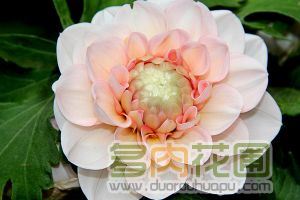
How to Make a Single Dahlia Plant Have Multiple Colors
If you only buy one dahlia plant from the market, it is absolutely impossible to make a single plant have multiple colors. So the best method is to cultivate a single dahlia plant with multiple colors through grafting. The method is very simple:
Selecting the Mother Plant
First, select a plump, disease-free high-quality tuberous root that does not carry buds as the grafting mother. The choice of mother plant is very important. If you choose a diseased plant, the tuberous root will not grow well, let alone grafting - you will not see anything.
Selecting the Scions
According to different flower color varieties, choose sturdy scions of roughly the same length, preferably two of each color, to avoid failure to survive due to environmental influences during grafting.
Grafting
Cut the branch into a duck-bill shape, make a cut on the mother plant, quickly insert the scion, and the cambium layers must be aligned with each other, then bind tightly with a tie, or seal and close the junction with adhesive tape, and afterward bury the tuberous root in fine sand, keeping it moist. Through sand culture, when the junction has healed and the scion begins to grow, transplant it into a pot or flower bed.
After grafting, strengthen fertilizer and water management, and carry out timely pinching, bud removal, staking and shaping pruning and other maintenance management. In this way, you can cultivate a clump of dahlias with beautiful form and many bright colors.
How to Grow Dahlias: Dahlia Cultivation Methods
How to Grow Dahlias: Dahlia Cultivation MethodsDahlias originate from the tropical highlands of Mexico at an altitude of 1 500 m. They are neither cold-tolerant nor heat-tolerant, and the climate there is cool and temperate, with a period of low temperature for dormancy. In places such as Liaoning and Jilin in China, the climate is suitable and dahlias grow well. They are also cultivated to a considerable extent in the Yangtze River basin and the Jiangnan region.
>Cultivation Techniques
Division propagation: Because dahlias have tuberous roots resembling a root crown as propagules, when dividing them they must carry part of the root crown and tuberous roots, otherwise they cannot sprout new plants. To facilitate propagation, the pre-burial method of roots is often used for sprouting, and after the adventitious buds on the root crown sprout, they are divided and planted. The division method is simple and easy, with a high survival rate and strong seedlings, but the number of propagated plants is limited.
Cutting propagation: This is the main propagation method for dahlias, with a large propagation coefficient. It is generally carried out in early spring, and also in summer and autumn. From March to April, cutting in a greenhouse or hotbed has the highest survival rate. The cuttings are taken from tuberous roots that have been forced to sprout. When a pair of leaves at the base of the new shoots unfolds, they can be peeled off from the base for cutting. You can also cut more than one node above the base of the new shoot, and later take young shoots from the axillary buds as they grow, so that more cuttings can be obtained. Spring cuttings, after full growth in summer and autumn, can bloom in the same year. From early June to August, shoots can be taken from growing plants for summer cuttings, but the survival rate is lower than spring cuttings. From September to October, the survival rate of cuttings is lower than in spring, but higher than summer cuttings. The cutting medium should be sandy loam with a small amount of leaf mold or peat.
Seed propagation: This is limited to flower bed varieties and breeding applications. In summer, seed setting is often poor due to damp heat, so seeds are mostly collected from those that mature after the weather turns cool in autumn. Double-flowered varieties are not easy to obtain seeds from and require artificial supplementary pollination. Sowing is generally carried out in a sowing box at around 20 degrees; they sprout and emerge in 4 to 5 days, and after true leaves grow they are transplanted separately, blooming after 1 to 2 years.
Cultivation management: Dahlia stems are tall, juicy and tender, so supports should be set up to prevent wind breakage, while dwarf varieties do not need this. Watering should follow the principle of watering only after the soil has dried thoroughly. After continuous cloudy days in summer followed by a sudden clear sky, spray clear water on the ground and leaves in time to cool down, otherwise the leaves will develop scorched edges and turn yellow and withered. During the dog days with no rain, in addition to daily watering, water should also be sprayed to cool down. After buds appear, apply liquid fertilizer once every 10 days until the flower buds show color. Before frost, leave 10 to 15 cm of root crown, cut off the branches and leaves, dig up the tuberous roots, dry them in place for 1 to 2 days, and then pile them indoors and store them in dry sand. The storage room temperature is about 5 degrees.
For potted dahlias, it is better to repot multiple times. Choose a shallow pot with a large opening, and at the same time make the drainage hole at the bottom of the pot as large as possible, and place a layer of broken tiles underneath as a drainage layer. The growing soil must contain half sandy soil. The last repotting needs to apply enough base fertilizer to supply sufficient nutrition; other management is the same as field planting. For cut-flower dahlias, the key cultivation points are the same as field planting, with a plant and row spacing of 50 to 100 cm. In the peak growing season, apply liquid fertilizer once every half month, pinch appropriately, and retain more side branches.
2012-09-11 14:41 Dahlia Cultivation Methods
2012-08-06 14:11 How to Dwarf Potted Dahlias?
2012-08-06 14:10 What Are the Four Likes and Four Fears of Dahlias?
2012-08-06 14:09 What Is the Secret to Field Planting Dahlias?;
2012-08-06 14:09 How to Prevent Potted Dahlia Leaves from Turning Yellow and Dropping?
2012-08-06 14:08 Why Do Divided Dahlia Tuberous Roots Fail to Sprout?
2012-08-06 14:08 How to Regulate the Blooming Period of Dahlias?
2012-08-06 14:07 How to Cultivate a Single Dahlia Plant with Multiple Colors?
2012-08-06 14:06 What Should Be Noted When Cultivating Cut-Flower Dahlias?
2012-08-06 14:03 How to Propagate Dahlias? Dahlia Cultivation Methods