What are the methods for dwarfing potted dahlias?
The cultivation techniques for growing potted dahlias include bud-bearing cuttings, repotting with root pruning and water control, and timely multiple pinching.
1. Bud-bearing cuttings. Select a stem branch that has just shown buds, cut it 0.5 cm below a node at a length of 12 cm, trim it into a horse-ear shape, first dip it in a little plant ash, remove the lower leaves of the stem, insert it into the potting soil, and place it in a shady spot; when it starts growing, move it to a sunny spot. During management, watering should be combined with spraying water on the leaves, and fertilizer and water management should be appropriate to avoid excessive water causing leggy growth.
2. Repotting with root pruning and water control. Select seedlings propagated by cuttings; after 3-4 repottings, part of the roots will inevitably be damaged, and then control fertilizer and water to harden the seedlings, which can control vigorous vegetative growth and dwarf the plant.
3. Timely pinching. When the main stem of the potted plant grows to 6 cm high, pinching can begin to promote side branches, then pinch again. At the same time, continuously remove buds, spray dwarfing agent, and carry out shaping and pruning to control vigorous vegetative growth and achieve the purpose of dwarfing.
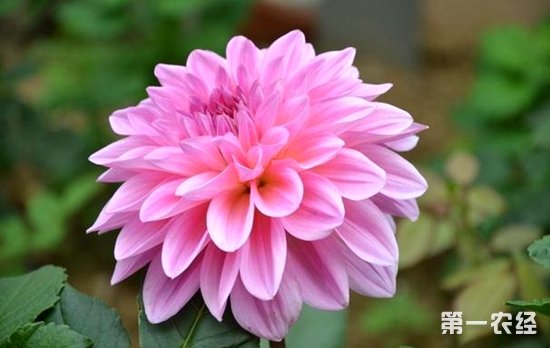
Image: Dahlia
[Expert Answer]
1) Bud-bearing cuttings. Select a stem branch that has just shown buds, cut it 0.5 cm below a node at a length of 12 cm, trim it into a horse-ear shape, first dip it in a little rooting powder, then dip it in a little plant ash, remove some of the large leaves on the stem, insert it into the potting soil, and place it in a shady spot. After 10 days it begins to root; move it to a semi-shady spot. When it starts growing, move it to a sunny spot.
During management, watering should be combined with spraying water on the leaves, and fertilizer and water management should be appropriate to avoid excessive water causing leggy growth, so that it grows in a dwarfed form.
2) Repotting with root pruning and water control. Select seedlings propagated by cuttings; after 3-4 repottings, part of the roots will inevitably be damaged, and together with controlling fertilizer and water to harden the seedlings, this can control vigorous vegetative growth and dwarf the plant.
3) Timely pinching. When the main stem of the potted plant grows to 6 cm high, pinching can begin to promote side branches, then pinch again; together with continuously removing buds, spraying chlormequat, and shaping and pruning, this can control vigorous vegetative growth and achieve the purpose of dwarfing.
[Editor's Summary]
Dahlias generally have tall plants and are suitable for growing in the ground. For pot cultivation, it is best to choose dwarf dahlia varieties, so the flower shape is more attractive and they are easier to manage. In this article, the First Farm Economics editor has introduced three methods for dwarfing dahlias, hoping they will be helpful to you.
What should be done to dwarf potted dahlias?
To dwarf dahlia plants and make the flowers full, you can start from the following points:
1) Use bud-bearing branches for cutting propagation, that is, cut the branches to about 12 cm long, cut them off with a sharp knife 1 cm below a node, remove the leaves on the stem, coat the cut with plant ash or gentian violet and other antiseptics, and insert them immediately into a prepared pot of plain sand. After inserting, water thoroughly, cover with plastic film, and place in a shady spot. Spray water 1-2 times a day, move to a semi-shady spot after about 10 days, and they can root after 20 days. When the roots grow to 4 cm long, transplant them into pots. In the early stage after potting, do not water too much, but often spray water on the leaves. Wait until the new seedlings enter the growing period for normal management. After about 2 months, you can cultivate potted dahlias about 35 cm tall with full flowers.
2) Repotting and water control. For potted dahlias, choose dwarf varieties, force sprouts indoors in early April, and when the sprouts grow to 2-3 true leaves, cut them from the base and insert them into plain sand to force roots. When the roots grow to 4 cm, pot them. During the growth of the seedlings, repot 3-4 times successively from small pots to large pots. Each time you repot, you can appropriately prune some large fibrous roots to inhibit plant growth. At the same time, control watering and carry out “seedling hardening” to prevent leggy growth. Usually water less; in hot summer weather, spray water on the leaves 1-2 times a day to supplement the water lost due to rapid evaporation. Never water heavily in the evening; in the morning, water only enough for the daytime needs, so that the tender leaves and tender shoots can naturally unfold, which is best.
3) Timely pinching. When the seedlings grow to 6 cm, pinch them so that the main branch keeps 4 leaves; after side branches grow, keep 2 leaves and pinch again; later pinch appropriately as needed, and remove axillary buds at any time.
4) Spray chlormequat. When the plant grows to a certain height, spray an appropriate amount of B9 at the right time, which can shorten the internodes and dwarf the plant.