The correct methods for watering and fertilizing tree peonies
Tree peonies like moderately moist conditions and fear waterlogging; since they have fleshy roots, they should not be watered too much and especially dislike standing water, otherwise the roots rot easily and the leaves drop. After growth begins in early spring, water sparingly, and during spring droughts water in a timely manner; in summer, when the weather is hot and evaporation is high, more water is needed. But in the rainy season, do not water too much, and in autumn watering should also be moderate, otherwise it will affect flowering the following year.
Timely fertilizing is an important measure for making tree peony flowers large and brightly colored. Newly planted tree peonies must absolutely not be fertilized; fertilizer can be applied only after half a year. Starting from the second year, apply the first fertilizer when the leaves and flower buds are extending; it promotes flowering that year and is called flower-promoting fertilizer. Within half a month after the flowers fade, apply the second fertilizer; it has a considerable effect on restoring the plant's vigor and promoting flower bud differentiation, thereby determining the number of flowers the next year, and is called bud-promoting fertilizer. Apply the third fertilizer in autumn and winter; it plays an important role in increasing growth the following spring. Apply fertilizer three times in total over the year; for the first and second applications, mainly use quick-acting fertilizers, and for the third application, mainly use base fertilizer.
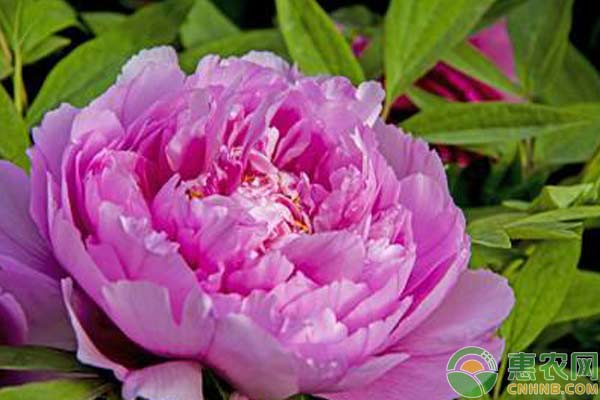
Watering
In spring, temperatures rise quickly, but cold waves still strike, so watering spring water early is very necessary; it can effectively lower soil temperature, delay plant sprouting, and prevent tree peonies from suffering damage from late frost and late spring cold. If watering is too late, it not only fails to protect against cold and freezing but also affects flowering quality. Therefore, spring water should be applied early rather than late, and early spring is the most suitable time; at this time, watering should also follow the principle of watering when dry and ensuring thorough watering, with no standing water on the soil surface being preferable, and it must not be merely a surface wetting. However, during the full flowering period, watering should be controlled; too much water shortens the flowering period and makes the flowers fade prematurely.
Pruning
In spring, tree peonies often send up large numbers of basal shoots from the base, so timely pruning is very important. Pruning tree peonies mainly involves 3 aspects: first, trim the "feet" of the tree peony. Except for branches retained as renewal branches or to correct the crown shape, all other newly grown soil shoots should be cut off completely to avoid consuming large amounts of nutrients and affecting flowering quality and summer flower bud differentiation. Second, thin out excess flower buds. Thin the buds on the principle of removing the weak and keeping the strong, leaving only one vigorous flower bud per branch. Third, cut off the spent flowers of plants not intended for seed collection to prevent them from consuming large amounts of nutrients by setting seed.
Fertilizing
In spring, tree peonies generally need two fertilizations, namely the pre-flowering fertilizer in early spring and the post-flowering fertilizer in mid-spring. The first is the pre-flowering fertilizer, that is, the flower-promoting fertilizer, which should be applied in early March. This fertilization greatly promotes flowering that year and large, brightly colored flowers; the second is the post-flowering fertilizer, which should be applied within half a month after the tree peony finishes flowering. This fertilization can promote plant growth and flower bud differentiation and has a direct impact on the number and quality of flowers the following year. In daily care, people often neglect the post-flowering fertilizer, but in fact this fertilization is very important. Therefore, generally within half a month after the flowers fade, apply 1 topdressing of compound fertilizer mainly containing phosphorus and potassium, and at the same time appropriately apply some decomposed and fermented barnyard manure. If the plant grows poorly after flowering, a 0.2% potassium dihydrogen phosphate solution can also be used for foliar topdressing to encourage lush branches and leaves.
Shading
After flowering, appropriate shading is needed. Although tree peonies like light, they dislike exposure to intense sun, and they grow best in light shade when in bloom. Early May is the full flowering period of tree peonies. If appropriate shading is not provided and the temperature is too high, it will not only shorten the flowering period but also easily cause the blooming flowers to lose their luster and reduce their ornamental value. Therefore, during the flowering period of tree peonies, appropriate shading measures should be taken so that they receive light before 9 a.m. and after 5 p.m. This can make the tree peony flowers large and brightly colored, prolong the flowering period, and also effectively prevent the leaves from being sunburned and developing scorched edges and similar problems.
Pest and disease control
Although spring is not the peak period for tree peony pests and diseases, if control work is relaxed, the plants are prone to attack by pests and diseases during the growing period, and may even die entirely. Therefore, in early spring before leaf expansion, spray the plants once with 3 to 5 degrees Baumé lime sulfur mixture, and after the flowers fade spray once every 15 days with a 1000-fold solution of 50% thiophanate-methyl wettable granules, which can also be used alternately with an 800-fold solution of 50% carbendazim wettable granules, to effectively control fungal diseases such as black spot, stem rot, and leaf blight. In spring, tree peonies are prone to aphid damage; if it occurs, broad-spectrum insecticides such as omethoate can be used to kill them.
Points to note in flowering-period management
Sufficient light is very beneficial to the growth of tree peonies, but they must not be exposed to prolonged intense sun. The suitable growth temperature is 25~25°C, and the plants go dormant above 25°C. During the pre-flowering period, the plants should be ventilated in a timely manner to avoid excessively high temperatures affecting plant growth.
The characteristics of tree peonies are "four preferences and four fears," namely they prefer coolness and fear freezing, prefer warmth and fear heat, prefer light and fear shade, and prefer dryness and fear moisture. Therefore, to plant tree peonies, choose a spacious, ventilated place with morning sunlight and fertile, loose soil, and do not plant them in waterlogged, damp-shaded, or rubble-covered ground.
The planting of tree peonies differs from that of other flowers: after planting, tree peonies do not need irrigation, and certainly must not be watered with manure water. Once winter arrives, mounding soil around them is enough to protect against cold, and after spring warms, pull the mounded soil away to facilitate growth.
To overwinter tree peonies, cover them with grass to prevent freezing, and once the weather warms in March, the covering grass should be removed.
Chinese tree peonies have broad ecological adaptability, so they are easy to cultivate and simple to manage. Friends who like tree peonies should quickly get started planting them.