What should be noted when planting forget-me-nots in the ground and in pots?
When cultivating forget-me-nots in the open ground, choose a ventilated, sunny, higher-lying sandy loam plot rich in organic matter, make it into raised beds, and apply decomposed organic fertilizer. When the seedlings grow 1-2 true leaves, transplant them once; if transplanted too late, they are not easy to survive. When they grow 4-6 true leaves, plant them in their final position. After planting, water a little more during the early growth stage, and apply 1-2 times a liquid fertilizer mainly based on nitrogen fertilizer. After the flower stem emerges, water a little less to help increase the hardness of the flower stem; at this time, apply 1-2 times a liquid fertilizer mainly based on phosphorus and potassium fertilizer to help the flowers be brightly colored and the plants robust. When the plants grow to about 20 cm tall, a net and support should be set up to prevent lodging.
When growing forget-me-nots in pots, a medium flower pot is suitable for planting 2-3 plants per pot. The potting soil is the same as the soil used for raising seedlings. Before planting, apply decomposed soybean cake and other materials as base fertilizer. After planting, place them in a sunny place for cultivation. In spring and autumn, generally water once a day; in summer, when the temperature is high, water once in the morning and once in the evening each day to maintain the moisture of the potting soil and help lower the soil temperature. During the growth period, there is no need to apply too much topdressing; generally applying 1-2 times a month of thin decomposed soybean cake water or compound fertilizer is enough. When applying liquid fertilizer, be sure not to let the fertilizer liquid splash onto the leaves.
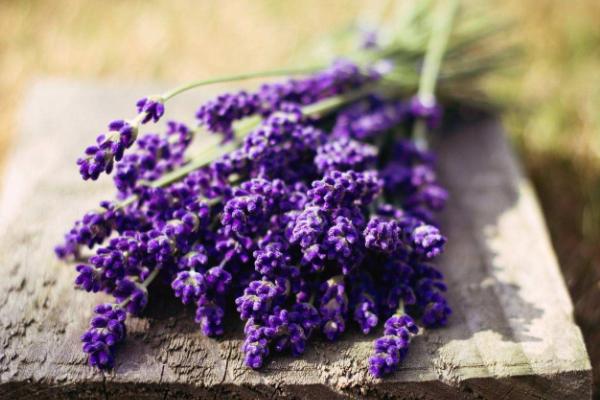
What is the difference between lavender and forget-me-nots?
1. Color
Forget-me-not: The flowers are mainly purple, but there are also pink, purplish red, orange-yellow, yellow, and white. The flowers are relatively larger and have five petals.
Lavender: The flowers are also mainly purple, but darker than forget-me-nots. In addition, there are blue and pink flowers. Currently, only 2 types are grown in China. Lavender flowers are grain-shaped and smaller than forget-me-nots.
2. Scent
Forget-me-not: The floral scent is very faint; you have to bring the flower close to your nose to smell it.
Lavender: The fragrance is strong, because it basically has oil glands all over its body; after being touched, the oil glands break and the fragrance comes out. Therefore, lavender is the world's number one aromatic plant, and the essential oil extracted from it is widely used in many fields such as beauty and daily chemicals.
3. Growth habits
Forget-me-not: It prefers loose, breathable, slightly alkaline soil, is drought-tolerant, likes dryness, and avoids moisture. When planting, control the spacing of each plant at 30-40 cm, and plant at a depth where the ground is higher than the root crown of the forget-me-not. Within 2 months after planting, control the temperature below 15°C to ensure that forget-me-nots pass through the temperature stage, which is beneficial for normal flowering.
Lavender: It likes sunlight and needs full-day sunlight. It likes warm winters and cool summers, is not very heat-tolerant, and fears waterlogging. When there is sun, do not water; when watering, do not pour water on the plants, to prevent insects and rot.
4. Effects
Forget-me-not: It can be tied into bouquets for giving to each other, and can also be used to make floral tea. The effects of the floral tea include nourishing blood and tonifying the kidneys, beautifying the face, and it is also good for the eyes. It is deeply loved by many women, but it must not be drunk too much, otherwise tonifying the kidneys becomes harming the kidneys.
Lavender: Its main effects include aiding sleep and inhibiting bacteria. Using lavender to make pillows can effectively improve sleep conditions. It can also be made into floral tea, facial masks, essential oil, etc. In short, its applications are much more extensive than those of forget-me-nots.
How to grow potted lavender
1. Watering
A continuously humid environment will leave lavender roots without enough air to breathe, causing poor growth and even sudden death of the whole plant. When water has been thoroughly poured, wait until the soil is dry before watering again, with the surface growing medium dry and the interior moist as the standard, and with slight leaf wilting as the main indicator. Water in the morning, avoid sunlight, and do not splash water on the leaves and flowers, otherwise they are prone to rot and breeding of red spider mites.
2. Light
Lavender is a full-sun plant and needs sufficient sunlight and a suitable humidity environment. It is better to provide a full-sun environment. In summer, at least 50% of sunlight should be shaded, and ventilation should be increased to lower the environmental temperature. In winter, lavender can grow well on flat ground and should be cultivated under full sun.
3. Temperature
Lavender is semi-heat-tolerant, prefers coolness, and likes warm winters and cool summers. The suitable growth temperature is 15-25°C, and it can grow at 5-30°C. The limiting temperature is above 35°C; if it is above 38-40°C for a long time, the top stems and leaves turn yellow and wither. In northern winters, it begins dormancy when it is below 0°C for a long time. During dormancy, mature plants can tolerate low temperatures of -20°C to -25°C.
4. Pruning
In the early stage of cultivation, some small flower spikes may as well be trimmed flat entirely with large scissors; the newly grown flower spikes will be uniform in height, which is beneficial for harvesting at one time. After flowering is finished, pruning must be carried out. The plant can be pruned to two-thirds of its original size; the plant shape will be more compact and it will be beneficial for growth.
Pruning should be done in cool seasons such as spring and autumn. Generally, prune in spring; pruning in autumn will affect cold resistance. When pruning, be careful not to cut into the lignified parts, so as to avoid weakening or death of the plant.
Complete list of lavender varieties
1. “Hidcote” lavender
“Hidcote” lavender is the most popular lavender variety abroad. It has a strong fragrance, deep blue-purple flowers, silver-green leaves, and a flowering period from late spring to early summer. The plant is relatively short and grows relatively slowly, making it a recommended variety for small gardens.
2. “Munstead” lavender
“Munstead” lavender has large flower spikes, light purple flowers, gray-green leaves with a ruffled edge, a very rich fragrance, a compact plant shape, and slow growth. Its flowering period is from mid-spring to late spring. It likes a cool full-sun environment and is quite popular in the United States.
3. “Graves” lavender
“Graves” lavender has slender flower spikes, and its flowering period is from late spring to early summer. The plant is taller than other narrow-leaved lavenders.
4. “Purple Bouquet” lavender
“Purple Bouquet” lavender has slender flower stalks, silver-green leaves, and a flowering period in early summer. The flower color is bright purple, and it is the first choice for making cut flowers and dried flowers. Like other lavenders, it likes a relatively dry environment, and attention should be paid to soil drainage.
How long is the flowering period of lavender?
Lavender usually blooms from June to August. However, in some cooler summers, lavender flowers will bloom very well. Especially when protected relatively well, or when potted, lavender will bloom for longer, but the flowering time is not fixed.
Presumably everyone has gained a deeper understanding of lavender and forget-me-nots through the above content. Lavender also has a calming and sleep-inducing effect, so if flower lovers have relatives or friends who suffer from insomnia at night, they might as well give them a lavender pillow!
Care for potted peach blossoms, and when do peach blossoms bloom?
Peachblossom is a plant in the Rosaceae family, possessing the double-petaled, abundantly clustered characteristics unique to Rosaceae flowers. Where peach blossoms bloom, colorful butterflies dance, exceptionally enchanting and beautiful. The fruit of the peach blossom, the peach, is also one of the most common edible fruits for Chinese people, and its sweet taste is memorable.
Care for potted peach blossoms, and when do peach blossoms bloom?
——————————————————————————————————————————————
[Plant profile]
——————————————————————————————————————————————
Chinese name:Peach blossom
Scientific name:Prunus persica
Alternative names:Bitao, Huatao, Taomei, Yangchun flower
Family:Rosaceae Rosaceae
Genus:Prunus Prunus
Origin and distribution:Peach originated in China, traceable as far back as the Zhou Dynasty, and gradually spread to surrounding areas of Asia. It was introduced to the West from Persia; the Latin name Persica means Persia.
Morphological characteristics:Deciduous small tree; leaves are narrowly elliptic to lanceolate, with a long and slender pointed tip, finely toothed margins, dark green and glossy, with nectar glands at the leaf base; bark is dark gray, developing cracks with age; flowers are solitary, from light to deep pink or red, sometimes white, with short stalks, 4 cm in diameter, blooming in early spring; nearly spherical drupe, with fine hairs on the surface, fleshy and edible, orange-yellow tinged with red, 7.5 cm in diameter, with a stone marked with deep dots and grooves, containing white seeds.
Care for potted peach blossoms
——————————————————————————————————————————————
Peach blossoms like light and should not be shaded. They are cold-tolerant, drought-tolerant, and afraid of waterlogging; their roots especially hate standing water. It is advisable to choose loose loam with good drainage, and it should not be too fertile, otherwise the branches and leaves will grow excessively and there will be fewer flowers. For potted peach blossoms, even more attention should be paid to care:
Watering: Do not water until dry; water in appropriate amounts to prevent water accumulation.
Fertilizing: Apply liquid fertilizer once or twice each year at flowering and after flowering; at other times, no fertilization is needed.
Pruning: Peach blossoms have the habit of differentiating flower buds in July and blooming in the following spring. Attention should be paid to pruning. For young peach trees, the main goal is to develop a peach crown. After flowering, for branches that have bloomed, keep only two or three buds at the base and cut off all the rest. In summer, pinch the growing tips of overly vigorous branches to promote flower bud formation. For plants with poor growth, avoid excessive pruning; suppress the strong and support the weak, and pay attention to even distribution of branches to create a beautiful plant shape.
Repotting: Carry out at the spring equinox each year. When repotting, place some phosphorus fertilizer at the bottom of the pot as base fertilizer, cut off overly dense roots, and fill in new potting soil.
Pest and disease control: Peach blossoms can develop peach leaf curl. At the beginning of the disease, spray Bordeaux mixture once every half month and brush it on the trunk for prevention and control. Pests such as aphids, slug moths, and longhorn beetles can be caught manually or killed by spraying pesticides.
When do peach blossoms bloom?
——————————————————————————————————————————————
The flowering period of peach blossoms is in early spring, and they are a good material for indoor vase arrangements during the Spring Festival. To ensure that they bloom during the Spring Festival, flower forcing can be carried out. Generally, after the peach blossoms lose their leaves, move the pot to a cool place below 7°C. Then move it indoors 1-1.5 months before the Spring Festival. First give a temperature of about 10°C, then gradually increase the room temperature. In an environment of 20-25°C, they can bloom after 15-25 days.
" Conclusion:Through the detailed introduction in this article, have you gained more and deeper understanding of peach blossom cultivation and when peach blossoms bloom? The Spring Festival is only a few days away. Are you ready for the potted peach blossoms in your home?
【More plant encyclopedia】
Agave Canna Spider lily Forget-me-not Dandelion Dendrobium officinale Yew Kapok Osmanthus Begonia Hydroponic plants
Home feng shui plants Bedroom feng shui plants Plum blossom Aloe Jasmine Radiation-proof plants Pilea Potted plants Bonsai making Drug plants
Mistletoe Indoor flowers Money tree Lucky bamboo Potted plant making Anthurium Mint Lithops Geranium Garden Christmas cactus Peace lily
Snake plant Kunlun snow chrysanthemum Water lily Flower pot Violet Magnolia Winter jasmine Mimosa Blue enchantress Hydroponic cyclamen Alocasia
Pingan tree Lucky bamboo Peperomia Fragrant wood Chinese rose Serissa Hydrangea Bamboo fern Mosquito repellent plant Rubber tree Buddhist pine Fuchsia
Ivy Cymbidium Jade plant Bowl lotus Orange jasmine Marigold String of coins Lily of the valley Osmanthus Tulip Snapdragon Datura
Morning glory Office feng shui plants Bleeding heart vine Solomon's seal Camellia Bellis perennis Bottle palm Epiphyllum