What is the difference between Camellia sasanqua, Camellia japonica and Camellia oleifera?
1. Camellia sasanqua and Camellia japonica are sister flowers of the same genus, with many similarities in form, but also differences. For example, the young shoots and main veins of Camellia japonica are hairless, while the young branches and main veins of Camellia sasanqua both have fine hairs, and the small leaves also have fine hairs on both sides. The flowers of Camellia sasanqua open flat, with petals spreading out.
2. The form of Camellia sasanqua also has quite a few similarities to Camellia oleifera, so counterfeit goods often appear on the flower market, passing off Camellia oleifera as the genuine Camellia sasanqua. The important differences between the two are the following 3 points:
1. Leaf size and gloss differ. Camellia sasanqua leaves are dark green, elliptical, relatively small and thin, with gloss. The main veins of young leaves protrude toward both sides, the leaf surface has an oblong shape, and the leaves are relatively large with little gloss. The main veins of the leaves are flat and straight, the main vein on the leaf underside has no soft hairs, and the reticulate veins on the back of the leaf are almost invisible.
2. The attachment position of the branches differs. Camellia sasanqua branchlets are slanting or horizontal, and the tender branches have soft hairs. In contrast, the branchlets of Camellia oleifera are not obviously horizontal, and the tender branches are hairless.
3. Flowering period and flower color differ. Camellia sasanqua flowers are single or double, in red, white, pink, purple and two-color combinations, with a flower diameter of 4-5 cm, 6-40 petals, and a pubescent ovary. In contrast, Camellia oleifera flowers are larger, mostly single, with smaller petals, a hairless ovary, and a flowering period earlier than that of Camellia sasanqua.
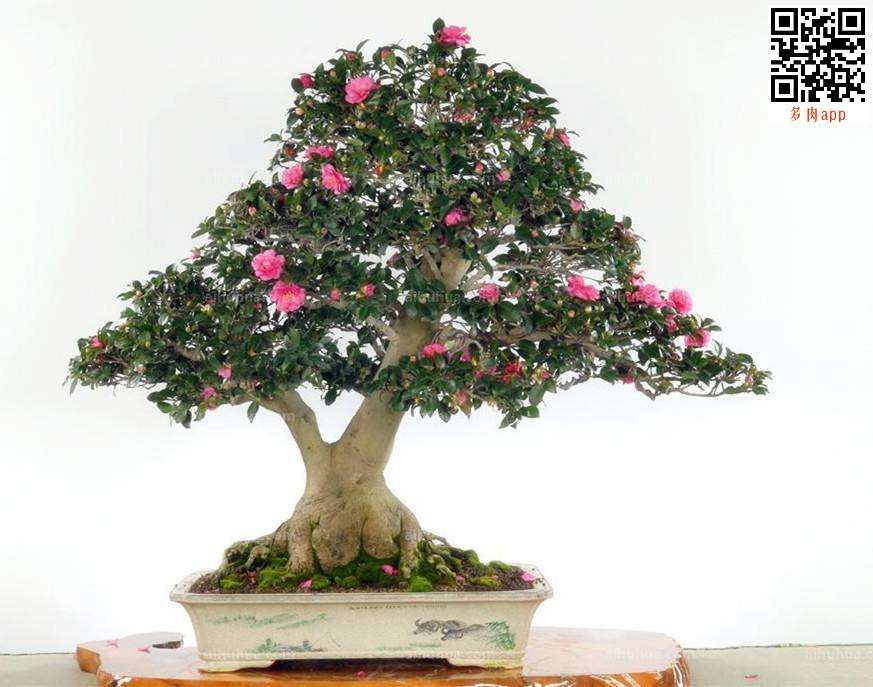
How to grow Camellia japonica and points to note: an introduction to Camellia japonica
Camellia, also known as Camellia japonica, is a plant in the family Theaceae, belonging to evergreen shrubs and small trees. Its ancient name was sea pomegranate. It also has aliases such as Yuming flower, Naitong, or Datura, and is further divided into East China camellia, Sichuan camellia and late camellia. There are extremely many cultivars of camellia. It is a traditional ornamental flower of China, ranking seventh among the "Ten Famous Flowers", and is also one of the world's precious flower trees.
Morphological characteristics of Camellia japonica
Camellia is an evergreen broad-leaved shrub or small tree. The branches are yellowish brown, and the branchlets are green or green-purple to purple-brown. The leaves are leathery, alternate, elliptical, long elliptical, ovate to obovate, 4-10 cm long, with an acuminate or acute apex, a cuneate to nearly semicircular base, and serrated margins. The upper surface of the leaf is dark green, mostly glossy, while the underside is lighter; the leaf is smooth and hairless, and the petiole is thick and short, with soft hairs or hairless.
The flowers are bisexual, usually solitary or in clusters of 2-3 at the tip of the branches or in the leaf axils. The pedicel is extremely short or inconspicuous, with 9-10 bracts and sepals arranged in imbricate fashion and covered with fine hairs. The flower is single, with 5-7 petals arranged in 1-2 whorls in imbricate fashion, the flower diameter is 5-6 cm, the color is bright red, the petal tips are concave or notched, and the bases are united into one body and form a tube; the stamens are well developed, as many as more than 100, the filaments are white or with a red tinge, united at the base into a tube shape, gathered at the flower center, and the anthers are golden yellow; the pistil develops normally, the ovary is smooth and hairless, 3-4 locular, the style is single, the stigma is 3-5 lobed, and the fruit set rate is high. The capsule is round, the shell is lignified, and the mature capsule can naturally split open from the dorsal suture, scattering the seeds.
The branchlets of Camellia are green or green-purple to purple-brown. The flowers are bisexual, usually solitary or in clusters of 2-3 at the tip of the branches or in the leaf axils. The pedicel is extremely short or inconspicuous, with 9-10 bracts and sepals arranged in imbricate fashion and covered with fine hairs. The flower is single, with 5-7 petals arranged in 1-2 whorls in imbricate fashion, the flower diameter is 5-6 cm, the color is bright red, the petal tips are concave or notched, and the bases are united into one body and form a tube.
The seeds are light brown or black-brown, nearly spherical or polygonal from pressing against one another, with flat surfaces and angles, the seed coat is horny and hard, the seeds are rich in oil, and the cotyledons are thick. The capsule is oblate, with hairs on the surface. Camellia chrysantha is a small tree, 2-6 m tall, with thin leathery leaves, oblong leaves, margins with bony small serrations or fine serrations, both sides smooth, sometimes hairy. There are 7-8 petals, sometimes as many as 17, golden yellow to pale yellow, with a waxy luster, flower diameter 3-5.5 (10) cm; the ovary is mostly 3-locular, hairless or hairy. The capsule is oblate or nearly spherical.
Yunnan camellia leaves are larger than those of Camellia japonica, 6-14 cm long and 3-7 cm wide, with sharply serrated leaf margins. The flowers are also larger than those of Camellia japonica, 8-16 cm in diameter, with some reaching 22 cm; the ovary is 3-5 locular, densely covered with silky hairs. The capsule is oblate, with hairs on the surface. Camellia chrysantha is a small tree, 2-6 m tall, with thin leathery leaves, oblong leaves, margins with bony small serrations or fine serrations, both sides smooth, sometimes hairy. There are 7-8 petals, sometimes as many as 17, golden yellow to pale yellow, with a waxy luster, flower diameter 3-5.5 cm; the ovary is mostly 3-locular, hairless or hairy. The capsule is oblate or nearly spherical.
Camellia japonica is a semi-shade-loving tree species with a deep root system and well-developed main root, often growing in pine-oak mixed forests or secondary scrub of evergreen broad-leaved forests, and growing well in deep soil rich in organic matter in sparse shade and moist places or on both sides of ravines. The flowering period of Yunnan camellia is from December to February-March of the following year, each flower lasts about 15 days from first blooming to final blooming, and the fruit ripening period is September-October.
Besides the original species, Camellia has many horticultural cultivars. Today the number of camellia cultivars in the world has grown to more than 5,000. China has about 300 camellia cultivars, which are currently being organized and studied. According to the petalization of stamens, the natural increase of petals, the evolution of stamens, and the petalization of sepals, they are broadly divided into 3 major classes and 12 flower types:
Single class: petals arranged in 1-2 whorls, 5-7 pieces, united at the base, mostly tubular, with pistils and stamens fully developed and able to set fruit.
(1) Single type: characteristics as above.
Semi-double class: petals arranged in 3-5 whorls, about 20 pieces, sometimes nearly 50 pieces (including petals petalized from stamens).
(1) Semi-double type: petals arranged in 2-4 whorls, with small stamen petals and most stamens concentrated at the flower center, most stamens tending to degenerate, occasionally able to set fruit, such as 'Bai Mian Qiu', 'Xing Hong Mu Dan', etc.
(2) Five-star type: petals arranged in 2-3 whorls, the corolla in a five-star shape, stamens present, pistils tending to degenerate. Such as 'Dong Yang Cha', etc.
(3) Lotus type: petals arranged in 3-4 whorls, the corolla in lotus form, stamens present, pistils tending to degenerate or occasionally present. Representative cultivars include 'Shi Yang Jing', 'Hu Zhua Bai', etc.
(4) Pine-cone type: petals arranged in 3-5 whorls, in a pine-cone shape, both pistils and stamens present. 64. Songzi, with 'Da Songzi' as the representative cultivar.
Double class: most stamens petalized, petals naturally increased, the number of petals above 50 (including stamen petals).
Ecological habits of Camellia japonica
Camellia prefers semi-shade and avoids blazing sun. It likes a warm climate, with an optimum growth temperature of 18-25°C and an initial flowering temperature of 2°C. It is slightly cold-tolerant; general cultivars can withstand a low temperature of -10°C and tolerate summer heat, but growth is inhibited above 36°C. It likes high air humidity and avoids dryness, and is suitable for growing in areas with annual precipitation above 1200 mm. It likes fertile, loose, slightly acidic soil, with a pH of 5.5-6.5 being best. It flushes shoots twice a year; the first is the spring flush, beginning in March-April; the summer flush emerges in July-September. The flowering period is long, 1-2 months for most cultivars, and a single flower generally lasts 7-15 days. The flowering period is February-March. Aliases: camellia, tea flower, mandala tree, late camellia, Naitong, tan, foreign tea, Guchun, mountain camellia.
Camellia likes a warm, humid and semi-shady environment. It fears high temperatures and avoids blazing sun. The optimum growth temperature for Camellia japonica is 18-25°C, 13-18°C from March to September, and 10-13°C from September to March of the following year. When the temperature is above 12°C it begins to sprout, and above 30°C it stops growing; the initial flowering temperature is 2°C, and the suitable temperature for flower opening is 10-20°C. Cold-tolerant cultivars of Camellia japonica can briefly withstand -10°C, while general cultivars can withstand -3 to -4°C. When the summer temperature exceeds 35°C, leaf scorching will occur.
Camellia japonica is suited to an environment with sufficient water and humid air, and avoids dryness. In the hot, dry summer and autumn, it should be watered or sprayed promptly, and the relative air humidity is best at 70%-80%. During the plum rain season, pay attention to drainage to avoid waterlogging and root rot.
Camellia japonica is a semi-shade plant, suitable for growing under scattered light, and fears direct sunlight and scorching exposure; seedlings need shading. However, long-term excessive shade is unfavorable to the growth of Camellia japonica, resulting in thin leaves and few flowers, affecting its ornamental value. Mature plants need more light to favor flower bud formation and flowering.
For open-field cultivation, choose deep, loose soil with good drainage, and a pH of 5-6 is most suitable; alkaline soil is not suitable for camellia growth. For potting soil, use fertile, loose, slightly acidic loam or leaf mold.
Cultivation techniques for Camellia japonica
Camellia japonica can be propagated by sowing, cuttings, grafting, layering and other methods. Sowing is generally used to breed new cultivars or propagate rootstock. After the seeds mature in autumn and winter, they are collected and immediately sown in the seedbed; at a temperature of 18-20°C, they germinate in 10-30 days, and cultivation requires 4-5 years before flowering. Cuttings are carried out from April to June, selecting one-year-old hard branches about 10-15 cm long, keeping one terminal bud and one lateral bud at the upper end, with 2-3 leaves attached, ring-barking, and all lower leaves must be cut off. The cutting medium can be sandy loam or humus soil. Place the cutting pot under a shade shed, maintain a temperature of 18-20°C and a relative humidity of 80%-85%; rooting takes about 60-100 days, and new branches can sprout the following spring. Current-year softwood cuttings can also be used, rooting in about 30 days. Inarching is commonly used for propagating horticultural cultivars of Camellia japonica; the rootstock can be seedlings of Camellia japonica, Camellia oleifera and Camellia sasanqua. Locally, cuttings of the variety Camellia japonica 'Bai Chuai Cha' are often used as rootstock; the scion should be 2-3 years old and about 30-40 cm long. The base of the inarched scion and the root crown of the rootstock are each cut with a 4-5 cm incision, and then the two are joined. Inarching is suitable from May to June; about 100-120 days after grafting, the rootstock and scion can fully heal and can be cut away from the mother plant. Air layering is carried out from May to October; select a robust one-year-old branch, make a ring bark 1 cm wide, pack the wound with leaf mold in a plastic bag and tie it, keep it moist, and it will root in 2 months; cut it off and pot it. Arranged in imbricate fashion, covered. The flower is single, 5-7 pieces, arranged in 1-2 whorls in imbricate fashion, diameter 5-6 cm, bright red, the petal tips are concave or notched, the bases are united into one body and form a tube; it likes fertile, loose, slightly acidic soil with a pH of 5.5-6.5 being best. It flushes shoots twice a year; the first is the spring flush, beginning in March-April; the summer flush emerges in July-September. Most cultivars last 1-2 months, and a single flower generally lasts 7-15 days. The flowering period is February-March. 6-14 cm long, 3-7 cm wide, with sharply serrated leaf margins. Some flowers reach 22 cm and are densely covered with silky hairs. The capsule is oblate, with hairs on the surface. Flower diameter 3-5.5 cm, oblate or nearly spherical.
Field-grown Camellia japonica
It is further divided into garden cultivation and nursery cultivation. If grown for landscaping, there must be shade trees as companions; for nursery cultivation, shade trees should be planted in rows. In warm areas, autumn planting is generally better than spring planting. Fertilization must grasp three key periods, namely: apply topdressing in February-March to promote the growth of spring shoots and flower buds; apply topdressing in June to promote the growth of secondary branches and improve drought resistance; apply base fertilizer in October-November to improve the cold resistance of the plants and lay a good foundation for new shoot growth the following spring. Cleaning the garden is one of the effective measures to control pests and diseases and strengthen tree vigor. Winter plowing can eliminate overwintering pests. Throughout the year, 5-6 rounds of intertillage and weeding are needed, but in the hot summer season intertillage should be stopped to reduce soil moisture evaporation. The main pests of Camellia japonica are: tea tussock moth, tea leaf miner, tea black citrus aphid, etc. The main diseases are: tea ring spot, camellia algal leaf spot and camellia anthracnose, etc. Control methods are: remove dead branches and fallen leaves to eliminate sources of infection. Strengthen cultivation management to enhance plant disease resistance, and use chemical control.
Potted Camellia japonica
The ratio of pot size to seedling should be appropriate. The potting soil used is best made by adding 1/2-1/3 of pine needles that have been composted for 1 year and cut into pieces to garden soil. Pot in November or February-March of the following year, and never pot in the hot season. After potting, water thoroughly, and usually water moderately. The amount of watering should change with the seasons. Around Qingming, the plants enter the growth and sprouting period, so the amount of water should gradually increase; after the new shoots stop growing (around late May), watering should be appropriately controlled to promote flower bud differentiation. June is the plum rain season, so guard against water accumulation. In the hot summer season, leaf evaporation is high, so leaf spraying is needed; spraying is best done in the early morning or evening, and never at noon. In winter, the plants gradually enter dormancy, so the frequency of watering should be correspondingly reduced. Never water with cold water under high temperature and blazing sun, to avoid the roots becoming unaccustomed and causing physiological leaf drop. On hot or windy days, leaf evaporation is high, so water or spray more. When air humidity is high, reduce the amount of watering. If drought and dehydration occur, with branches and leaves wilting, immediately place the plant in a shady place, water thoroughly, and at the same time spray the leaves. Generally, large-leaf, large-flower cultivars and fast-growing cultivars have high water demand and should be watered more. Precious cultivars such as 'Shi Xiang Jing', 'Yuan Feng Guan', 'Sa Jin Bao Zhu', 'Feng Xian', 'Lu Zhu Qiu', etc. have low water evaporation, and overwatering can cause leaf drop and bud drop. In the hot summer and autumn seasons, shade and cool promptly. In winter, take anti-freezing measures. Potted plants overwinter indoors, and it is best to maintain 3-4°C; if the temperature exceeds 16°C, it will promote early sprouting. Fertilization, pruning, and pest and disease control for potted camellias are basically the same as for open-field cultivation.
Propagation methods and cultivation characteristics of Camellia japonica
Camellia japonica likes a warm and humid climate environment, avoids blazing sun, likes semi-shady scattered light, and is also shade-tolerant.
Fertilization methods
Do not over-fertilize or apply concentrated fertilizer; this is the characteristic that Camellia japonica does not like concentrated fertilizer, otherwise it will damage the root system and reduce the number of flowers. The base fertilizer for Camellia japonica is best made with organic fertilizer, such as fermented chicken and duck manure and animal organs, as well as soybean cake and fish bone meal. These organic fertilizers contain nitrogen, phosphorus, potassium and other components, are relatively comprehensive, and have long-lasting fertilizer effects. When applying, they can be sun-dried and ground into powder, first mixed with 5-6 times the amount of dry soil, and then scattered 2-3 cm away from the plant roots when repotting and filling the potting soil.
Camellia japonica likes cool weather and fears high temperature and heat. When topdressing after the beginning of spring, alum fertilizer water must be applied. To make alum fertilizer water, add 100 g of green [ferrous sulfate] to 10 kg of clean water, then add 200 g of soybean cake powder and 1000 g of dried poultry manure and soak to ferment. In hot weather, soak for 1 month; in cool weather, soak for 3-4 months to fully decompose.
Commonly used propagation methods
There are cuttings, grafting, and sowing.
(1)Cuttings
The suitable cutting period in East China is mid-to-late June. The second cutting is carried out from late August to early September. In both periods the temperature is around 30°C; with shade facilities, the temperature can be controlled at around 25°C. Cuttings should be selected from current-year semi-mature branches on the outside of the canopy that are firm in tissue, with complete leaves, plump leaf buds and free of pests and diseases. The cutting length is generally 4-10 cm, with 2 leaves kept at the tip, and when cutting, the lower part should have a heel. The cutting density is generally 10-14 cm row spacing and 3-4 cm plant spacing, requiring the leaves to interlock without overlapping; insert the cuttings about 3 cm into the soil. Shallow insertion roots quickly, deep insertion roots slowly; after inserting, spray thoroughly with water. From cutting to rooting generally takes about 30 days. "The key to survival is to maintain sufficient humidity in the early cutting stage, take measures to reduce hot air convection, avoid direct sunlight, and pay attention to leaf spraying, keeping the leaf surface often covered with a thin film of water." After rooting, gradually increase sunlight; after October, let the seedlings receive full sunlight to accelerate lignification.
(2)Grafting
Seedling rootstock bud grafting: after the seeds are sown in a sand bed, they grow for about 2 months, and when the seedlings reach 4-5 cm tall, they can be dug up and grafted by the cleft method. Select well-growing semi-lignified branches as scions, cutting them one by one from bottom to top with 1 bud and 1 leaf. Cut the scion into a regular wedge shape and place it in a wet towel. Take the dug-up rootstock seedlings, remove all mud and sand, then cut them off 1-1.5 cm above the cotyledons, and make a vertical cut downward along the cotyledon suture line, with a depth consistent with the cut surface of the scion; insert the cut scion into the cleft of the rootstock, align the cambium on one side, and tie tightly with a plastic film band. Plant the grafted seedlings in the seedbed at a row spacing of 8 cm x 2 cm. The bed soil should preferably be fertile, loose sandy loam. After planting, the seedbed should be covered with a plastic shed to keep warm; generally healing begins in 10-15 days, and in 20-25 days the film can be opened at night to allow ventilation. After that, gradually increase ventilation, appropriately increase light, and after new growth begins, remove all the film. Semi-mature branch grafting: use thick camellia or adult Camellia oleifera plants as rootstock for side grafting to replace branches, and in 1-2 years a large plant of a famous camellia cultivar can be produced. Select healthy plants with plump buds and no pests or diseases as rootstock; for summer grafting, prune before the end of February, and for autumn grafting, prune in early-to-mid June, cutting off diseased and weak branches, drooping branches, crossing branches and overly dense branches. The suitable grafting temperature is 5-30°C. For branches with a diameter of more than 1 cm, bark grafting is used, that is, at the appropriate part of the rootstock, make one cut each on the top, left and right, reaching the xylem, pull the bark down, with a length consistent with the cut surface of the scion, then attach the cut scion to the peeled part of the rootstock, pull the bark up to wrap the scion, then bind it with a plastic band, exposing the buds, and then put on a plastic bag to increase humidity and promote healing; after 30 days remove the binding, and after the scion sends out new shoots and gradually lignifies, remove the tie. Cutting off the rootstock is done in 3 stages: the first time, cut off the shoot tip when tying; the second time, after the first new shoot of the scion has fully lignified, cut off 1/3 of the upper part of the rootstock; the third time, after the second new shoot of the scion has fully lignified, cut off the rootstock at the graft union. When grafting in the hot season, success depends on the control of high temperature. A shade shed must be built, covered with double-layer curtains, so that basically no direct sunlight enters the shed; water should be sprayed around noon to cool down, keeping the local temperature at around 30°C.
(3)Sowing
In early-to-mid October, place the harvested fruits indoors in a ventilated place to dry in the shade, and after the capsules split open and the seeds are taken out, sow immediately. If they cannot be sown immediately in autumn, they need to be stored in sand until sowing in February of the following year. Before sowing, the seeds can be mixed with New High Lipid Film; generally autumn sowing has a higher germination rate than spring sowing.
Commonly propagated by cuttings, grafting, layering, sowing and tissue culture.
Cutting propagation
Mid-June and around the end of August are the most suitable. Select current-year semi-mature branches on the outside of the canopy that are firm in tissue, with complete leaves and plump leaf buds as cuttings, 8-10 cm long, with 2 leaves kept at the tip. When cutting, keep as much old branch as possible at the base; after insertion, callus tissue is easily formed and rooting is fast. Cut the cuttings in the early morning and insert them as soon as they are cut, inserting about 3 cm into the medium. When cutting, the leaves are required to interlock; after insertion, press firm with fingers. Shallow insertion is better, as it allows ventilation and fast healing and rooting. The cutting bed needs shading, spraying the leaf surface every day, keeping it moist, and maintaining the temperature at 20-25°C; about 3 weeks after insertion healing begins, and rooting occurs after 6 weeks. When the roots are 3-4 cm long, transplant into pots. When cutting, dip the base of the cuttings in 0.4%-0.5% indolebutyric acid solution for 2-5 seconds, which has an obvious effect of promoting rooting.
Grafting propagation
It is often used for cultivars that are difficult to root from cuttings or have few propagation materials. Grafting from May to June, when the new shoots have become semi-lignified, gives the highest survival rate, and after successful grafting, buds sprout and shoots grow quickly. The rootstock is mainly Camellia oleifera; collect seeds in October, store in sand in winter, sow in early April of the following year, and when the seedlings grow to 4-5 cm, they can be used for grafting. Use the softwood cleft grafting method: use a blade to cut off the embryonic bud part of the bud rootstock, make a vertical cut upward along the pith in the center of the cross section of the hypocotyl, then take one node of camellia scion, cut the base below the node into a regular wedge shape, immediately insert the cut scion into the bottom of the rootstock cleft, align the cambium on both sides, bind with cotton thread, and put on a clean plastic bag. After about 40 days remove the bag, and only after about 60 days will it sprout and grow shoots.
Layering propagation
In the plum rain season, select a robust 1-year-old branch, 20 cm from the tip, make a ring bark 1 cm wide, wrap it with leaf mold, then cover with plastic film; it roots after about 60 days, and can be cut off and directly potted, with a high survival rate.
Sowing propagation
Suitable for single or semi-double cultivars. The seeds mature in mid-October and can be sown immediately. Shallow sowing is better; use vermiculite as the medium, cover 6 mm, room temperature 21°C, 10 hours of light each night, which can promote seed germination; germination begins 15 days after sowing, within 30 days the seedlings reach 8 cm tall, and transplant when the seedlings have 2-3 leaves.
Tissue culture propagation
The explants are often seedlings; after routine disinfection, cut into 1 cm lengths and inoculate on MS medium supplemented with 1 mg/L kinetin, 1 mg/L 6-benzylaminopurine and 0.1 mg/L indoleacetic acid. After 4 weeks of culture, only callus tissue forms, without buds. After transferring to new medium, a single 4 cm shoot begins to form, then soak in 0.5 mg/L indolebutyric acid solution for 20 minutes, then transfer to 1/2 MS medium, and roots grow after 4 weeks. After growing on the rooting medium for 8 weeks, transplant the seedlings into pots containing perlite and peat.
Disease control of Camellia japonica
There are camellia anthracnose and camellia blister blight; common pests include red spider mites and scale insects.
When camellias are cultivated indoors or in greenhouses, if ventilation is poor, they are susceptible to red spider mites and scale insects; they can be controlled by spraying with 40% omethoate emulsifiable concentrate at 1000 times dilution or washed clean. In the plum rain season, air humidity is high, and anthracnose damage often occurs; it can be controlled by spraying with equal-amount Bordeaux mixture or 25% carbendazim wettable powder at 1000 times dilution.
Semicircular or irregular brown lesions appear at the leaf tip or leaf margin of Camellia japonica, with massive leaf drop and even death of the whole plant, caused by fungal infection. Common ones include: brown spot disease, which in the early stage forms many small brown spots on the upper leaf surface, then gradually expands into semicircular, circular or irregular large brown spots, and finally turns silver-gray, with many small black granules arranged in rings or scattered; the boundary between the lesion and normal tissue is obvious. Red spot disease initially shows light brown small spots, then expands into circular or irregular reddish-brown lesions, but there are no small granules on the lesions; the lesion margin is slightly raised, darker in color, and clearly demarcated from normal tissue. This disease occurs in the Jiangsu-Zhejiang area and in Yunnan, Sichuan, Hunan and other places. In severe cases, a large number of leaves drop, and even the whole plant dies.
In addition, there is camellia anthracnose caused by anthracnose fungi, which also mostly occurs at the leaf margin; the shape and color of the lesions are basically similar to the leaf spot disease caused by the above-mentioned leaf spot fungi, but the typical symptom unique to anthracnose is that when humidity is relatively high, a pale red viscous substance is produced on the lesions, which can distinguish it from other lesions. There are also fungi that infect the leaf surface, young leaves and young shoots of Camellia japonica, but the location, shape and color of the lesions are obviously different, and the control methods are the same. The above diseases are mainly caused by fungal infection when the disease resistance of Camellia japonica plants decreases under high temperature and high humidity conditions; they can also occur at low temperature and rainy conditions or high temperature and dryness, as well as on wounds of plants with poor ventilation or sunscald spots, and generally occur easily in summer and autumn.
Strengthen management and careful maintenance to enhance plant disease resistance and reduce chances of infection. For example, appropriately increase the distance between plants and rows to maintain good ventilation; often weed, loosen the soil, and remove standing water; the soil should be acidic (pH around 6), loose, and have good drainage; usually water by the principle of dry-wet alternation, and never apply nitrogen fertilizer alone; in midsummer pay attention to shading to prevent sunscald, and avoid injuring leaves during management operations.
Chemical control: during the growing period of camellia, spray once every half month for prevention. Once diseased leaves are found, remove them immediately and burn them in a centralized manner to reduce sources of infection. For affected plants, suspend fertilization (especially nitrogen fertilizer), remove standing water in time, keep the potting soil appropriately on the dry side, and pay attention to ventilation. At the same time, spray the leaf surface with chemicals. Commonly used control chemicals include: 65% zineb wettable powder at 800 times dilution; 50% Tuzet wettable powder at 800-1000 times dilution; 75% chlorothalonil and 50% carbendazim at 500-800 times dilution; 70% thiophanate at 800-1000 times dilution, etc., all have good control effects. Spray the leaf surface once every two weeks, wetting the entire leaf surface, for three consecutive times, preferably in the evening. Note that when using zineb, avoid mixing it with other alkaline pesticides.
The reason for poor chemical efficacy also lies in frequently using one chemical for control; over time, the pathogen will develop a certain resistance, and the efficacy will become less obvious. Other chemicals can be appropriately substituted, or chemicals can be used alternately or mixed, and the plant's ecological environment should be improved in time. In addition, improper concentration, timing and method of application will also reduce the sterilization effect.
Common pests and diseases of spring flowers
In spring, the temperature is warm at first and then cold again, and the air humidity is high, so the occurrence of crop pests and diseases is at a moderate to severe level, and flowers also have more pests and diseases. Generally, the following are more serious in April-May:
Aphids: Hibiscus syriacus, flowering peach, Chinese hibiscus, Chinese rose, honeysuckle, etc. are all easily harmed by aphids. As the temperature rises, aphids also increase day by day. Control methods: 1. Spray with 40% omethoate or 50% phosmet diluted 1200-1500 times with water. 2. For a small number of potted flowers, you can also spray with 70-100 times dilution of neutral washing powder liquid.
Red spider mites: damage to jasmine, Chinese hibiscus, asparagus fern, Chinese rose, dahlia, etc. starts in early April. Control methods: 1. Spray with 1000 times dilution of Supracide. 2. For a small number of potted flowers, often rinse the front and back of leaves with tap water, or spray or dip with 100-150 times dilution of boiled and cooled flour paste water, then rinse once with clean water a day or two later, which can achieve obvious results.
Scale insects (flower lice): scale insects on white magnolia, Chinese rose, boxwood, and Pittosporum tobira mostly begin to hatch from mid-April to mid-to-late May. Control methods: 1. Before hatching, gently brush off the insects by hand. 2. During the larval hatching period, spray with 40% omethoate at 1000-1500 times dilution.
Damping-off: when the temperature reaches 20°C, newly sown flowers, saplings, and some flowers prone to root rot are highly susceptible to damping-off when soil moisture is high. Control methods: 1. Before sowing, evenly mix 1.5-4 kg of 70% quintozene per mu into the soil. 2. Control watering at the seedling stage, and do not let the soil become too wet. 3. At the initial stage of disease, irrigate with 1% ferrous sulfate or 200-400 times dilution of 50% amobam solution, irrigating 2-4 kg of solution per sq m.
Rust: rose rust attacks when rose flowers are in bud. Control methods: 1. When roses sprout, promptly pick off and burn the yellow diseased buds that sprout first, to eliminate sources of infection. 2. Spray with 15% triadimefon at 700-1000 times dilution at the initial infection stage.
Powdery mildew: Chinese rose powdery mildew and impatiens powdery mildew mostly occur in May-June; in summer they easily cause symptoms such as yellow leaves, withered leaves, and curved young shoots. Control methods: 1. Pay attention to ventilation and light transmission for the flowers. 2. Apply less nitrogen fertilizer and more phosphorus and potassium fertilizer. 3. Spray once with 15% triadimefon at 700-1000 times dilution at the initial infection stage.
Identifying flower pests and diseases
Flower diseases are generally divided into two categories: physiological diseases and parasitic diseases. Physiological diseases are mainly caused by unsuitable conditions such as climate and soil. Common physiological diseases include: scorching caused by strong light in summer; freezing damage caused by low temperature in winter; root rot caused by too much water; leaf edge scorching and wilting caused by insufficient water; and deficiency symptoms due to lack of certain nutrient elements in the soil, etc. Parasitic diseases are caused by fungi, bacteria, viruses, nematodes, etc. infecting flowers. These organisms have different forms, but most have parasitic and pathogenic ability, and strong reproductive capacity, and can spread from infected plants to healthy plants through various channels (stomata, wounds, insects, wind, rain, etc.), growing, developing, reproducing, and spreading under suitable environmental conditions, cycling over and over and gradually expanding. Therefore, this type of disease causes the greatest harm to flowers. Fungi: fungi are lower organisms with true nuclei and no chlorophyll. They use mycelium as the vegetative body and reproduce by spores, and are the most important category among flower diseases. Most fungal diseases have obvious symptoms, such as mold-like substances, powdery substances, rust-like substances, dot-like substances, filamentous substances, etc. These characteristics are one of the main bases for identifying fungal diseases. Common fungal diseases include powdery mildew, anthracnose, etc. Bacteria: bacteria are a type of single-celled prokaryotic organism that reproduce by division. The characteristics of bacterial diseases are mainly that the affected tissue is water-soaked or the lesions are translucent, and under humid conditions bacterial mucus overflows from the diseased part, showing an "ooze" phenomenon, which is one of the main bases for identifying bacterial diseases. Common bacterial diseases include iris bacterial soft rot, etc. Viruses: viruses are extremely tiny parasites. Their form must be observed with an electron microscope. They parasitize within the living cell tissues of flowers, and can move with the host sap flow within the flower body and spread to the whole plant, causing whole-plant disease. Viral diseases often show symptoms such as mosaic, yellowing, deformity, and ringspot. Common viral diseases include narcissus viral disease, etc. Nematodes: nematodes belong to a type of lower animal. Nematodes have a slender body, slightly pointed at both ends, generally 1-2 mm long, like a roundworm. A few nematodes have females that are spherical or pear-shaped. They mostly survive in the soil, parasitize the roots of flowers, stimulate the local proliferation of host cells, and form nodules. Common nematode diseases include cyclamen root-knot nematode disease, etc.
Cultivar classification of Camellia japonica (1) The 3 major classes of Camellia japonica:
1. Single class
2. Semi-double class
3. Double class
(2) The 12 types of Camellia japonica:
1. The single class is divided into: single type;
2. The semi-double class is divided into: semi-double type, five-star type, lotus type, pine-cone type;
3. The double class is divided into: Togui type, chrysanthemum type, hibiscus type, crown type, hydrangea type, radial type, rose type.
There are about 2000 camellia cultivars, which can be divided into 3 major classes and 12 flower types. The Compendium of Materia Medica says: "The leaves of camellia are similar to tea, and can also be used as a drink, hence the name."
The Flower Mirror records nineteen cultivars of Camellia japonica: agate camellia, crane's crest red, treasure pearl camellia, banana-calyx white treasure pearl, Yang Fei camellia, Zhenggong powder, pomegranate camellia, Yi Nian Hong, Zhao Dian Hong, late camellia, southern camellia, etc. Camellia japonica has many flower types, including single, semi-double, double, curved-petal, five-star petal, hexagonal, pine-shell type, etc. The flowers come in red, yellow, white, pink, and even white petals with red dots, etc.:
Single class: petals in 1-2 whorls, 5-7 pieces, united at the base, mostly tubular, setting fruit. Under it there is only 1 type, namely the single type.
Semi-double class: petals in 3-5 whorls, about 20 pieces, sometimes nearly 50 pieces. It is divided into 4 types, namely semi-double type, five-star type, lotus type, pine-cone type. 3. Double class: most stamens petalized, petals naturally increased, the number of petals above 50. It is divided into 7 types, namely Togui type, chrysanthemum type, hibiscus type, crown type, hydrangea type, radial type, rose type.
Common cultivars include Chenxi in the single class, with crinkled petals, pure white; Sai Jinguang, with white flowers, marked with peach-red lines and sprinkled with fine dots; Da Hua Jin Xin, with bright red flowers, flower diameter 6-7 cm.
In the semi-double class there are Sai Luoyang, with red flowers and white spots; Da Songzi, with deep red flowers; Zui Yang Fei, with pink flowers; Xing Tao Mu Dan, with peach-red flowers.
In the double class there are Bai Bao Zhu, with pure white flowers; Hong Fu Rong, with oleander-red flowers; Hua Fu Rong, with white flowers and red lines; Hua Bao Zhu, with pink flowers and irregular red stripes; Wu He Peng Qiu, with bright red flowers; Hua Fo Ding, with bright red flowers and a small amount of white spots; Hong Shi Ba Xue Shi, with red flowers; Chi Dan, with bright red flowers; Hua He Ling, with light red flowers and white spots.
Cultivars bred abroad include:
Adolphe Audusson, with large, deep red, double flowers. Alba Plena, with large, white, double flowers.
Berenica Boddy, with light pink, semi-double flowers and strong cold resistance.
Debutante, with large, peony-form, light pink flowers.
Doncke-larii, with red flowers with white marble stripes, semi-double.
Elegans, with large, anemone-form, rose-red flowers with white spots. Finlandia, with light pink, semi-double flowers.
Glen 40, with large, deep red, double flowers.
Herme, with pink flowers with irregular white edges and deep pink stripes, semi-double.
Kumasaka, with rose-form, rose-red flowers.
Magnoliaeflora, with light red, semi-double flowers.
Mathotiana, with large, rose-form, deep red, double flowers.
Purity, with white, rose-form, double flowers.
Among hybrid camellias there is Donation, with large, pink, semi-double flowers.
Fragrant Pint, with small, peony-form, deep pink flowers that are very fragrant.
Distribution range of Camellia japonica
Camellia is native to the Himalayan region, Chongqing, Zhejiang, Jiangxi, Sichuan and Shandong; it is also distributed in Japan and the Korean Peninsula, and is especially abundant in Yunnan. Later, Camellia japonica spread to Europe and America and became one of the world's renowned flowers.
China has more than 306 cultivars of Camellia japonica. Batch production has begun in Zhejiang, Fujian and Jiangsu and other places. It has become a major potted ornamental flowering tree in the flower market in winter.
Camellia japonica is native to China. Wild Camellia japonica is distributed under the forest in mountain valleys of Chongqing, Zhejiang, Jiangxi and Sichuan, and on Laoshan in Shandong and coastal islands. In the Siming Mountains of Ningbo, Zhejiang, there are also patches of wild Camellia japonica. In the rock crevices at an altitude of 380 m at Baoyan South of Huacheng Cave in Daruo Mountain, Rui'an County, Wenzhou, southern Zhejiang, there is still preserved an ancient camellia tree more than 1200 years old. In Chongqing, Lichuan, Jiangxi and Mount Emei, Sichuan and other places, there are natural distributions of ancient tea trees more than 1000 years old growing wild in forests.
For the cultivation distribution of Camellia japonica, the open-field planting areas are mainly in the Yangtze River basin. In China, except for parts of the Northeast, Northwest and North China where the climate is too cold for planting, it is planted almost everywhere in gardens throughout China. However, large-area open-field cultivation is mostly in Chongqing, Zhejiang, Fujian, Sichuan, Hunan, Jiangxi and Anhui provinces. Yunnan camellia is a specialty of Yunnan, originating from Tengchong in southwestern Yunnan. It has a wide open-field cultivation distribution within Yunnan Province. After Liberation, Shanghai, Beijing, Guangzhou and other places introduced and planted it, but mostly in greenhouse cultivation. In 1824, Yunnan camellia was first introduced to Europe. Camellia chrysantha is mostly native to Guangxi, China; there are only 4 species in northern Vietnam, and it has also been found in Yunnan.
Uses of Camellia japonica: ornamental value
The genus Camellia in the family Theaceae has about 220 species, among which Camellia japonica, Yunnan camellia, Camellia sasanqua and the newly discovered Camellia chrysantha in China are all important ornamental flowering trees.
Camellia japonica is an evergreen flowering tree that blooms at the turn of winter and spring, with graceful flower posture and bright flower color. Comrade Guo Moruo praised it: "A camellia tree blooms peach-red early, a hundred rosy clouds howl proudly in the midst." Guo lao also once wrote a poem praising Yunnan camellia: "It is said with admiration that camellia is the provincial flower, today I first see the city full of sunset clouds; everyone says peony is good, I say peony is not as good as camellia."
Medicinal or dietary therapeutic value of Camellia japonica
The medical information and health dietary information on Hugarden Network is for reference only and cannot be used as a basis for diagnosis or medical treatment. For any health problem, consult professional medical personnel, and for the treatment of any disease, please follow doctor's advice.
Ultimate flower-protecting task: to love yourself, start from reality and follow doctor's advice. Toward illness, do not be careless, do not delay, do not give up hope; face it bravely, warm the silent world with love, and care for the flower field within your heart with your heart.
Brief introduction to the medicinal material
[Aliases]Camellia.
[Source]It is the plant Camellia japonica L. of the genus Camellia in the family Theaceae, and its roots and flowers are used as medicine. The roots can be collected throughout the year; the flowers are collected in spring and winter, then sun-dried or oven-dried.
Camellia, also known as the camellia flower, is a plant of the genus Camellia in the family Theaceae. The camellia flower has a full and graceful form, is dignified and elegant, and is one of China's traditional top ten famous flowers. It is also one of the world's famous flowers.
Camellia is an evergreen shrub of the family Theaceae. It belongs to the family Theaceae, an evergreen shrub or small tree, reaching a height of 3-4 m. The trunk is smooth and hairless. The leaves are ovate or elliptical, with fine serrations along the edges, leathery, and bright green on the surface. The flowers are borne singly or in pairs in the leaf axils or at the tips of the branches; the petals are nearly round, and double-flowered varieties can have 50-60 petals. The flower colors include red, white, yellow, purple, and near-black, and are very vivid. The flowering period varies by variety, with flowers blooming from October to April of the following year. The capsule is round and ripens in late autumn, but most double-flowered forms cannot bear fruit. The camellia has the proud plum-like character of "only the camellia endures so long, alone it can claim the spring wind in the deep months," and also the peony-surpassing vividness of "flowers abundant and brilliantly red, deeply rivaling the morning glow." Therefore, since ancient times it has been a highly renowned woody ornamental flower, reaching its peak in the Tang and Song dynasties, and after being introduced to Europe in the 17th century it caused a sensation, thus earning the reputation of a "world-famous flower." It prefers a cool, humid climate and cannot tolerate high temperatures. It is not demanding about soil, but sandy soil with high moisture content is more suitable, and both full sun and partial shade are suitable. The flower's fruit is a capsule, large with a thick skin, containing 1-2 or more than 2 seeds.
Medicinal properties: pungent, bitter, cold.
"Bencao Jingshu": sweet in taste with a slight pungency, balanced in nature with a slight cold.
"Bencao Fengyuan": bitter, warm, non-toxic.
"Baicao Jing": astringent in taste.
Meridian entry of the medicinal material:Liver; Lung meridians.
"Bencao Zaixin": enters the liver and lung meridians.
"Bencao Cuoyao": enters the foot Jueyin and hand Yangming meridians.
Functions and indications
Astringes and cools the blood, stops bleeding. Used for vomiting blood, nosebleeds, bloody stool, and profuse uterine bleeding; externally used for burns and scalds, and traumatic bleeding.
"Gangmu": For burns and scalds, grind into powder and apply mixed with sesame oil.
"Yilin Zuanyao": Tonifies the liver and calms the liver, breaks blood stasis and clears heat.
"Baicao Jing": Cools the blood, breaks blood stasis, and stops bleeding. Dissolves abscesses and swellings and injuries from falls, stops chronic dysentery, intestinal wind with bloody stool, uterine bleeding, vaginal discharge, bloody strangury, nosebleeds and vomiting blood; externally applied for moxibustion sores.
"Bencao Zaixin": Treats the blood aspect, regulates intestinal wind, clears liver fire, moistens the lungs and nourishes yin.
Applied formulas
To treat vomiting blood and cough: One Baozhu camellia, roasted black on a tile, mixed with red sugar, taken daily in unrestricted amount. Two: Ten Baozhu camellia flowers, five qian of safflower, one liang of Bai Ji, four liang of red dates. Decoct in water into one bowl and take, then take the residue again; the red dates may also be eaten at any time. (Wang Diangui, "Buyao Liangfang")
To treat red dysentery: Large red Baozhu camellia flowers, dried in the shade and ground into powder, mixed evenly with white sugar, steamed over a rice pot three or four times and taken. ("Jiusheng Kuhai")
To treat bleeding hemorrhoids: Baozhu camellia, ground into powder and taken with water. ("Gangmu Shiyi")
To treat cracked and painful nipples that feel about to fall off: Baozhu camellia, roasted and ground into powder, mixed with sesame oil and applied. ("Gangmu Shiyi")
[Usage and dosage] 10-15 grams. For external use, an appropriate amount, ground into powder and applied mixed with sesame oil.
[Excerpted from]"National Compendium of Chinese Herbal Medicine", "Gangmu".
Cultural background and cultivation history of camellia
Camellia originated in China. In the early 7th century AD, Japan introduced camellias from China, and by the early 15th century it was introducing large numbers of Chinese camellia varieties. In 1739, the United Kingdom first introduced Chinese camellias, and afterward camellias spread to Europe and the United States. To date, countries such as the United States, the United Kingdom, Japan, Australia, and Italy have developed rapidly in camellia breeding, propagation, and production, and have entered the stage of industrialized production, with interspecific hybrids and new varieties continuously coming onto the market.
China has a long history of cultivating camellias. Cultivation of camellias began as early as the Southern Dynasties. In the Tang Dynasty, camellias were cultivated as precious ornamental plants. By the Song Dynasty, camellia cultivation was already very widespread. In the Southern Song Dynasty, camellias from Wenzhou were introduced to Hangzhou and developed rapidly. In the Ming Dynasty, "Huashi" described and classified camellia varieties. By the Qing Dynasty, camellia cultivation was even more flourishing, and camellia varieties continuously appeared. Since 1949, China's camellia cultivation level has improved to a certain extent, and variety selection and breeding have further developed. China already has more than 300 camellia varieties.
Beautiful legend
It is said that there was a woman named Dabu. She was very hardworking and kind, but had always been alone. She worked from dawn to dusk, had enough to eat and wear, and lived a very comfortable life.
Her greatest hobby was her love of flowers and plants. Inside and outside her courtyard, she planted many flowers and plants. Whenever she had time, she watered the flowers and plants, hoed the weeds, and caught insects. Red, white, yellow, and purple, there was nothing she did not have; spring, summer, autumn, and winter, there were always flowers blooming. They vied in splendor, a riot of color, with a fresh fragrance that penetrated the heart. But there was not one she especially liked. She always wanted to find the one flower she loved most and plant it in the center of her courtyard. She searched everywhere, looking over all the mountains and ridges, but the flower she loved most was still nowhere to be found.
One day, Dabu went to the Kuige Longtan to carry water to water the flowers. When she reached the edge of the Longtan, she saw a flower with nine stamens and eighteen petals reflected on the water's surface, its colors extremely vivid, and she was dumbstruck. After looking for a while, she raised her head and looked around, but did not find any flower like the one on the water's surface, so she filled her container with water and carried it home on her back. She thought of that flower when she went out, and thought of that flower again when she came in; she thought of that flower with her eyes open, and thought of that flower with her eyes closed! Thinking and thinking, within a few days she fell ill, eating and drinking nothing, lying in bed all day. What illness had she contracted? She did not know either. Many doctors came to treat her, but none could cure her illness. Her illness grew worse day by day! After being ill for who knows how many days, Dabu was close to death.
At the critical moment, a beautiful girl stepped across the threshold, came to Dabu's bedside, called her "Ama" sweetly, and said she had come to treat her illness. Dabu opened her eyes and saw that the flowers in the girl's hair and the flowers hanging on her chest were exactly the same as the kind she had seen on the water's surface. Without taking a single pill, she recovered! Dabu suddenly sat up, jumped out of bed with a thud, and stared at the girl without blinking. The girl's smiling face was also just like the kind of flower she had seen.
Dabu asked the girl what flower she was wearing, and she said it was a camellia; when asked whether she had a seedling, she gave Dabu one.
After the girl left, Dabu took a hoe and planted the camellia in the center of her courtyard. Dabu watered the camellia every day, fertilized it every month, and hoed weeds around it every season, as careful and thorough as if she were raising an infant. Within a few years, the camellia tree grew up and bloomed. That camellia tree had a vigorous and graceful form, with green leaves that did not wither in all four seasons; each flower was as large as a peony, as brilliant as rosy clouds, graceful and dazzling! Even more strange was that when that camellia was in full bloom, people from the surrounding villages, when they drew water in golden basins, could see the camellia's reflection; when they went to the edge of the Longtan to carry water, they could also see the camellia's lovely image on the water's surface.
After who knows how many years, Dabu died. It is said that the girl who gave Dabu the camellia was the Camellia Fairy from heaven! To commemorate the Camellia Fairy, and also to commemorate Dabu, a temple was built on the spot where the camellia was planted, named the Camellia Temple. During the late Qing Dynasty, the Camellia Temple was destroyed, but the legend of the camellia is still told to this day!
The camellia braves wind and snow, fears no harsh environment, and can bloom for a long time without fading in the severe winter. The fighting people all praise it as the flower of victory.
The camellia is called the flower of victory, and there is another legend: Wu Sangui, a commander under Chongzhen, the last emperor of the Ming Dynasty, guarded Shanhaiguan. The peasant rebel army led by Li Zicheng captured Beijing, and Emperor Chongzhen hanged himself at Meishan. Wu Sangui surrendered to the Qing army and brought in the Qing forces, suppressed the peasant rebel army, served as the vanguard, killed the Ming Prince of Gui, and the Qing enfeoffed him as the Prince of Pingxi, to guard Yunnan. In Yunnan, Wu Sangui acted tyrannically, built a palace on Wuhua Mountain, constructed Axiang Garden, and issued an order for all parts of Yunnan to present rare flowers and exotic plants. In Luliang County, there was a camellia at Puji Temple, more than two zhang tall, with flowers having nine stamens and eighteen petals and a rich fragrance overflowing, a rare treasure of the world. When the Luliang County magistrate saw the decree, he went to Puji Temple and forced the residents near the temple to dig up the camellia tree. The villagers refused to obey, and it went on until dark. No one raised a spade. That night, an elderly man of high prestige in the village saw a beautiful girl walk over, holding a blooming camellia in her hand, and say to him: "The villagers love me and cultivate me; my flowers open only for the fellow villagers. Wu Sangui need not think of seeing even a glance of me. You cannot keep me by staying, and insisting on defying the order will make the common people suffer. Better to let that county magistrate send me away; I have my own way to deal with them, and I will surely return in victory." The old man reached out to grasp the girl's hand, and startled awake; it had been a dream.
The next day the old man told the villagers about the dream. Everyone thought it was the Camellia Fairy sending a dream, so they would do as she said! The county magistrate personally escorted the villagers in delivering the camellia tree to Wu Sangui's Axiang Garden. Who would have thought that as soon as the camellia tree was set down, a "hua" sound was heard, and all the leaves of the camellia tree fell off. Wu Sangui was furious and blamed the county magistrate for inadequate protection along the way. A strategist advised: "Under the sun along the way, this often happens; once planted it can still survive." By spring, the camellia tree had grown a full set of leaves, but simply would not bloom. Wu Sangui lashed the camellia tree with a whip, leaving a scar. The next spring, Wu Sangui brought his many concubines to Axiang Garden to view the flowers, and saw that the camellia had only a few thin, small flowers. Wu Sangui said angrily, "What kind of world-famous flower is this!" He raised his whip and lashed again, leaving a second scar on the camellia trunk. In the third spring, Wu Sangui saw that the garden was desolate, with no flowers blooming at all, and on the camellia tree perched a crow, cawing straight at him. Wu Sangui flew into a rage, swung his whip and lashed the camellia tree again, and blood seeped from the second scar. Wu Sangui ordered the gardener seized and punished. To save the gardener, the Camellia Fairy, disregarding her own pain, came into Wu Sangui's dream and sang: Sangui, Sangui, do not stay intoxicated; blame not the flower queen, blame your own benightedness. I am a common girl, I seek no wealth or honor, I only want to return home, to pass my poor years. Wu Sangui raised his precious sword and hacked at the Camellia Fairy. With a "kacha" sound, the sword struck the nine-dragon chair, cutting off a bloody dragon head. The Camellia Fairy sneered and sang again: A base soul, a notorious name. Betraying your lord for glory, a fox among dogs! In vain you build palaces and gardens, staining the throne with blood. Heaven is angry, people resent it; disaster will surely fall. Hearing this, Wu Sangui broke into a cold sweat, and found a dream-interpreting strategist to ask about fortune and misfortune. The strategist said: "The ancients said, fortune is what misfortune leans on, misfortune is what fortune hides within. The camellia tree is a lowly species; entering the palace brings misfortune, leaving the palace brings fortune. Better to banish it back to its original home, to escape misfortune and gain fortune." Wu Sangui thought this reasonable, and sent the camellia tree back to Luliang.
When the camellia tree returned home, the men, women, old, and young of the village all came out to welcome it. Everyone touched the whip scars on the trunk, grief and joy mingled, and they shed tears of excitement. That night, the villagers had the same dream: the Camellia Fairy said to everyone: "In fighting the enemy, be patient, be resilient. Though I am covered in scars, I have finally returned; I am the victor." From then on, in Yunnan, the camellia has been called the flower of victory. When the camellia blooms, it always shows people's joy at the victory of their struggle.
Related poetry and prose: Camellia at the Shaobo Fanxing Temple
(Song) Su Shi
Camellias face each other, but who planted them? In fine rain, with no one else, I come alone.
I tell you of it, but you do not understand; brilliant red as fire, it blooms in the snow.
Camellia
(Southern Song) Lu You
In the east garden, three days of rain and wind; peach and plum blossoms scatter, swept empty to the ground.
Only the camellia endures so long; in the green thicket it puts forth several red branches again.
Camellia
(Tang, Five Dynasties) Guan Xiu
Shaped by wind and dyed by sun, it blooms in the immortal garden; among a hundred flowers its color dies, the orangutan blood is mistaken.
Today one blossom falls before the steps; there must be someone watching who resents Sun Xiu.
Kaiyuan Temple formerly had no flowers; this year they bloom profusely
(Song) Su Shi
Beneath the ever-burning lamp, by the stone railing, long together with pines and firs it keeps the cold of the year.
Thick leaves with edges, sturdy as rhino armor; deep-colored flowers with few charms, red as a crane's head.
Long accompanying the abbot's mandarava rain, ashamed to face the master's alfalfa plate.
Blooming in Zhili, one knows there is meaning; after it opens next year, who else will look?
White Camellia
(Ming) Shen Zhou
Rhino-armor leaves brave the cold, heavy and green; where the jade cup is held aloft, the dew is rich.
When could one borrow the wine of longevity and eternal spring? I fear only the Camellia Immortal will not allow it.
Camellia
(Qing) Liu Hao
Braving the cold, it forcibly rivals the elegance of pine and bamboo; putting forth splendor, it vainly startles that the years are not what they were.
Amid the confusion of ice and snow, its true nature remains; its roots and trunk are old and large, rare in all the gardens.
November Camellia
(Tang) Bai Juyi
As if with heavy makeup it emerges from crimson gauze; a trail of flowing light reflects the morning glow.
Sending fragrance and offering beauty, how much spring it brings, like a truly red and long-lasting flower.
The flower language of camellia
Ideal love - modesty
Type: Theaceae
Place of origin: China
Flower colors: peach red, red, white
Flowering period: late autumn to winter
Alias: Jizhuang
The camellia was named by a German botanist and promoted throughout the world.
It always blooms quietly in courtyards when the weather turns slightly cool in late autumn. Unlike the stump, the camellia does not drop its whole flower at once; instead, its petals wither slowly one by one, until life ends. Is not such a careful way of fading just like people's attitude in pursuing an ideal partner? So gradually the camellia became the spokesperson for expressing feelings to the woman one admires in one's heart. In winter, when almost all flowers have withered, the red camellia is especially warming and full of life. Moreover, planted in a courtyard it can also let people enjoy her faint floral fragrance. Lovable, modest, ideal love, cautious, remarkable charm
Camellia (white): pure and innocent
Camellia (red): naturally beautiful
White camellia (Camellia): reserved
Flower divination: You are a gentle and emotional person, and your willpower is strong. Your heart hides passion, and you long for love. Even so, you will not take an aggressive attitude in confessing to the other person. After you have set your sights on the target, you will pursue the other person step by step, and then your inner passion will slowly be drawn out.
Flower motto: Never rush into marriage; wait until love has matured.
Camellia pictures