How to grow Anthurium in water? Detailed growing methods and tips
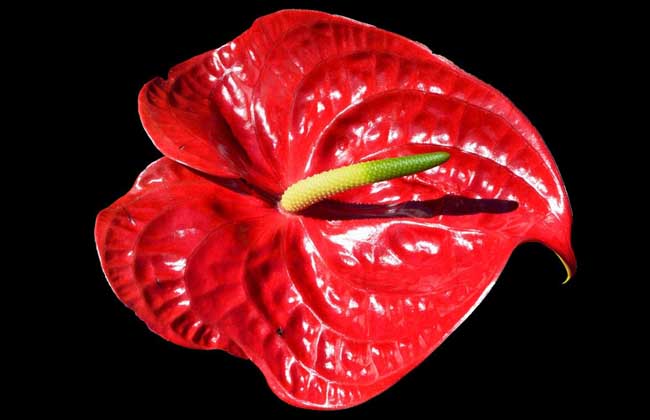
Anthurium is also known as flamingo flower, Anthurium andraeanum, fire crane flower, red crane taro, red goose palm, etc. It is native to tropical rainforest regions such as Costa Rica and Colombia, and has great ornamental value. It likes warm, humid, and semi-shaded environments and is very suitable for water culture. Let's take a look at the growing methods and precautions for water-cultured Anthurium!
Can Anthurium be grown in water?
Anthurium can be grown in water. Anthurium likes warm, humid, and semi-shaded environments and is very suitable for water culture. When growing Anthurium, pay attention to moisture retention. Not only should you change and add water for the Anthurium, but you should also spray water into the room where the Anthurium is grown, so that the leaves retain enough moisture. More importantly, spray water on the Anthurium leaves. Moisture is the key to Anthurium's fiery red blooms and graceful appearance.
Growing methods for water-cultured Anthurium
1. Transplanting Anthurium: Dig the potted Anthurium out of the soil, cut off rotten roots, hair roots, and old leaves, wash the roots clean with clear water, soak them in potassium permanganate solution for disinfection, and then rinse the Anthurium again with clear water. If using a transparent glass container for water culture, it is best to cover the outside of the glass with a black plastic bag to prevent strong light. Cover the top with a transparent convenience bag (for heat and moisture retention). Place it in a spot with scattered light and keep the temperature above 10 degrees.
1. Nutrient solution preparation: It is recommended to choose a nutrient solution for foliage plants, and it must be replaced once every 7-10 days. Regularly changing the water for Anthurium can remove the mucus secreted by the Anthurium root system and some algae. In summer, when temperatures are high, change the water more frequently than in winter. It is recommended to change the water for Anthurium once every 2-3 days. Do not fill the water too full, to prevent root rot. It is best to keep about half of the Anthurium root system exposed above the water. This can ensure the roots absorb oxygen.
2. Light and temperature: Anthurium likes semi-shade, and a warm, humid environment is also one of the requirements for Anthurium's growing environment. It is afraid of sun exposure, so during cultivation pay special attention to its placement. It is best to place it in a spot with good ventilation that can also avoid strong light. When growing Anthurium in water in summer, note that the surrounding temperature should not be higher than 28 degrees. Relative air humidity should be maintained at 80%. When the weather is relatively dry, spray a moderate amount of water on the Anthurium leaf surface. In winter, the temperature for water-cultured Anthurium should not be lower than 14 degrees. Below this temperature, Anthurium is prone to cold damage. Pay attention to keeping it warm and increasing the temperature. Also control the air humidity at around 80%, and be sure not to place the Anthurium outdoors, otherwise it is very easy to cause frostbite.
Growing methods for water-cultured Anthurium: an evergreen herbaceous plant
Anthurium is a perennial evergreen herbaceous flower native to the tropical rainforests of South America. It likes warm, humid, and semi-shaded environments, but is not tolerant of shade. It likes sunlight but avoids direct sunlight, is not cold-tolerant, and likes fertilizer but avoids saline-alkaline conditions. So what are the growing methods and tips for water-cultured Anthurium? Let's take a look at the growing methods and tips for water-cultured Anthurium with wed114 editor!
Growing methods for Anthurium:
Cultivation methods
When potting seedlings, according to the procedure, the growing medium should first be prepared. The medium should have good permeability. In China, peat ash plus perlite is generally used (at a ratio of 3:1), and the medium still needs to be disinfected. If old pots are used when potting, the pots should also be disinfected to avoid cross-infection by pathogens and insect eggs. For pots, you can choose black plastic bag cultivation pots, or you can directly use plastic pots. But no matter what kind of pot is used, one with good drainage performance should be selected. If the drainage holes are blocked, clear them before potting. The planting requirement is the same as low planting, that is, not too deep and not too shallow, and the stem tip should not touch the medium or debris.
How to fertilize for home cultivation
For home care, preparing your own nutrient solution is rather cumbersome. Therefore, powders already formulated according to nutritional requirement elements are available on the market, and they can be used by mixing with water in proportion. There is also a slow-release fertilizer on the market now. Bury it in the soil according to the instructions, and afterward it dissolves as you water, for the flamingo flower to absorb. Apply 1—3 grams at a time, and its fertilizer effect can last up to 3 months. These fertilizers have one thing in common: they contain all the required nutrient elements. Different growth stages have different formulas, and they are clean and hygienic. In fact, slow-release fertilizer is also used in large-scale cultivation. Especially for outdoor care, if fertilization is followed by rain, it is as if it was wasted, and using slow-release fertilizer can avoid this. In home care, you can also compost hoof and nail pieces and sesame paste residue, and if you add some ferrous sulfate to it, the so-called alum fertilizer water will have a better effect. In home fertilization, you should grasp the principle of being dilute rather than concentrated, and apply small amounts more frequently.
How to water
Anthurium likes a relatively humid environment. The humidity mentioned here refers to the relative humidity in the air, not just the water content in the growing medium. Humidity is also a variable, because when humidity rises and dry winds increase (especially in northern China), if water is not replenished, then the humidity will decrease. Generally speaking, the humidity required by Anthurium should be maintained at 70%—80% (air temperature 20—28°C). The level of humidity can regulate humidity for Anthurium, that is, regulate the transpiration of Anthurium leaves. If relative humidity is too low, causing drought and water deficiency, the edges of the leaves and spathes will dry up, and the spathes will be uneven. The water temperature for watering Anthurium should be maintained at around 15°C (including the nutrient solution used for watering), which is especially important in severe cold and extreme heat. The medium moisture should not be too wet, because the roots of Anthurium are semi-succulent, and the roots themselves store a large amount of water. Too much water in the medium causes a lack of oxygen in the medium, obstructs root respiration, and long-term excessive moisture will cause root rot. The above explains the quantitative standard for moisture. For home care of Anthurium, it is very difficult to achieve greenhouse effects, which is also an obstacle for families choosing Anthurium. But we can create a humidity environment suitable for Anthurium growth through the following methods. For example, if the household also keeps ornamental fish, you can place the Anthurium on the fish tank, with a tray under the pot, or beside the fish tank. You can also use two flower pot trays: place a slightly larger tray below and fill it with water, then use a smaller tray upside down on the tray with water, and then place the potted Anthurium on top, paying attention that the bottom of the pot does not touch the water surface. You can also use discarded cola bottles or mineral water bottles, fill them with tap water, let them sit for 3—4 days, then pour the water into a spray bottle and spray the Anthurium leaf surface. In summer, spray once at 10:00—11:00 and once after 15:00, but the pH value of the sprayed water should be low. The water used for watering should also be left to sit as above before use. On one hand, the chlorine in tap water can volatilize; on the other hand, water that has been left to sit can remain consistent with room temperature. Do not put the standing water in sunlight, to avoid the formation of green algae. If using cooled boiled water, that is also feasible.
Precautions for home water culture of Anthurium:
1. Selection of growing substrate. In standardized large-scale production, the substrate I use is mainly peat soil plus a small amount of perlite and coarse river sand, with a small amount of floral foam placed at the bottom of the pot. For small-scale home use, it is recommended to buy prepared potting soil from a garden store and mix it with ceramsite or dry bark (ratio 2:1) as a substrate, which is also quite ideal. The prepared substrate must be disinfected.
2. Requirements of the growing environment. Since Anthurium is a semi-shade plant, the suitable growth temperature for Anthurium is between 14°C—35°C. When the temperature is lower than 10°C, cold damage can occur; when the temperature is higher than 35°C, the plant will also be harmed. In this case, water should be sprayed on the plant and its surroundings in a timely manner. To a certain extent, when the temperature is high and the humidity is also high, damage is less likely to occur.
3. Management of fertilizer and water. Anthurium plants generally have a higher demand for "magnesium fertilizer" than other foliage plants. It is recommended to apply a complete fertilizer with P:N:K=1:1:1. For ordinary small-scale home cultivation, you can buy 15—15—15+3Mgo (Magicon) granular slow-release fertilizer from a garden store and apply it together with foliar fertilizer, or buy Baolifeng No. 2, Huaduoduo general-purpose, and other fully water-soluble compound fertilizers, dilute them into an 800—1000 times liquid fertilizer, and apply regularly (no less than once per week). The principle of fertilizing Anthurium is to prefer dilute over heavy, and small meals more often; otherwise it is easy to cause root damage, affect plant growth, and directly cause plant death. Anthurium likes moisture (high relative humidity), but the substrate should be on the dry side. Therefore, watering is best done together with liquid fertilizer. Usually spray more water on the leaves and surroundings to increase the relative temperature of the growing environment.
4. Prevention and control of pests and diseases. The most common pests on Anthurium are red spiders, nematodes, cabbage caterpillars, whiteflies, thrips, snails, and scale insects, among which red spiders, nematodes, and cabbage caterpillars are the main ones. Anthurium is very sensitive to insecticides, and the concentration must be correct when used. The concentration is usually lower than that used for other flowers. Pay special attention that copper-containing pesticides and dimethoate, methamidophos, dichlorvos, malathion, parathion, etc. will cause toxicity to Anthurium.
Water culture growing methods and precautions for Anthurium
Anthurium is also called Anthurium andraeanum and flamingo flower. Anthurium has brilliant flower colors, blooms in all seasons, and has high ornamental value. Anthurium can be grown in potting soil or in water. Below let's look at the water culture growing methods and precautions for Anthurium.
Water culture growing methods for Anthurium
First, disinfect the roots of the Anthurium. You can use clear water (tap water left to sit for 2 days) to rinse off the growing medium, then soak in 1000 times diluted potassium permanganate solution for disinfection for 30 minutes; after washing clean, cut off old roots and residual roots, and remove flowers.
Then, place the Anthurium plant in a container, fill it with ceramsite, then dilute rooting powder in proportion, spray and moisten the ceramsite, and note that there should not be too much standing water below; if there is too much water, just pour it out.
During regular management, pay attention to changing the water regularly. Generally in spring and autumn, change the water once every 5-7 days, in winter once every 7-10 days, and in summer when the temperature is high, once every 2-3 days. When changing the water, do not fill it too full; at least 1/2 of the plant's roots should be exposed above the water, so that the exposed part can absorb enough oxygen.
Anthurium likes a warm, humid, and cool environment. Usually it should be placed in a ventilated place with scattered light. In summer, it is best not to exceed 28°C; in winter, if it is lower than 14°C, cold damage will occur, so heat preservation is necessary. Relative humidity should not be lower than 80%, otherwise the edges of the leaves and the red spathes will dry up. Pay attention to spraying water to ensure air humidity.
To prevent root rot, you can appropriately increase the dissolved oxygen content in the water. The best way to increase oxygen in water is to make the water flow. You can hold the plant with one hand and shake the vase with the other; shaking for 1 minute can increase the dissolved oxygen content in the water by 30%; you can also add a little hydrogen peroxide to the water; or first take out the Anthurium and use an oxygen pump for fish keeping to "replenish oxygen" for the water.
Precautions for water culture of Anthurium
Note that when growing Anthurium in water, half of the root system should be exposed to the air so that the roots can breathe in the air; otherwise it is easy to cause root rot. At this time, there must be no direct sunlight, otherwise it is easy to affect the normal growth of Anthurium; if root rot occurs, cut it off immediately. If the stem has already been infected, also cut it off with a sharp knife, then disinfect with 1000 times diluted potassium permanganate solution for 30 minutes, and then replace with clean water for culture again (note: clean water, do not add nutrient solution), changing the water once every 1-2 days, and after new roots grow, return to normal management.
These are the water culture growing methods and precautions for Anthurium collected by the editor. From these, it can be seen that the water culture method for Anthurium is not easy. To grow water-cultured Anthurium well, careful care is still needed.
Further reading:
How to grow Anthurium? Anthurium growing methods, fertilizing tips, disease prevention and control, and flower language