How Many Kinds of Hibiscus Are There? The Benefits and Uses of Hibiscus Can Cure a Hundred Diseases
Hibiscus, another name for the lotus, also called cotton rose hibiscus, is a plant that begins blooming in early October. In everyday life, everyone has surely heard the name hibiscus, but how much do you really know about it? For example, how many kinds of hibiscus are there? Different kinds have different uses, so what are the benefits and uses of hibiscus? It is said that besides being ornamental, hibiscus can also cure a hundred diseases! Aren't you curious? Let's take a look together!
I. How Many Kinds of Hibiscus Are There? 5 Flower Colors
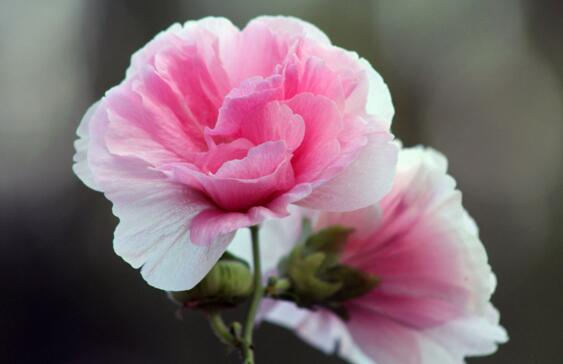
When it comes to hibiscus, what color comes to mind? White, or pink, or something else? It is understood that hibiscus originated in China and has a cultivation history of three thousand years, which has given rise to many different varieties. As for how many kinds of hibiscus there are, the common classification by flower color divides them into the following five:
1. Red hibiscus, with peach-red flowers
2. White hibiscus, with pure white flowers
3. Yellow hibiscus, with yellow flowers
4. Five-color hibiscus: flowers are red and white intermixed
5. Drunken hibiscus, with changeable colors
The drunken hibiscus opens white in the early morning and forenoon, gradually turning pink, and by afternoon to evening when it withers it turns deep red. Because the flower changes color three times in a day, it is named drunken hibiscus, three-drunk flower, also known as "three-drunk hibiscus," and is a rare and precious variety. The Qing dynasty "Flower Mirror" (1688) clearly records the drunken hibiscus, showing that China has cultivated this flower for at least more than 300 years.
II. The Benefits and Uses of Hibiscus
As a very common flower in everyday life, hibiscus has a great many benefits and uses. Besides being enjoyed for its beauty, it can also be used in industry. More importantly, hibiscus is neutral in nature and pungent in taste, with the effects of clearing heat, cooling the blood, detoxifying, reducing swelling and eliminating toxins, and is suitable for diseases such as lung-heat cough, excessive menstruation, excessive leukorrhea, carbuncles and swelling toxins, boils, and scalds and burns from water and fire. Next, let's take a closer look.
1. Ornamental
When it comes to the benefits and uses of hibiscus, the first is of course ornamentation, which is probably the purpose for which the vast majority of flower lovers grow it! Hibiscus has a long flowering period and blooms abundantly, with relatively many varieties. Its flower color changes with different light intensity: in the morning when it opens it is generally white or light red, and from noon to afternoon when it opens it is deep red, giving it relatively high ornamental value.
2. Industrial Raw Material
Unlike other flowers, the stem bark of hibiscus contains 39% cellulose. The stem bark fiber is flexible and water-resistant, and can be used as raw material for cables and textiles, and also for papermaking, so it also has certain value in industrial applications.
3. Medicinal Use
Hibiscus can be used as medicine. Its flowers, leaves and roots are rich in medicinal components such as flavonoids, hyperoside, inulin glycosides, phenols and reducing sugars, all of which can be used as medicine. Traditional Chinese medicine holds that hibiscus is neutral in nature and pungent in taste, with the effects of clearing heat, cooling the blood, detoxifying, reducing swelling and eliminating toxins, and is suitable for diseases such as lung-heat cough, excessive menstruation, excessive leukorrhea, carbuncles and swelling toxins, boils, and scalds and burns from water and fire:
① For excessive menstruation
Hibiscus and lotus seedpod shell in equal parts, ground into powder, 6 grams each time, 3 times a day, taken with rice water.
② For cough
Hibiscus 60 grams, an appropriate amount of pig heart and lung, stewed together until cooked, then add 60 grams of brown sugar; eat the meat and drink the soup.
③ For excessive leukorrhea in women
Hibiscus 50 grams, cockscomb flower 30 grams, decocted in water, 1 dose per day.
④ For gout
Hibiscus leaves and cotton rose hibiscus flowers 30 grams each. Clean the cotton rose hibiscus, put it in a medicine pot, add an appropriate amount of clear water, soak for 5-10 minutes, then decoct in water and take the liquid, put it in a foot bath basin, and when it is warm do a foot bath, twice a day, 20-30 minutes each time, 1 dose per day, for 2-3 consecutive weeks.
⑤ For rheumatism
Hibiscus and mulberry mistletoe 10 grams each. Clean the cotton rose hibiscus, put it in a medicine pot, add an appropriate amount of clear water, soak for 5-10 minutes, then decoct in water and take the liquid, put it in a foot bath basin, and when it is warm do a foot bath, twice a day, 20-30 minutes each time, 1 dose per day, for 2-3 consecutive weeks.
⑥ For scalds and burns from water and fire
Fresh hibiscus flowers, dried in the sun, ground into powder, mixed evenly with sesame oil and applied to the affected area.
⑦ For swelling toxins
Hibiscus leaves and cocklebur in equal parts, ground into powder, mixed evenly with honey, and applied to the affected area.
⑧ For mumps
Hibiscus leaves, ground into powder, mixed evenly with egg white, applied to the affected area, twice a day.
⑨ For mastitis
Fresh hibiscus roots and fresh leaves in equal parts, pounded together into a paste, mixed with white liquor and applied to the affected area.
⑩ For sores, carbuncles, swelling and pain
Fresh hibiscus flowers 30-60 grams (halve if dried flowers), rock sugar 15 grams. Decoct the fresh cotton rose hibiscus flowers in water, take the liquid and add rock sugar to dissolve, and drink it frequently as a tea substitute.
III. Dietary Taboos of Hibiscus
"Compilation of Common Folk Herbal Medicines": pregnant women should not take it
"Sichuan Chinese Materia Medica" 1960 edition: those without true heat should not use it
The benefits and uses of hibiscus have been introduced quite comprehensively above, and it really does seem to be a flower with a hundred benefits and not a single harm. However, hibiscus does have dietary taboos, namely that patients with deficiency-cold and pregnant women are forbidden to take it.
Introduction to the Silk Tree, the Meaning of Hehuan, the Benefits and Uses of Silk Tree Flowers
The Meaning of Hehuan
Silk tree (Latin name: Albizia julibrissin Durazz), aliases: thorn staff, kan staff, one hundred needles, tiger puddle, five-plus ginseng, Russian ginseng, Siberian ginseng. A deciduous tree whose beautiful flowers resemble velvet balls and whose fresh fragrance assails the senses; its leaves are remarkable in that they close at sunset and open at sunrise, giving people a symbol of friendliness. The leaves resemble those of the sensitive plant, and its flowers and foliage are elegant and unusual, with green shade like an umbrella, making it suitable for viewing.
It can be planted beside garden ponds or as shade trees and street trees. The silk tree's leaves are slender like feathers, its green shade is like an umbrella, and its red flowers form clusters, elegant and distinctive, and it also has strong resistance to hydrogen chloride and nitrogen dioxide, and a certain resistance to sulfur dioxide and chlorine gas. The bark and flowers can be used medicinally, with the effects of calming the spirit and relieving depression, invigorating the blood and relieving pain, and stimulating the appetite and regulating qi; the extracted extract is used externally to treat fractures, painful carbuncles, swelling and pain, and other conditions. The wood is solid, with straight grain and fine texture, durable, and can be used to make furniture, farm tools, buildings and ships. The silk tree has distinct yin and yang and is called a sensitive plant, and is listed as a preferred tree species for earthquake observation.
[Chinese name] Hehuan, Qingtang, Hehun, Yehe, Maying, hibiscus flower, hibiscus flower tree, hehuan wood, horse cherry blossom, wild flower wood
[Chinese pinyin] Hehuan
[English name] Silk-tree, Albizzia, Mimosa-tree, Powderpuff-tree, Mimosa, Silktree Siris, Albizzia, Albizia, Persian Silk Tree, Pink Siris
[Latin scientific name] Albizia julibrissin Durazz.
[Family and genus classification] Fabaceae, Albizia
[Plant morphology] A deciduous tree, up to 16 m tall. Crown spreading; trunk grayish-black; young branches, inflorescences and leaf rachises covered with tomentum or short soft hairs. Stipules linear-lanceolate, smaller than the leaflets, falling early; bipinnately compound leaves, alternate; common petiole 3-5 cm long, with one gland near the base of the common peduncle and one at the point where the topmost pair of pinnae is attached; pinnae 4-12 pairs, sometimes up to 20 pairs in cultivated plants; leaflets 10-30 pairs, linear to oblong, 6-12 mm long, 1-4 mm wide, slanting upward, with a small pointed tip at the apex, ciliate, sometimes with short soft hairs beneath or only on the midrib; midrib close to the upper margin. Capitula arranged in paniculate inflorescences at the branch tips; flowers pink; calyx tubular, 3 mm long; corolla 8 mm long, lobes triangular, 1.5 mm long, both calyx and corolla covered externally with short soft hairs; stamens numerous, connate at the base, filaments slender; ovary superior, style nearly as long as the filaments, stigma cylindrical. Legume strap-shaped, 9-15 cm long, 1.5-2.5 cm wide, young pods with soft hairs, old pods hairless. Flowering period June-July, fruiting period August-October.
[Habitat and distribution] Grows on hillsides or is cultivated. Distributed in Northeast, East, Central-South and Southwest China. Medicinal material is mainly produced in Hubei, Jiangsu, Zhejiang, Anhui and other places.
[Medicinal parts] The bark, flowers or flower buds are used as medicine. Chinese medicine names: bark: hehuan bark. Flowers or flower buds: hehuan flower.
[Harvesting and processing] Bark: peel in summer and autumn, cut into sections, sun-dry or dry over a heated kang. Flowers or flower buds: harvest in summer when the flowers first open, remove branches and leaves, and sun-dry.
[Main components] Dried hehuan bark contains lignan glycosides, such as syringaresinol-4-O-β-D-apiofuranosyl-(1→2)-β-D-glucopyranoside, 5,5/-dimethoxy-7-oxolariciresinol-4/-O-β-D-apiofuranosyl-(1→2)-β-D-glucopyranoside, 21-[4-(ethylidene)-2-tetrahydrofuranmethacryloyl]machaerinic acid, machaerinic acid methyl ester, acacic acid lactone and other components. The main aromatic components in the flowers are trans-linalooloxide, linalool, isopentanol, a-ocimene and 2,2,4-trimethylixetane and other components.
[Pharmacological effects] Anti-fertility, anti-allergic, anti-tumor.
[Nature, flavor and functions] Bark: sweet, neutral. Flowers or flower buds: sweet, bitter, neutral. Bark: calms the spirit and relieves depression, invigorates the blood and disperses carbuncles. Flowers or flower buds: relieves depression and calms the spirit, regulates qi and stimulates the appetite, dispels wind and brightens the eyes, invigorates the blood and relieves pain.
[Indications and usage] Bark: restlessness of the mind; depression, insomnia, internal and external carbuncles and sores, traumatic injuries. Flowers or flower buds: depression and insomnia, chest tightness and poor appetite, wind-fire eye diseases, blurred vision, low back pain, traumatic pain. Bark: internal use: decoct in water, 10-15 grams; or make into pills or powders. External use: appropriate amount, grind into powder and apply. Those with wind-heat spontaneous sweating or insomnia due to external contraction should not take it. Pregnant women should take it with caution. Flowers or flower buds: internal use: decoct in water, 3-9 grams; or make into pills or powders.
1. Restlessness and insomnia: hehuan bark 9 grams, tuber fleeceflower stem 15 grams. Decoct in water. (Zhejiang Medicinal Plants)
2. Damp-turbidity obstructing the middle, poor appetite: hehuan flower, hyacinth bean flower and magnolia flower 6 grams each. Decoct and take. (Anhui Chinese Herbal Medicine)
The Benefits and Uses of Silk Tree Flowers
The silk tree is a plant that people find delightful, and it has many aliases, among which the alias "love tree" comes with a touching legend.
It is said that in ancient times there was a village at the foot of Mount Tai, and in the village lived a certain Squire He. In his later years, Squire He had a daughter, named Huanxi. The girl was clever and beautiful, and Squire He and his wife treasured her as the pearl of their palm. In the year Huanxi turned 18, she went to the Southern Mountain to burn incense on Qingming Festival, and after returning she contracted a hard-to-cure illness: she was dazed and absent-minded, had no appetite for food or drink, and grew thinner day by day. Many famous doctors were summoned and many medicines were taken, all to no effect. Therefore, Squire He posted a notice offering a generous reward to anyone who could cure the young lady's illness. In the western village there was a scholar who, though poor, was handsome and intelligent; besides outstanding literary talent, he was also well versed in medicine. He was troubled by having no money to go to the capital for the imperial examination. Seeing the notice, the scholar tore it down and entered the house. Upon seeing the young lady, the scholar immediately understood her illness: it turned out that on the day she burned incense at the Southern Mountain, she had met the scholar by chance and fallen for him, and after returning home she yearned for him day and night; now that she saw the scholar, she was more than half cured. So, after taking her pulse, the scholar said: "This young lady's illness is caused by her wishes being unfulfilled, by anxiety and longing turning into illness, and by her emotions being pent up." He also said that on the Southern Mountain there was a tree known as the "sentient tree," with pinnately compound leaves, leaflet facing leaflet, opening by day and closing by night, whose flowers are like silk threads and whose fragrance fills the nose; it could clear the heart and relieve depression, calm the mind and settle the spirit, and if decocted in water and drunk, it could cure the young lady's illness.
Hearing the scholar's words, the squire immediately sent people to go with the scholar to the Southern Mountain to gather this flower. Following the method the scholar described, the young lady took it and was soon cured, and thus grew even more fond of the scholar. With the young lady's financial support, the scholar went to the capital for the imperial examination, passed as the top scholar, and won the young lady's heart. The time of his success on the golden roll was the night of his wedding. Later, people called this "sentient tree" the hehuan tree, and this flower the hehuan flower.
Traditional Chinese medicine holds that hehuan indeed has the effect of relieving depression and calming the spirit. "Ancient and Modern Chinese Annotations" says: "To dispel a person's anger, gift them qingshang. Qingshang is hehuan." "On Nourishing Life" also says: "Hehuan dispels anger, daylily forgets worry." Hehuan is sweet in flavor and neutral in nature. It enters the heart and liver meridians.
Hehuan flower contains hehuan glycosides and tannins; it relieves depression and calms the spirit, regulates qi and stimulates the appetite, invigorates the collaterals and relieves pain, and is used for restlessness of the mind and depression with insomnia. It treats pent-up depression and chest tightness, insomnia, forgetfulness and wind-fire eye disease; it can calm the five viscera, harmonize the mind, and brighten the complexion, and has relatively good effects in strengthening the body, calming, settling the spirit and beautifying, and is also an excellent remedy for neurasthenia.
The Meaning of Hehuan
1. Also written as "". Also written as "".
1. To celebrate together; to rejoice in harmony. "Book of Rites, Record of Music": "Therefore food and drink are for rejoicing together; music is for symbolizing virtue; rites are for restraining excess." "Mozi, Explaining Ghosts, Part Three": "Even if ghosts and spirits truly do not exist, this can still bring people together in celebration, gathering the masses and winning the affection of the neighborhood." Han dynasty Jiao Gan, "Yilin, Sheng zhi Wuwang": "The two states rejoice together, and Yan and Qi are at peace." Ming dynasty Liang Chenyu, "Record of Washing Silk, Picking Lotus": "Since Xi Shi entered the palace, with marvelous dances and clear songs, joy by morning and pleasure by evening, before many days had passed, one could not count the thousand times of cloud-and-rain passion, nor remember drinking ten thousand cups of hehuan wine." Qing dynasty Fang Wen, "Letter to Zhou Yinghou Arranging to Go Together to Qiantang," poem no. 2: "The one driving the carriage at Lanling, shall drink himself drunk at the time of rejoicing together."
2. Refers to sexual union between man and woman.
"Stories to Warn the World, Yu Tangchun Meets Disaster and Meets Her Husband": "Shen Hong had originally been intimate with Xiao Duanming; at that time he pulled her onto the bed, and they hastily joined in union, which counted as a moment of spring breeze." Qing dynasty Ji Yun, "Notes of the Thatched Cottage of Close Scrutiny, As I Heard It, Part Two": "The husband and wife were also very fond of each other... seeing that their quilt had already become a union quilt."
3. A plant name. Also called horse cherry blossom. A deciduous tree with pinnately compound leaves, the leaflets opposite, closing in pairs at night, hence commonly called "night-closing flower." It blooms in summer, with capitula, a gamopetalous corolla, and many stamens, light red. The ancients gave it to others, saying it could remove ill feeling and restore good relations.
Three Kingdoms period, Wei, Ji Kang, "On Nourishing Life": "Hehuan dispels resentment, daylily forgets worry." Jin dynasty Cui Bao, "Ancient and Modern Annotations, Plants and Trees": "Hehuan, the tree resembles the parasol tree, its branches and leaves are luxuriant and interwoven with each other; whenever the wind comes, the body untangles itself, with nothing clinging to anything else. Planted in the courtyard, it keeps people from resentment; Ji Kang planted it in front of his house." Jin dynasty Cui Bao, "Ancient and Modern Annotations, Questions and Answers on Meanings": "If you wish to dispel a person's resentment, then gift them qingshang; qingshang is also called hehuan, and hehuan makes one forget resentment." Southern Dynasties Liang, Emperor Jianwen, "Listening to Night Courtesans": "Hehuan leaves dispel resentment, daylily strips forget worry."
4. Name of a Han dynasty palace hall. See "Hehuan Hall."
5. Name of a fan.
Tang dynasty Zhang Hu, "On the White Bamboo Fan of Fuzhou": "Still relying on your not casting it aside in early times, each time pitying that it was first made under the name hehuan." See "hehuan fan."
Flower language: harmony and happiness, completeness
Legend: In ancient times, this hehuan tree was called the bitter-love tree, and it did not bloom. The transformation of bitter love into hehuan begins with a scholar. The scholar had studied hard for ten years and was preparing to go to the capital to seek official rank through the examination. On the eve of departure, his wife Fenshan pointed to the bitter-love tree before the window and said to him: "My husband, on this journey you are sure to pass with high honors, only the capital dazzles the eyes with flowers; do not forget the road home!" The scholar promised and left. But from then on there was no news of him at all. Fenshan waited and waited at home, hoped and hoped, her black hair turned white, yet she never waited for her husband to return. When the end of her life was about to arrive, Fenshan, dragging her sick and weak body, struggled to the bitter-love tree that had witnessed her and her husband's vow, and with her life she made a solemn oath: "If my husband has changed his heart, then from now on let this bitter love bloom; let the husband be the leaf and I be the flower; may the flower not age, the leaf not fall, one heart for a lifetime, rejoicing together life after life!" Having said this, she breathed her last and died. The next year, all the bitter-love trees indeed bloomed, soft pink, like little fans hanging all over the branches, and carrying a faint fragrance, only the flowering period was very short, just one day. Moreover, from that time on, all the leaves also opened in the morning and closed in the evening along with the blooming and fading of the flowers. To commemorate Fenshan's devoted love, people renamed the bitter-love tree the hehuan tree.
When Does Saxifrage Bloom? The Legend of Saxifrage / Turning a Young Woman into a Fairy
As a plant of the order Rosales, saxifrage, although famous for its medicinal value and foliage, does also bloom, and its flowers are very unique and beautiful. So when does saxifrage bloom? What is the flower language of saxifrage? And what legends are there about saxifrage? Below, the editor answers each one for you.
When Does Saxifrage Bloom
Saxifrage is a perennial herbaceous plant, also called stone lotus leaf, golden-thread hanging hibiscus, and so on. It does bloom, usually from April to November, and the flowers are highly ornamental, with flower colors mainly yellow, white and pink; the petals are white, with purple-red spots on the upper middle part and yellow spots at the base, very beautiful.
Saxifrage Flower Language
The flower language of saxifrage is true love, a yearning for pure and beautiful love. Its meaning is persistence. If someone gives you saxifrage flowers, it carries the blessing that your patience is exceptionally strong, and the hope that you can persevere and achieve great things.
The Legend of Saxifrage
The legend of saxifrage originates from the Sui dynasty. It is said that Emperor Yang of Sui, because of his indulgence in pleasure, caused society at the time to fall into chaos, and in those troubled times evildoers were everywhere. In Jiaxing there once appeared a flower-picking thief who assaulted young women nearby, including two sisters, Taohua and Juhua.
In a certain cold winter, the hands of both Taohua and Juhua were frozen and injured, the wounds festering and developing chilblains, yet the two sisters still remained full of yearning for life. One day Juhua and Taohua went together to the riverbank covered with saxifrage to wash clothes, but unfortunately the flower-picking thief followed them.
Taohua and Juhua fought desperately with the flower-picking thief, and the surrounding villagers came upon hearing the news, so the flower-picking thief jumped into the river and escaped. A few days later, the chilblains on the injured hands of Juhua and Taohua gradually disappeared. They believed the saxifrage by the river had taken effect, so they gathered saxifrage and pounded it into juice to apply to their wounds; not only were the chilblains cured, but their skin became smoother than before.
Later this legend of saxifrage spread around the area, and more and more people knew that saxifrage could not only cure illness but also help maintain health. In fact, scientific research has found that saxifrage does indeed contain high medicinal value, which is why such a legend arose.
Summary: The flowering period of saxifrage is April to November, and its flowers are famous for being unique and vivid. Because of saxifrage's special medicinal value, legends about saxifrage have existed since ancient times, and it is considered by many to be a good medicine that can cure a hundred diseases, so it can be seen in many places in China.