What to do when Clivia leaves turn yellow? Effective prevention and treatment tips
A reader asks: what to do when Clivia leaves turn yellow, and how to prevent Clivia leaves from turning yellow? Clivia leaves turning yellow generally occurs in several situations. If the bottom leaves turn yellow because new roots grow from the leaf axils, this is normal metabolism. In another situation, no new roots grow from the leaf axils but the leaves turn yellow; this is mostly caused by raw soil, poor aeration, too much fertilizer, or poor control of watering dryness and moisture leading to root rot, and all of these can make Clivia leaves turn yellow. If water does not penetrate thoroughly, the root tips lack moisture, and the leaf tips turn yellow and dry. When this happens, you must water thoroughly. In summer, every 7-10 days you can set the flowerpot bottom in a small basin of water, which ensures thorough watering; this is called the soaking method.
In another situation, yellow spots of varying sizes appear on both sides of the leaf, called brown spot disease. This is mainly caused by relatively raw soil and excessive fertilizing. Generally, the potting soil should be leaf mold soil, which has fairly good aeration. Especially when fertilizing in summer, use dilute fertilizer and apply it frequently, and never drip fertilizer water onto the leaves; this can prevent brown spot disease from occurring. In yet another situation, because summer sunlight is abundant and temperatures are high, if Clivia is placed in direct sunlight, sunburn can occur; in mild cases the leaves turn yellow, and in severe cases they wilt. In summer, shade should be provided and the plant placed in a ventilated spot, with 50% shading being best; for a south-facing window at home, one layer of gauze can be used to shade the light.
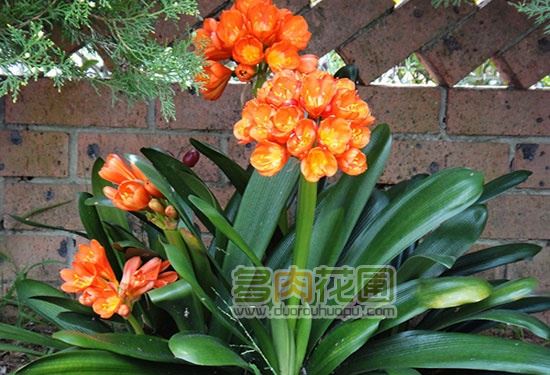
>>Click the image to learn more related content<<
Reason 1 for Clivia leaves turning yellow: temperature
The suitable temperature for Clivia growth is 15-25°C. A day-night temperature difference of 8-12°C is most suitable for Clivia growth. When the temperature exceeds 30°C for a long time in summer, it enters semi-dormancy. At this time, if the air humidity is below 60%, Clivia leaves will become lighter and yellow and even wilt; if the humidity is above 90%, the stems and leaves grow long. To prevent these undesirable phenomena, measures should be taken to lower the temperature, then provide ventilation and light transmission, and control humidity. In winter, when the temperature drops below 8°C, Clivia basically stops growing. If the temperature drops below 6°C, frost damage occurs, causing the leaf tips and leaf margins to lose green and turn yellow, and even yellow-white necrotic spots appear.
>>Click the image to learn more related content<<
Reason 2 for Clivia leaves turning yellow: humidity
Clivia is a moisture-loving plant and has relatively high requirements for the humidity of its growing environment. Its most suitable relative humidity range is 70%-80%. In this humidity environment, Clivia leaves are tender green, the veins are clear, and the leaves are short, wide, and neat, with high ornamental value. If the potting soil is too dry for a long time and the temperature is also high, the leaves are prone to turning yellow. But long-term overwatering can easily lead to oxygen deficiency, hindering the plant's normal respiration and causing Clivia roots to rot or even die.
>>Click the image to learn more related content<<
Reason 3 for Clivia leaves turning yellow: soil and fertilizer
Clivia likes loose, fertile sandy soil. Soil compaction and insufficient fertilizer supply will make the leaves turn yellow and affect flowering. Generally, fertilizing once in spring and once in autumn within a year is enough. Decaying-resistant tree leaves must be fermented before use; if not fermented, they easily burn the roots. Clivia must have its soil changed once a year. When the temperature at the Clivia care location is above 25°C, fertilizer should be appropriately reduced or stopped to avoid excessive fertilizing burning the fleshy roots. If the temperature can be lowered below 20°C, fertilizing can still continue as usual.
>>Click the image to learn more related content<<
Reason 4 for Clivia leaves turning yellow: light
Clivia is a semi-sun-loving flower and prefers relatively weak scattered light. It is not tolerant of strong light, and too strong light easily causes sunscald; in mild cases the leaves turn from green to yellow, and in severe cases the leaves dehydrate, dry up, and die. Short-day conditions in winter and spring are more conducive to flowering. Good light is an important condition for ensuring large, brightly colored Clivia flowers. However, if the placement location is too dark and light is insufficient for a long time, the leaves will also lose their luster, old leaves will become dark green, and new leaves will become thin and yellow or yellow-green (shade yellowing). At this time, Clivia should be moved to a place with slightly stronger light or given supplemental lighting. Clivia leaves have phototropism and should be grown facing the light so as to maintain the shape of forming a line when viewed from the side and a fan when viewed from the front.
>>Click the image to learn more related content<<
Reason 5 for Clivia leaves turning yellow: ventilation
While Clivia's thick fleshy roots store sufficient water, they also place higher demands on the soil they depend on for survival. Only nutrient soil with good aeration, loose texture, and rich humus is suitable for the growth of Clivia's fleshy roots. If Clivia is placed too densely and the surrounding environment is closed off, both hinder air circulation and make the plant weak, thin, and yellow. Therefore, indoor ventilation should be strengthened and placement density should be avoided.
What to do when Clivia leaves turn yellow, why Clivia leaves turn yellow
Clivia leaves turning yellow is an abnormal phenomenon commonly seen when flower lovers grow Clivia. This problem is mainly a physiological disorder caused by improper management, and in severe cases it can even cause the entire Clivia plant to die. Pay attention to these points, and you will not need to worry about Clivia leaves turning yellow.
How to deal with the causes of Clivia leaves turning yellow 1. Avoid applying raw fertilizer or concentrated fertilizerCause 1 of Clivia leaves turning yellow: its fleshy root system is thick, plump, and tender, and it is most averse to applying too much or too concentrated fertilizer or unfermented raw organic fertilizer; otherwise, it very easily causes root burn, with mild cases causing Clivia leaves to turn yellow and leaf margins to scorch, and severe cases causing the whole plant to turn red-yellow and die.
Treatment method:
① Immediately increase the amount and frequency of watering to dilute the concentrated fertilizer. Prevent waterlogging.
② If the damage is caused by raw fertilizer, immediately repot and change the soil, take out the plant, first rinse the root system, cut off the damaged roots, then smear the wounds with charcoal powder, and replant.
2. Avoid poor drainageCause 2 of Clivia leaves turning yellow: watering too frequently or long periods of continuous rainy weather keep the potting soil in a waterlogged state for a long time, reducing oxygen in the soil so it cannot meet demand, causing abnormal life activities in Clivia, root rot, and causing tender leaf tips to turn yellow and then old leaves to turn yellow.
Treatment method:
① Immediately control watering.
② Avoid rain exposure.
③ Stop fertilizing.
④ Loosen the soil frequently to increase the oxygen content in the soil, improve root absorption capacity, and promote plant growth.
3. Reasonable placementCause 3 of Clivia leaves turning yellow: it likes a cool, moist environment. If Clivia is placed in a stuffy, unventilated place, or in a high-temperature, dry environment plus scorching sun exposure, the normal activity of enzymes in the Clivia plant is inhibited, and the chlorophyll in the leaves is destroyed; then Clivia leaves will turn yellow, especially with young tender leaf tips turning yellow or leaf margins scorching.
Treatment method:
① Move the potted flower promptly to a ventilated, cool place.
② Provide shade to prevent direct sunlight.
③ Spray water around the Clivia plant and on the ground to increase humidity and lower temperature.
4. Soil droughtCause 4 of Clivia leaves turning yellow: the potting soil is too dry, and the soil lacks moisture. In severe cases, old leaves die and new leaves have dry tips.
Treatment method:
① Water moderately first.
② When the temperature is high and dry, pay even more attention to balanced watering.
③ After Clivia gradually recovers its vitality, return to normal water and fertilizer management.
④ Usually keep the potting soil moist and loose.
5. Scorching sun exposureCause 5 of Clivia leaves turning yellow: it likes a cool, moist environment. If Clivia is placed in a stuffy, unventilated place, or in a high-temperature, dry environment plus scorching sun exposure, the normal activity of enzymes in the Clivia plant is inhibited, and the chlorophyll in the leaves is destroyed; then Clivia leaves will turn yellow, especially with young tender leaf tips turning yellow or leaf margins scorching.
Treatment method:
① Move the potted flower promptly to a ventilated, cool place.
② Provide shade to prevent direct sunlight.
③ Spray water around the Clivia plant and on the ground to increase humidity and lower temperature.
How to deal with Clivia leaves turning yellow 1. Clivia leaves turn yellow, and the small central leaves turn black and rotTreatment method: there are two causes of this situation. One is that too much water was sprayed while the flower was with the owner, causing dirty water to flow into the gaps and cause bacterial infection and rot. Or careless watering caused dirty water to splash into the gaps and cause rot. You can use toilet paper or tissue paper to absorb the rotting sap, use a suitable method to remove the debris that can be cleaned, and usually keep the environment relatively dry. It is recommended to use the bottom-watering method.
2. All Clivia leaves turn yellowTreatment method: all turning yellow is often a symptom of sunscald; shade immediately and cut off the yellow leaves.
3. Clivia leaves wither, yellow, and droopTreatment method: leaves withering, yellowing, or drooping are symptoms of water deficiency. Watering should follow the principle of not watering until dry, and no water accumulation in the pot.
4. Part of the Clivia leaf turns yellowTreatment method: localized yellowing is very likely due to fire scorching, cold wind, hot water, or acid-base erosion. Promptly eliminate the external cause. Sometimes, insufficient nitrogen fertilizer may cause the plant to suffer from chlorosis. Reduced chlorophyll causes the leaves to turn yellow. In this case, additional fermented cake fertilizer water can be applied. (Growing methods also differ by season.)
5. Clivia leaves wrinkle and develop yellow spotsTreatment method: excessive fertilizing causes root burn. Immediately change the soil, soak the roots in a 0.1% potassium permanganate aqueous solution for 20-30 minutes, rinse with clean water, let dry, cut off the rotten roots, apply plant ash to the wounds, and replant.
6. The two outer leaves of Clivia turn yellow (grown for 4 years)Treatment method: this is normal metabolism of the outer layer; simply prune off the 2 outer leaves.
7. Clivia leaves appear grayish yellowTreatment method: the main cause of Clivia leaves appearing grayish yellow is overly strong direct sunlight, so Clivia needs to be shaded.
8. Clivia leaves show yellowing symptomsTreatment method: due to insufficient light, if the room is very dark, Clivia will become etiolated. Solution: use a fluorescent lamp to supplement light.
9. Clivia leaves are yellow and weakTreatment method: yellow, weak leaves indicate fertilizer deficiency. Apply dilute fertilizer frequently; yellowing leaves indicate raw, non-aerated soil. Replace with leaf mold soil or pine needle soil;
10. Lower leaves turning yellow cause root rotTreatment method:
Materials: scissors, utility knife, chlorothalonil, rooting water, nutrient water, spray bottle.