What to do when Kalanchoe leaves turn yellow? Give it more sun, water it less, and cut off the yellow leaves
As a beautiful flower that is also good for human health, Kalanchoe (Kalanchoe blossfeldiana) is deeply loved by gardening enthusiasts. However, during the growing process, due to improper operation or carelessness, Kalanchoe can become sick, and the common symptom is yellowing leaves. So what should you do when Kalanchoe leaves turn yellow? It is actually very simple: find the cause of the yellowing, then solve it accordingly. Below, the editor will introduce the causes of yellowing Kalanchoe leaves and the treatment methods.
1. What to do when Kalanchoe leaves turn yellow: find the cause
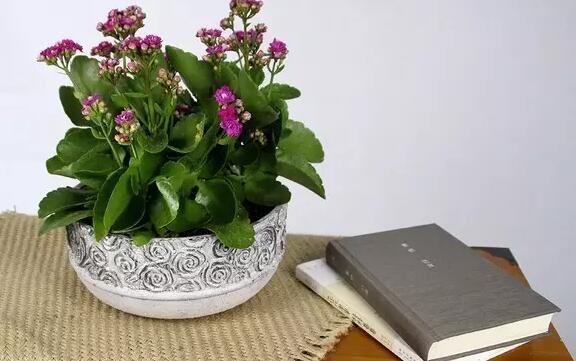
In the cultivation methods and main points for Kalanchoe, we learned that soil, moisture, light, temperature and so on have a great influence on Kalanchoe. Once one of them is not up to standard, the symptom of yellowing leaves will appear. As for what to do when Kalanchoe leaves turn yellow, find out whether it is the soil or something else causing it, and then solve it.
2. Causes of yellowing Kalanchoe leaves and treatment methods
1. Natural yellowing
When you encounter yellowing Kalanchoe leaves, gardening enthusiasts should not worry first, because this may be a normal phenomenon. It is understood that the leaves at the bottom of Kalanchoe will naturally wither and turn yellow, and this usually does not affect the top leaves, so it is normal for some bottom leaves to wither and turn yellow.
Solution: This situation is normal. For the sake of appearance, just cut off the yellowing leaves.
2. Too little light or exposure to strong sunlight
Kalanchoe likes light. If the light duration is not enough, the leaves will wilt and turn yellow; but Kalanchoe is also not suitable for exposure to strong sunlight. If its leaves begin to dry out from the edges, it may be caused by strong sunlight exposure.
Solution: ① Let Kalanchoe get more sun, ensuring at least 4 hours of light per day; ② Put Kalanchoe in a shady place, water it appropriately, and cut off the leaves that are severely withered and yellow.
3. Overwatering
If the leaves first become soft and then turn yellow, it may be due to waterlogging, that is, overwatering. If watered too much, drainage is poor, and the potting soil is too wet, it can easily lead to root rot and yellowing leaves.
Solution: You can take Kalanchoe outside to get some sun. After the edges of the leaves dry out, use scissors to cut off the dried parts. The remaining leaves will heal themselves in a few days, and new shoots will gradually grow out.
4. Relatively low temperature
In the cold winter, if the indoor temperature is low, or if it is exposed to cold wind, the leaves will also turn yellow and fall off.
Solution: Although Kalanchoe can also grow in semi-shade, its stems and leaves will be relatively weak, so control the temperature between 15~25°C. In winter, when light is weak, appropriate artificial supplemental lighting can be used.
5. Improper fertilizing
If too much fertilizer is applied or the concentration is too high, the tips of new leaves will turn brown, and old leaves will become dry, scorched, yellow, and fall off. Generally, the leaf surface where there is more fertilizer appears glossy, but most of it is uneven.
Solution: Control fertilizing. Gardening enthusiasts who are not sure can combine fertilizing with watering, and water promptly after fertilizing. This helps the plant absorb the fertilizer and also dilutes the fertilizer, preventing excessive local fertilizer and causing fertilizer burn.
6. Pests and diseases
In addition to the several causes above for yellowing Kalanchoe leaves, Kalanchoe damaged by pests and diseases can also cause yellow leaves and falling off. But if in winter a small number of leaves at the lower part of the plant turn yellow and fall off, it belongs to normal metabolism.
Solution: Find out exactly which pest or disease is affecting it, and then solve it accordingly. As for the prevention and control of Kalanchoe pests and diseases, it has been introduced in detail earlier, so it will not be repeated here.
What to do when Kalanchoe leaves turn yellow, I believe everyone knows now! It is actually very simple. We just need to be a little more careful in daily care, let Kalanchoe get more sun, water only when the potting soil is dry, and move it back indoors in winter. The most important thing is not to panic when Kalanchoe leaves turn yellow. Carefully finding the cause is the key! The above is the relevant content about yellowing Kalanchoe leaves. I hope it can help everyone.
What to do when Kalanchoe leaves turn yellow: causes and solutions for yellowing Kalanchoe leaves
Kalanchoe has a relatively long flowering period, many flower colors, and is relatively easy to grow, so it is loved by many gardening enthusiasts. But during the growing process, what should you do when Kalanchoe leaves turn yellow? Let us take a look at the answer below.
1. Caused by too much watering
Yellowing Kalanchoe leaves caused by long-term watering. We all know that Kalanchoe generally does not need too much water. Overwatering causes problems: tender leaves lack firmness, while old leaves do not change much. The roots are relatively fine, and too much water will affect the respiration of Kalanchoe roots, hindering their nutrient absorption.
Solution: Watering should be controlled. Just water thoroughly once every 3 days to 4 days and keep the potting soil slightly moist. In winter at low temperatures and during the rainy season, watering should be controlled to avoid root rot. During the peak growing season, apply a dilute compound liquid fertilizer once every 2 weeks to 3 weeks.
2. Caused by drought
If drought is caused by the owner having no time to manage it, it can also cause Kalanchoe leaves to turn yellow. Generally, if there is a lack of water, old leaves will wither, turn yellow, and fall off from bottom to top, while new leaves grow normally.
Solution: Be diligent in management and understand Kalanchoe's growth cycle and watering habits at each stage. Appropriately increase the amount and frequency of watering.
3. Caused by fertilizing
If too much fertilizer is applied or the concentration is too high, the tips of new leaves will turn brown, and old leaves will become dry, scorched, yellow, and fall off. Generally, the leaf surface where there is more fertilizer appears glossy, but most of it is uneven.
Solution: Fertilizing should be controlled. If necessary, use a detector to check the moisture condition. Understand the moisture requirements of Kalanchoe.
Similarly, a lack of fertilizer can also cause leaves to turn yellow. If potted flowers are watered for a long time without fertilizing, the leaves will lack fertilizer and nutrients. Or if the pot is not changed for many years, the roots will ball up, the plant cannot get nutrients, and the leaves will turn yellow. Besides changing the pot in time, normally apply thin fertilizer frequently.
Kalanchoe likes fertilizer. After flowering, apply a nitrogen-based liquid fertilizer once to promote rejuvenation. At other times, except for stopping fertilization in summer, only apply a nitrogen-phosphorus-potassium compound fertilizer. When fertilizing, do not get fertilizer on the leaves, otherwise the leaves are prone to rot.
4. Caused by too much light or too little light
Kalanchoe likes sufficient sunlight, but we know that the strong sunlight at noon in summer can also cause Kalanchoe leaves to be scorched and turn yellow.
If Kalanchoe lacks light for a long time, the chlorophyll in the leaves decreases, causing the green color of the leaves to gradually disappear, showing chlorosis.
Solution: At noon in midsummer, it should be slightly shaded; at other times, it should be placed in a sunny place. It needs at least 4 hours of direct light every day to grow robustly. Although it can also grow in semi-shade, the stems are thin, the leaves are thin, there are few flowers, and the colors are pale. If it is too shady, it easily loses leaves and has no flowers. The most suitable growing temperature for Kalanchoe is 15°C to 25°C, and it can bloom in December.
For home cultivation, it should be placed in a place with direct sunlight all year round. But around noon in summer, it should be properly shaded and can be moved indoors; otherwise, the light is too strong and the leaves easily turn yellow. Conversely, if the light is insufficient, not only will the branches be weak and slender, the leaves thin, and the plant shape unattractive, but the number of flowers will also decrease, the flower colors will be less vivid, and a large number of leaves will fall off, losing ornamental value.
5. Yellowing due to damp heat
Kalanchoe is not tolerant of high temperatures. Yellowing can be caused by summer heat, poor ventilation, and improper shading. If this phenomenon occurs in a stuffy, humid environment, pay attention to ventilation and cooling, and the potting soil should not be too warm.
6. Yellowing due to low temperature.
In the cold winter, if the indoor temperature is low, some cold-sensitive flowers will also have leaves turn yellow and fall off. In addition, flowers damaged by pests and diseases can also cause yellow leaves and falling off. If a small number of leaves at the lower part of the plant turn yellow and fall off, that is a normal phenomenon.
What to do when Kalanchoe leaves turn yellow? Causes of yellowing Kalanchoe leaves and solutions
Kalanchoe is a plant with a beautiful meaning, with extremely high ornamental value and symbolic blessing significance, and is deeply loved by many gardening enthusiasts. But if Kalanchoe is not cultivated properly, the phenomenon of yellowing leaves may occur. Do you know any prevention and control methods for yellowing Kalanchoe leaves? Let us learn together with the editor.
1. Caused by too much watering
Yellowing Kalanchoe leaves caused by long-term watering. We all know that Kalanchoe generally does not need too much water. Overwatering causes problems: tender leaves lack firmness, while old leaves do not change much. The roots are relatively fine, and too much water will affect the respiration of Kalanchoe roots, hindering their nutrient absorption.
Solution:Watering should be controlled. Just water thoroughly once every 3 days to 4 days and keep the potting soil slightly moist. What to do when Kalanchoe leaves turn yellow: in winter at low temperatures and during the rainy season, watering should be controlled to avoid root rot. During the peak growing season, apply a dilute compound liquid fertilizer once every 2 weeks to 3 weeks.
2. Caused by drought
If drought is caused by the owner having no time to manage it, it can also cause Kalanchoe leaves to turn yellow. Generally, if there is a lack of water, old leaves will wither, turn yellow, and fall off from bottom to top, while new leaves grow normally.
Solution:Be diligent in management and understand Kalanchoe's growth cycle and watering habits at each stage. Appropriately increase watering.
3. Caused by too much light or too little light
Kalanchoe likes sufficient sunlight, but we know that the strong sunlight at noon in summer can also cause Kalanchoe leaves to be scorched and turn yellow. If Kalanchoe lacks light for a long time, the chlorophyll in the leaves decreases, causing the green color of the leaves to gradually disappear, showing chlorosis.
Solution:At noon in midsummer, it should be slightly shaded; at other times, it should be placed in a sunny place. It needs at least 4 hours of direct light every day to grow robustly. What to do when Kalanchoe leaves turn yellow: although it can also grow in semi-shade, the stems are thin, the leaves are thin, there are few flowers, and the colors are pale. If it is too shady, it easily loses leaves and has no flowers. The most suitable growing temperature for Kalanchoe is 15°C to 25°C, and it can bloom in December. Amount and frequency.
The above is all the content I have learned today about Kalanchoe. I hope gardening enthusiasts will find it helpful after reading this article. If you want to learn more about Kalanchoe, please continue to follow Succulent Garden, and we will provide you with more related knowledge!