What to Do When Carnation Leaves Turn Yellow? Fertilizing, Watering, Sunlight and Pruning Are All Important
Mother's Day is approaching. Have your carnations bloomed, fellow flower lovers? For those who know how to grow them, getting carnations to bloom may be easy, but for beginners who have just started, they will probably run into many problems, such as yellowing leaves. So what should you do when carnation leaves turn yellow? It is actually very simple: find the cause of the yellowing carnation leaves and then solve it. The common methods are fertilizing, providing sunlight and pruning. Let's take a look together.
I. Causes of Yellowing Carnation Leaves and Solutions
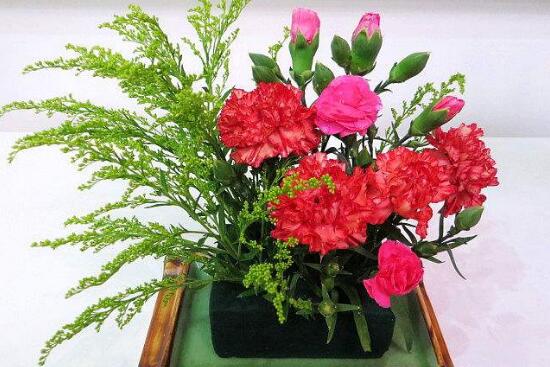
1. Overwatering or underwatering
In the methods for growing carnations, we mentioned that watering is very important, and one of the causes of yellowing carnation leaves is improper watering, that is, overwatering or underwatering. With overwatering, the flowerpot stays in a waterlogged state for a long time, the roots may well rot, and the leaves will turn yellow; with underwatering, because the plant cannot absorb water, the leaves will dry up and turn yellow.
Solution: If the yellowing leaves are caused by improper watering, we can move the pot to a shaded area, stop adding fertilizer, and carefully control watering. If the pot is not dry, be sure not to sprinkle water; loosen the soil frequently to let the roots breathe.
2. Improper light and temperature
When the temperature is above 30°C, the leaves dry out very easily and turn yellow. If there is not enough light, the leaves cannot carry out respiration and photosynthesis, and they will turn yellow.
Solution: The suitable temperature for carnation growth is 13-25°C, and it needs 6 to 8 hours of sunlight per day. Loving light is its characteristic; no matter which area of the room you put it in, you must ensure the sun can reach it, so that it will grow well.
3. Alkaline soil
Soil is one of the most important aspects of potted carnations, and this plant likes slightly acidic soil. So if you often water it with water containing alkaline substances, or the soil used for planting also contains alkali, the leaves will naturally be harmed and turn yellow.
Solution: If the leaves of this flower turn yellow during the growing period, the nutrient medium is quite likely to be alkaline. You can add 0.2 percent alum fertilizer water, and the leaves will turn green before long. If the yellowing occurs during normal growth, then the roots have probably rotted from too much watering.
4. No repotting for a long time
If you bought your carnation a long time ago and have never changed the pot or soil, and the leaves have also turned yellow, then it is very likely caused by not repotting or changing the soil for a long time. Flowers grown this way cannot keep up with nutrition; there are no longer many nutrients for the roots to absorb, so the leaves lack nourishment.
Solution: Flower lovers need to change the soil appropriately, and if a long time has passed, they also need to change the pot. Only in this way can carnations get balanced nutrition and the leaves avoid turning yellow.
5. Pruning depends on timing
When carnation leaves turn yellow, they certainly need to be cut off, but this should wait until the plant has recovered. For now, you only need to clean away the yellow leaves at the bottom; by no means should you prune in a way that harms the roots. As for how to prune carnations, we introduce the specific methods below.
II. How to Prune Carnations
Many people grow carnations but do not know how to prune them. In fact, pruning them requires different methods depending on the time. For example, during its growing period, in order to remove apical dominance and make it grow more luxuriantly, we can choose to pinch off the top; during the bud stage, we can cut off some flower buds to improve flower quality; after flowering, we can cut off the pedicels to help it grow better. The specific pruning methods for carnations are as follows:
1. Pinching and pruning
Most plants have apical dominance: the terminal bud grows first, which restricts the growth of lateral buds. So, to make plants more luxuriant and increase the number of flowers, we choose to remove the top. Carnations also belong to this group of plants, and their pinching and pruning is divided into two rounds:
The first pinching should be done when the plant has grown 8 to 9 pairs of leaves, and this time only 4 to 6 pairs of leaves need to be kept;
The second pinching should be done when the plant's lateral branches have grown more than 4 pairs of leaves, and this time only 3 to 4 pairs of leaves are kept on each lateral branch. In the end, the whole plant only needs 12 to 15 lateral branches.
2. Pruning during the bud stage
When carnations grow flower buds, we only need to keep the flower bud at the very front of each lateral branch, and all the others can be removed. This can ensure brightly colored flowers and large flower shapes, improve flowering quality, and increase its ornamental value.
3. How to prune carnations after the flowers fade
On this question, everyone should pay attention: after the carnation's first flowering ends, the pedicel must be cut off immediately. This helps the plant continue to bloom and reduces the loss of nutrients.
Here the editor wants to remind you that if you are a beginner grower, there is no need to be overly cautious when pruning, and do not be so full of tender feelings that you cannot bear to prune. Carnations have extremely strong vitality, so even if you prune incorrectly, they can slowly grow back. But if you do not pay attention, the carnation may fail to bloom normally, and by then it will be too late to regret it. The above is all the content about carnation pruning and dealing with yellowing carnation leaves. We hope it can help everyone.
How to Grow Carnations in Water: Water Culture Methods and Precautions for Carnations
Carnation is a relatively common flowering plant. It has rich colors, and if the growing environment is suitable, it may bloom in all four seasons. Many people grow carnations, but most use the method of planting in pots with soil. In fact, it can not only grow in soil, but can also survive in water. Let's learn about the water culture method for carnations together.
How to Grow Carnations in Water
1. Prepare a vase or other container and fill it with an appropriate amount of clean water. To make the fresh flowers last longer, you can also put a little beer into the vase, or add a small amount of white sugar and aspirin to the water.
2. Check the leaves on the bouquet and cut off all the leaves that might become submerged in the water.
3. Use scissors to make a diagonal cut at the base of each carnation stem in the bouquet. After that, it can be inserted into the water.
4. It is best to spread the bouquet apart so that the flower stems maintain good ventilation between them. If you must keep the binding ribbon on the bouquet, it is recommended to loosen it a little and not tie it too tightly.
5. If you want carnations to bloom earlier, you can trim the flower stems and place them in warm water preservative solution, and the flowers will open a few days earlier.
Water Culture Methods and Precautions for Carnations
1. Cutting the stems
Cut its stems 35 mm below a node, and the cut should be flat without cracks. Remove the leaves below the bottle mouth, and leave a certain interval between each flower stem to ensure smooth ventilation. Every year from December to February of the following year is its growing time, and it only takes about 30 days to root.
2. Watering
Before putting it into the bottle, clean it thoroughly. The water should cover half of the roots, and part of the roots should be left exposed above the water. If it is a newly grown flower, there are many wounds on the roots, and they rot easily, so change the water frequently, and at the same time wash the bottle and the flower roots clean.
If the weather is hot, the amount of oxygen in the water decreases, its respiration speeds up, and the oxygen is used up quickly, so you must change the water even more frequently, preferably every day, until white roots grow in the water, after which you can gradually reduce the frequency of adding water.
If the water in the bottle evaporates by 20 to 30 percent, you can add water, but do not add too much; part of the roots still need to be left exposed above the water surface. In spring and autumn, change the water about once every half month; in winter, change it about once every 20 days.
3. Adding fertilizer
Because it is water culture, any fertilizer added will dissolve in the water. Once its ratio exceeds what the flower needs, it will have adverse effects. It is best to buy a special nutrient solution, whose ratio is formulated according to the flower's needs and is very scientific.
4. Light
It relatively likes sunlight. If the seedlings have just emerged or the flowers are in full bloom, do not place it under strong light. At other times, there is no need to worry that strong light will harm it.
5. Temperature
It likes cool temperatures. In winter, if the temperature is below 9°C, growth will stop; in summer, if the temperature is above 35°C, it will be harmed. So in summer, cool it down, and in winter, wrap it in plastic film to keep it warm.
The Uses of Carnations
1. Decoration and ornamentation
Carnations have diverse and vivid flower colors and are an excellent flower variety. Dwarf varieties can be used for potted ornamentation; they are delicate in form, elegantly patterned and clean, dignified and generous, with a clear, subtle fragrance, and have great ornamental value. They can be used to arrange and decorate the home environment.
2. Spiritual symbolism
Carnations mostly represent love, health and beauty, charm, and respect. The feelings they express are also relatively mild and warm, and they are often used to describe familial love. They are mostly flowers that children offer to their parents, and they are the symbolic flower of mothers, symbolizing maternal love.
3. Medicinal use
Carnations please the heart and can also beautify the face. Carnations have the effects of beautifying the face and nourishing the complexion, calming the mind and quenching thirst, clearing the heart and brightening the eyes, reducing inflammation and relieving irritability, promoting body fluid and moistening the throat, and strengthening the stomach and reducing food stagnation. They have obvious effects in treating headaches and toothaches. Carnations contain various trace elements needed by the human body, can accelerate blood circulation, promote metabolism, clear the heart and remove dryness, detoxify and beautify the face, and regulate endocrine disorders. At the same time, they have the effects of strengthening the kidneys and benefiting essence, and treating consumptive disease, cough, and diabetes.
The Flower Language of Carnations of Different Colors
1. Beige-red carnation: sorrow.
2. Deep red carnation: passionate love.
3. Peach-red carnation: loving you.
4. Variegated carnation: rejecting your love.
5. Striped carnation: sorry.
6. Purple carnation: willfulness, unpredictability.
7. Speckled carnation: refusal, I cannot be with you.
8. Yellow carnation: expressing thanks to mother. Others: you disappoint me, abandonment, contempt, long-lasting friendship.
9. Pink carnation: expressing wishes for mother to remain forever young and beautiful; others: representing that I will never forget you, beauty, youth, passion.
10. Red carnation: expressing wishes for mother's health and longevity. Others: my heart aches for you, appreciation, worship, infatuation, family love, enthusiasm.
11. White carnation: representing pure love. Sweet and lovely, innocent. A gift that brings good luck to women, purity, pure friendship, my living love, my love forever, faith, elegant love, true feelings, respect.
Carnations are very famous and are known as the "flower of mothers." They not only have high ornamental value but also hold a high place in medicinal value. Their cultivation method is not very difficult, so friends in need can consider it.
Potted Carnation
Carnation, also known as carnation and musk carnation. It is an evergreen subshrub of the Caryophyllaceae family and Dianthus genus, herbaceous when young, and often cultivated as a perennial. The plant height is 30 cm to 60 cm or taller, and the stems and leaves are smooth. The whole plant is covered with white powder, and the stem base is often lignified. The leaves are opposite or whorled, linear-lanceolate, thick, entire, clasping at the base, gray-green. The flowers are usually solitary or 2 to 5 clustered at the branch tips. Flower colors include white, water red, purple, yellow, cream yellow, orange, etc., and they are fragrant. The bracts are in 2 to 3 layers, closely appressed to the calyx tube; the end of the calyx tube is 5-lobed, with broadly ovate lobes. The petals are numerous, with single and double forms, and the tips are wrinkled and wavy. The fruit is a capsule, and the seeds are brown. The natural flowering period is from May to July. Greenhouse cultivation can produce cut flowers year-round, and the peak flowering period in winter is from January to February.
What is usually called carnation mainly refers to the ever-flowering carnation grown in the ground or in pots in greenhouses. Under good and moderate cultivation conditions, it can bloom continuously for several years, and the stem base becomes lignified. These varieties were mainly bred in the United States. Carnation is native to southern Europe, the Mediterranean coast, and as far as India. It likes fresh air, a dry and refreshing environment, and sufficient sunlight. It requires soil rich in humus, with strong water and nutrient retention, and slightly clayey, but it must have good drainage. Continuous cropping is avoided. In summer it prefers coolness and cannot tolerate damp heat. The optimum growing temperature is 15°C to 20°C, and the winter nighttime temperature is 7°C to 10°C. Different varieties have some differences in temperature requirements. For example, yellow-series varieties have an optimum growing temperature of 20°C to 25°C and an optimum flowering temperature of 10°C to 20°C, while red-series varieties have higher requirements and grow slowly or even fail to bloom below 25°C.
For large-scale production of carnations, virus-free seedlings are usually bred by tissue culture as mother plants, and then propagated by cuttings. For cutting timing, January to March gives better results, and late January to early February in a medium-temperature greenhouse gives the best results. For cuttings, choose when the terminal bud of the mother plant has grown to a diameter of 1 cm and its middle lateral buds have grown to 4 cm to 6 cm, then break them off by hand. The action should be quick, and the base should carry a little heel-like tissue, which makes rooting easier. Use cutting boxes or seedling pots as cutting containers, and use plain sandy soil as the substrate. The cutting depth should be 1 cm. After cutting, first place them near a heat source in diffused light in the greenhouse and keep the substrate temperature at about 20°C to promote rooting. In the initial stage, spray water once to twice a day with a fine watering can. After about 1 month, new shoots begin to move, and new roots emerge from the lower part. Move them to a sunny place, water when dry, ventilate moderately to harden the seedlings, and apply diluted liquid fertilizer as appropriate. At the end of April, move them to an open-field seedling bed for maintenance.
For open-field cultivation, choose a plot of sandy loam with high, dry terrain that can prevent waterlogging, make a bed, level and rake it fine, apply sufficient base fertilizer, and then plant the seedlings. The plant spacing is 10 cm × 10 cm. After about 1 month, transplant again with a plant spacing of 20 cm × 20 cm. Water when dry, and frequently cultivate and weed. When the plant has grown 6 to 9 pairs of leaves, remove the top shoot above the 4th pair of leaves. Usually keep 2 lateral buds and remove the rest. When the lateral buds develop into branches, pinch again, keeping 7 to 9 neat lateral branches per plant, and they will flower in winter. After pinching, the plant needs 5 to 6 months for the subsequent branches to bloom, which can be used to regulate the flowering period.
As summer temperatures rise, the plant's growth gradually weakens, and fertilizer should be stopped immediately. With the arrival of the Beginning of Autumn and the weather turning cooler, gradually apply liquid fertilizer 4 to 5 times, increasing the concentration each time. At this time it grows relatively quickly. To concentrate nutrients for the flowering of the main branches, the lateral buds growing on each branch and the lateral buds that sprout later should all be removed. The 2 lateral buds that appear at the base of each branch can be appropriately retained, so that after the main branch flower head is cut off, the lateral buds can sprout new branches and bloom again.
In early October, transplant the plants with a full, solid soil ball into greenhouse ground beds or pot them indoors. The bed soil should be deeply turned and fertilized in advance and sterilized. Keep the room temperature at 15°C to 20°C, and strictly prevent the day-night temperature difference from exceeding 8°C. Pay attention to ventilation and keep sufficient light. They can then bloom successively from January to February, and the flowering period can be extended to May to June. Carnations like frequent fertilizer. In addition to base fertilizer, when the flower buds form, liquid fertilizer also needs to be applied several times; organic liquid fertilizer and 0.3% potassium dihydrogen phosphate solution can be applied alternately. After the plants grow tall, they tend to lodge, so support stakes should be set up or a net frame erected so they grow within the grid. This is beneficial for ventilation and light transmission, and at the same time the branches are straight and grow neatly and robustly.
For home potted carnations, for new seedlings from spring cuttings, use half high-humus clivia soil and half plain sandy soil, mix evenly and rub fine, and plant them in small pots with an inner diameter of 10 cm for maintenance. After two pinchings, the plant grows solid. In mid-July, use fertilized culture soil to repot them into planting pots with an inner diameter of 20 cm for cultivation. Put some broken pot pieces at the bottom of the pot as a drainage layer, and place a small amount of slow-release base fertilizer. In midsummer, place them in a place sheltered from wind and rain, with diffused shade and coolness; avoid drought and prevent waterlogging. Repot once every spring, and prune and trim moderately. By carefully tending them according to their habits, they can be enjoyed for many years.