Honeysuckle Tea: Benefits, Effects and Contraindications - Antiviral and Anti-inflammatory, Avoid with Spleen-Stomach Deficiency Cold
I. Honeysuckle Tea Benefits, Effects and Contraindications: Avoid with Spleen-Stomach Deficiency Cold
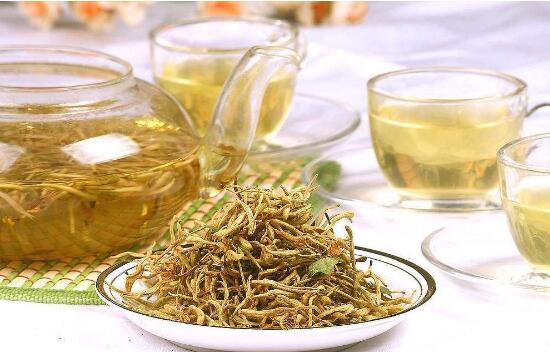
The benefits and effects of honeysuckle tea are extremely wide-ranging; it not only removes toxic substances from the body but also treats heat toxin. Girls who want to improve their beauty and lose weight can also drink honeysuckle tea - it can make you more and more beautiful. There are also contraindications to drinking honeysuckle tea: people with spleen-stomach deficiency cold and women during menstruation had best not drink it.
II. Honeysuckle Tea Benefits and Effects
1. Clearing heat and detoxifying
Honeysuckle has a neutral nature and a very obvious effect on clearing heat and detoxifying. In the hot summer, you can regularly steep honeysuckle in water and drink it; it not only has a cooling effect but also effectively lifts your spirits, making the body feel refreshed. If honeysuckle is mixed with Forsythia suspensa, fresh Rehmannia, bamboo leaf roll core and Scrophularia ningpoensis, the effect is mainly to clear the nutritive level and purge heat.
2. Anti-inflammatory
Honeysuckle has an anti-inflammatory effect, because after entering the body, honeysuckle can effectively promote the release of adrenal cortex hormones, which have a good inhibitory effect on various inflammations and swollen painful conditions. Therefore, if the body shows signs of inflammation, or if you want to prevent inflammation, you can take an appropriate amount of honeysuckle water.
3. Treating dysentery and bloody stool
You can steep honeysuckle in water and drink it, or put it in a clean pot and decoct it; it has a good effect on cooling the blood, stopping dysentery and detoxifying. If the dysentery or pus-and-blood condition is already severe, you can also mix honeysuckle with Coptis chinensis, red peony root and Pulsatilla chinensis and decoct them together; the effect is very good.
4. Strengthening body immunity
Honeysuckle can also strengthen body immunity, because honeysuckle contains a certain substance that can effectively promote the transformation of lymphocytes, thus better enhancing the phagocytic function of white blood cells, and the body's resistance will become better and better. In addition, modern medicine has also found that regularly taking honeysuckle water has a good preventive and therapeutic effect on various cancers and tumors; this is also one of the benefits and effects of honeysuckle tea.
5. Antibacterial and antiviral
Modern medical research has found that honeysuckle contains a substance that can effectively inhibit dysentery, typhoid, meningococcus, Pseudomonas aeruginosa, Staphylococcus aureus, hemolytic streptococcus and influenza virus, among others, and has a good therapeutic effect on many diseases of the body, making the body healthier.
6. Dispersing heat and expelling pathogenic factors
If the body shows headache and fever, or insomnia with many dreams and physical fatigue, then steeping honeysuckle in water and drinking it can effectively regulate the body. In addition, if the body shows symptoms of chapped lips and dry mouth and tongue, taking honeysuckle can also effectively relieve them.
III. Contraindications of Honeysuckle Tea
1. Menstruation is the most special period for all women. During this stage, women must take good care of themselves and eat or come into contact with as little cold or cooling food or objects as possible. Honeysuckle is cold in nature, so it is best not to take it during menstruation, to avoid adverse effects on the body.
2. Honeysuckle is cold in nature, and taking it in excess can easily cause discomfort in the stomach and intestines. Some people, in order to enhance honeysuckle's effects on the body, take a large amount of honeysuckle at one time; this brings the body no benefit, only harm.
3. Honeysuckle is cold in nature. If the patient's body is originally of a deficiency-cold constitution and prone to weakness and illness, then drinking honeysuckle steeped in water will not only fail to nourish and protect the body but will instead increase the burden on the spleen and stomach, which is very unfavorable to health. People with spleen-stomach deficiency cold should not take it.
4. Honeysuckle is not suitable for taking in all four seasons. Experts suggest that if you want the body to obtain the best health care, the best time to take honeysuckle is in summer. Because summer weather is hot, the body easily suffers heatstroke and thirst; at this time, taking honeysuckle can effectively promote fluid production and quench thirst as well as clear heat and detoxify. The above are the benefits, effects and contraindications of honeysuckle tea. We hope this helps everyone.
Honeysuckle Tea Benefits, Effects and How to Consume It_ The Correct Way to Brew Honeysuckle Tea
Honeysuckle is a plant widely recognized for reducing internal heat and reducing inflammation, with high medicinal value; its effect in resisting pathogens and providing vitamins is excellent, and it has an inhibitory effect on many common viruses and bacteria, such as Staphylococcus aureus, hemolytic streptococcus, Escherichia coli, dysentery bacillus, Vibrio cholerae, typhoid bacillus, paratyphoid bacillus and so on, all of which it inhibits to a certain degree. Below are the benefits, effects and how to consume honeysuckle tea compiled by the editor. Welcome to refer to them!
Nutritional Value of Honeysuckle Tea
The stems, leaves and flowers of honeysuckle can all be used as medicine, with effects of detoxifying, reducing inflammation, killing viruses, sterilizing, promoting urination and relieving itching. Honeysuckle distillate is an excellent summer product for preventing and treating prickly heat and pustules in children. Fresh honeysuckle has a delicate fragrance and a relatively high nectar content; rural children often pick the flowers and suck the nectar. Fresh flower stems are sun-dried or dried by the method used for making green tea, producing honeysuckle tea. There are two kinds of honeysuckle tea on the market: one is fresh honeysuckle blended with a small amount of green tea and scented according to the honeysuckle tea scenting process; the other is made by blending dried honeysuckle - oven-dried or sun-dried - with green tea. Of these two honeysuckle teas, the former has a striking floral fragrance and is mainly for appreciating the floral scent; the latter has a lower tea aroma but can maintain the medicinal effects of honeysuckle, without losing its health benefits. Honeysuckle tea is a health beverage suitable for all ages, and is especially suitable for drinking in summer.
Benefits of Honeysuckle
1. Anti-pathogenic microorganism effect. What are the benefits and effects of honeysuckle? It has a certain inhibitory effect on many pathogenic bacteria such as Staphylococcus aureus, hemolytic streptococcus, Escherichia coli, dysentery bacillus, Vibrio cholerae, typhoid bacillus, paratyphoid bacillus and so on.
2. It has bacteriostatic and bactericidal effects on pneumococcus, meningococcus, Pseudomonas aeruginosa, tubercle bacillus, Shigella dysenteriae, Streptococcus mutans and so on, and has inhibitory effects on influenza virus, orphan virus, herpes virus and Leptospira.
3. Anti-inflammatory and detoxifying effect; for carbuncles, swellings, boils and sores, intestinal abscess and lung abscess, it has a strong effect in dispersing carbuncles and reducing swelling, clearing heat, detoxifying and reducing inflammation.
4. Dispersing heat and expelling pathogenic factors; it has a certain effect on externally contracted wind-heat or the early stage of warm disease, with body heat and headache, restlessness and little sleep, mental confusion and crimson tongue, dry throat and parched mouth, and so on.
5. Cooling the blood and stopping dysentery; for heat-toxin dysentery, dysentery with pus and blood, damp-warmth obstructing the throat, and sore swollen throat, it has the effect of detoxifying, stopping dysentery, cooling the blood and benefiting the throat.
6. Honeysuckle tea is sweet in flavor and cold in nature, with effects of clearing heat, detoxifying, and dispersing wind-heat. Honeysuckle has the effects of clearing heat, detoxifying, soothing the throat, and relieving summer heat and irritability. It can treat summer-heat syndrome, dysentery, influenza, sores, boils and swollen toxins, acute and chronic tonsillitis, periodontitis and other diseases.
7. In addition to medicinal uses, honeysuckle's effects on beauty, weight loss and health preservation are even more remarkable, and its huge protective and restorative effects on the body are very significant. Honeysuckle's benefits include relieving summer heat, sobering up after alcohol, clearing the mind, quenching thirst, removing toxic substances from the body, lowering lipids, losing weight, beautifying and cleansing the skin, preventing aging and prolonging life.
Brewing Honeysuckle Tea
The method for brewing and drinking honeysuckle tea follows the principle of preserving the aroma so it is not lost ineffectively and showing the special beauty of the tea base.
For brewing particularly tender tea-base honeysuckle tea, such as jasmine Mao Feng, jasmine Silver Needle, jasmine Dongfeng tea and other premium famous teas, because the tea base itself has artistic appreciation value, it is best to use a transparent glass teacup. When brewing, place the cup on a tea tray and put two or three grams of honeysuckle tea into the cup. Brew with freshly boiled water slightly cooled to about 90°C, then immediately cover with the cup lid to prevent the aroma from dispersing; hold the tea tray facing the light and, through the glass cup wall, observe the tea dancing up and down and floating and sinking in the water, as well as the tea leaves slowly unfolding, restoring their leaf shape, and the changing color of the tea liquor as it seeps out. "A cup is a small world, with the spirit of mountains, rivers, flowers and trees" - it can be called an artistic enjoyment, known as "eye appreciation."
After brewing for 3 minutes, lift one side of the cup lid and smell the aroma rising in the steam from the liquor; you will suddenly feel a fragrance rushing to your nose and your spirits will lift: "fragrant as the orchid air of nine acres," "the essence of plants and trees is truly divine." Those interested can also lean close to the aroma and take a deep breath to fully appreciate the pleasant fragrance; this is called "nose appreciation."
When the tea liquor is slightly cool and pleasant to the mouth, sip it in small mouthfuls, letting it stay in the mouth a little, coordinating the actions of inhaling through the mouth and exhaling through the nose, and letting the tea liquor flow back and forth over the tongue once or twice to fully contact the taste buds. After tasting the tea flavor and the aroma in the liquor, swallow it. Only after doing this once or twice can you taste the true fragrance and real flavor of precious honeysuckle tea. This flavor is intoxicating, just as the Song dynasty writer Fan Zhongyan said in his tea song: "the tea flavor today is lighter than sweet cream," "the tea fragrance is thinner than hidden orchids." Comprehensively appreciating the unique tea flavor and fragrant charm of honeysuckle tea is called "mouth appreciation." There is a folk saying: "one mouthful is drinking, three mouthfuls are tasting." Only by sipping carefully can the flavor emerge. After drinking the first infusion, when one third of the liquor remains, add more boiling water; this is the second infusion. If you drink a third infusion, the tea flavor is already weak, and you should not continue. After smelling and tasting the tea liquor through three infusions and comprehensively appreciating the palatability of the tea flavor and the freshness, concentration and purity of the aroma, those with all three fragrances are considered "complete fragrance"; those excellent in tea shape, taste and aroma are high-grade, famous-grade and precious-grade honeysuckle tea.
For brewing ordinary mid-grade honeysuckle tea, without emphasis on appreciating the tea base form, you can use a white porcelain lidded cup. After brewing with 100°C boiling water, cover with the cup lid; after 5 minutes, smell the aroma and taste the tea. This kind of honeysuckle tea has a fragrant aroma and mellow tea taste, still has tea flavor by the third infusion, and withstands repeated brewing.
For brewing mid-to-low-grade honeysuckle tea, or honeysuckle tea dust, called "gao mo" in the north, a white porcelain teapot is generally used. Because there is more water in the pot and heat retention is better than in a cup, it helps fully extract the tea flavor. Depending on the size of the teapot, the number of drinkers and the strength of taste preferred, put an appropriate amount of tea leaves into the pot, pour in 100°C freshly boiled water, add the pot lid, wait 5 minutes, and then pour into teacups to drink. This method of brewing together and dividing for drinking is, first, convenient and hygienic; second, when family members gather, or three or five relatives and friends chat together, sitting around to taste tea and talk about daily matters, it is more harmonious and adds an atmosphere of unity, friendship and harmony.
Precautions
Contraindications of honeysuckle: people with weak spleen and stomach should not use it regularly. It should not be eaten often, because it can make the constitution weaker; take it only when there is internal heat, or when you have a cold and cough, and long-term use is not recommended. Honeysuckle is cold and cool in nature and flavor, and will affect the transportation and transformation functions of the spleen and stomach. This medicinal is generally more suitable for use in summer.
Honeysuckle Tea Benefits, Effects and How to Consume It_ The Correct Way to Brew Honeysuckle Tea
Honeysuckle Tea Benefits and Effects, and Side Effects of Honeysuckle Tea
Introduction:Honeysuckle is a very common flower in daily life and is extremely popular, mainly because honeysuckle tea has very great benefits and effects and is very good for strengthening the body. So what are the benefits and effects of honeysuckle tea?
Honeysuckle picture
Introduction to honeysuckle:
What we commonly call honeysuckle mainly refers to the honeysuckle plant, a perennial semi-evergreen twining woody vine of the Caprifoliaceae family. Honeysuckle first opens white and later turns yellow, hence the name honeysuckle; the honeysuckle plant is rod-shaped, thick at the top and thin at the bottom, slightly curved, 2-3 cm long, with a surface
that is yellow-white or green-white, with a delicate fragrance and a bland, slightly bitter taste; honeysuckle has extremely strong growth ability, likes sunlight, tolerates shade, has strong cold resistance, and also tolerates drought and waterlogging, sending out new shoots twice each year in spring and summer.
Honeysuckle tea picture
Honeysuckle tea benefits and effects:
Since ancient times, honeysuckle has been praised as a good medicine for clearing heat and detoxifying. It is sweet in nature, cold in qi and aromatic; being sweet and cold, it clears heat without harming the stomach, and being aromatic and penetrating, it can also dispel pathogenic factors. Honeysuckle can both diffuse and disperse wind-heat and is also good at clearing and resolving blood toxin. For various heat diseases, such as body heat, rash, macules, heat-toxin sores and carbuncles, and sore swollen throat, it has remarkable effects, mainly including:
First, antibacterial and antiviral microorganisms; honeysuckle tea has a certain inhibitory effect on many pathogenic bacteria such as Staphylococcus aureus, hemolytic streptococcus, Escherichia coli, dysentery bacillus, Vibrio cholerae, typhoid bacillus, paratyphoid bacillus and so on.
Second, anti-inflammatory and detoxifying; honeysuckle tea has a strong effect in dispersing carbuncles and reducing swelling, and in clearing heat and detoxifying, for carbuncles, swellings, boils and sores, intestinal abscess and lung abscess;
Third, dispersing heat and expelling pathogenic factors; honeysuckle tea has a certain effect on externally contracted wind-heat or the early stage of warm disease, with body heat and headache, restlessness and little sleep, mental confusion and crimson tongue, dry throat and parched mouth, and so on;
Fourth, cooling the blood and stopping dysentery; honeysuckle tea has the effect of detoxifying, stopping dysentery, cooling the blood and benefiting the throat for heat-toxin dysentery, dysentery with pus and blood, damp-warmth obstructing the throat, and sore swollen throat.
Fifth, strengthening immunity; honeysuckle can promote lymphocyte transformation and enhance the phagocytic function of white blood cells.
Sixth, honeysuckle tea is sweet in flavor and cold in nature, with effects of clearing heat, detoxifying, and dispersing wind-heat. Honeysuckle has the effects of clearing heat, detoxifying, soothing the throat, and relieving summer heat and irritability. It can treat summer-heat syndrome, dysentery, influenza, sores, boils and swollen toxins, acute and chronic tonsillitis, periodontitis and other diseases.
Seventh, lowering blood lipids; honeysuckle can lower blood lipids and is very useful for the elderly.
Eighth, central excitation; honeysuckle can cause excitation of the central nervous system, and can be drunk when mentally fatigued.
Honeysuckle tea picture
Honeysuckle tea prices
Hancaohui Honeysuckle Tea Premium Henan Fengqiu Wild Honeysuckle 50g/can Price: ¥39.90
Lichun Concentrated Honeysuckle Tea 1g*30 packets/box Price: ¥49.90
Mingjitang 14-year New Tea Honeysuckle Premium Honeysuckle Tea Henan Fengqiu 30g Price: ¥26.80
Yijiangnan Honeysuckle Tea Flower Herbal Tea Scented Tea Authentic Henan Honeysuckle 35g/can Price: ¥29.90
Huizitang Honeysuckle Honeysuckle Tea Fengqiu Flower Herbal Tea 35g Price: ¥197.00
Side effects of honeysuckle tea:
As a traditional Chinese herbal medicine, honeysuckle has great benefits and effects, but every medicine has some toxicity. Honeysuckle tea is cold in nature, so people with weak constitutions should not drink much of it; moreover, if hepatitis B patients drink it long term, adverse reactions such as stomach discomfort, poor appetite, borborygmus and diarrhea may appear.
Contraindications of honeysuckle tea:
1. People with weak spleen and stomach should not use it regularly.
2. It should not be eaten often, because it can make the constitution weaker; take it only when there is internal heat, or when you have a cold and cough, and long-term use is not recommended.
3. Honeysuckle is cold and cool in nature and flavor, and will affect the transportation and transformation functions of the spleen and stomach. This medicinal is generally more suitable for use in summer.
4. Pregnant women can drink a moderate amount of honeysuckle tea, but it should not be too strong; women during menstruation should also try not to drink honeysuckle tea.
Common formulas of honeysuckle tea:
A commonly used modern dosage is: pangolin scales 3 grams, Gleditsia sinensis thorn 3 grams, Angelica sinensis tail 3 grams, licorice 3 grams, honeysuckle 9 grams, red peony root 3 grams, frankincense 3 grams, myrrh 3 grams, Trichosanthes root 3 grams, dried tangerine peel 9 grams, Saposhnikovia divaricata 3 grams, Fritillaria 3 grams, Angelica dahurica 3 grams.
Honeysuckle picture
Making honeysuckle tea:
1. Tea base preparation:Honeysuckle tea uses refined green tea base as the main material, at about 90% of the amount. Pick fresh tea leaves with one bud and two leaves or one bud and three leaves as raw material, and make the tea base according to the new green tea production process of "high-temperature fixing, rapid rolling, complete baking." The requirements are tightly rolled tea strips, tender leaves, and a moisture content below 5%, and old leaves, tea stems and impurities should be removed and tea dust sifted out.
2. Honeysuckle harvesting:Summer is the harvest period for honeysuckle. When the flower buds turn from green to white and the upper part swells, pick the unopened buds before 9 a.m. on a sunny day (while the dew has not yet dried). At this time the flower's fragrance is the strongest, and it also helps maintain the flower color.
3. Tea base absorbing fragrance:Prepare materials in the ratio of 5-6 kg of fresh honeysuckle per 10 kg of tea base. Depending on the amount of fresh flowers, evenly divide them into several mesh bags (sewn from nylon window-screen cloth) and spread them flat. Place the tea base and flower bags in alternating layers in a clean wooden box, that is, put a layer of tea, then a bag of flowers, then another layer of tea, and seal the container mouth tightly so the tea leaves absorb the fragrance. After 2-3 hours, take the flower bags out of the container, take out the tea base and mix it evenly, then place the tea base and flower bags in alternating layers in the container for a second fragrance absorption, and then take out the tea and flower bags.
4. Drying and packaging:Pour the honeysuckle into a baking tray and dry it at 40°C; or spread it in a mesh sieve and burn medicinal sulfur beneath the sieve for 2-3 minutes (until smoke is visible above the sieve), then air-dry it to prevent the honeysuckle from changing color. At the same time, re-bake the tea base to dryness and cool it for 24 hours. Mix at a ratio of 90% dry tea and 10% dried honeysuckle, and seal and package by weight specification in composite film bags; this is the finished tea.
Honeysuckle tea is a flower tea we often drink, especially in summer, and it has the effect of clearing heat and detoxifying. However, if your body has weak spleen and stomach, you should be careful and not drink too much.
and How to Consume It Side Effects of Ilex pubescensRoselle Tea Benefits and Effects Side Effects of Roselle Tea
Moonstone Benefits and Effects The Magical Moonstone
Berry Tea Benefits and Effects Side Effects of Berry Tea
Side Effects of Pine Pollen Instructions for Using Pine Pollen
Liu Shen Qu Benefits, Effects and How to Consume It
Anji White Tea Benefits and Effects Anji White Tea Prices
Huajuhong Benefits, Effects and How to Consume It