How to Grow a Snake Plant? A Detailed Guide to Snake Plant Care
Snake Plant, also known as Thousand-Year Plant or Snake Plant, is a perennial herbaceous flowering plant of the Agavaceae family. Its leaves are upright, thick and fleshy, linear-lanceolate, with white and dark green “tiger-tail”-like horizontal banded markings on the leaf surface, strange and interesting. Cultivated variants also include the Golden-Edged Snake Plant and the Short-Leaf Snake Plant.
The Snake Plant is native to North Africa and nearby regions. It is extremely adaptable, prefers warmth and moisture, tolerates drought, and both likes light and tolerates shade. It is not demanding about soil, but sandy soil with good drainage is best.
Because the Snake Plant is highly adaptable and easy to manage, the potting soil should be chosen for especially good drainage. You can mix 3 parts fertile garden soil with 1 part cinder, then add a small amount of soybean cake or chicken manure as base fertilizer. Bright, diffused light is better, and in summer it should be slightly shaded from the scorching sun. If it is placed in a too-dark spot indoors for too long, the leaves will darken and lose their vitality. In addition, if it has been indoors for a long time, do not suddenly move it directly into the sunlight; first move it to a brighter spot to let it adapt before exposing it, otherwise the leaves are easily scorched. Watering should follow the principle of rather dry than wet. In spring, when new shoots emerge at the root crown, water a little more to keep the potting soil moist. In the rainy season, never let water accumulate in the pot. Normally, you can wipe dust off the leaf surface with clean water to keep the leaves clean and glossy. It does not have high fertilizer requirements; during the growing season, apply a 15% soybean cake fertilizer solution once every half month. Move it indoors in early November, and it can overwinter safely as long as the room temperature stays above 0°C, but during this period the potting soil should not be too wet, and it should receive plenty of sunlight.
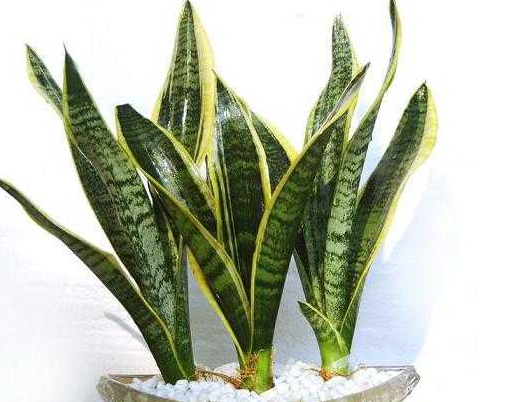
The Snake Plant is propagated by division and cuttings. Cuttings can be taken when the temperature is above 15°C. The method is to take a leaf 5-10 cm long, let it dry slightly, then insert it into sand; when inserting the cutting, it must not be placed upside down. Be careful to maintain a certain humidity, and it will root after one month. However, for the Golden-Edged Snake Plant, propagation by cuttings tends to lose the golden edge, so division is best. The method of division is: during the growing season, knock the plant out of the pot, separate it at the rhizome, and replant separately. However, division should not be done too frequently, otherwise it affects growth vigor; generally, wait until the pot is full before dividing.
How to Grow a Snake Plant: Snake Plant Care Methods
The Snake Plant is a very good foliage plant, and sometimes it even blooms, but how should this Snake Plant be grown to grow well? Below, let's look at the Snake Plant care methods.
How to Grow a Snake Plant: Snake Plant Care Method 1. The Snake Plant is a very good foliage plant with a nice appearance, very suitable for indoor decoration. The Snake Plant is a plant that likes loose soil, and the soil must have strong air permeability, with more leaf mold added.2. The Snake Plant is a plant that likes sunlight, so it is best to place the Snake Plant somewhere that sunlight can reach, and also move it outside regularly to get some sun; this is good for the Snake Plant's growth.
3. The Snake Plant is a plant that likes warmth and must not be placed in an environment below ten degrees. If it is too cold and damp, it should be moved to a warm place indoors.
4. The Snake Plant does not need too much water; watering it once or twice a week is enough. If winter comes and the temperature is low, watering once a week is enough.
5. If you find that the Snake Plant has yellow leaves, promptly prune away the yellow leaves so that the healthy leaves can receive more sunlight and grow better.
6. The Snake Plant should be repotted regularly. Generally once a year; after a year of growth, a large number of roots have filled the pot. At this time, it needs a larger pot and new soil added to benefit the Snake Plant's growth.
How to Grow a Snake Plant: Snake Plant Care Methods and Precautions / Sufficient Light Is Needed
The Snake Plant gets its name because its leaf markings resemble a tiger's tail. It is also called Tiger Tail Orchid or Thousand-Year Plant, and it is a plant with great ornamental value, cultivated in many places across the country. As for how to grow a Snake Plant? Generally, it is best to choose soil with relatively good drainage and maintain sufficient sunlight, because the Snake Plant likes warmth most. Below are the Snake Plant care methods and precautions; friends interested in it should not miss them.
I. How to Grow a Snake Plant: The Environment Is Very Important
The Snake Plant is a warmth-loving plant. Generally, it is best to let it grow in an environment of 16°-30°C, with sufficient light. The soil should preferably be one with good drainage, and the amount of watering varies by season. As for how to grow a Snake Plant, the specific details are introduced in the Snake Plant care methods and precautions; let's continue reading.
II. Snake Plant Care Methods and Precautions
1. Soil: Drainage Is Very Important
In the Snake Plant care methods and precautions, the first thing we should note is the soil; after all, growing flowers requires soil. The Snake Plant is not too strict about soil requirements, but it is still best to choose soil with good drainage; a mix of humus soil and some sand can be used.
2. Maintain Sufficient Light
How to grow a Snake Plant: besides soil, light is extremely important. The Snake Plant relatively likes a warm environment and should generally be placed outdoors in a place with sufficient sunlight. If it cannot get sunlight for a long time, the leaves will turn yellow and darken.
3. Watering Amount: Depends on the Season
The watering amount for the Snake Plant should change according to the season. Generally, in spring and summer, keep the potting soil moist, while in autumn and winter, water only after the potting soil dries. When the temperature is below 10°, do not water, so as to avoid cold damage to the Snake Plant.
Extension: Propagation Methods
Which method to use to propagate which variety of Snake Plant is very important. The propagation methods of the Snake Plant can generally be divided into division and cuttings. Division is suitable for all varieties of Snake Plant, while cuttings are only suitable for Snake Plant varieties whose leaves do not have golden-yellow edges or silver veins.
III. Precautions for Snake Plant Care
1. Flower Pot Selection
Flower pots are generally clay pots, plastic pots, porcelain pots, or ceramic pots for cultivation, generally planted in pots with a diameter of 16-30 cm. The root system of the Snake Plant is not deep, so generally choosing tall-footed flower pots is beneficial to the beauty of the plant shape.
2. Soil Selection
For general home planting, the soil ratio is garden soil : leaf mold : sand = 5:2:3; peat soil : leaf mold : sand : perlite = 4:2:2:2.
3. Do Not Apply Too Much Fertilizer
When planting a Snake Plant, you can add a small amount of base fertilizer to the soil. Generally, fertilizing once a month is enough, and during the growing season you can apply once more. It is best to use compound fertilizer.