How to Grow Potted Venus Flytraps? Detailed Planting Method
The Venus flytrap (Dionaea muscipula) is a small carnivorous plant in the genus Dionaea, family Droseraceae. The genus contains only one species, native to the sandy bogs of southern North Carolina and northern South Carolina in the United States. The plant stays green all year round, with white flowers and a flowering period of 5-7 months. It is an entertaining ornamental plant.
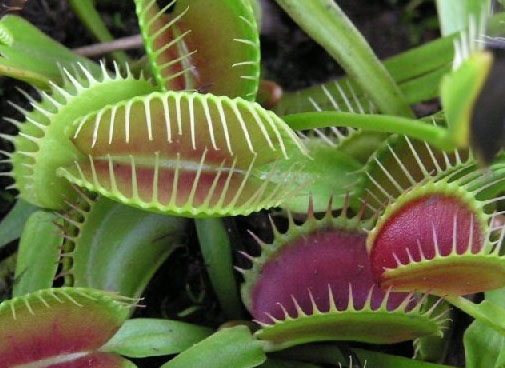
The trap-type insect catcher has trigger hairs inside, located on both sides within the trap, usually 3 of them. If within 1 second to 10 seconds, 2 of the trigger hairs are touched separately or one of them is touched continuously, the trap will snap shut rapidly. If touched further, the trap will continue to tighten.
Because only the crawling of prey can produce continuous touching of the trigger hairs, this enables the Venus flytrap to easily distinguish between the crawling of prey and the accidental touch of ordinary objects. It can also adjust the tightening force of the trap according to the degree of the prey's struggling.
The Venus flytrap is a very popular carnivorous plant. Potted plants can be placed on sunny windowsills and balconies for viewing, or specially grown in planting troughs, offering a unique charm.
Before planting a Venus flytrap, let us first look at the annual growth cycle of the Venus flytrap:
In winter, the Venus flytrap goes dormant. During dormancy, most of the leaves wither, and the plant looks like it is about to die. However, if you dig up its rhizome and look, you can find that its rhizome is still white. (Note: The dormancy temperature must be 0-8°C; above 8°C it will not go dormant.)
In spring, the sleeping Venus flytrap is summoned by sunlight and stimulated by temperature, and begins to grow long, tall leaves. After winter dormancy, the Venus flytrap sometimes also sprouts many side shoots. After a while, very long flower stalks emerge. The flowers on the flower stalks basically open day by day, not all at once in a single day. After a few weeks, these flowers are almost all faded. Then summer arrives. (Note: Flowering consumes nutrients and affects leaf growth, so if you do not want it to bloom, you can cut it off.)
Stimulated by the intense sunlight of summer, the interior of the Venus flytrap's traps slowly turns red. The traps in this period are usually the largest and most numerous!! You can fully enjoy a cluster of gaping bloody mouths facing the sky!
Then, as autumn gradually deepens, the traps no longer extend toward the sky as in spring and summer, and most of them turn to a posture of lying flat on the ground. The increasing temperature difference between day and night stimulates the glands inside the traps to turn red. As the daylight shortens and the temperature drops, in late autumn you can begin to reduce the water supply. But note: still do not let the Venus flytrap's potting soil dry out completely.
Introduction to Venus Flytrap Planting Methods
TheVenus flytrap's predation mechanism is an organically arranged process. First, the Venus flytrap secretes nectar to lure insects close. When an insect touches the Venus flytrap's trigger hairs twice, the two lobes of the leaf quickly close. The bristles growing on the leaf margins interlock tightly with each other to prevent the insect from escaping. Then the Venus flytrap secretes digestive fluid to digest the insect and obtain nutrients.
Introduction to Venus Flytrap Planting Methods
——————————————————————————————————————————————
[Plant Profile]
——————————————————————————————————————————————
Chinese name:Venus flytrap
Scientific name:Dionaea muscipula
Aliases:Insect-eating grass, insect-catching grass, Venus's flytrap, hell of flies
Family:Droseraceae
Genus:Dionaea
Origin and distribution:The Venus flytrap is native to the eastern coast of North America. Its natural native habitats are mainly in North Carolina, South Carolina, and Florida.
Morphological characteristics:The Venus flytrap is a vascular plant with complete roots, stems, leaves, flowers, and seeds. The most important and obvious part is its leaves. Not only do they have the function of catching insects, but their obvious bristles and red sessile gland areas make them look like gaping bloody mouths with sharp teeth.
Venus Flytrap Planting Methods
——————————————————————————————————————————————
◆ Light: The Venus flytrap is a light-loving plant and can accept full sun. Light can make the plant's colors vivid, but in summer, to avoid high temperatures, appropriate shading can be provided.
◆ Water: The Venus flytrap is relatively sensitive to salt. Too high a concentration of minerals in the water will cause the plant to decline and even die, manifested as the plant stopping growth or becoming smaller, and the edges of non-aged traps and leaves beginning to necrose. Therefore, a water source with low mineral concentration must be used. During the growing season, the substrate can be kept at relatively high humidity, and the tray method can also be used for growing. During dormancy, it needs to be somewhat drier but not completely dry, to prevent the plant from rotting.
◆ Humidity: The air humidity for the Venus flytrap should be kept above 50%. General growing environments can satisfy this, and no special humidification is needed.
◆ Temperature: The suitable temperature for growth is 20-30°C. Below 10°C it will go dormant (during dormancy most leaves wither, leaving only a few small leaves). It can survive at 0-38°C.
◆ Substrate: Growing Venus flytraps requires a substrate with good water retention and acidic or even strongly acidic properties, with a pH between 3-5. Pure sphagnum moss can be used, or a mixed substrate of 2 parts peat plus 1 part perlite or river sand. For tray-method growing, a mix of 1 part peat and 1 part perlite or river sand can be used.
◆ Nutrients: During the growing season, use a general compound fertilizer diluted 5,000 times and spray it on the leaves, 1-2 times per month. When fertilizing, it is better to apply thin fertilizer frequently; do not use too high a concentration, to avoid the serious consequences of fertilizer burn or even fertilizer death. If you have no experience, do not fertilize casually. You can also use the feeding method, feeding insects or raw meat, and the size must be appropriate so that the trap can completely enclose the food. The number of traps fed must not exceed 1/3 of the total number of traps.
◆ Diseases: High summer temperatures easily cause stem rot. Good environmental ventilation, root cooling, good light, and a large day-night temperature difference all help reduce the occurrence of diseases. If part of the stem is found to have rotted, the rotten part should be thoroughly removed immediately, then soaked in fungicide for 5 minutes, and then planted in a sterilized clean substrate.
Propagation Methods of Venus Flytraps
——————————————————————————————————————————————
◆ Sowing: Venus flytrap seeds should be sown as soon as possible after collection. The longer the time, the lower the germination rate. Storage time should not exceed 12 months. When sowing, they can be directly scattered on the surface of a clean substrate (mixed peat or pure sphagnum moss can be used). Do not cover with soil on the surface, or cover with 1-3 mm of fine peat or fine-grained akadama soil to help fix the root system. Maintain high humidity and bright light, keep the temperature at 15-30°C, and they will germinate in about one month. It takes 3-5 years of growing to reach mature plant size.
◆ Leaf cuttings: Peel off an entire leaf from the mother plant, insert it obliquely or lay it flat on a clean substrate such as sphagnum moss, maintain high humidity and bright light, and in about 2 months shoots can grow.
◆ Division: Venus flytraps frequently grow side shoots. When they grow large enough, separate them from the mother plant and cultivate them separately. (Sometimes shoots also grow on flower stalks, and these can also be cultivated like divisions.)
[More Plant Encyclopedia]
Agave Canna Red Spider Lily Forget-me-not Dandelion Dendrobium officinale Chinese Yew Kapok Osmanthus Begonia Hydroponic Plants
Home Feng Shui Plants Bedroom Feng Shui Plants Plum Blossom Aloe Jasmine Radiation-proof Plants Copper Coin Grass Potted Plants Bonsai Making Drug Plants
Mistletoe Indoor Flowers Money Tree Lucky Bamboo Potted Plant Making Anthurium Mint Living Stones Geranium Garden Christmas Cactus Peace Lily
Snake Plant Kunlun Snow Chrysanthemum Water Lily Flower Pot Violet Magnolia Winter Jasmine Mimosa Blue Enchantress Hydroponic Cyclamen Elephant Ear
How to Sow Venus Flytrap Seeds: Introduction to Venus Flytrap Planting Methods
The Venus flytrap is also a very famous carnivorous plant, mainly catching flies, and is therefore sought after by many flower lovers. Regarding Venus flytrap planting methods, the editor will provide detailed planting steps for everyone. Generally, seed sowing is used. Want to know how to grow Venus flytraps? Come and try it!Potted Venus flytraps can be placed on sunny windowsills and balconies for viewing, or specially grown in planting troughs; the Venus flytrap is known as the carnivorous plant of the natural world. The planting steps for Venus flytrap seeds are introduced as follows:1. Prepare the flower pot for sowing: Fill the flower pot with substrate, then place it in a glass tank or water basin containing purified water, so that the substrate absorbs water until the surface is moist. Then use a spray bottle to moisten the surface (mist spray).
2. Sowing: Carefully open the Venus flytrap seed package, evenly scatter the Venus flytrap seeds on the surface of the substrate, and cover with three centimeters of culture soil.
3. Spraying water: Use a spray bottle to moisten the surface (mist spray). Spray carefully so that the Venus flytrap seeds are not washed away.
4. Cultivation: Place the flower pot with the sown Venus flytrap seeds together with the glass tank or water basin on the inner side of a sunny windowsill. If it is a water basin, a plastic cover with an opening at the top should be added to retain moisture. Note to replenish water in time. Generally they germinate in about 10 days (20°C).
5. Seedling stage: When the Venus flytrap seedlings grow 2-3 true leaves, they can be transplanted.
The Venus flytrap is relatively sensitive to water quality. Watering requires water with low mineral content (such as rainwater, purified water, etc.). High summer temperatures easily cause stem rot. Good environmental ventilation, root cooling, good light, and a large day-night temperature difference all help reduce the occurrence of diseases. If fertilization is needed, spray at more than 1/5 of the indicated concentration!