What to Do When Azalea Leaves Drop? A Detailed Guide to Everyday Care
Many gardening enthusiasts discuss how to grow azaleas so they bloom beautifully. Here is a summary: to make azaleas bloom beautifully, you must first understand the soil of their growing environment, with a pH between 5.5 and 6.5; alkaline or clay soils must be avoided. The suitable growing temperature is 12°C to 25°C. In summer they need shade and sun protection, and in winter they need protection from freezing and cold, and are best moved indoors. Follow the details described above and tend them carefully, and your azaleas will surely bloom beautifully.
Azaleas love rich soil. Acidic humus soil formed from dead branches and fallen leaves that have piled up and rotted over many years is most suitable for growing azaleas.
Clay soil has poor permeability and poor drainage, so it should not be used; in particular, soil containing lime must never be used.
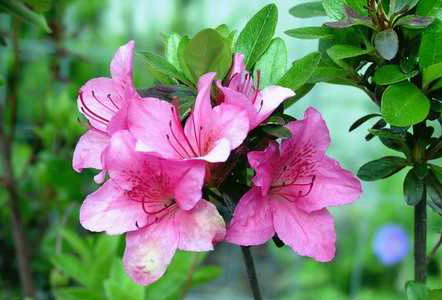
When applying additional fertilizer, do not use alkaline fertilizer water. Burying rancid fats such as lard into the soil can make azaleas grow vigorously, bloom more, and produce brighter flower colors. Use nitrogen, phosphorus and potassium fertilizers correctly. With sufficient nitrogen fertilizer, the leaves are deep green and growth is vigorous. With insufficient nitrogen fertilizer, the leaf color is pale and lusterless, the leaves are thin and aged-looking, the branches are short, small and weak, and the flowers are few and small. Too much nitrogen fertilizer, on the other hand, causes excessive vegetative growth. With sufficient phosphorus fertilizer, the plants are strong, bear many flowers, and the flower colors are brilliant. With insufficient phosphorus, there are few branches and they are weak, the petals are thin, and the flowering period is short. When potassium fertilizer is lacking, azalea branches are slender and the tissues are soft. Apply somewhat more nitrogen and potassium fertilizer when the plants are young, and somewhat more phosphorus fertilizer when they are mature. If the soil has already become alkaline, causing the leaves to lose their green color and turn yellow-white, additional ferrous sulfate should be applied. Fertilizer water should not be too concentrated. Apply light fertilizer frequently. Liquid fertilizer that is too concentrated will burn the roots and harm the plant.
Azaleas fear both drought and waterlogging. If the azalea's potting soil is too dry, the root tips shrink, and the leaves first droop or curl, after which the tips of the young leaves turn scorched yellow; in severe cases the plant cannot recover for a long time and gradually withers and dies. If the potting soil is too wet, aeration is poor, causing root rot; in mild cases the leaves turn yellow and drop early and growth stops, and in severe cases the plant dies.
If the azalea's potting soil has become too dry and damaged the roots, the remedy is to soak the whole pot and root ball in water, place it in a cool, shady spot, and mist the leaves several times. If excessive moisture has caused yellowing and early leaf drop, place the affected plant in a well-ventilated spot, control the frequency and amount of watering, and stop fertilizing to prevent infection by pests and diseases.
Azalea rhododendron Azalea Illustrated Guide: How to Grow Azaleas / How to Propagate Azaleas
Azalea ProfileAzalea rhododendron
How to Grow Azaleas and Points to Note An Introduction to Azaleas
One of China's top ten famous flowers. Among all ornamental flowering trees and shrubs, it can be called beautiful in both flower and leaf, suitable for both ground planting and container growing, and very versatile in use. Bai Juyi praised it: "Idly I break off two branches and hold them in my hand; looking closely, they seem not of this world. Among flowers, this one is Xishi; the hibiscus and peony are all plain women." In the natural distribution of azaleas worldwide, China is renowned for the greatest variety and number of azalea species; China is a treasure house of azalea resources. Today Jiangxi, Anhui and Guizhou have the azalea as their provincial flower, and even more cities have named it their city flower.
Thorny shrub or small tree, 1-10 m tall, sometimes climbing, much branched, branches stout, young branches sometimes sparsely hairy. Thorns axillary, opposite, stout, 1-5 cm long. Leaves papery or nearly leathery, opposite or clustered on suppressed lateral short shoots, obovate or oblong-obovate, rarely ovate to spatulate, 1.8-11.5 cm long, 1-5.7 cm wide, apex obtuse or shortly pointed, base cuneate or decurrent, both surfaces hairless or with strigose hairs, or with sparse stiff hairs along the midrib and lateral veins, short tufted hairs often present in the vein axils beneath, margins often shortly ciliate, lateral veins slender, 4-7 pairs, slightly raised beneath, flat above, petiole 2-8 mm long, sparsely soft-hairy or hairless; stipules membranous, ovate, apex mucronate, 3-4 mm long, deciduous.
Flowers solitary or 2-3 clustered at the apex of leafy, suppressed lateral short shoots, pedicel 2-5 mm long, covered with brown long soft hairs; calyx tube bell-shaped or ovate, 3.5-7 mm long, 4-5.5 mm wide, outside covered with brown long soft hairs, limb slightly enlarged, apex 5-lobed, lobes broadly elliptic, apex pointed, 5-8 mm long, 3-6 mm wide, with 3 veins, outside covered with brown long soft hairs, inside covered with short stiff hairs; corolla initially white, later becoming pale yellow, bell-shaped, outside densely covered with silky hairs, corolla tube relatively broad, about 5 mm long, throat with sparse long soft hairs, corolla lobes 5, ovate or ovate-oblong, 6-10 mm long, about 5.5 mm wide, spreading widely, apex rounded; anthers linear-oblong, exserted, about 3 mm long; ovary 2-locular, each locule with many ovules, style about 4 mm long, stigma spindle-shaped, apex 2-cleft, about 2 mm long. Berry large, spherical, 2-4 cm in diameter, hairless or sparsely soft-hairy, crowned by the persistent calyx lobes, pericarp often thick, seeds numerous. Flowering March-June, fruiting May to January of the following year.
Man Shan Hong is the leaf of the rhododendron-family plant Rhododendron dauricum, pungent and bitter in taste, cold in nature, slightly toxic. Enters the lung meridian. It has the effects of relieving cough and resolving phlegm. It is used for acute and chronic bronchitis.
Main components: The leaves contain flavonoids: hyperoside, isohyperoside, farrerol, 8-demethylfarrerol, kaempferol, quercetin, myricetin, azaleatin, dihydroquercetin, gossypetin; coumarins: scopoletin, umbelliferone; phenolic acids: vanillic acid, p-hydroxy-benzoic acid, gallic acid, protocatechuic acid, syringic acid, rhododendrol, etc., as well as hydroquinone and trace amounts of andromedotoxin.
It also contains volatile oil, within which are germacrone, juniper camphor, menthol, alpha-, beta-, and gamma-eudesmol, and 4-phenyl-butan-2-one. In addition, using gas chromatography-mass spectrometry-computer coupling and chromatographic retention index as two qualitative methods, 24 components were identified from the volatile oil, among which the main components are cis-4,11,11-trimethyl-8-methylenebicyclo[7,2,0]-undeca-4-ene, humulene, gamma-selinene, gamma-elemene, germacrone and juniper camphor.
Morphological Characteristics of Azaleas
The genus Rhododendron has many species and varied forms. They range from large trees (over 20 m tall) to small shrubs (only 10 cm-20 cm tall), with trunks erect or prostrate, and branches alternate or whorled. They are distributed in Europe, Asia and North America, with the greatest number in Asia. The difference between it and the Western azalea is that its form is relatively smaller and its flowers are relatively smaller.
The leaves are mostly rolled back into tube shapes, and some are shriveled and broken. Complete leaves, when flattened out, are long-elliptic or long-obovate, 2-7.5 cm long, 1-3 cm wide, apex obtuse, base nearly rounded or broadly cuneate, margin entire, upper surface dark green to brownish green, scattered with pale yellow glandular scales, lower surface grayish green, with very many glandular scales, midrib raised beneath, lateral veins 4-6 pairs. Petiole 3-10 mm long. Nearly leathery. Aromatic with a distinctive odor, taste slightly bitter and slightly pungent.
Ecological Habits of Azaleas
In our country, they are distributed in all provinces and regions north and south except **, with the greatest number of species in Yunnan, Tibet and Sichuan, which form the world distribution center of the genus Rhododendron. The genus Rhododendron has many species and great differences in habits, but most species are produced in high-altitude areas and prefer cool, humid climates, disliking intense heat and dryness. They require acidic soil rich in humus, loose, moist, and with a pH between 5.5 and 6.5. Some species and horticultural cultivars are more adaptable, tolerant of drought and poor soil, and can also grow in soil with a pH between 7 and 8. However, on heavy or poorly aerated soil, growth is poor. Azaleas have certain light requirements, but do not tolerate scorching sun; in summer and autumn they should be shaded from the fierce sun by deciduous trees or a shade frame, and the ground should often be sprayed with water. Azaleas generally put out shoots in spring and autumn, mainly spring shoots. The most suitable growing temperature is 15-20°C; when the temperature exceeds 30°C or falls below 5°C, growth stops. In winter there is a brief dormant period, after which, as the temperature rises, the flower buds gradually swell. Generally, open-ground cultivation flowers in March-May, while in high-altitude areas flowering is delayed until July-August. In the north they are grown in greenhouses, where they can flower in January-February. Azaleas tolerate pruning, and latent buds sprout very easily once stimulated, which can be used to control the tree shape and rejuvenate the plant. Pruning is generally carried out before May; the new shoots produced can all form flower buds in the same year, while pruning too late affects flowering. Generally, new shoots that sprout around the Beginning of Autumn can still lignify. If new shoots form too late, they are prone to cold damage in winter. They are evergreen or deciduous shrubs.
Distribution Areas of Azaleas
Rhododendron is a large genus, with about 900 species worldwide, distributed in Europe, Asia and North America, mainly produced in East and Southeast Asia, and not found in Africa or South America; there are 850 species, of which our country has more than 530 species, accounting for 59% of the world total, especially concentrated in the Hengduan Mountains area of the three provinces and regions of Yunnan, Tibet and Sichuan, which is the birthplace and distribution center of the world's azaleas. In the Himalayan range, Bhutan, Sikkim, Nepal, Myanmar and northern India also have relatively many species, while Japan, Korea, Soviet Siberia and the Caucasus have only a few species.
At the entrance of Longyuan Village, Tangkou Township, Pingnan County, Ningde City, Fujian Province, there is a tree over 3 m tall with a crown diameter of 5 m, growing as seven clustered trunks, the ridged trunks covered with moss, and an age of more than 400 years. It has no flowers only in July of the year, and can be seen in flower the rest of the time, with large red flowers; experts have verified that it is a variety of Rhododendron pulchrum and is very precious. Similar azaleas have also been found on the mountains at Jiufeng Temple in Xiling Township, Baolin Temple on Tianping Mountain, and the Liugongyan Scenic Area.
The ten-thousand-mu azalea display on Yunwu Mountain in Huangpi District, Wuhan City has bloomed, with azaleas blooming in brilliant colors all over the mountains and plains. Wuhan City specially launched a Wuhan flower-viewing map for the convenience of tourists. The 4th Wuhan Mulan Azalea Festival was held in the Yunwu Mountain Scenic Area in Huangpi. At the opening ceremony, the Huangpi District Tourism Bureau signed a cooperation agreement with the provincial passenger transport company for the "Wuhan to Mulan Eight Scenes Tourist Direct Bus," signed with Guangzhou for "Ten Thousand Cantonese Touring Huangpi," and signed with the Huangshi City Tourism Bureau for "Huangshi People Touring Huangpi." The azaleas on Yunwu Mountain are mainly Rhododendron simsii, and there are also 9 varieties including purple-flowered azalea, Rhododendron pulchrum, Rhododendron fortunei and Rhododendron rubiginosum. The chairman of the scenic area introduced that due to differences in altitude, even on the same mountain the peak blooming period of the azaleas occurs at different times, so the flower-viewing period runs from the end of March to the beginning of May.
At the border between Qianxi County and Dafang County in western Guizhou there is a place called "Baili Azalea" (Hundred-Mile Azalea); it is a stretch of natural wild azalea forest extending fifty kilometers, and thus the place is called "the Earth's colored ribbon, the world's garden, the hometown of Suoma" (Suoma is the name for azalea in the Yi language). The azalea species in this azalea forest account for 4 of the world's 5 subgenera, and the varieties are also extremely numerous. The flower area in Dafang County is hailed as the "Azalea Kingdom" and "Heart of the Sea of Flowers," while Qianxi County is even hailed as the "Capital of Azaleas." The Baili Azalea Management Committee has also increased its tourism development efforts, striving to build tourism resources combining Yi culture and azalea culture, and from the end of March to mid-April each year it attracts a great many visitors.
Macheng in Hubei has 1 million mu of ancient azaleas, including a 100,000-mu primitive ancient azalea community in the Guifeng Mountain Scenic Area. Experts have verified that in terms of its size, age, degree of preservation, density and beauty of flower color, it can be called unsurpassed in central China, and it is the largest primitive ancient azalea community discovered in our country to date. Among them, the "Azalea King" on Guifeng Mountain is more than 300 years old, with 56 secondary branches, each branch trunk between 6 cm and 10 cm in diameter, a crown diameter of 6 m, and a coverage area of 35 sq m. The ancient azalea community on Guifeng Mountain was included in the Shanghai Great World Guinness Records on April 16, 2009, for its great size, great age, high density, good preservation and beautiful flower color.
The azalea is produced in Taiwan, China, Guangdong, Hong Kong, China, Macao, China, Guangxi, Hainan, and Menghai, Pu'er, Gengma, Jinghong, Hekou and Simao in Yunnan; it grows in forests or thickets in open fields, hills, mountain slopes and valley gullies at altitudes of 30-1600 m. Abroad it is distributed in Indonesia, Malaysia, Vietnam, Laos, Cambodia, Thailand, Myanmar, Bangladesh, Nepal, Sikkim, India, Pakistan, Sri Lanka, and the tropical regions of eastern Africa. The type specimen was collected from Macao, China.
Variety Classification of Azaleas
(1) The 5 subgenera of azaleas: 1. Subgenus Hymenanthes (evergreen scaleless rhododendrons); 2. Subgenus Rhododendron (evergreen scaly rhododendrons); 3. Subgenus Pentanthera (the yellow azalea subgenus); 4. Subgenus Tsutsusi (the Rhododendron simsii subgenus); 5. Subgenus Azaleastrum (the Rhododendron ovatum subgenus).
(2) The 58 subsections of azaleas:
1. Classification within the evergreen scaleless rhododendron subgenus: the evergreen scaleless rhododendron group is divided into 24 subsections (omitted);
2. Classification within the evergreen scaly rhododendron subgenus: the evergreen scaleless rhododendron group is divided into 27 subsections (omitted), the bearded rhododendron group, and the bilberry rhododendron group divided into 7 subsections (omitted);
3. Classification within the yellow azalea subgenus: our country has only 1 species;
4. Classification within the Rhododendron simsii subgenus: the short-calyx group, the Rhododendron simsii group;
5. Classification within the Rhododendron ovatum subgenus: the Rhododendron ovatum group, the long-stamen rhododendron group.
Under natural growing conditions, spring azaleas mostly flower in April-May; summer azaleas flower in May-June; the flowering period of spring-summer azaleas falls between that of spring and summer azaleas; the flowering period can last more than one month.
The species commonly cultivated in China include: Mao Juan (Rhododendron pulchrum), Xia Juan (summer azalea), Western azalea, Dong Juan (Japanese azalea), Chun Juan (spring azalea), Rhododendron molle, Rhododendron mucronulatum, Rhododendron ovatum, and Rhododendron argyrophyllum.
The genus Rhododendron has about 900 species, with about 850 species produced in Asia. Among them, China has about 530 species, distributed in all the small regions north and south except **. New Guinea and Malaysia have about 280 species, almost all of them epiphytic. In addition, North America has 24 species, Europe has 9 species, and Oceania has 1 species. The genus Rhododendron has many species with great differences, including evergreen large trees, small trees, evergreen shrubs and deciduous shrubs.
Azaleas are divided into two major categories: deciduous and evergreen. Deciduous types have small leaves, while evergreen types have large leaves. They prefer cool, shady, humid conditions and tolerate cold, and mostly grow on mountain slopes, alpine meadows, forest edges, rock faces and marshy ground at altitudes of 1000-1400 m.
Common Species
Rhododendron decorum, Rhododendron daguanense, Rhododendron delavayi, Rhododendron yunnanense, Rhododendron stamineum, Rhododendron emarginatum, Rhododendron mucronatum
Rhododendron agastum, Rhododendron anthosphaerum, Rhododendron floribundum, Rhododendron molle, Rhododendron xichangense, Rhododendron ambiguum, Rhododendron simsii
Rhododendron delavayi, Rhododendron agastum, Rhododendron floribundum, Rhododendron irroratum, Rhododendron rubiginosum, Rhododendron yunnanense, Rhododendron simsii, Rhododendron decorum
Rare Species
Rhododendron mucronatum, Rhododendron molle, Rhododendron adenosum
The Dietary or Medicinal Value of Azaleas
The medical information and health dietary information on Hugarden.com is for reference only and cannot serve as a basis for diagnosis or medical treatment. For any health problem, consult professional medical personnel, and for the treatment of any disease, follow your doctor's advice.
The ultimate flower-protecting mission: to love yourself, start from reality and strictly follow your doctor's advice. Toward illness, do not be careless, do not delay, do not give up hope; face it bravely, warm the silent world with love, and care for the flower field within your heart with care.
Beauty Benefits
Azaleas have antibacterial and anti-inflammatory effects; among them syringic acid, vanillic acid and anisic acid all have antibacterial effects, with a good eliminating effect on Cutibacterium acnes caused by acne; the anti-inflammatory effect of its farrerol is equivalent to injected salicylic acid.
Pharmacological Effects
1. Antitussive, antiasthmatic and expectorant effects: In mice, oral administration of 5 mg of germacrone has an antitussive effect equivalent to 2 mg of codeine; intraperitoneal germacrone has an effect against histamine-induced bronchial spasm in guinea pigs. Farrerol is the main active ingredient in Man Shan Hong for treating bronchitis; among the therapeutic effects on individual symptoms, the effective rate for expectoration is the highest, followed by cough relief, with asthma relief poorer. A small amount of ink was injected into the trachea of rabbits, and the speed of its movement was observed in vivo to measure the rate at which the tracheal cilia transport mucus; after intraperitoneal farrerol, the transport speed was markedly accelerated, consistent with the clinical conclusion of expectoration.
2. Anti-inflammatory and antibacterial effects: The guaiazulene contained in this product has anti-inflammatory and uterine-stimulating effects and can be used as an anti-inflammatory agent. Farrerol has antibacterial activity against Staphylococcus aureus, with an MIC of 25 ug/ml. Syringic acid and vanillic acid also have antibacterial and antifungal effects, and anisic acid also has preservative and antibacterial effects.
3. Blood pressure-lowering and diuretic effects: Andromedotoxin has a blood pressure-lowering effect when given intravenously to anesthetized cats. Although avicularin has a blood pressure-lowering effect in anesthetized dogs, it lasts only a very short time and readily produces rapid tolerance. Avicularin at 0.5 mg/kg intravenously has a diuretic effect in anesthetized dogs, and the effect increases with dose. In rat experiments, whether given orally or intraperitoneally at 34 mg/kg, it can produce a significant diuretic effect; the effect is weaker than that of aminophylline, but its toxicity is only 1/4 that of aminophylline, so its therapeutic index is relatively large.
4. Analgesic effect: Andromedotoxin has a certain analgesic effect, with a minimum analgesic index of 8.60. Hyoscyamine can greatly enhance its analgesic effect without markedly affecting toxicity. Atropine can slightly enhance the analgesic effect of this product. In addition, andromedotoxin has weak cytotoxic activity, with an ED50 of 60 ug/ml, and relatively high in vivo toxicity.
5. Central inhibitory effect: Syringic acid has sedative and local anesthetic effects, and its effects are dose-dependent.
6. Effect on tissue respiration: Farrerol can inhibit rat trachea-lung tissue respiration in vitro, reducing oxygen consumption by about 26.4%, mainly acting on the pyridine nucleotide enzyme system.
Edible Value
Sweet in taste, warm in nature, it can lower blood lipids and cholesterol and nourish and beautify the skin; long-term consumption can make the skin delicate and the complexion rosy; it can lower blood lipids and cholesterol, reduce inflammation, nourish and beautify the skin, nourish the blood, regulate menstruation, dispel rheumatism, and treat irregular menstruation. It has the effects of clearing heat and detoxifying, beautifying and protecting the skin, harmonizing the blood, regulating menstruation, dispelling rheumatism, and treating rheumatic pain. Azelaic acid can be extracted from it to make cosmetics, with certain beauty effects. The roots, leaves and flowers of azaleas are used as medicine, with the effects of harmonizing the blood and regulating menstruation, and reducing swelling and stopping bleeding; the flowers and leaves used externally, together with the roots, treat internal injuries, rheumatism and other conditions. It can also be used to treat severe wind-phlegm pain, rheumatic arthralgia, and toothache due to wind and worms. Azaleas are somewhat toxic; please use them under the guidance of an expert.
Azalea Cultivation Techniques Azalea
Also known as Ying Shan Hong, it generally refers to azaleas of various red colors, describing how their blazing bright red radiance reddens the whole mountain. In fact, azaleas are not only red; in present-day plant taxonomy, "Ying Shan Hong" is only one species (including many cultivated varieties). Yunnan Province alone and Macheng City in Hubei have nearly 300 species; China is the native home of azaleas, and Macheng is their distribution center.
Ying Shan Hong
It is a common type of azalea, named because when it blooms it reddens the whole mountain. It is distributed in Longlin in Macheng City, Hubei Province, and in the mountainous areas above 500 m altitude in Xijiang, Fenghuang Mountain, Zhuangkou and Lanshan in Huichang County, Ganzhou City, Jiangxi Province. Ying Shan Hong has long had the reputation of "king of woody flowering plants"; writers and scholars ancient and modern, Chinese and foreign, have written many fine essays and poems praising Ying Shan Hong, such as a poem by Yang Wanli of the Song Dynasty: "Why need to view the spring breeze in famous gardens; the mountain flowers all along the way do not fail you. Day after day the Jin River presents a brocade-like scene; the clear stream reflects Ying Shan Hong upside down." This praises the plain and tenacious vitality of Ying Shan Hong.
Wild azaleas are mostly shrubs and small trees one or two meters tall, but there are also the creeping azaleas and purple-backed azaleas only a few centimeters tall that creep over rocky ground, as well as the large tree rhododendrons and giant rhododendrons that reach several zhang in height and bear ten thousand flowers. The azalea's inflorescence is umbel-like at the top, composed of several bell-shaped or funnel-shaped flowers, just like a full hydrangea ball. The leaves are mostly leathery, as large as loquat leaves or as small as fingernails; there is even a species, the pointed-tip rhododendron, whose leaves reach more than 70 cm in length and more than 20 cm in width; the fruit is a capsule, and the seeds are as fine as dust, so sowing requires careful management before seedlings can emerge.
In Yunnan, azaleas grow at altitudes of 800 m to 4500 m in high mountains, mid-mountains, low hills and fields, with the greatest abundance of species in the high mountains of western Yunnan. Especially in the cold, humid alpine zones. Many evergreen rhododendrons such as Rhododendron wardii, Rhododendron nivale, Rhododendron anthosphaerum and Rhododendron campylocarpum, in various colors, often form dense azalea thickets and pure forests, with the remarkable spectacle of "seas of flowers" of azaleas stretching for ten or twenty kilometers in a row. The flowering period of azaleas varies with climate and species: in warm, hot low mountain zones they mostly open in February-March, in cool mid-mountain zones they mostly open in April-June, and in cold, cool high mountain zones they mostly open in July-August. Because of their many species, wide distribution and complex, diverse ecological environments, the forms and grace of azaleas are also varied: some have sparse branches and leaves, some have a hundred bare branches; some are lush and handsome and upright, some are twisted like dragons, vigorous and antique. Their flower colors are even more dazzling and varied: fiery crimson, glittering gold, crystal blue like gems, some with spots and dots, some with stripes and patches, pink, magenta, orange-yellow, pale purple, yellow with red, red with white, white with green, truly endlessly changing and full of wonders. Some are richly made up in gorgeous dress, some plainly clad in white; some have red lips and white teeth, some are fragrant and refreshing, truly each with its own grace and countless charming manners.
Precisely because of the important value of azaleas in landscaping, our country's richly varied azalea resources were long coveted by Western countries. As early as the beginning of the 19th century, they repeatedly sent people to Yunnan at great expense to collect specimens and seeds. The several hundred species of azaleas that the Royal Botanic Gardens in Britain today boasts of were mostly collected and cultivated from Yunnan; they long ago grew into forests, and when the buds are in full bloom, British men and women come and go in crowds, lingering without wanting to leave.
Flowering Period Control
If you want flowers at Spring Festival, you can move the potted plant to a sunny spot in a 20°C greenhouse in January or 20 days before Spring Festival, with other management as normal, and you can view the flowers during Spring Festival. If you want flowers on "May 1st," you can move the pot to an indoor cold-storage area below 5°C before the early-spring bud break, move it to a sunny spot in a 20°C greenhouse on April 10, and move it outdoors on April 20, and you can see flowers on "May 1st." Therefore, temperature can regulate the flowering period, allowing it to open at will in all four seasons. In addition, plants pruned immediately after flowering can bloom in late October; if pruned during the peak growing season, the flowering period can be delayed by about 40 days; if pruned in combination with cuttings, the flowering period can be delayed to January-February of the following year. Therefore, pruning at different times also affects how early or late the flowering period is.
Fertilization Techniques
When fertilizing flowers, you must grasp the seasons and achieve timely, appropriate amounts and properly configured concentrations. Azaleas have very fine, dense root systems and a strong ability to absorb water and fertilizer; they like fertilizer but fear concentrated fertilizer. Ordinary human feces and urine are not suitable; it is suitable to apply additional alum fertilizer water.
Azalea fertilization should also be carried out according to different growth stages. From March to May, to promote the growth of branches, leaves and flower buds, fertilize once a week. June to August is the height of summer, when azalea growth gradually slows and enters a semi-dormant state; too much fertilizer will not only cause old leaves to drop and new leaves to turn yellow, but also make the plant prone to pest and disease damage, so fertilization should be stopped. In late September the weather gradually turns cool and azaleas enter autumn growth; apply a 20%-30% phosphorus-containing liquid fertilizer once every 10 days to promote flower bud growth. Generally after October, autumn growth basically stops, so no more is applied.
Care Essentials 1. Environmental Conditions
Moisture, acidic soil and warmth are the environment azaleas like most; scorching sun, drought and waterlogging, and concentrated fertilizer are the growing environment azaleas fear most. For soil-grown azaleas, the soil must be acidic soil with good aeration, rich in humus and with a pH of 5.5-6.5. To maintain the acidity of the azalea's potting soil, you should normally apply some alum fertilizer water, or add a little ferrous sulfate to the water. When repotting azaleas, add an appropriate amount of slow-release fertilizer to the potting soil; this fertilizer is often used in azalea horticultural production because it saves trouble and is clean, so the azaleas grown this way have lush leaves and brilliant flowers.
2. Potting Soil Requirements
Azaleas like loose, highly permeable, well-drained acidic soil rich in humus, with a pH of 5.0-6.0. If clay or alkaline soil is used, hardly one in a hundred survives. Especially summer azaleas and Western azaleas must have mountain soil. Mountain soil must also be improved; usually 3 kinds of prepared growing soil are used.
(1) Mix 7 parts mountain soil, 1 part dried moss and grass debris, 2 parts dry leaf mold, and 1 part dry fertilizer.
(2) Layer 3 parts mountain surface soil (topsoil), 3 parts horse manure, 3 parts fallen leaves and weeds, and 1 part human feces and urine in a compost pile; after 1-2 years, sieve and set aside for use.
(3) Mix 3 parts mountain soil, 3 parts leaf mold, 4 parts garden soil, and 2 parts sandy soil, and add 50 grams of sesame paste residue and bone meal per pot.
3. Flower Pot Selection
For pots for growing azaleas, depending on the purpose, generally two kinds are chosen: clay pots and purple clay pots. Clay pots have good aeration and water permeability, which is good for root growth; flower and tree production units all use this kind of pot for cultivation. For finished azaleas, especially those already styled, for indoor and outdoor display they are generally planted in beautiful, antique purple clay pots; purple clay pots are fine in texture, rich in color and beautiful in shape, and can increase ornamental value. Purple clay pots are not as permeable as clay pots, so when planting, broken tile pieces (old tiles) should be placed around the pot walls to aid drainage. The size of the pot chosen depends on the age of the plant; generally a 5-inch pot is used for 4-6 year old plants; a 6-inch pot for 7-10 year old plants; and an 8-inch pot for 11-15 year old plants.
4. Improving Water Quality
For watering azaleas, rainwater is best, followed by river water and pond water. If tap water is used, it is best to store the water for 1-2 days to let the chlorine volatilize before use. When using it, add 0.2% ferrous sulfate, and water once every 7-10 days during the growing season; use it regularly to ensure the soil is acidic.
5. Fertilizer and Water Management
Azaleas like shade and moisture and should not be too dry. During the flowering period they especially need more water. In winter azaleas have entered the dormant period and do not need much water; generally water once every 4-5 days, preferably around noon on clear, warm days. The specific amount can be adjusted according to how dry the potting soil is. In March, azaleas take root and sprout, and their water needs increase accordingly. Summer azaleas grow and develop a little later, and the amount of watering should be less than for spring azaleas. Generally water an appropriate amount once every 2 days in the morning. From April to June azaleas bloom one after another and branches and leaves also begin to sprout, requiring a relatively large amount of water; generally water once every morning or evening. In the hot, dry season from July to early September, water once in the morning and once in the evening, with the amount not too much, and spray water on the leaves and ground at noon to maintain a humid environment. From mid-September to November, the weather gradually turns cool; this is the adaptation period for azalea growth, and to prevent autumn shoots from being produced and to enhance winter cold resistance, the amount of watering should be appropriately reduced. Generally water once every other day in the early morning and keep it moist. Azaleas relatively like fertilizer; generally rotted cake fertilizer, fish meal, broad beans or Chinese milk vetch, etc., after rotting, are mixed with water and used for irrigation; human feces and urine should not be used. After the plants are brought out of the house and before the flower buds open, apply a thin fertilizer once every 10 days at a concentration of 15%, for a total of 2-3 applications, to prompt the old leaves to turn green and new roots to sprout. After the flowers fade, in order to promote branch and leaf growth, fertilize 5-6 times from mid-May to early July. If it rains continuously, dry fertilizer can be applied. Before the plants are brought indoors and before azalea growth is about to stop, fertilize 1-2 times.
6. Outdoor Shading
From before the plants are brought out of the house until before flowering, they should get more sunlight; during the flowering period, shade briefly at noon, with 60% light transmittance; during the plum rain period from June to early July, which is exactly the azalea's leaf and branch sprouting period, they should get as much sunlight as possible. But in strong sunlight, shade from 9 a.m. to 4 p.m. to prevent scorching the new leaves. From mid-July to early September, shade every day from 8 a.m. to 5 p.m. to prevent scorching sun exposure. In the autumn growing period after September, the shading time can be shortened, generally shading from 10 a.m. to 4 p.m.; after October, they should get more sunlight. Then carry out shaping, cutting off excessive growth shoots, diseased and weak branches, deformed branches and damaged branches.
7. Shaping and Pruning
Azaleas grow relatively slowly; generally they are left to grow naturally, and shaping is done only after flowering, cutting off excessive growth shoots, diseased and weak branches, deformed branches and damaged branches.
8. Cutting Propagation
Azaleas can be propagated by five methods: cuttings, grafting, layering, division and sowing. Among these, the cutting method is the most common and produces the largest number of propagules; layering produces rooted plants fastest; grafting is the most complicated, and grafting is used only for varieties that are difficult to root from cuttings; sowing is mainly used for breeding varieties.
For cutting propagation, a new shallow clay pot with a 20 cm diameter is best, because it has good aeration and is easy for rooting. A growing soil made by mixing 20% humus garden soil, 40% horse manure debris, and 40% river sand can be used as the substrate. The best time for cuttings is spring (May) and autumn (October), when the temperature is between 20 and 25°C, most suitable for cuttings. When taking cuttings, choose the current year's semi-lignified, healthy, well-developed shoot tips as cuttings; using very sharp scissors, cut 6-10 cm with a node, with the cut required to be smooth and neat, remove the lower leaves, and keep only 3-4 small leaves at the top. Buy 1 ampoule of vitamin B12 injection; after opening it, dip the cutting in the liquid, take it out and let it dry for a while, and then it can be inserted. Before inserting, use a watering can to moisten the growing soil in the pot the day before, but do not spray too much; by the next day it is just moist, most suitable for cuttings. The insertion depth is 3-4 cm. When inserting, first use chopsticks to poke a hole in the soil, then insert the cutting, press the soil firm with your hand so that the potting soil fully contacts the cutting, and then water thoroughly once. After inserting, it is best to cover the pot with a plastic bag and tie the bag opening with a string; open it again when watering is needed, and tie it again after watering thoroughly. The pot with cuttings should be placed in a spot without direct sunlight; the potting soil of the cuttings should be sprayed with water every day for 10 days; except on rainy days, spray once on cloudy days, and spray twice when the climate is dry, but the amount of water sprayed each day should not be too much. After 10 days, still pay frequent attention to keeping the soil moist. Within 4-5 weeks, shade is needed, and only after sprouting can they gradually be given some sunlight. Generally it takes about 2 months to root. After that, shading is needed only for 2-3 hours at noon, and the rest of the time they can be given light, so that through photosynthesis they can manufacture nutrients on their own.
9. Landscaping Uses
Azaleas have abundant flowers and lush leaves, are gorgeous and varied, have strong sprouting ability, tolerate pruning, and have unusual root stumps; they are excellent bonsai material. In landscaping they are most suitable for planting in clusters and patches at forest edges, beside streams, by pond banks and beside rocks, and can also be scattered under open forests.
10. Light and Temperature
During the azalea's leaf and branch sprouting period, they should get as much sunlight as possible, but in strong sunlight they should be shaded from 9 a.m. to 4 p.m. to prevent scorching the new leaves. In summer, shade every day from 8 a.m. to 5 p.m.; after September the shading time can be shortened, and after October they should get more sunlight.
Azaleas grow most vigorously at around 20°C, stop growing and enter a dormant state above 30°C. They will freeze to death if kept below 0°C for a long time. In winter, heat-preservation measures must be taken, and a temperature above 15°C is best.
Azalea Disease and Pest Control
Preventing disease and controlling pests: For the lantana lace bug (also known as the crown net bug), spray 40% dimethoate 1500x solution during the damage period, once every 7 days, for 3 consecutive times. The main control method for the terminal bud leaf roller is manual capture and killing; the larvae or pupae can also be killed by spraying 40% dimethoate emulsifiable concentrate 2000x solution or dichlorvos 1500x solution.
For red spider mites, 1000x dicofol solution can be used for control. For the lantana lace bug, 1500x dimethoate or dichlorvos can be used for control. The most common disease is brown spot, which can be controlled with 800x thiophanate or an equal-strength Bordeaux mixture.
Main Diseases and Pests
Red spider mite. Can be killed by spraying 40% dimethoate 1500-2000x solution, 58% Feng Lei Ji emulsifiable concentrate 1500-2500x solution, etc.
Lantana lace bug (pear lace bug). Can be killed by spraying 50% fenitrothion 1000x solution.
Tea bagworm (bagworm, bag moth). Can be killed by spraying 90% trichlorfon 2000x solution.
Tea tortrix (leaf-tying worm). Adults can be trapped and killed with black light lamps; larvae can be killed by spraying 20% diflubenzuron suspension concentrate 8000x solution, 20% Duo Chong Wei 2000x solution, etc.
Damping-off. Mostly occurs in seedling beds; during damage it causes seedlings to turn brown from the root to the root crown, later becoming dark brown; in severe cases the phloem rots, the xylem is exposed, the roots rot black-brown, and the aboveground leaves of the seedlings wither and yellow or even the whole plant dies, but without lodging. The occurrence of this disease is mostly caused by seedlings being planted too densely, poor ventilation, or the seedbed being too wet. To prevent and control this disease, the seedbed must first be well ventilated and well lit, and shading must be done well in the hot season; at the same time, take care not to water too much and make the soil too wet. If the seedbed soil is first disinfected with 50% captan 500x solution, the effect is even better.
Leaf spot. Azalea leaf spot is a common disease. In the early stage of damage, small purplish-red spots appear on the leaves; in the later stage the middle of the lesion becomes gray-white. Small black dots grow on it, causing the leaves to drop. This disease occurs 3 times a year on Western azaleas: mid-month, early September and early October are the peak periods of occurrence. In winter, after Western azaleas are brought indoors for care, it will continue to occur as long as the temperature is suitable. Leaf spot is generally most severe during the plum rain and tropical storm seasons. If 70% thiophanate 1x solution or 20% triadimefon 4000x solution or 50% mancozeb 500x solution can be sprayed once every 2 weeks from May after flowering to late August, the development of this disease can be controlled.
Chlorosis. Azalea chlorosis often causes the green leaves to fade evenly and the leaf color to become lighter. First the young leaves lose green and the leaf tissue turns yellow. In severe cases the leaves turn white, the veins also turn yellow, and scorched brown spots and other necrotic tissue appear at the middle of both sides of the leaf or at the leaf tip, gradually expanding and causing the leaves to drop. The occurrence of this disease is mainly caused by alkaline soil and iron deficiency. When this symptom appears, promptly spray the plant with 0.2%-0.5% ferrous sulfate solution; the effect is better than directly applying it to the soil.
Geometrid looper. Adults can be trapped and killed with black light lamps; larvae can be killed by spraying 20% Ju Sha emulsifiable concentrate 2000x solution, 25% Feng Mang emulsifiable concentrate 800-1000x solution, etc.
Brown spot. Can be sprayed with 70% thiophanate-methyl 1000x solution, 65% zineb 600-800x solution, etc., once every 5-7 days. Spray 3-5 times consecutively depending on the condition.
Root rot. Pay attention to strengthening cultivation management; keep the soil moist and loose, and avoid water accumulation. In the early stage of the disease, drench the roots with 12% copper octanoate emulsifiable concentrate 800-1000x solution or Lü Heng No. 1 3000x solution, once a week, for 2-3 consecutive drenchings. When the disease is severe, promptly dig the plant out of the soil (for potted plants or bonsai, promptly repot and change the soil), wash off the soil from the roots, cut off the diseased root system, then soak the plant roots for 30 minutes in 12% copper resin acid emulsifiable concentrate 600x solution, or Lü Heng No. 2 800x solution, or 50% Gen Fu Ling wettable powder 500x solution, then rinse the roots with clean water, then use 75% chlorothalonil wettable powder 1000x solution, or 50% carbendazim wettable powder 800x solution, add an appropriate amount of fine red (yellow) soil, stir into a thick mud slurry, dip the roots and set aside for planting. For ground planting, dig new holes and loosen the soil (for potted plants and bonsai, change to loose new growing soil), and use 50% Gen Fu Ling 600x solution or 50% Sha Jun Wang water-soluble powder 1000x solution, Lü Heng No. 1 3000x solution, 12% copper octanoate emulsifiable concentrate 600x solution, etc., to drench the soil (growing soil) for disinfection, then plant the plant; after planting, spray the leaves once a week with 12% copper resin acid emulsifiable concentrate 1000x solution or 50% Gen Fu Ling wettable powder 800x solution, Lü Heng No. 2 600-800x solution, 70% manganese fungicide wettable powder 600-800x solution and other fungicides; it is best to use two or more in alternation, spraying 3-5 times consecutively.
Leaf gall disease (blister disease). Strengthen cultivation management, pay attention to environmental ventilation and light, and promptly and thoroughly remove diseased leaves and diseased shoot tips when found, and destroy them promptly. Before spring sprouting, spray the plant once with 1 degree Baumé lime sulfur mixture; during the new leaf expansion period, spray the leaves with 0.5 degree Baumé lime sulfur mixture or 1% Bordeaux mixture 2-3 times, once every 7-10 days. [3]
Stem Split Disease
[Symptoms] The phloem of the lower stem of the azalea is damaged and necrotic, the xylem is exposed, and small black dots are produced on the diseased part.
[Pathogen] The pathogen is a fungus, Leptosphaeria tritici.
[Occurrence pattern] It generally occurs during the plum rain season; any factor causing stem injury will worsen the disease, such as insect injury, mechanical injury, friction damage, etc.
[Control method] Spray 50% carbendazim 500x solution, once every 10-15 days; after 2-3 consecutive sprayings, the disease can be brought under control.
The Flower Language of Azaleas
The language of azaleas - forever yours
The language of azaleas - representing the joy of love; it is said that people who like this flower are pure and innocent. The motto of the azalea is that when you see azaleas blooming all over the mountains, it is the time when the god of love descends.
Flower language: the joy of love, temperance, temperance of desire
Meaning of flower colors: the joy of love
White: the joy of being loved
Its flower language is "temperance," and the biggest reason is that it only blooms in its own flowering season, even though azaleas always give people a lively and bustling feeling. When it is not in flowering season, its dark green leaves are also very suitable for planting in gardens as a low wall or barrier.
The cultural background of azaleas
In 492 AD, Tao Hongjing of the Qi and Liang dynasties recorded in "Commentary on the Classic of Materia Medica" that "yang zhizhu: when sheep eat its leaves, they stagger and die, hence the name."
Su Shi of the Northern Song dynasty also mentioned it many times in his poems: "At the time I only thought it was the immortal of Helin, able to leave autumn light and let azaleas bloom." In addition, Bai Juyi of the Tang dynasty also wrote "Delight at Mountain Pomegranate Flowers Blooming": "Today's flowers in Zhongzhou prefecture, last year's trees on the peak of Mount Lu. I already pitied the damaged roots and cut and replanted them, and I am still glad the flowers bloom in the same number."
Li Shizhen of the Ming dynasty gave more detailed records of yang zhizhu and yingshanhong in "Compendium of Materia Medica." Slightly later, the famous geographer Xu Hongzu wrote "The Travel Diaries of Xu Xiake," which described the azaleas of central Yunnan.
Azalea pictures
How to grow azaleas, how to care for azaleas
This article introduces how to grow azaleas and how to care for azaleas. Azaleas are neutral flowers and like a warm, semi-shaded, cool, ventilated and moist environment. They require loose, fertile, humus-rich, slightly acidic (loess) soil with a pH between 5.5 and 6.5, and alkaline or clayey soil should be avoided. The suitable growing temperature is 12°C to 25°C. In summer, shade them from the sun and protect them from heat; in winter, protect them from freezing and keep them warm, preferably moving them indoors. This is especially true for more delicate azaleas such as Western azaleas, where care should be taken even more.
1. Azalea roots are as thin as hair strands, with very few thick main roots. They fear both dryness and wetness, and especially fear heavy fertilizer. If watered too much, the roots soak in water; if too dry, the branches and leaves shrivel and the petals fall off, posing a great threat to the plant. As for applying heavy fertilizer, it can endanger their lives.
2. After the flowers fade, the spent flowers must be cut off to avoid seed formation consuming nutrients. After new branches sprout, thin the branches appropriately, deciding what to keep or remove according to the plant's growth vigor.
3. Azaleas are best planted in clay pots, because clay pots absorb water and breathe, which helps root growth and development and makes the branches and leaves lush.
4. There are particular considerations for where to place potted azaleas. Generally, they should be placed on a southeast-facing balcony, and they need ventilation; move them as little as possible. Without ventilation, they are prone to black spot disease and large numbers of fallen leaves.
5. Azaleas also have moderate light requirements; avoid direct light in summer. For fertilizing, apply thin fertilizer frequently; dilute rather than concentrate. Apply an organic compound fertilizer to the pot soil once a month. Spray potassium dihydrogen phosphate once every 10 days as a foliar feed. Water in good time, and you can also add edible vinegar to the water to increase acidity.
6. Thin buds and leaves in good time. Remove part of the flower buds and leaves that have grown too many and too densely, so that air circulates and nutrients are concentrated in the flower buds. After the flower buds form, increase nutrition and apply a moderate amount of extra phosphorus and potassium fertilizer, otherwise the flower buds will turn into leaf buds.
7. The main reasons for azalea leaf drop and failure to bloom are: direct sunlight in summer being too strong, freezing damage from severe cold, too much watering, fertilizer applied too strongly, being kept indoors for too long, being placed in a place with no air circulation or in a dark, damp place, exposure to acid rain, and so on. Therefore, these situations should be avoided during care.
8. Repotting and changing the soil do not need to be done every year, generally once every 2 to 3 years. Try to damage the roots as little as possible. The time should be after the flowers fade or in autumn, and at the same time spray thiophanate to prevent disease.