Can You Water a Peace Lily with Beer? The Watering Method Is: Don't Water If the Soil Isn't Dry
In the care methods for the peace lily, we specifically mentioned the importance of watering. Water it too little, and the peace lily won't grow well; water it too much, and the plant may even die. So how should you water a peace lily? This is actually a skill in itself, and regarding this, some flower lovers jokingly claim they once used beer instead of water to water their plants. Is that true? Can you water a peace lily with beer? Let us answer these questions for you one by one.
1. Can You Water a Peace Lily with Beer? Not Recommended
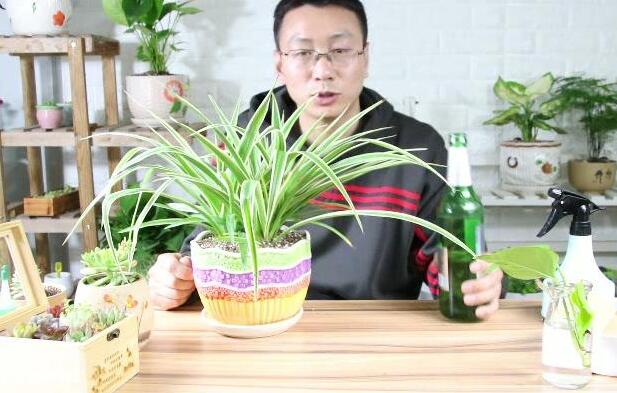
In daily life, people often say you can water flowers with beer, and many have surely heard this. So can you water a peace lily with beer? Our answer is yes, but it's not recommended. That's because watering flowers with beer actually means smearing beer foam on the leaves of plants with large leaves, which can promote leaf growth. If you pour beer directly into the pot, the consequences are very serious.
2. How to Water a Peace Lily: Don't Water If the Soil Isn't Dry
Although the peace lily is easy to keep alive, if you want it to bloom beautifully, there are many things to pay attention to, and watering is the most crucial part. As for how to water a peace lily, the method is very simple: you just need to grasp one principle, which is "don't water if not dry, water thoroughly when you do."
Don't water if not dry: Check whether the soil in the pot is dry. If it's on the dry side, you can choose to water. If the soil inside is moist, it's best not to water, because overwatering will only cause water to accumulate in the pot, which directly leads to root rot. So when you do water, water thoroughly each time.
3. How Often to Water a Peace Lily: Once a Week
In the care methods for the peace lily, we learned that its water requirements are very high. You must always keep the potting soil moist, and you must never overwater. Usually, watering just once a week is enough, otherwise it will directly affect its normal growth. Of course, how often to water a peace lily also depends on the season. Below, let's look at the four-season watering methods for the peace lily.
4. Four-Season Watering Methods for the Peace Lily
Because the peace lily has extremely high water requirements, to water it properly, you need to adjust according to seasonal changes. Here's how to water a peace lily through the four seasons of the year, as follows:
1. How Often to Water a Peace Lily in Spring: 7 Days
In spring, temperatures rise but air humidity is relatively high. This period is the peak growing season for the peace lily, and while fertilizing frequently, you also need to pay attention to watering. At this time, watering can follow a regular pattern: water once every 7 days.
2. Watering a Peace Lily in Summer: Once Every 3 Days
In summer, temperatures are high and water evaporates quickly. You should frequently use a fine-nozzle sprayer to mist the leaves, and also sprinkle water on the ground around the plant. At the same time, the frequency of watering the pot should increase accordingly, preferably about once every 3 days.
3. Watering a Peace Lily in Autumn: Reduce Frequency
In autumn, as temperatures drop, reduce the amount of water, keeping the potting soil slightly moist. The watering frequency is roughly the same as in spring, because the temperature difference between these two seasons is not great and has relatively little impact on the peace lily, so you only need to reduce the amount of water.
4. Watering a Peace Lily in Winter: Water Less
In winter, temperatures are low and water evaporation from the potting soil is minimal. If you water too much, it easily causes water accumulation in the pot and leads to root rot, so watering should depend on the actual condition of the potting soil. It's best to water sparingly.
How to Tell When to Water: Touch with Your Hand
Watering in spring, summer, and autumn is manageable, but in winter especially, everyone must pay close attention. Before watering a peace lily, be sure to touch the soil with your hand first. Only water if it's overly dry. If it's noticeably moist, you can skip watering. Just keep the potting soil slightly moist.
Whether it's spring, summer, autumn, or winter, watering is determined by the situation, so don't follow the rules too rigidly. In short, just remember the principle of "don't water if not dry, water thoroughly when you do." Master this balance, and your peace lily will grow up healthy. That's all for the watering methods for the peace lily. We hope this helps everyone.
These Flowers Are So Tough They Just Won't Die No Matter How You Grow Them
Sun-Tolerant Flowers
With Minor Heat already here and temperatures rising rapidly everywhere, the first thing we want to round up for all you flower lovers are those flowers that aren't afraid of the sun. The stronger the sun, the more vigorously they grow, almost as if they have a death wish!
1. Blue Plumbago
The first one we'll mention is blue plumbago. Just looking at its color, you immediately feel a wave of coolness wash over you. It's practically the top choice flower for summer. Blue plumbago absolutely loves the sun. The more light it gets, the more it blooms. When watering normally, water thoroughly each time and just keep the potting soil on the dry side.
(Author: Yueji Yihao Source: Blue Plumbago Forum)
2. Moss Rose
Moss rose is known to almost all flower lovers as a flower that's famously unafraid of the sun. The more sun it gets, the more easily it fills out the pot. And it propagates incredibly fast too. Before you know it, it has taken over your entire yard!
(Author: Cancan de Lei Se Shui Jing Source: Moss Rose Forum)
3. Dwarf Lotus
If you don't grow dwarf lotus in summer, what kind of summer are you even having? Dwarf lotus is a signature flower of summer and loves the sun most of all. As long as it gets good light, it will bloom abundantly. Besides that, you need to ensure good ventilation to prevent the water from going foul due to poor air circulation.
(Author: cqu10211 Source: Dwarf Lotus Forum)
4. Petunia
When it comes to filling out a pot, the first flower that comes to mind is the petunia. Quite a few of our friends have grown petunias into full, bursting pots, and the simplest secret is giving them plenty of sun. On top of that, if you want your petunia to burst with blooms, adding fertilizer about once every half month is just perfect!
(Author: yaqin88310 Source: Petunia Forum)
5. Jasmine
We once heard a saying: "the jasmine that can't be sunburned to death." From this, you can see just how sun-tolerant jasmine is. So if you have a balcony at home, be sure to put your jasmine on a south-facing balcony to get plenty of sun, so it will bloom more fragrantly!
(Author: szzz Huobao Source: Jasmine Forum)
Shade-Tolerant Flowers
Corresponding to those flowers that thrive the more they're sunned, some flowers at home can't handle direct sunlight at all. Once exposed to direct sun, their leaves easily get scorched, or they may even die!
1. Hydrangea
When it comes to shade-tolerant flowers, the first one that comes to mind is the hydrangea, which is in bloom right now. To get a hydrangea to bloom well, you must ensure it gets 10 hours of darkness treatment each day. It's best to place it on a north balcony or east balcony. In summer, watering about once a week is enough.
(Author: crusadtt Source: Hydrangea Forum)
2. Peace Lily
Many flower lovers keep a peace lily at home, as it symbolizes smooth sailing. But it can't be placed in direct sunlight, otherwise its leaves will turn yellow. Normally, watering once every 3-5 days is enough, and most people also choose to grow it hydroponically.
(Author: Jixiang Ruyi Yijiu Source: Peace Lily Forum)
3. Clivia
Clivia is a semi-shade-loving flower that most flower lovers know about. It doesn't like direct sunlight, so just place it in a bright living room or on a north balcony. Normally, water about once every 5-7 days. To keep the leaves glossy and shiny, you can wipe the leaves with beer diluted in water.
(Author: 793602716 Source: Clivia Forum)
4. Monstera
Monstera's leaves stay green year-round and it can also absorb formaldehyde, making it a top choice for many households. Monstera is shade-tolerant, so just keep it in the living room. You can water about once every 4-6 days. To keep the leaves glossy, you can dilute beer with water and spray it on the leaves.
(Author: a Xiao Xue Xue aa Source: Monstera Forum)
5. Asparagus Fern
A couple of days ago, a friend told us that all the leaves on her asparagus fern had turned yellow. After asking, we found out she had placed it on a south balcony where it got direct sunlight. Of course the asparagus fern's leaves would turn yellow! Asparagus fern likes semi-shade, so just keep it in a bedroom or living room. Water it when you notice the surface of the potting soil turning white.
(Author: Jia Zai ww Yuanfang Source: Asparagus Fern Forum)
Drought-Tolerant Flowers
In summer, temperatures are high and evaporation is significant. If you're not careful, plants can easily die from lack of water. But some flowers are especially drought-tolerant. Even if you don't water them for months, they'll still thrive!
1. Aloe
We remember going out to play once and being away from home for about 2 months. When we came back, the aloe was still growing great. That's because aloe leaves themselves can store a lot of water. If anything, overwatering is what causes root rot and death. In summer, watering about once every half month is enough.
(Author: Xia Tian de Mao 052 Source: Aloe Forum)
2. Money Tree
Recently, quite a few flower lovers have messaged us saying their money trees are having all sorts of problems. Today we still have to emphasize: money trees must be watered sparingly. During the vigorous growth period in spring and summer, watering once every half month is plenty. In winter, watering once a month is also enough. Whatever you do, don't overwater, or just wait for your money tree to die!
(Author: Bei Fang Zhi Bei bei Source: Money Tree Forum)
3. Succulents
Everyone says succulents are hard to get through summer, but we think that as long as you water less and ensure good ventilation, they'll get through it just fine. Even though evaporation is high in summer, you only need to water about once a week. In spring and autumn, water just once every 1-2 weeks. Overwatering easily causes root rot and death!
(Author: Lu Gang Xiao Gang Source: Succulents Forum)
4. Snake Plant
Snake plant is also quite drought-tolerant. In summer when evaporation is high, watering once a week is enough. In spring and autumn, water about once every 2-3 weeks. In winter, the interval is even longer, and watering once a month won't kill it. All you flower lovers better remember this!
(Author: Rang Ni Gan Dong 9 Source: Snake Plant Forum)
5. Desert Rose
Just hearing the name "desert rose," you know it must be especially drought-tolerant, and that's indeed the case. The desert rose's root system is particularly thick and large. Even if you don't water it for ten days to half a month, it won't die. Before watering, you can squeeze its roots. If the roots feel soft, just water thoroughly once.
(Author: song Yu Hou Hua Kai Source: Desert Rose Forum)
Waterlogging-Tolerant Flowers
Watering in summer is a big issue. Besides those flowers that don't need watering for ten days to half a month, there are also some flowers that aren't afraid of watering at all. They can even sit in water all day without any problem!
1. Pennywort
You've probably already guessed it: the first one we recommend is pennywort! Pennywort absolutely loves water. Watering it several times a day won't kill it. Many flower lovers even toss it into water to grow hydroponically, and its growth is just skyrocketing!
(Author: Anastasia Source: Pennywort Forum)
2. Areca Palm
The areca palm has large leaves, and summer is its peak growing season, so its water needs are also high. Water it when you notice the surface of the potting soil turning white. The areca palm mainly relies on misting. Mist the leaves once in the morning and once in the evening to maintain higher air humidity.
(Author: Guai Shou 8023YQ Source: Areca Palm Forum)
3. Maidenhair Fern
We personally really like ferns because they're so easy to grow. Just place them on a north balcony or in the bathroom and make sure there's good ventilation. Normally, water about once every 1-2 days. Lack of water will cause the leaves to wilt.
(Author: Qing Shan Ru Gu Source: Maidenhair Fern Forum)
4. Lucky Bamboo
Back when we watched "Léon: The Professional," we wondered why the hitman kept a lucky bamboo as his friend. Later we understood: it's because it's just so easy to grow! As long as there's good ventilation, watering once every 2-3 days will keep it growing vigorously!
(Author: zyl Le Le fly Source: Lucky Bamboo Forum)
5. Calathea
Calathea has large leaves and evaporates water quickly, so it correspondingly needs more water. If there isn't enough water, the leaves will curl and turn yellow. So watering about once every 2-3 days is best, keeping the soil in a slightly moist state.
(Author: Bu Yi Da Shi Source: Calathea Forum)
Things to Note When Growing Common Flowers
Friends who love flowers, don't miss this article on how to grow flowers. We suggest flower lovers save it for easy reference when planting.
How to grow flowers well is indeed a very important issue for friends who love growing flowers, and since everyone's experience with flowers differs, the results vary too. The process of growing flowers should be one of mutual learning and joyful exchange. Now let's share the following article on growing flowers with everyone.
(1) Azalea: Prefers cool, ventilated conditions; dislikes high heat; prefers semi-shade, dislikes harsh sun; prefers moisture, dislikes dryness; prefers acidic soil, dislikes alkaline soil; prefers well-drained pine-needle soil, dislikes water accumulation; if drainage is good, more water is fine, and the leaves should be misted frequently.
(2) Clivia: Prefers warmth, fears cold; prefers semi-shade, dislikes direct hot sunlight; prefers well-drained leaf mold soil, dislikes water accumulation; when flower arrows are stuck, adjust the day-night temperature difference to 7-10 degrees and water with a little beer. When the potting soil is dry, do not mist the leaves; misting easily causes leaf rot. If there's dust on the leaves, wipe with a damp cloth. Clivia can only bloom when its leaf veins reach 20 or more.
(3) Camellia: Camellia is a shade-loving woody plant, requiring about 50% shade. It grows well under filtered shade and fears exposure to the sun. If exposed to direct sunlight, young leaves are easily scorched, causing weak growth and affecting blooming. In summer it prefers cool, moist conditions; in winter it prefers a warm environment. The general optimal growing temperature is 15-25 degrees. The flowers and leaves should be misted frequently. It fears drought and dislikes water accumulation. It grows best in fertile, loose, well-drained, slightly acidic sandy soil, and will gradually die in alkaline or waterlogged soil.
(4) Poinsettia: Prefers a warm, humid environment; not cold-tolerant; prefers ample light; not shade-tolerant; has no strict soil requirements but prefers fertile, loose, well-drained, slightly acidic soil.
(5) Aglaia: Prefers warm, humid conditions; fears dryness; not cold-tolerant; prefers sunlight; not shade-tolerant; prefers fertile, loose, slightly acidic sandy soil. A poem praises it: "Its small melon-seed leaves are elegant and refined, the whole tree blooms with rice-shaped flowers, whose rich fragrance can compare? It welcomes distant guests to brew fragrant tea."
(6) Bird of Paradise: Prefers sunlight but cannot tolerate the scorching summer sun of the north; prefers warmth; not cold-tolerant; requires moderate temperatures in winter and a cool, moist environment in summer; prefers well-drained, breathable humus soil.
(7) Bleeding Heart Vine: Prefers warm, humid conditions; not cold-tolerant; prefers ample sunlight but fears intense direct light; prefers fertile, well-drained, breathable humus soil.
(8) Serissa: Serissa is an evergreen or semi-evergreen small shrub. It prefers a shady, moist, warm climate; is not cold-tolerant; and has no strict soil requirements. It prefers well-drained, breathable humus soil. Provide moderate shading in summer, and it can safely overwinter at room temperature above 10 degrees in winter.
(9) Golden Vein Justice: Prefers warm, humid conditions; not cold-tolerant; tolerates semi-shade; fears strong light; prefers fertile, loose soil.
(10) Dragon Tree (Brazilian Wood): Prefers a warm, humid environment; fears drought; prefers light but also tolerates shade; suitable for indoor growing; prefers well-drained leaf mold soil mixed with peat soil and cake fertilizer.
(11) Ivy: Prefers warm, humid, and semi-shady conditions; relatively cold-tolerant; prefers fertile, loose, well-drained soil.
(12) Snake Plant (Tiger Skin Arrow): Prefers a warm, sunny environment; tolerates semi-shade; fears sun exposure; tolerates drought; dislikes water accumulation; has no strict soil requirements. Normally place it in a well-ventilated, sunny spot. Water by the principle of "wet then dry."
(13) Lucky Bamboo: Prefers warm, humid, and semi-shady conditions; prefers diffused light; dislikes direct sun exposure; prefers loose, fertile soil. Normally place it in a bright indoor spot. Avoid direct sunlight in summer, and give it more sunlight in winter.
(14) Potted Pomegranate: Prefers a warm, sunny environment; relatively cold-tolerant; tolerates drought; fears waterlogging; prefers loose, fertile soil. Only with proper light, water, fertilizer, and pruning will it produce abundant flowers and fruit.
(15) Christmas Cactus: Prefers warm, humid, and semi-shady conditions; fears intense direct light; relatively drought-tolerant; fears waterlogging; not cold-tolerant; requires humus-rich, loose, well-drained soil. When temperatures are high in summer, stop fertilizing and control watering. (Similar to the Christmas Cactus is the Easter Cactus; the difference is that the Easter Cactus has no sharp teeth on the edges of its stems, which are gently wavy instead; the Christmas Cactus has four sharp teeth on each side of its stem edges and generally blooms white or light-colored flowers, while those with three sharp teeth generally bloom red flowers.) When budding and blooming, do not move the pot, otherwise it easily causes bud drop and flower drop.
(16) Jasmine: Prefers a hot, humid, sunny environment; not shade-tolerant, not cold-tolerant, and not drought-tolerant. It grows well at temperatures of 25-30 degrees. Below 4 degrees, cold damage begins to appear, with leaves dropping and even death. It prefers loose, fertile, well-drained soil containing organic matter.
(17) Haworthia: Prefers a warm, sunny environment; tolerates drought; fears waterlogging; prefers humus-rich, well-drained sandy soil.
(18) Kalanchoe: Prefers a warm, humid environment; although it likes sunlight, it's also relatively shade-tolerant; dislikes extreme heat; tolerates drought; prefers well-drained sandy soil. Water by the principle of "wet then dry." Provide appropriate shading and ventilation in summer, and strictly control watering in winter.
(19) Aloe: Prefers a sunny, warm, humid environment; not cold-tolerant; prefers loose, fertile, well-drained soil. In summer it needs ample watering and frequent misting of the leaves; in other seasons, control water. In spring and autumn, it likes direct sunlight. (Note: Grow tiger aloe the same way as aloe.)
(20) Epiphyllum: Prefers warm, humid, and semi-shady conditions; relatively drought-tolerant but not cold-tolerant; fears intense direct light; dislikes water accumulation; requires well-drained, loose, fertile soil. Epiphyllum generally blooms at night between 19:00-20:00 when it's dark, and each flower's blooming period lasts about two hours. If you want it to bloom during the day, you can change the lighting: in the few days before the buds are about to open, place it in darkness during the day and expose it to light at night.
(21) Chrysanthemum: A sun-loving flower that prefers cool conditions and ample sunlight. Autumn is cool and it's relatively cold-tolerant (best at temperatures of 18-22 degrees). It's relatively drought-tolerant but not moisture-tolerant, especially fearing water accumulation. It can tolerate mild alkalinity and requires humus-rich, loose, well-drained sandy soil. Chrysanthemums are generally propagated by division or cuttings, that is: divide pots in April, pinch in May, fertilize in June, pinch again in July, and keep water flowing in August and September. Depending on the flower's growth, when pinching and removing the growing tips in mid-to-late May, keep 3-5 leaves; when pinching and removing the growing tips in mid-to-late July, keep 2-3 leaves. With proper methods and good management, the blooms can reach the "three, three, nine tripods" standard.
(22) Chinese Evergreen (also known as Silver King): Prefers warm, humid conditions and is strongly shade-tolerant; dislikes dryness; fears intense direct light; slightly cold-tolerant; can safely overwinter at room temperature above 5 degrees in winter. Prefers loose, fertile potting soil. Sticky potting soil causes root rot, so it's best to use leaf mold soil with a small amount of river sand. Prefers compound liquid fertilizer rich in nitrogen and potassium. In summer's high temperatures, water more; in spring and autumn, water by the principle of "wet then dry"; in winter, restrict watering.
(23) Croton (Variegated Leaf Croton, also known as Golden Spotted Croton): Prefers high temperatures, high humidity, and sunny conditions; not cold-tolerant; prefers loose, fertile, well-drained sandy soil. It grows well at winter temperatures above 15 degrees, and temperatures below 10 degrees will cause death.
(24) Banana Shrub: Prefers warm, humid conditions; it's a semi-shade flower requiring good ventilation and appropriate shade. When air humidity is high, the leaves are dark green and smooth. It's not drought-tolerant and dislikes harsh sun exposure, otherwise the leaves easily turn yellow. It likes fertilizer and water but fears waterlogging; it's not very cold-tolerant; and it prefers fertile, loose, slightly acidic sandy soil. A poem praises it: "The flower blooms without opening its mouth, bashful and bowing its head, like a beauty smiling, deep feelings flowing silently."
(25) Echeveria: Prefers warmth, dryness, and ample light; also tolerates semi-shade; fears cold; and does well in fertile, well-drained sandy loam. During the growing period, maintaining 4-6 hours of light daily will keep it growing robustly with vivid leaf colors. Mist the leaves with clean water once every 7-10 days. Echeveria is fine without watering for ten days to half a month. If kept in a dark indoor spot for a long time, it will drop its leaves.
(26) Banyan: It likes warmth and cannot tolerate cold; in the north it must be moved into a greenhouse to overwinter. It needs a humid environment with ample sunlight, and also tolerates partial shade. It is not demanding about soil and is highly adaptable; although it prefers acidic soil, it can also grow normally in slightly alkaline soil.
(27) Gardenia: Gardenia is an evergreen shrub or small tree. Four kinds are commonly seen: (1) Large-flowered gardenia, also known as Hehua gardenia. The leaves are large and oblong; the flowers are large, mostly double, with a strong fragrance. (2) Small-leaved gardenia, also known as sparrow's-tongue flower. The plant is short and compact, the flowers are relatively small, double, with a very strong fragrance. (3) Oval-leaved gardenia. The leaves are relatively small and obovate; it bears single small white flowers with a delicate fragrance. (4) Walnut-pattern gardenia. The leaves are large and ovate, with obviously protruding veins in a spotted pattern; the flowers are large with a relatively light fragrance.
Gardenia likes a warm, humid climate and cannot tolerate cold; south of the Yangtze River it can overwinter in the open ground, while in the north it is always grown in pots and moved indoors to overwinter in winter. It likes light and also tolerates shade; in summer, when the sunlight is intense, it should be kept in a semi-shaded place for care. The leaf surface should be sprayed with water frequently. If strong direct sunlight, high temperature and excessive watering are combined, these three factors together are most likely to cause yellow leaves and may even kill the whole plant. Gardenia likes fertile, loose, well-drained, slightly acidic sandy soil.
(28) Peace lily: The peace lily is a perennial herbaceous flower, divided into large-leaved and small-leaved types. It likes warmth and humidity and belongs to the semi-shade flowers; it requires good ventilation and appropriate shading in summer. Watering should alternate between moist and dry; too much water easily causes root rot, and it requires a loose, well-drained sandy soil rich in humus.
(29) Golden barrel cactus: The golden barrel cactus is a perennial succulent flower. It likes a warm, dry environment and ample light, and also tolerates partial shade and drought; it will not die if not watered for a long time, but too much water will cause root rot and death. It requires well-drained sandy soil. (Note: The habits of succulents such as Shan Ying, Hu Tou, Long Gu and Liang Tian Chi are basically the same as those of the golden barrel cactus.)
(30) Peacock plant: Also known as blue-flowered banana, with a small plant and beautiful form; the leaf color is gorgeous, and the markings on the leaf surface are like a vivid peacock displaying its tail. The peacock plant is a perennial evergreen herbaceous plant of the Marantaceae family. It likes a high-temperature, humid and semi-shaded environment and has fairly strong shade tolerance; it grows well under bright scattered light indoors. The suitable growth temperature is 18---22 degrees, and it requires loose and fertile potting soil. In summer, avoid direct strong light, otherwise the leaf edges are prone to scorch. The ambient air must circulate, and clean water should often be sprayed on the leaf surface. (The cultivation of other arrowroots is basically the same as this.)
(32) Kalanchoe: Also known as the birthday flower, it likes ample sunlight. In the hot summer of the north, the light intensity is high and easily turns the leaves yellow, so around noon it should be properly shaded or placed indoors in half light, but attention must be paid to ventilation and cooling. For the potting soil, it is best to mix 40% leaf mold, 40% garden soil and 20% river sand plus a small amount of bone meal; this soil is loose, fertile, well-drained and slightly acidic. Avoid heavy clay soil, which will lead to poor growth and cause root rot and leaf drop. In winter the room temperature must not be lower than 10 degrees; at around 7 degrees the leaves turn red and the flowering period is delayed.
(33) Freesia: Also known as fragrant snow orchid and foreign tuberose. Its leaves are like small swords stuck into the ground, and from the sword cluster several flower spikes emerge, each lined with about 8 golden bell-like flowers, just like little golden funnels. The flower colors include bright yellow, pure white, blue-purple, rose red and so on, with a fantastical form; it has both the delicate fragrance of orchids and the sweetness of osmanthus. Placed indoors as a pot, its fragrance is rich and pure, making one feel fresh and comfortable at once. The habit of freesia is that it fears both cold and heat; when summer is hot it enters dormancy, and after the weather turns cool the corms begin to sprout and grow and send up stems to bloom. The suitable growth temperature is 18---20 degrees during the day and 14---16 degrees at night; the overwintering temperature is 6---7 degrees. Freesia is a light-loving plant, so it requires sufficient light, but under conditions of strong light and high temperature it tends to grow leggy. Its flower buds are formed under short-day conditions, and after the buds form, long days also promote its flowering. Freesia has relatively strict water requirements: it fears dampness and also cannot tolerate drought. Too much soil moisture easily causes root rot; lack of soil water hinders growth and the leaves lose their luster. Plant it in mid-to-late September each year, about 10 per pot. The flower soil can be mixed from 20% leaf mold, 50% garden soil, 20% compost soil and 10% sandy soil. Freesia has a dormancy habit; after flowering, around May, when the leaves turn yellow, the corms can be taken out of the pot, the dead leaves removed, and the corms dried and stored in a cool, ventilated place.
(34) African violet: Also known as African violet, it is a perennial herbaceous plant. It likes ample scattered light, which is needed for it to grow vigorously and bloom. The potting soil for the violet must not be too dry or too wet, and when watering, do not pour water on the leaves, otherwise yellow spots or rotten leaves will appear on the leaf surface. It likes warmth and cannot tolerate cold, nor high temperatures; in summer avoid direct sunlight, and the overwintering temperature should be kept above 12 degrees. It likes fertile, loose, well-drained, slightly acidic sandy soil.
(35) Rose: The rose has strong adaptability to the environment and likes warmth; it grows best at an average temperature of 22---25 degrees. The rose is not demanding about soil, but grows vigorously in fertile, loose and slightly acidic soil. During the growing period, sunlight must be sufficient, otherwise the plant becomes weak, the leaves turn yellow, and the flowers are small and off-color. Rose flowers must be pruned; the pruning period is generally before and after flowering in spring and autumn, cutting off diseased and weak branches, crossing branches, inward-growing branches, as well as dead branches and spent flowers. In summer, when it is hot, the soil dries out very easily, so water must be given in good time to keep the soil moist; especially during the bud and flowering stages, the water supply must not be lacking. In the rainy season, accumulated water should be drained promptly. In winter it is best to put it in a cellar to let it hibernate, and take it out around mid-March of the following year to prune.
(36) Bougainvillea: Also known as paper flower, it likes a warm, humid climate and sunlight, and cannot tolerate cold; insufficient light will cause very few flowers and leaf drop. It likes fertilizer and water, grows robustly, and is not demanding about soil. Pruning is generally done after flowering and before new shoots grow, cutting off overly dense, inward-growing and leggy branches and taking care to keep the tree shape attractive. The overwintering temperature is best above 12 degrees.
(37) Epiphyllum: It is a tropical plant. It likes high temperature and high humidity, sunlight, a well-ventilated environment and fertile soil (it is best to use potting soil with 20% hair, 20% cinders, 30% loam and 30% sandy soil). It cannot tolerate cold. Keep the potting soil at 40% humidity; when the temperature is low, do not water much and do not fertilize. The overwintering temperature is best above 10 degrees, and place it where sunlight can shine directly.
(38) Anthurium: It is a perennial evergreen herbaceous plant. Also known as Anthurium andraeanum, red flamingo taro, flamingo flower and so on. The plant height is 30---50 cm, and the flower form is wonderfully beautiful. It likes a warm, humid and semi-shaded environment, avoids direct strong light, and cannot tolerate cold. In summer, give it sunlight in the morning and evening; around noon, pay attention to shading and often spray clean water on the leaf surface; when watering, pay attention to alternating dry and wet. For the potting soil, it is best to use a mixed medium of leaf mold (or peat soil), moss plus a small amount of garden soil and charcoal, and superphosphate.
(39) Spider plant: The spider plant is a perennial evergreen herbaceous flower. It likes warmth, semi-shade and a humid air environment, and requires loose, fertile, well-drained soil. The potting soil should preferably be on the dry side, and clean water should often be sprayed on the leaf surface; keeping the indoor temperature no lower than 10 degrees is enough for it to overwinter safely.
(40) Boston fern: It is a pendulous fern. It likes a warm, humid and semi-shaded environment and avoids extreme heat. It can be placed indoors in bright scattered light for cultivation, and must not be exposed to direct strong light, otherwise the leaf color easily turns yellow or the leaf edges dry up; but it also must not be kept in a dark place, otherwise the leaves will drop after a few weeks. The Boston fern has relatively strict water requirements: it should not be too wet, nor too dry, and it is best to keep the potting soil moist at all times. In summer, note to spray water 2---3 times a day; in winter, when the room temperature is low, reduce watering, and keeping the room temperature above 8 degrees is enough for it to overwinter safely.
(41) Asparagus fern: The asparagus fern has branches and leaves extending flat, like thin clouds layered on one another, and its stems are like bamboo, hence it is also known as cloud bamboo. It likes warmth, humidity and semi-shade, fears drought, cannot tolerate cold, and likes fertilizer. It requires soil rich in humus and well-drained. The asparagus fern is a shade-loving plant and grows well under scattered light. In winter, keeping the room temperature no lower than 10 degrees is enough for it to overwinter safely.
(42) Hibiscus: The hibiscus flower likes light, warmth, humidity and a well-ventilated climate. It cannot tolerate cold, and is suited to loose, fertile, deep sandy loam. In winter, the lowest temperature should not be lower than 15 degrees, otherwise it easily causes leaf drop; if the room temperature is kept above 20 degrees, it can be expected to continue flowering in winter. (Note: Cultivating wood hibiscus is basically the same as hibiscus. Hibiscus generally bears trumpet-shaped flowers on long buds, while wood hibiscus flowers are mostly double and paired. The flower color can be judged from the color of the new branches: if the new branches are green, they generally bear red flowers; if the new branches are smoke-colored, they generally bear pink or light-colored flowers.)
(43) Pot peach: It likes light, warmth, humidity and a well-ventilated climate, fears waterlogging, and is relatively cold-tolerant. It is not demanding about soil, but fertile, loose soil is best. For overwintering, it is best to put it in a cellar when the weather turns cold, or place it indoors in a shaded, cool place, water it less, and use the standard that the potting soil is not dry.
(44) Spider plant: The spider plant is a perennial herbaceous flower. It likes warmth and a semi-shaded environment with humid air, and requires loose, fertile, well-drained soil. In spring and autumn it grows vigorously; place it in semi-shade and apply a dilute liquid fertilizer once every half month. In summer, place it in a shady, cool place, water it sufficiently, and often spray water on the leaf surface. In winter it can receive some light, and keeping the room temperature no lower than 10 degrees is enough for it to overwinter safely.
(45) Water tower flower: Also known as bromeliad, it likes warmth and humidity and belongs to the semi-shade flowers. It requires good ventilation and likes acidic sandy loam rich in humus with good drainage and air permeability. You can choose leaf mold, moss and garden soil (sand), mix them and add a small amount of bone meal as a base fertilizer. During the growing season, apply a dilute liquid fertilizer once every half month; before flowering, apply 1---2 additional applications of 0.2% potassium dihydrogen phosphate, and the flower colors will be more striking. Fertilization should be stopped during the flowering period, after flowering and during the dormant period. The suitable growth temperature is 20---28 degrees; in the hot summer, when the temperature exceeds 30 degrees, do a good job of ventilation and cooling. In winter, keep it above 15 degrees and let it receive some light to promote robust growth.