How to grow a peace lily? Growing methods and precautions, remember to fertilize regularly
When people hear "peace lily," they surely think of it as an auspicious idiom, but besides being an auspicious phrase, it is also a plant, commonly used for indoor greening and decorative display. A plant with such an auspicious meaning naturally makes many people want to grow it, so how do you grow a peace lily? Soil, light and other factors are essential, but fertilizing is also very important. Below are the growing methods and precautions for the peace lily, very comprehensive, so anyone who wants to grow one should definitely take a look~
I. How to grow a peace lily, fertilizing is key
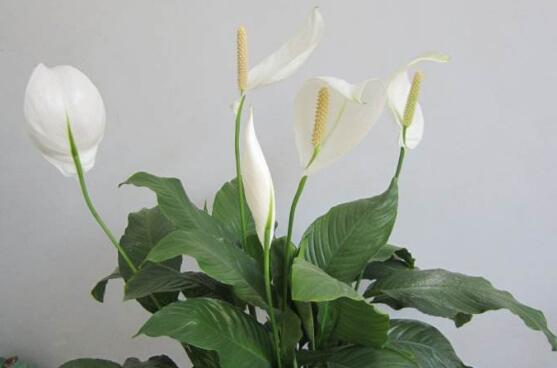
Because it is grown indoors, without the favorable conditions of nature, if you want to grow a peace lily well, you have to create the conditions yourself. Soil, watering, light and so on are all essential; besides these, temperature and fertilizing also need attention. More specifically, these are covered in the growing methods and precautions for the peace lily, so let's continue reading.
II. Growing methods and precautions for the peace lily
1. Choosing a pot
Although the requirements for the pot are not high, when growing a peace lily, it is best to choose a pot with a diameter of 18—34 cm. Pot material requirements: you can use clay pots, plastic pots, porcelain pots, or ceramic pots for cultivation.
2. Soil
The peace lily likes soil rich in humus that is loose and well-draining. When choosing soil, gardeners can use this formula: garden soil : leaf mold : sand = 4:4:2, or peat soil : leaf mold : sand : perlite = 4:3:2:1.
Precautions: Potted peace lilies require loose soil with good drainage and aeration; heavy clay soil must not be used. Generally, leaf mold and peat soil mixed with a small amount of perlite can be made into a growing medium. The prepared medium should have an EC value of around 0.7 mS/cm and a pH of around 5.5.
3. Light
In the growing methods for the peace lily, light is essential. It is understood that the peace lily is fairly shade-tolerant; as long as there is about 60% scattered light, its growth needs can be met, so it can be kept year-round indoors in a spot with bright scattered light.
Precautions: During the peace lily's growing period, direct sunlight should be avoided; it can be placed in a shaded spot or under a shade canopy for care. After direct sunlight, the leaves tend to wrinkle and scorch. In winter, it is best to appropriately increase light to meet the needs of photosynthesis.
4. Watering
The peace lily likes moist soil and is averse to drought and waterlogging. During the growing season, the potting soil should be kept moist; while watering, it should also be misted several times around the plant to increase air humidity. When winter temperatures are low, the potting soil can be allowed to dry out somewhat.
Precautions: The peace lily likes a humid environment, and the medium must always be kept moist. Do not wait until the medium is completely dry before watering, as this increases the chance of root disease and is not conducive to growth.
5. Temperature
The peace lily is a heat-loving species, with an optimal growing temperature of 20-30°C. When summer temperatures exceed 30°C, spraying water is needed to cool it down; in winter, the growing temperature should be kept above 15°C. Prolonged low temperatures or cold drafts will cause the leaves to lose their green color, turn yellow and scorch.
Precautions: (1) When spraying water to cool the plant in summer, never pour water into the leaf center, otherwise it will cause rot; (2) The maximum should not exceed 24°C; if daytime temperatures are higher, as compensation, nighttime temperatures can be appropriately lowered.
6. Fertilizing
The peace lily likes fertilizer and is tolerant of it. When fertilizer is lacking, new leaves grow slowly; if no new leaves emerge for a long time and the old leaves age, it loses its ornamental value. So during the growing season for young plants, gardeners need to apply decomposed 10-fold liquid fertilizer once every 15 days, or 1000-fold "Huaduoduo" general-purpose fertilizer twice. Mature plants should be given a compound fertilizer once every 30 days.
Precautions: (1) The peace lily grows quickly when fertilizer is sufficient and will soon grow from a small plant into a larger one. Indoor display space is relatively small, so at this point water and fertilizer should not be too abundant; (2) When applying decomposed liquid fertilizer, do not splash the fertilizer solution onto the leaves, otherwise the leaves can be burned; rinse them clean with water promptly.
II. Precautions for growing the peace lily
Although there are already quite a few precautions in the growing methods above, if you want to grow a peace lily well, there are still many things gardeners need to pay attention to. Overall, there are 3 more precautions for growing the peace lily as follows:
1. Repotting
Repot once every 1-2 years, and repotting should be done in spring. When repotting, place an appropriate amount of cake fertilizer at the bottom of the pot as a base fertilizer. The peace lily has fleshy roots and a fairly developed root system, so the potting soil should be a culture soil mixed from 5 parts leaf mold, 3 parts sandy soil, 2 parts sawdust and an appropriate amount of organic fertilizer. When planting, use 1 plant per pot.
2. Potting soil must not be too wet
Keep the potting soil moist frequently, but not overly wet. If the potting soil is too wet, it affects root development and can even cause root rot. In winter, water less; water again when the surface of the potting soil turns pale, and it is best to use lukewarm water. Besides meeting the potting soil's water requirements, you should also frequently mist the leaves to raise air humidity.
3. Appropriate amount of topdressing
The peace lily grows fast and has a large growth volume, requiring sufficient fertilizer, but fertilizing must be done in appropriate amounts. Summer's high temperature and high humidity suit the peace lily's growth and are its vigorous growing period, so topdress once every 7-10 days. When winter temperatures exceed 20°C, apply a small amount of nitrogen fertilizer and an appropriate amount of phosphorus and potassium fertilizer to build up the root system. When winter temperatures are below 20°C, topdressing should be stopped.
How to grow a potted peace lily? Growing methods and precautions for the peace lily
[Common questions]How to grow a potted peace lily?
[Expert answer]The peace lily is a perennial herbaceous plant of the genus Spathiphyllum in the family Araceae. Its leaves are emerald green and dripping with color, and its flowers bloom pure white and elegant. It also carries the beautiful meaning of smooth sailing and everything going your way, so it is deeply loved and very suitable for potted display to accent a home environment. So how should a potted peace lily be grown? The growing methods and precautions for the peace lily are introduced below.
Image: peace lily
I. Growing methods for the peace lily
1. Soil:Potted peace lilies require soil that is loose with good drainage and aeration; heavy clay soil must not be used. Fertile loam rich in humus is best. Generally, leaf mold and peat soil mixed with a small amount of perlite can be made into a growing medium, and a small amount of organic fertilizer can be added as a base fertilizer when planting.
2. Light:The peace lily is fairly shade-tolerant, so it is suited to growing in a semi-shaded environment; direct sunlight must be avoided. About 60% scattered light can meet the peace lily's growth needs, so it can be kept year-round indoors in a spot with bright scattered light. If it is placed under strong light, the leaves will turn yellow and may even be directly sunburned.
3. Temperature:The peace lily likes high temperatures and is especially afraid of cold. Its most suitable growing temperature is 20-28°C. Once winter comes, it must be brought indoors. The lowest temperature it can withstand is 10 degrees, so attention is needed in winter. Relatively speaking, growing conditions in the north are too poor; if kept at low temperatures for a long time, it will cause root rot, leaf drop or scorched yellowing, and in severe cases even death.
4. Watering:The peace lily has a relatively high demand for water and must frequently be kept with moist potting soil, but overwatering must also be avoided. Once overwatered, a large amount of water accumulates in the pot, which easily causes root rot and the plant to wither and yellow. Also note that in summer and during droughts, you should frequently spray water on the leaves and the ground to raise air humidity, which is conducive to its growth.
5. Fertilizing:When fertilizing a peace lily, do not apply concentrated fertilizer or raw fertilizer, and after applying solid fertilizer, water once with clear water. It is best to use dilute fertilizer water instead of clear water for watering; this generally will not cause fertilizer burn, and the peace lily will grow very lushly.
6. Pests and diseases:During its growing period, the peace lily is most favored by pests. Regularly spray miticides specific to mites for prevention and control, such as dicofol, hexythiazox, pyridaben, etc. Common bacterial leaf spot, brown spot and anthracnose harm the leaves and can be sprayed with a 500-fold solution of 50% carbendazim wettable powder.
7. Repotting:The peace lily has strong tillering ability. Repot once every 1-2 years. When repotting, take care to trim the roots and cut off withered leaves. Divide overly dense plants and pot them separately. Remove some old roots and overly long roots, pick out the old soil, and replace it with fresh culture soil to encourage the peace lily to bloom.
Image: peace lily
II. Precautions for growing the peace lily
1. Repot once every 1-2 years, and repotting should be done in spring. When repotting, place an appropriate amount of cake fertilizer at the bottom of the pot as a base fertilizer. The peace lily has fleshy roots and a fairly developed root system, so the potting soil should be a culture soil mixed from 5 parts leaf mold, 3 parts sandy soil, 2 parts sawdust and an appropriate amount of organic fertilizer. When planting, use 1 plant per pot.
2. Keep the potting soil moist frequently, but not overly wet. If the potting soil is too wet, it affects root development and can even cause root rot. In winter, water less; water again when the surface of the potting soil turns pale, and it is best to use lukewarm water. Besides meeting the potting soil's water requirements, you should also frequently mist the leaves to raise air humidity.
3. The peace lily grows fast and has a large growth volume, requiring sufficient fertilizer, but fertilizing must be done in appropriate amounts. Summer's high temperature and high humidity suit the peace lily's growth and are its vigorous growing period. During this period, topdress with 0.1%-0.3% urea water combined with watering, once every 7-10 days, and at the same time spray 0.2% monopotassium phosphate to encourage broad, bright leaves. Alternatively, every 7-10 days, topdress with a mixture of 0.2% urea fertilizer water and 0.2% monopotassium phosphate fertilizer water. When winter temperatures exceed 20°C, apply a small amount of nitrogen fertilizer and an appropriate amount of phosphorus and potassium fertilizer to build up the root system. You can topdress with a mixture of 0.1% urea water and 0.1% monopotassium phosphate fertilizer water, once every 15-20 days. When winter temperatures are below 20°C, topdressing should be stopped. Do not fertilize a peace lily too much; when overfertilized, the leaves turn yellow and wrinkle, and in severe cases it causes root rot and even death.
4. The suitable growing temperature for the peace lily is 20-30°C. When summer temperatures exceed 30°C, spraying water is needed to cool it down, but never pour water into the leaf center, otherwise it will cause rot; in winter, the growing temperature should be kept above 15°C. Prolonged low temperatures or cold drafts will cause the leaves to lose their green color, turn yellow and scorch.
5. During the peace lily's growing period, direct sunlight should be avoided; it can be placed in a shaded spot or under a shade canopy for care. After direct sunlight, the leaves tend to wrinkle and scorch. In winter, it is best to appropriately increase light to meet the needs of photosynthesis.
Image: peace lily
[Editor's conclusion]The peace lily likes a hot and humid environment, and special attention is needed during care. The growing methods and precautions for the peace lily were introduced above, and I hope they can be helpful to everyone!
How to grow a peace lily: growing methods and precautions for the peace lily
The peace lily itself carries an auspicious meaning, and because it is easy to grow, it is often kept in households. How do you grow a peace lily? Let's take a look below at the growing methods and precautions for the peace lily.
Growing methods for the peace lily:
1. Light
The peace lily is fairly shade-tolerant, so it is suited to growing in a semi-shaded environment; direct sunlight must be avoided. According to experiments, about 60% scattered light can meet the peace lily's growth needs, so it can be kept year-round indoors in a spot with bright scattered light. If it is placed under strong light, the leaves will turn yellow and may even be directly sunburned. In northern winter greenhouse cultivation, no shading or little shading is needed; if the light is too dim for a long time, the peace lily will not easily bloom.
2. Temperature
The peace lily likes high temperatures and is especially afraid of cold. Its most suitable growing temperature is 20-28°C. Once winter comes, it must be brought indoors. The lowest temperature it can withstand is 10 degrees, so attention is needed in winter. Relatively speaking, growing conditions in the north are too poor; if the peace lily is kept at low temperatures for a long time, it will cause root rot, leaf drop or scorched yellowing, and in severe cases even death.
3. Soil
Soil is the foundation of growing. Potted peace lilies require soil that is loose with good drainage and aeration; heavy clay soil must not be used. Generally, leaf mold and peat soil mixed with a small amount of perlite can be made into a growing medium, and a small amount of organic fertilizer can be added as a base fertilizer when planting.
4. Watering
The peace lily has a relatively high demand for water and must frequently be kept with moist potting soil. But it must not be waterlogged; once overwatered, a large amount of water accumulates in the pot, which easily causes root rot and the plant to wither and yellow. In summer and during droughts, frequently spray water on the leaves and the ground to raise air humidity, which is conducive to its growth. In winter, watering should be controlled, with the potting soil slightly moist as appropriate
5. Fertilizing
Because the peace lily grows quickly and has a relatively large fertilizer requirement, liquid fertilizer must be applied once every 1-2 weeks during the growing season. Fertilizing should be done with dilute fertilizer; do not apply concentrated fertilizer or raw fertilizer, and after applying solid fertilizer, water once with clear water. It is best to use dilute fertilizer water instead of clear water for watering; this generally will not cause fertilizer burn, and the plant will grow lushly.
6. Diseases and pests
This is a common problem for homegrown plants, and it can be avoided as long as care is proper. If harmful mites cause damage, the leaves show adverse symptoms such as wilting, faded luster and yellow withering. Miticides specific to mites can be sprayed for prevention and control, such as dicofol, hexythiazox, pyridaben, etc.
Precautions for growing the peace lily:
1. The peace lily needs relatively high growing humidity; if the air is too dry, it will cause the leaves to wilt.
2. Master the appropriate light level. Generally speaking, growing a peace lily requires at least 73% shading; in summer, 80% shading is better. If the light level is too low, the peace lily's leaf color will fade and its growth will be stunted.
3. The peace lily is easy to grow, but its demand for magnesium is much higher than that of many other foliage plants. When magnesium supply is insufficient, the edges of the peace lily's old leaves will turn withered and yellow.
4. Controlling root rot is very important; if the plant is infected with root rot, its root system will turn black and cause the old leaves to wither and die off, and in severe cases it will cause the plant to die.
5. Spraying gibberellic acid artificially induces the plant to bloom, and different varieties bloom at different times. Note that too high a concentration of gibberellic acid will cause the plant's flowers to become deformed.
6. Choose a container of appropriate size according to the variety.
More information