How to grow Chinese roses? Growing methods and precautions: water more and give more sunlight
Speaking of Chinese roses, I believe everyone is familiar with them. Chinese roses are as gorgeously beautiful as roses and are deeply loved by people. Nowadays many plants can be grown at home, and of course Chinese roses are no exception. Many people want to grow Chinese roses but do not know how to grow them. Below, the editor will give you a detailed introduction to the growing methods and precautions for Chinese roses.
1. How to grow Chinese roses: give plenty of sunlight and water more
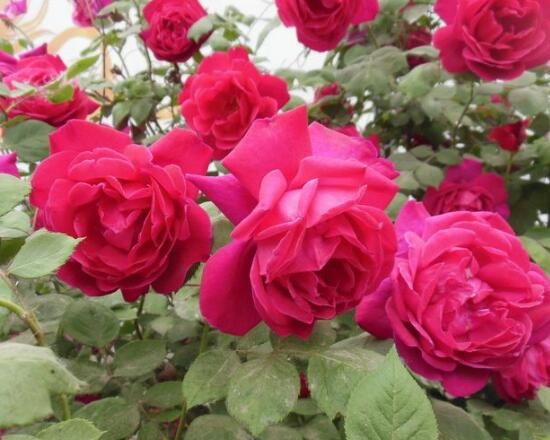
Chinese roses are very beautiful, but if you want to grow them well you must understand how to grow them. Chinese roses are plants that greatly love sunlight and strongly dislike shady environments. When you first grow Chinese roses, do not water them frantically, otherwise the roots may easily rot. Once they enter the flowering period, they need to be watered every day. Below, follow the editor to take a look at the growing methods and precautions for Chinese roses.
1. Soil
Chinese roses like fertile, moist soil and fear drought and waterlogging. You must choose a sandy loam soil that is loose in texture, rich in organic matter, good in drainage and aeration, and also has water- and fertilizer-retaining capacity. For newly rooted Chinese rose seedlings from cuttings, use a small 15 cm flower pot; for 1-2 year old seedlings, use an 18-20 cm pot; afterward, gradually change to larger pots as the plant grows.
2. Light requirements
Chinese roses are sun-loving plants and like ample sunlight. Daily sunlight must not be less than 5-6 hours, otherwise the branches and leaves become weak, grow leggy, bloom poorly, and the flower color is not vivid. Generally they are suitable to be placed in a spot with sufficient light, but if placed on the concrete ground of a high-rise, attention should be paid to appropriate shading and sun protection at noon in summer.
3. Watering method
If you want to know how to grow Chinese roses, you must first understand the watering method for Chinese roses. Chinese roses should be watered so that the soil is neither too dry nor too wet. In March, when new branches and leaves grow, water once every 2 days, in the morning. In April, when flower buds form, water once a day. After entering the flowering period in May, if the potting soil is too dry or too wet, it will generally cause flower drop. Generally, water once around 8 a.m., and around 4 p.m. supplement with an appropriate amount of water as needed. Grasp the principle of "do not water if not dry; when watering, water thoroughly." In summer, the leaf surface needs to be sprayed with water frequently to lower the temperature.
4. Temperature requirements
Potted Chinese roses placed indoors can safely overwinter, and in high-temperature seasons attention should be paid to cooling. The most suitable temperature for Chinese roses is 18-20°C, so flowers blooming in April-May and September-October are large, have many petals, vivid color and strong fragrance. When the temperature reaches above 25°C, growth speed accelerates, but the flowers do not last long. In high temperatures above 30°C and humid climates, not only are the flowers small, with few petals, pale color and weak fragrance, but various pests and diseases are also prone to occur. Below 5°C, growth stops and the plant enters a dormant state.
5. Fertilization
Grasp the principle of "light fertilizer applied frequently," and avoid applying raw fertilizer or concentrated fertilizer. In winter, apply a small amount of organic fertilizer at the roots to enhance cold resistance for overwintering. In early March before sprouting, you can apply relatively high-concentration liquid fertilizer such as decomposed human manure, soybean cake, chicken and duck manure, or fish innards. When the buds are about to open, apply one additional application of light liquid fertilizer. In summer after the flowers fade and before the axillary buds develop, apply one application of medium-concentration decomposed liquid fertilizer to promote abundant flowering in autumn. The above is an analysis of how to grow Chinese roses and the growing methods for Chinese roses. Below let us look at the precautions for Chinese roses.
2. Precautions for growing Chinese roses
1. Generally, when new shoots grow to 15-20 cm, cut off about 3 cm from the top to promote the sprouting of side buds. When the side branches grow to a certain length, continue pinching them back until the required number of branches is reached.
2. Chinese roses have strong cold resistance and can withstand low temperatures of -10°C. Generally speaking, in the south they do not need to be moved indoors for overwintering; it is only required to place them under a south-facing eaves. After flowering in October, do not prune, so as not to cause new buds to sprout. Stop applying nitrogen fertilizer and instead apply phosphorus and potassium fertilizer to make the branches robust and full, enhancing cold resistance. Do not water when frozen, to prevent death from dry freezing.
3. Potting Chinese roses should be carried out in early spring before sprouting. Use decomposed sesame paste residue and horse hoof slices as base fertilizer, place the young seedling with its soil ball in the center of the pot, add soil around it until 2-3 cm from the rim of the pot, press the soil firm, water thoroughly, place in a cool place, and after one week move it to a spot with sufficient sunlight.
4. Potted Chinese roses dry out very easily in the pot, and nutrients are easily lost, so during the growth period they should be watered and fertilized in a timely manner. In spring, water thoroughly once every 2-3 days; afterward, as the temperature rises, change to watering once a day; in hot summer, an appropriate additional watering should be given once a day. Of course, do not let water accumulate in the pot. After heavy rain, attention should be paid to drainage; otherwise, long-term water accumulation will cause root rot.
Chinese roses are actually a very easy potted plant to grow. Through the answers above, do you now know how to grow Chinese roses? The above are the growing methods and precautions for Chinese roses. I hope they can help you.
Growing methods and precautions for Chinese roses
Many beginners growing Chinese roses are looking up the growing methods and precautions for Chinese roses, hoping to find a way to grow them in this article. Although this article cannot be called a perfect article suitable for beginner flower lovers, it includes the selection of Chinese rose varieties, key points of daily care, and prevention of pests and diseases, and is very worth reading for flower lovers.
1. Variety selection
First, you have to choose the variety you want. There is no such thing as a good or bad variety, only a Chinese rose that suits you. Every Chinese rose, when bred, always has its advantages and always has a reason to exist. Do not blindly follow trends, do not be a picture-only fan, and choose the variety you need most and that suits you best according to your growing environment. Do not replace it with another new variety before this one has even grown into effect. In the end, none of them look good, and new varieties are updated too quickly. Some varieties need to reach maturity to have an astonishing flowering effect. Perhaps you are not satisfied with it as a young seedling, but once it takes shape it will surprise you immensely. Note: do not blindly pursue new varieties.
Balcony growers: choose those varieties with a large flower quantity, multiple-season blooming, and not too large a plant crown. Be sure to check the information first, otherwise before you even see flowers it turns into a tree. In fact, the flowering performance in many materials translated from foreign languages is very inaccurate, since the climate is different; you should refer to what others have actually grown. You can choose some small-crown Austin roses, floribunda roses, miniature roses, etc. It is not that only miniature roses can be grown on a balcony; some small-crown ones are also fine, such as Misaki, Austin's Juliet, Miranda, etc., which are quite suitable.
Terrace: similar to a balcony, but you can choose some shrub types, and you can make flower stands or flower pillars to grow small climbers, and you can also grow a few HT ones, but classical rose types and grandiflora roses are not recommended.
Courtyard: choose your varieties according to the actual situation in the yard. If there is a wall, make a climbing one; if there is a flower stand, make a small climber; if there is an arch, make a climber. If the wall is large, mix once-blooming and repeat-blooming types. Some once-blooming old roses are really beautiful and can always give you a big surprise, and they are easy to grow and easy to care for. Combine them according to the colors you like. In open areas, plant a few grandifloras; a cluster is very beautiful. Along the edges, you can plant some HT types densely. Beside rockeries and in corners, you can plant a few old roses; their fragrance is strong, flower quantity is large, and they are very spectacular. To make a true rose garden, these old roses are indispensable. Although they bloom once, when they bloom they are very spectacular and surprising enough for a whole year.
Specific application recommendations:
Arch: when most people mention an arch, they think of climbing Chinese roses. In fact, climbers are not very suitable. Climbers grow very tall and grow without limit, even crushing the arch; mine did. Moreover, the lower part of climbers does not easily bloom, and many climbers do not flower well, and few are fragrant. Therefore the most recommended are small climbers like Austin's, such as Mortimer Sackler, Windermere, Princess Margaret, Claire Austin, Tess of the d'Urbervilles, Gertrude Jekyll, Teasing Georgia, etc.
Wall: divided into general fence type and high wall. For fence height, same as the arch. For a high wall, choose climbers. If the wall is long, you can match several colors together, and combine repeat-blooming with once-blooming.
Pergola: if it is just around a pillar, same as the arch. If it needs to cover the entire corridor frame, you can choose large climbers; Eden Rose, Alchymist and the like are very suitable.
Flower bed: just choose low-growing varieties. For varieties, the ones I mentioned above for the balcony are fine. Generally flower beds are always together with fences and walls; for the flower bed plant these low-growing ones, and then above them choose large shrubs.
Potted: choose some varieties with vigorous growth and lateral spreading. Austin's small shrub types, floribunda roses, and miniature roses are all fine.
Variety enthusiasts: then it is hard to say, haha. Everyone has different preferences, so choose for yourself!
Collectors: collect every variety, as long as you have land, haha.
2. Purchasing and handling plants
Domestic production started late, and the level still cannot reach that of foreign countries. Most European roses are generally only about half-year-old small seedlings. Those large grafted seedlings still need some time, but this is the trend and is inevitable. Note that I mean own-root grafted ones, like the imported bare-root ginseng roots everyone sees. Grafting onto cut rose stems does not belong to this category. This type ages quickly, and when the rootstock sprouts, you will have plenty of trouble.
I want to emphasize first what kind of seedling is a strong seedling. It is not that a tall seedling is strong, so I do not like it when people ask me how tall your seedling is. A vigorous root system and fresh leaves are more important than anything. If the root system is good, after receiving it there is no need to acclimatize it; it grows directly and grows much faster than a slightly larger bare-root seedling. If the root system is poor, then during the period when new roots are re-growing, if it cannot hold on, it dies. Leaves are also very important. Part of the root water absorption relies on root hairs, which provide the driving force for water uptake based on concentration differences. This is the principle behind concentrated fertilizer burning roots: when fertilizer is concentrated, the external concentration is high, and water from inside the roots is drawn out. Another part relies on leaves; leaf evaporation provides the driving force for roots to absorb water. If there are no leaves and the roots are also poor, water cannot be absorbed and the plant dies of dryness; watering more is useless. This is the principle behind many plants bought in autumn with few leaves that die. Also, in summer you absolutely must not prune until only stems remain. Many growers, upon seeing disease, cut off all the leaves and in the end even cut the seedling to death. So I hope flower lovers will not ask me again how tall the seedling is; it is really hard to answer. It is not that tall is good. If you want it tall, without pruning it can quickly grow one meter, but that is unnecessary; you need to look at the overall condition. It is good if the seedling is healthy; being small is not a problem.
Regarding acclimatizing after receiving it: if the root system is very good as described above, with many white new roots, then no acclimatization is needed. In spring or autumn you can directly plant it in the ground or repot it and then place it in the sun. In summer, plant it in the evening and then water thoroughly. If the sun is not especially strong, it can get sun the next day. If it is really large, just leave it in a cool place for a few days. Pay attention to ventilation and indirect light. Note: absolutely, absolutely do not acclimatize it indoors, leave it for a week, and then put it in the sun; it will certainly die. If the soil ball is very hard and no new roots can be seen outside, you can peel off a layer of soil so the roots contact the new medium, which helps rooting. If you use a peat-type medium, this is unnecessary; just plant directly, and do not worry about nematode problems.
3. Medium
Although Chinese roses do not have high requirements for the medium and basically can grow well in almost anything, a good medium can make it easier to grow good seedlings and reduce maintenance input. The most reasonable ratio for potted medium is solid, air, and water at 30%, 35%, and 35% respectively. Although it is impossible to strictly follow this, you can choose and mix various media according to this. For soil, the ratio of solid, air, and water is 50%, 25%, and 25% respectively. There is a lot to say about media; if elaborated, it could fill a book, and there are many kinds of mixtures. Roughly, just mix according to the materials you have around you; loose and breathable is fine. Common formulas include: garden soil: coarse sand = 6:4, peat: perlite = 6:4, peat: pine bark = 6:4. It is not very strict; you can do it your own way. If you mix in some organic fertilizer, even better. Organic fertilizer can be slowly decomposed by microorganisms to release nutrients, strengthen the granular structure of the soil, make the soil loose, and give good aeration and drainage, so it will not become very compacted. It is recommended to add some organic fertilizer to pots that contain garden soil. There is also a misunderstanding to understand: base fertilizer is not fertilizer placed at the bottom of the pot, because then the fertilizer easily flows away with water. It can be mixed into the soil or applied in a ring in the surface soil around the roots; roots have a tendency to grow toward fertilizer. There is also a common fact many people do not believe: potted plants grow better than those planted in the ground. You do not believe it, huh, hehe.
4. Pot selection
Generally, half-year-old seedlings can be transplanted into pots about 16 cm in diameter. Do not change to a very large one all at once just for convenience; if moisture is hard to control, the roots will rot. Then after growing for another half year or so, change to a larger pot, each time increasing the pot size by 10 cm.
5. Planting
When planting, support the surface of the pot with your palm, then turn it upside down, and directly remove the nursery pot. Then turn it upright and place it into the pot or planting hole. Absolutely do not pull it directly. Be careful to try not to break up the soil ball, as that will damage the root system. A slight squeeze can break many root hairs because they are too fine. You know the importance of root hairs, right? After planting, water thoroughly in time. Even if it rains, be sure to water again. Watering allows the root hairs to cling to the medium and directly absorb water; otherwise water absorption will be affected. There is another point: in winter, some flower lovers worry that after watering it will freeze, but in fact having moisture there also provides a buffering effect; without water, the root system is more likely to freeze. So remember absolutely to water in time after planting, and do not delay until the next day. If you do not water, what will its root system do that night?
Many flower lovers report that after planting, the leaves turn yellow and then fall off. In fact, this is caused by water shortage at some stage. After water shortage, in order to reduce water evaporation, the plant produces abscisic acid and the leaves drop, thinking it is entering dormancy. Although this will not necessarily cause death, it will affect growth. Many bare-root seedlings are also like this.
6. Fertilization
First understand what plants need. What they need most is nitrogen, phosphorus, and potassium, plus trace elements. So as long as these are supplemented, it is enough for the plant. Organic fertilizer also utilizes these, only releasing them more slowly, ensuring long-term nutrient supply for the plant, and also promoting looseness and so on. Chicken manure and bone meal are the main sources of phosphorus fertilizer, but the fertilizer effect is very slow. Phosphorus promotes flowering, so it is very beneficial for Chinese roses. Plant ash is the main source of potassium fertilizer, promoting robust branches. Soybean cake contains a large amount of nitrogen fertilizer and phosphorus fertilizer.
So these chemical fertilizers can all satisfy the needs. Chinese roses are not for eating; a little chemical fertilizer is no problem. The simplest and most convenient is to use controlled-release fertilizer. Controlled-release fertilizer is formulated according to the plant's needs and is used once a year, very convenient. The release speed of controlled-release fertilizer varies according to the amount of moisture and the temperature, so there is no need to worry about winter and such. If there is no controlled-release fertilizer, ordinarily you can spray foliar fertilizer or water it in. Dilute water-soluble fertilizer basically at 1:1000, once a week, to keep the plant healthy and very robust. However, different seedling stages use different ratios of nitrogen, phosphorus, and potassium. For small seedlings and in autumn, use a bit more with high potassium content; when flowering, use one with high phosphorus content; to grow leaves, use a bit more nitrogen. But for simplicity, using a general-purpose one is usually fine.
I personally also want to emphasize one point. Many sayings circulate that you should not fertilize when growing small seedlings, but this is under the premise that the bare root or medium contains a small amount of fertilizer, such as having added organic fertilizer. If you use new nutrient soil with no fertilizer added and the root system is also very good, then you definitely still need to fertilize. It is best to apply light fertilizer frequently; otherwise the roots, branches, and leaves have no nutrients and cannot grow all at once.
There is also a misunderstanding that you cannot fertilize in summer. Summer is when plants grow fastest in the whole year. At this time, if you feed them fully, how can they grow fast? So it may cause dormancy and such. Many times the small flowers in summer are also because of this. In summer, the best approach is light fertilizer applied frequently, plenty of water and fertilizer, fast growth, and the flowers will still be very large.
7. Pruning
There is a lot to say about pruning; I will supplement it properly later. I will discuss it a little. In fact, just look at a diagram and you will understand.
Just follow this approach, and you will definitely be able to grow a very full ball shape. Many people always say this one easily turns into a tree and that one easily turns into a tree. In fact, it turning into a tree is because you spoil it. If you prune like this from the beginning, it will not become a tree. With just these few branches still tied straight, how can it be encouraged to send up basal shoots? It will only keep growing upward.
However, I want to emphasize a few points about major winter pruning. First, each type of Chinese rose is pruned differently. Old roses have old rose pruning methods, HT has HT pruning methods, miniature roses have miniature rose methods, and climbers have climber methods. Roughly remember: old roses can be pruned higher, leaving more branches; modern roses can retain three to five large branches per plant, cutting to about 30 to 45. Small seedlings bought only half a year ago do not need pruning in winter; leave them to accumulate nutrients. With more leaves, they grow faster, and the root system is also better. Branches, leaves, and roots are in direct proportion. In this way, basal shoots are easily produced in spring, and in winter they basically will not lose leaves. Wait until the basal shoots emerge before pruning.
8. How to promote basal shoot growth
If you want to produce a thick and strong basal shoot, you can do two things. First, nutrition must keep up; the seedling must be very robust and fertility sufficient. Second, break apical dominance; you can press the branches sideways or pull them horizontal. Although pruning can also destroy apical dominance, pruning affects the plant's nutrient absorption, so try to retain as many leaves as possible. In this way, a very strong basal shoot will surely emerge. Then if the original branches are very thin and weak, you can cut them. Also note one point: do not do it too late, otherwise when the shoots emerge they may freeze in winter, which is not good.
9. Pests and diseases
For pests, generally once you see a little you should apply pesticide. The main ones are red spider mites and caterpillars.
Red spider mite: everyone should recognize it. Once seen, apply pesticide immediately. If there are not many seedlings, and you can pinch them off by hand, then pinch them off. If not, wash them with water. Take a spray bottle and spray them every day; after three days they will be washed away. But you must spray the backs of the leaves. If there are many Chinese roses and many pests, then you can only apply pesticide. Generally you can use abamectin-diafenthiuron, which is the most commonly used. If this does not work, you can switch to a new pesticide. It may be a bit expensive, but the effect is very good.
For caterpillars: if there are not many, pinch them off. If there are many, it is recommended to use biological pesticides, Bacillus type. The efficacy lasts one month and is non-toxic to people. This is the best.
Aphids: generally, using a little imidacloprid can take care of them.
Diseases: mainly black spot and powdery mildew. This relies mainly on prevention. Basically, at home spray alternately once every one week to half a month, and after each rain, spray once more as a supplement.
Black spot: black spots appear on the leaves, and the surrounding area turns yellow. In severe cases, the leaves of the entire seedling turn yellow and fall off, with a great impact.
Powdery mildew: white powder appears on the leaves, and then the leaves curl. This occurs very readily in both spring and autumn. Generally it relies on usual prevention. Once it appears, it is also very troublesome. It is mainly on young leaves. Once present, cutting them off directly is the most convenient. However, there are several pesticides that are quite effective. After spraying, the powdery mildew dies in three days.
Powdery mildew: after spraying fungicide, the powdery mildew was killed.
10. Common problems
Black stem: mainly caused by weak seedlings and poor root systems. This is the plant's own problem, and medication has little effect. It is recommended to increase ventilation and keep the medium on the dry side.
Yellow leaves: one is that the old lower leaves turn yellow just after receipt. This is premature aging caused by mailing and is not a big problem. Roots and leaves are in direct proportion; if the root system is slightly damaged, leaves need to be reduced to balance it.
Another: normally yellow leaves are mainly caused by inadvertent drying. Perhaps you watered thoroughly in the morning, but at noon there is still water shortage and wilting. Although it recovers by evening and you think it is fine, damage has already occurred. After water shortage, it needs dormancy to reduce loss, and the most direct manifestation is leaf drop. Or it directly wilts from dryness. After this, do not immediately water thoroughly; first spray a little water, water slightly, and after it recovers, then water. Do not follow severe dryness with immediate heavy watering, or the roots will certainly rot.
Tips for growing Chinese roses: new methods for growing Chinese roses
Chinese rose is a plant in the Rosaceae family, blooming in all four seasons, and has the reputation of being the queen of flowers. It can also be called "monthly red." It likes sunny, ventilated environments, and must receive at least 5-6 hours of direct sunlight per day to grow well. The growing conditions for Chinese roses are by no means harsh, but there are also many limiting conditions. Tips for growing Chinese roses and new methods for growing Chinese roses bring you both traditional and brand-new growing methods for Chinese roses.
Tips for growing Chinese roses
Chinese rose can be considered a plant with strong adaptability and strong cold resistance. It is not very strict about the growing soil; slightly acidic soil is best, and good drainage conditions are also needed. The traditional growing methods for Chinese roses use two methods: growing-season cuttings and winter cuttings.
First, plant the seedbed in a sunny, dry, and ventilated place. If using the growing-season cutting method, it needs to be in the first half of the year in April-May, and in the second half of the year in September-October, this neither-cold-nor-hot, most suitable climate for cuttings. Cuttings are best taken in the morning when there is dew, choosing branches from the current year that are robust and full, free of pests and diseases, with basal scales yellow but not yet fallen; length 8-14 cm, and short branches that have not flowered or have flowered are suitable. Second, after the cuttings are prepared, insert them immediately into the pot, with depth 1/3 of the cutting; too deep or too shallow is not good. At this stage, the pot should be placed in a cool place, not exposed to direct sunlight, and in dry weather use a sprayer to moisten the leaf surface several times. Finally, after about 30 days, when new leaves are found to have grown larger and turned green, they can be potted.
New methods for growing Chinese roses
In addition to the two methods above, cuttings and winter cuttings, there is also a growing method called water cutting. This new method for growing Chinese roses makes the survival rate of Chinese roses very high.
After Chinese roses fade, cut off the residual flowers and let the flowering branch grow for several days. Wait until the first axillary bud on the flowering branch grows thicker and stronger and accumulates nutrients, then cut a 3-node cutting, remove the basal leaf stalk, use a sharp blade to cut the back of the basal bud into a slanted surface, and immediately insert it into a prepared bottle full of clean water. The cutting can be inserted 1/3 into the water. To reduce leaf water evaporation, some leaves can be cut off. In a dark environment, the cut is likely to grow new roots, so a brown bottle should be used. If there is no brown one, wrap the bottle with a layer of black plastic film. Place the inserted bottle on a south-facing windowsill, and do not expose it to direct sunlight. When the temperature is relatively high, change the water once a week. At a temperature of 15-25°C, roots can grow in only about 20 days. When the young roots grow to 1-2 cm long, they can be transplanted into a pot.
Compared with traditional methods, this new method of growing Chinese roses is simpler, has a higher survival rate, and is not restricted by time; as long as the flowers have faded, cuttings can be taken. However, note one point: during transplanting, because the young roots grew in water, to help them adapt to the environment, water once a day at the beginning of transplanting, then gradually reduce. After shading for one week, they can see sunlight in the morning and evening, and they will survive.
The above content is about the growing methods and tips for Chinese roses. For beginners currently growing Chinese roses, these methods and tips are still very helpful. Tips for growing Chinese roses and new methods for growing Chinese roses summarize traditional and new growing methods and tips for Chinese roses. I hope they are helpful to you.