What to do when rose leaves turn yellow? Pay attention to 5 points, light is key
As an excellent choice for indoor growing, the rose is a favorite of many beginners, because it is not only easy to grow but also very beautiful. However, during the growing process, due to improper care and other issues, symptoms of yellowing leaves can appear. So what should you do when rose leaves turn yellow? First of all, you need to stay calm, then carefully find the cause of the yellowing leaves, and finally solve it accordingly.
1. What to do when rose leaves turn yellow: find the cause
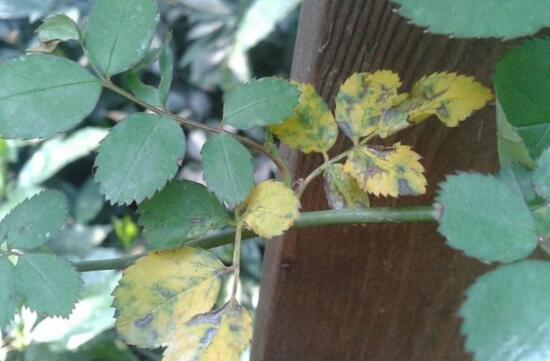
In the methods for growing roses, we learned that roses have requirements for soil, light, watering and so on, and once these are not met, yellowing leaves will show up. As for what to do when rose leaves turn yellow, first of all, roses have extremely strong vitality, so we should not panic; we should calmly find the cause and then solve it. Below are the causes and solutions for rose leaves turning yellow compiled by the editor. Be sure to take a look~
2. Causes and solutions for rose leaves turning yellow
1. Not repotting for a long time
Once rose leaves turn yellow, everyone will surely think of various causes, but the first thing we should consider is actually the potting soil. Because if a purchased rose is not repotted or given new soil for a long time, its branches and leaves will grow thin and weak, the leaves will become thinner and then turn yellow.
Solution: Very simple, just repot and change the soil. Roses do not have strict requirements for soil; gardeners can simply replace it with new loose, fertile potting soil.
2. Too much or too little watering
The young leaves at the top of the rose turn pale yellow, the old leaves also gradually turn yellow, and the new shoots wither. This is because too much watering causes the pot to be overly wet, the soil to lack oxygen, and the fibrous roots to rot, after which the leaves turn yellow. The color of the top leaves of the rose is normal, but the lower leaves gradually dry, turn yellow and fall off from the bottom upward. This is generally because the pot soil is too full, and for a long time water cannot penetrate thoroughly, causing the lower leaves and branches to age.
Solution: ① Too much watering: take the rose out of the pot, place it in a ventilated and shady spot to let the soil ball dry naturally, then put it back in the pot, or frequently loosen the soil and control watering; ② Too little watering: water appropriately and just keep the soil moist.
Note: Roses like moisture but fear wetness and are averse to waterlogging. From early spring budding to the flowering period, water 3~4 times as appropriate according to the weather, and just keep the soil moist. Remember not to water too much, and do not fail to water either; striking the right balance is very important.
3. Insufficient light
When rose leaves turn yellow, the most likely cause is insufficient light. As we introduced earlier, roses like light, and the stronger the light the better. So if you keep a rose indoors for a long time, the leaves easily turn yellow, because the leaves cannot get enough sunlight and cannot form chlorophyll, and the whole plant's leaves turn yellow and then fall off.
Solution: ① Insufficient light: supplementing light can avoid this problem.
4. Leaf yellowing caused by lack of fertilizer
Newly planted roses need to be fertilized in the soil in autumn. Before that, a small amount of chemical fertilizer solution can be sprayed on the leaves, such as a 0.2% solution of urea and monopotassium phosphate. If fertilized too early, it can easily burn the root system, causing the leaves to turn yellow, and in severe cases even causing the plant to die.
Solution: Although roses like fertilizer, there must also be a limit. Fertilizing 1-2 times in March is enough.
5. Leaf yellowing caused by pests and diseases
As for the causes of rose leaves turning yellow, besides the several above, Kalanchoe blossfeldiana affected by pests and diseases can also cause yellow leaves and falling off. Among them, black spot disease mainly damages the leaves, powdery mildew damages the young leaves, and various insects can also make rose leaves turn yellow.
Solution: Find out exactly which pest or disease is affecting it, then solve it accordingly. As for the prevention and control of rose pests and diseases, we introduce it separately in detail, so we will not say more here.
Although roses have strong vitality and are very easy to grow, once everyone is negligent, they can still get sick, and yellowing leaves are just one manifestation. However, after the leaves turn yellow, everyone only needs to do as said above, and the yellowing problem is also very easy to solve. Regarding rose leaves turning yellow, the editor will introduce it here, hoping it can help everyone.
What to do when rose leaves turn yellow: 5 causes and solutions
What should you do if the leaves of the rose you are growing turn yellow? I believe many gardeners who grow roses have encountered this. In fact, there are quite a few causes of rose leaves turning yellow. Below are 5 common causes and solutions.
What to do when rose leaves turn yellow 1. Unreasonable lightWhen caring for roses, if the rose is placed in a place with too strong light, it will cause the rose leaves to turn yellow and lose their vitality. If the light is too dim, stuffy and not ventilated, or the air is dry, it will likewise cause rose leaves to turn yellow.
What to doIt is recommended that gardeners place potted roses in a place with moderate sunlight and a ventilated environment, such as a balcony.
2. Unreasonable wateringRoses are afraid of too much water. If you water slightly too much or too little, it will affect the root growth of the rose and also make the rose leaves turn yellow. Especially in seasons with too much rain, it is very easy to cause the rose root system to rot, and water and nutrients cannot be transported in time, so the rose leaves will show yellowing.
What to doIt is recommended that gardeners water according to weather changes. Generally, when roses bud in early spring, water 3-4 times a day, and just keep the soil moist.
In summer, during high temperature and drought, water another 2-3 times; generally in autumn, watering 2-3 times is enough. So be sure to water reasonably in different seasons.
3. Unreasonable fertilizingGenerally, newly planted roses should not be fertilized as soon as they are planted. Usually they can only be fertilized in autumn. If fertilized too early, it will cause the root system to burn and cause the rose plant to die.
At the same time, if too much fertilizer is applied, it will cause root burn in roses; if too little fertilizer is applied, nutrients will be insufficient, and both will cause leaves to turn yellow.
What to doBecause newly planted rose plants are very fragile, it is recommended that gardeners appropriately spray foliar fertilizer, and wait until autumn before applying soil fertilizer. Reasonable fertilizing can make roses produce large flowers and lush leaves.
4. Not changing the soil for a long timeIf potted roses should have their soil changed once every 3 to 6 months, and if the soil is not changed for a long time, the soil nutrients will be insufficient. The rose cannot get sufficient nutrients, and the rose leaves will also turn yellow.
What to doWhen changing the soil for potted roses, pay special attention not to damage the rose roots. At the same time, when moving the rose back, do not press the soil too tightly. Water appropriately and place it in a sunny spot to wait for the rose to recover its vitality.
5. Leaf yellowing caused by pests and diseasesCommon diseases of roses include: black spot disease, powdery mildew, rust disease, etc. As long as a rose becomes diseased, spots or symptoms of varying degrees will appear on the leaves, and the leaves will gradually lose green and turn yellow. In severe cases, the leaves will fall off in large numbers.
What to doAs long as gardeners find signs of disease in roses, they must deal with it in time and spray the corresponding agent on the rose leaves, generally once a week, but note that different agents have different spraying frequencies and durations.
How to propagate Chinese roses and what to do when Chinese rose leaves turn yellow
Chinese roses have diverse varieties and beautiful flower colors, and are very suitable for decorating and beautifying the home, but many people know very little about how to grow Chinese roses. So, how do you propagate Chinese roses? What should you do when Chinese rose leaves turn yellow? Below is a detailed introduction for everyone.
How to propagate Chinese roses
1. Cutting propagation
The cutting branches should be tender. During cutting, pay attention to keeping warm and moist. The cutting time for Catharanthus roseus is generally spring. We try to cut a relatively tender branch as the cutting, which can be a tender shoot on a new branch or a newly grown tender shoot on an old branch; as long as it is tender, that is fine. The top can have two or three leaves, then insert the bottom of the branch into moist sandy soil. During cutting, try to keep the temperature between 20 and 25 degrees. After watering, a layer of plastic film can be covered over the pot soil and cutting to keep it moist, and place the pot soil in a ventilated and shady place to wait for rooting.
2. Water cutting propagation
When done in summer, pay attention to changing the water more frequently. The selection of cuttings for the water cutting method of Catharanthus roseus is about the same as ordinary cutting. Just insert the cut branch directly into clean water, but you must persist in frequently changing the water for the cuttings. The best frequency is once every two days, to ensure the nutrient content and cleanliness of the clean water. When necessary, you can also add a few drops of nutrient solution as appropriate to promote rooting of the water cuttings. Generally speaking, rooting takes about 20 days.
3. T-shaped grafting method
This is carried out during the seedling growth season when the plant has high water content and the phloem is easy to peel off. When grafting, select plump buds on fully developed new shoots of the current year as the scion, cut off the leaves, keep the petiole, then take a little wood, and cut a 1.5~2 cm long, 0.5~0.6 cm wide incision to form a T shape. Next, use the bone part at the tail of the budding knife to pry open the incision, so that the phloem separates from the xylem. After gently tearing off the xylem of the bud, insert it into the opening of the rootstock, align the flat upper part of the bud with the horizontal cut on the rootstock, and make the cambium of the bud and rootstock fit closely. Bind it with a plastic film strip 0.6~0.8 cm wide and about 20~25 cm long, sealing the wound tightly and exposing the bud and petiole. After grafting, after 5~7 days, use a finger to move the petiole. If the petiole falls off easily, it indicates the grafting was successful, and about 15 days after survival, untie it in time.
4. Bud patch grafting method
This is a single-bud graft used in autumn and winter when the bark of the rootstock is not easy to peel off. The bud can be taken with a little wood and cut into an olive shape. A similar cut surface is also made on the rootstock as in bud grafting. Leave a 2~3 mm horizontal cut at the lower part of the incision, keeping a little stub to facilitate insertion of the bud. Align the cambium of the bud and rootstock (visually align the bark of both) and then bind. In the Shanghai area, this method usually uses cuttings of roses from September to October, digs out rooted cuttings from November, grafts them indoors, and then plants them in the seedbed at 10~15 cm spacing. Plant 45~100 plants per square meter. The seedbed should be covered with plastic film or placed in a greenhouse. When the new seedlings are 30~40 cm tall, they can be planted out.
5. Layering propagation method
After ring-barking a ring of outer bark from a Chinese rose branch, bury it in the soil, or wrap wet soil around the ring-barked area; after new roots grow at the ring-barked area, cut off the branch for transplanting. The survival rate can reach 100%, but the disadvantage is that the number propagated is small and the time is long, making it suitable for home use but not for large-scale propagation methods such as flower farms.
What to do when Chinese rose leaves turn yellow
1. Overwatering: Although Chinese roses like a moist environment, you cannot water blindly. If you water excessively, the leaves of the Chinese rose will turn yellow. At this time, you only need to water less and it can return to normal.
2. Light: Chinese roses are flowers that like light. Generally, it is best to maintain more than six hours of light. If they cannot get sunlight for a long time, it will also cause the leaves to turn yellow. Just move them out to bask in the sun and it can be solved.
3. Poor air circulation: Poor air circulation is also one of the causes of Chinese rose leaves turning yellow, because a dry, stuffy and hot environment easily makes the leaves of Chinese roses turn yellow.
4. Temperature: Chinese roses are plants that like warmth and fear heat. If the temperature is too high or too low, it will also cause their leaves to turn yellow. Pay attention to changes in the ambient temperature.
5. Fertilizing: Sometimes, in order to make Chinese roses grow better, we apply more fertilizer. In fact, too much fertilizer will cause root burn, and then the leaves will also turn yellow.
6. Pests: When Chinese roses are harmed by pests such as red spiders and scale insects, it will also cause the leaves to turn yellow. We need to remove the pests, and then the Chinese rose can be healthy.
7. Soil: Chinese roses like loose soil with good drainage. If the soil is compacted and the roots cannot get air, it will also cause the leaves to turn yellow, and in severe cases it can even cause the plant to die.
The above are some answers on how to propagate Chinese roses and what to do when Chinese rose leaves turn yellow. Is everyone clear now? For more home knowledge, please stay tuned.