What to Do When Honeysuckle Leaves Turn Yellow, Causes of Yellowing Honeysuckle Leaves (Caused by Improper Watering)
I. What to Do When Honeysuckle Leaves Turn Yellow: Prune Dead Leaves and Treat the Root Cause
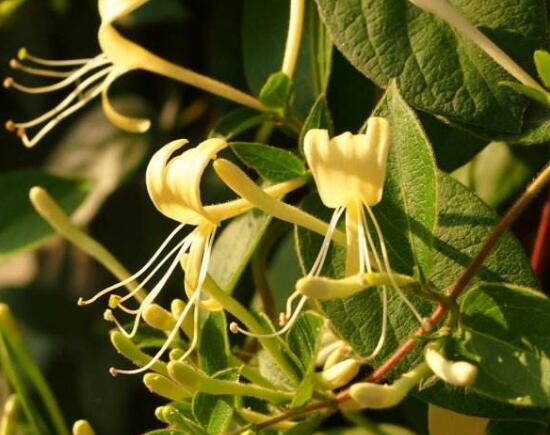
Honeysuckle is a very easy flowering plant to grow. Earlier we covered how to grow honeysuckle and its benefits and uses. Now let's look at what to do when honeysuckle leaves turn yellow. There are many causes of yellowing honeysuckle leaves. The most common one is overwatering. At this point the yellowing is "water yellow," and we should cut off these dead leaves, then wait for the soil to dry out.
II. Causes of Yellowing Honeysuckle Leaves
1. Watering
Honeysuckle likes a moist growing environment and has fairly high requirements for air humidity. When watering is insufficient and the root system is damaged, or when the air is too dry, honeysuckle leaves will turn yellow. Conversely, if watered too much, with water accumulating in the pot and poor drainage, the roots of honeysuckle will be deprived of oxygen and rot, causing yellow leaves and even death.
Solution: What to do about yellowing honeysuckle leaves in this case? First check the soil in the flowerpot to see whether there is too much water and standing water, because prolonged waterlogging causes poor root respiration, leading to yellowing and leaf drop. At this point, stop watering. If it is potted, promptly place it in a ventilated spot and wait for the soil to dry out.
2. Fertilizing
If yellowing honeysuckle leaves are caused by fertilizing, it is generally because too much fertilizer was applied at once, burning the roots and stems of the honeysuckle and causing yellow leaves. Honeysuckle actually does not need heavy fertilizer to grow; when fertilizing, apply light, frequent feedings. These are all causes of yellowing honeysuckle leaves.
Solution: Do not use uncomposted fertilizer, and do not apply too much fertilizer at once. Some gardeners like to use nutrient soil to plant flowers directly; it is best to add a little ordinary garden soil to it.
3. Lack of Fertilizer
This is caused by insufficient fertilizer, too low a fertilizer concentration, and too long an interval between feedings. Its characteristic is that the young leaves and tender stems turn yellow first. If this phenomenon is seen and fertilizer is not applied in time, it can also cause the whole plant's leaves to yellow and even die. For flowers lacking fertilizer, never apply a large amount of concentrated fertilizer at once, to avoid burning the roots.
3. Pests and Diseases
If honeysuckle suffers from pests and diseases, yellowing leaves can also occur, such as leaf spot and anthracnose. Root rot can also cause yellowing leaves and can even be more harmful. These are also common causes of yellowing honeysuckle leaves.
Solution: Generally, when honeysuckle has pests or diseases, the effect on the leaves is a gradual process. In the early stages of the disease or pest outbreak, if it can be discovered in time, countermeasures can be taken. Based on the symptoms shown by the honeysuckle, determine which pest or disease it has encountered, and choose the corresponding treatment measures, spraying pesticide or using manual control, which will alleviate the yellowing of the orchid's leaves.
Honeysuckle is a very easy flowering plant to grow, but improper cultivation methods can also cause leaves to turn yellow and wither. The above is the complete answer to the causes of yellowing honeysuckle leaves and what to do about them. We hope it helps everyone.
What to Do When Anthurium Leaves Turn Yellow. What to Do When Anthurium Leaves Turn Yellow, Anthurium Photo Gallery
When many plants are being cultivated, quite a few cultivation problems can arise, such as yellowing leaves, pest and disease attacks, and so on. The appearance of these situations will affect the normal growth of the plant. Some friends grow anthurium at home, but the anthurium leaves turn yellow. What should be done? Let's take a look together at some of the more common treatment methods!
Causes of yellowing plant leaves.
I. When old leaves and new leaves simultaneously show yellowing, the main cause is long-term lack of light. Solution: Increase light appropriately.
II. The second case is: old leaves turning yellow. This occurs with long-term water shortage or when watering does not soak through. Solution: Water the plant thoroughly.
III. If new leaves turn yellow but the old leaves are normal, that indicates the watering amount is too large, or there is a lack of fertilizer. Solution: Control watering, or apply additional fertilizer.
Treatment Methods
First cut off the yellowed leaves, place in a cool spot, and when the water is almost dry, water again. Do not rush to fertilize. There may be two situations: one is that the air humidity is too low, that is, too dry; the other is a lack of trace mineral elements.
Control temperature and humidity well, give it some sun in the morning and evening, and fertilize appropriately.
When anthurium shows symptoms of yellowing, drying, and rotting leaves, it is caused by bacteria. To eliminate the bacteria, you can spray a 0.3% solution of garlic juice, a 0.2% solution of vinegar, or fungicides such as carbendazim or chlorothalonil at 800-**** times dilution for prevention and control.
Anthurium should be managed in a semi-shady, moist, warm environment. The best temperature is between 20-25°C, and it must not exceed 33°C, otherwise uncomfortable symptoms easily appear; air humidity must be between 75-90%, and below 50% the leaves easily develop scorched edges and drying.
Fertilizing should not be too concentrated either. Use fully water-soluble fertilizer to water the potting soil. Do not apply ordinary chemical fertilizers, because anthurium cannot absorb them and fertilizer damage will occur.
The care environment is best semi-shady; it must not be fully shady or fully sunny. Anthurium especially loves light, so frequently rotate the growth direction to keep the plant shape attractive. The water quality must be clean, or use fertilizer water, but do not directly water with tap water, because harmful substances such as chlorine in tap water will cause poor growth or even death of the anthurium. Let the water sit for about 2 days before watering. It is best to place it close to the anthurium, so that there is no temperature difference between the water temperature and the potting soil temperature, and the anthurium's fine hair roots will not be harmed.
Summary: The above is an introduction to relevant information about yellowing anthurium leaves. Some of this information may not be entirely correct, and we ask for everyone's understanding. When cultivating plants, be sure to be careful and do not neglect the plant's growing conditions, as this will affect the plant's growth.
More Information
|What Does a White Rose Symbolize|What Plants Protect Against Computer Radiation|Geranium|How to Grow Azaleas and Points to Note|Spider Plant|
|Lavender Blooming Season|Indoor Foliage Plants|Boston Ivy|How to Fold a Lily|Benefits and Uses of Mint|How to Grow Mimosa|
|How to Grow Succulents|Osmanthus|Benefits and Uses of Jiaogulan|Handmade Roses|Benefits and Uses of Honeysuckle|Kumquat|
What to Do When Anthurium Leaves Turn Yellow, Anthurium Photo Gallery
When many plants are being cultivated, quite a few cultivation problems can arise, such as yellowing leaves, pest and disease attacks, and so on. The appearance of these situations will affect the normal growth of the plant. Some friends grow anthurium at home, but the anthurium leaves turn yellow. What should be done? Let's take a look together at some of the more common treatment methods!
Causes of yellowing plant leaves.
I. When old leaves and new leaves simultaneously show yellowing, the main cause is long-term lack of light. Solution: Increase light appropriately.
II. The second case is: old leaves turning yellow. This occurs with long-term water shortage or when watering does not soak through. Solution: Water the plant thoroughly.
III. If new leaves turn yellow but the old leaves are normal, that indicates the watering amount is too large, or there is a lack of fertilizer. Solution: Control watering, or apply additional fertilizer.
Treatment Methods
First cut off the yellowed leaves, place in a cool spot, and when the water is almost dry, water again. Do not rush to fertilize. There may be two situations: one is that the air humidity is too low, that is, too dry; the other is a lack of trace mineral elements.
Control temperature and humidity well, give it some sun in the morning and evening, and fertilize appropriately.
When anthurium shows symptoms of yellowing, drying, and rotting leaves, it is caused by bacteria. To eliminate the bacteria, you can spray a 0.3% solution of garlic juice, a 0.2% solution of vinegar, or fungicides such as carbendazim or chlorothalonil at 800-**** times dilution for prevention and control.
Anthurium should be managed in a semi-shady, moist, warm environment. The best temperature is between 20-25°C, and it must not exceed 33°C, otherwise uncomfortable symptoms easily appear; air humidity must be between 75-90%, and below 50% the leaves easily develop scorched edges and drying.
Fertilizing should not be too concentrated either. Use fully water-soluble fertilizer to water the potting soil. Do not apply ordinary chemical fertilizers, because anthurium cannot absorb them and fertilizer damage will occur.
The care environment is best semi-shady; it must not be fully shady or fully sunny. Anthurium especially loves light, so frequently rotate the growth direction to keep the plant shape attractive. The water quality must be clean, or use fertilizer water, but do not directly water with tap water, because harmful substances such as chlorine in tap water will cause poor growth or even death of the anthurium. Let the water sit for about 2 days before watering. It is best to place it close to the anthurium, so that there is no temperature difference between the water temperature and the potting soil temperature, and the anthurium's fine hair roots will not be harmed.
Summary: The above is an introduction to relevant information about yellowing anthurium leaves. Some of this information may not be entirely correct, and we ask for everyone's understanding. When cultivating plants, be sure to be careful and do not neglect the plant's growing conditions, as this will affect the plant's growth.
More Information
|What Does a White Rose Symbolize|What Plants Protect Against Computer Radiation|Geranium|How to Grow Azaleas and Points to Note|Spider Plant|
|Lavender Blooming Season|Indoor Foliage Plants|Boston Ivy|How to Fold a Lily|Benefits and Uses of Mint|How to Grow Mimosa|
|How to Grow Succulents|Osmanthus|Benefits and Uses of Jiaogulan|Handmade Roses|Benefits and Uses of Honeysuckle|Kumquat|