Michelia figo blooms from March to May; how should you care for it to get more flowers?
Most people have heard of Michelia figo (banana shrub). Its flowers are lovely in shape, fresh in color and captivating in fragrance, making it a highly ornamental plant, so everyone who grows it looks forward to it blooming. So when does Michelia figo bloom? To make Michelia figo more ornamental, the more flowers it produces the better. So how should Michelia figo be cared for to produce more flowers? Here, let us answer your questions.
1. When does Michelia figo bloom? March to May
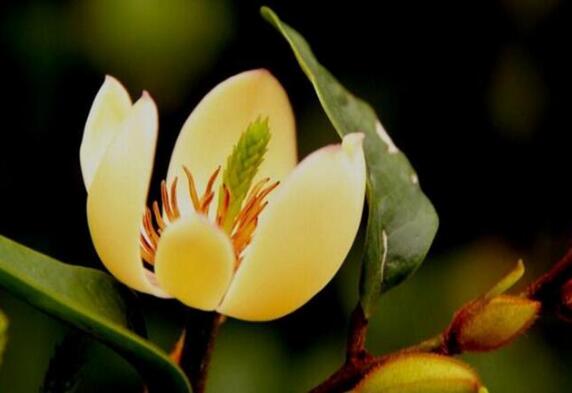
The beauty of Michelia figo lies mainly in its flowers; its petals open slightly like a hand holding something, and the flower color is as warm and soft as if mixed with creamy white. As for when Michelia figo blooms, according to research it generally blooms from March to May, and with proper care it can bloom in all three seasons except winter within a single year.
2. How long does the Michelia figo flowering period last? 3 months
Michelia figo has pale yellow petals, its flowers are about 2-3 cm in diameter, and it has a strong banana scent; it not only looks beautiful but also smells very pleasant. Generally speaking, Michelia figo starts blooming in March and can keep blooming until May, so the answer to how long the Michelia figo flowering period is, is 3 months.
3. How should Michelia figo be cared for to produce more flowers? Pay attention to 4 points
On this question, we can actually go back to the methods and precautions for growing Michelia figo; as long as you do well the places that need attention, Michelia figo will produce more flowers. In general, to get Michelia figo to produce more flowers, we need to start with 4 points: light, watering, fertilizing and temperature. The specific steps are as follows:
1. Light, 30% shade
Michelia figo needs light, but not direct strong light. So for how to care for Michelia figo to produce more flowers, the lighting method should consider giving it shade, but it must not be too shady. Therefore, what growers can do is: keep the shade level at 30% and let it receive some light appropriately; when strong light comes, provide shading.
2. Watering, once a day
To get Michelia figo to produce more flowers, sufficient water is essential. During the flowering period, growers should water once a day; however, Michelia figo has fleshy roots, so it should not be watered too much. Therefore, the correct watering method is very important. As for how to water Michelia figo, it is described in detail earlier, so I will not say more here.
3. Fertilizing, once every half month
Flowering consumes nutrients, so for how to care for Michelia figo to produce more flowers, proper fertilizing is key. During the growing period, fertilize once every half month, preferably with a mixture of animal manure, bone meal and decomposed cake fertilizer. Note: do not fertilize Michelia figo while it is blooming!
4. Temperature, keep it around 15 degrees
To get Michelia figo to produce more flowers, in addition to the above points, a warm environment is also a part that must be ensured. It is best to grow Michelia figo at around 15°C; however, Michelia figo likes warmth, not high temperatures, so the temperature should not be too high.
How to grow Michelia figo? When does Michelia figo bloom?
How to grow Michelia figo, when does Michelia figo bloom?
Michelia figo is native to the southern provinces and regions of South China, and grows wild in Dinghu Mountain in Guangdong, where it grows in shady slopes and mixed woods. As a plant in gardens that is both ornamental and fragrant, when the flower buds swell and the outer bracts are about to split and fall off, the picked Michelia figo flowers have the strongest fragrance and are deeply loved by growers. Today I will briefly introduce how to grow Michelia figo and when Michelia figo blooms.
How to grow Michelia figo: propagation methods:
Michelia figo can be propagated by cuttings, layering and grafting. Cuttings are best done from late July to early September; you can take woody branches or terminal buds about 15 cm long that have not yet sprouted new buds but still have 3—8 leaves, dip the base of the cuttings in rooting powder and insert them into sandy soil, then provide appropriate shading and keep the environment moist; they will root in about 2—3 months, and can be transplanted the following spring.
For layering, generally in April select well-developed, full and robust 2-year-old branches. Make a 0.5 cm wide ring cut at a suitable part of the branch, deep enough to reach the xylem, apply moist moss to the ring-cut area, wrap the outside with plastic film, and tie it tightly above and below; it will root in about 2 months. After the new roots have fully developed, cut it off and pot it for cultivation; after potting, water thoroughly, then water once a day or not at all.
Start fertilizing when the new shoots are about 7 cm long. Grafting is generally carried out from May—June, often using magnolia as the rootstock, and after it survives it can grow quickly. Michelia figo, with thick and fleshy roots, does not tolerate transplanting; if transplanting is truly necessary, it is best to take more soil with the root ball, and pruning and shaping of the plant are best done before overwintering. These three methods can all promote the propagation of Michelia figo, and the choice depends on the situation.
Watering method:
Usually keep the potting soil moist, but not too wet, otherwise the roots rot easily. During the growing period and before flowering it needs more water, so water once a day; in hot summer weather, water the leaf surface to maintain a certain air humidity. In autumn and winter, because sunshine is shorter, watering once or twice a week is enough.
Fertilizing method:
Michelia figo likes fertilizer; it is often given decomposed cake fertilizer, bone meal, chicken and duck manure, and fish intestines and other composted fertilizers diluted with water. In the growing season from April—September, fertilize once about every 15 days; stop fertilizing during the flowering period and after October. If the leaf color is not bright, apply one application of alum fertilizer water.
Repotting:
Repot once every 1—2 years, preferably before new leaves emerge each spring, or after flowering; it can also be done in autumn. Along with repotting, remove an appropriate portion of the compacted old soil, replace it with fertile, loose culture soil, cut off dead branches and overly old long roots, and place enough base fertilizer in the bottom of the pot.
Pruning and shaping:
Michelia figo should not be pruned excessively. Usually after flowering, prune the leggy branches, diseased and weak branches, and overly dense overlapping branches that affect the tree shape, and remove the fruit after flowering to reduce nutrient consumption. Before budding in spring, appropriately thin out some old and residual leaves of Michelia figo to stimulate new branches and leaves.
When does Michelia figo bloom?
April and May each year are the season when Michelia figo blooms heavily. If you frequently prune the shoot tips, it can bloom in three seasons a year, and it will not bloom in winter unless grown in a greenhouse. Although the flowers in summer and autumn are not as many as in April and May, the fragrance remains the same. Michelia figo flowers open but do not fully spread, as if smiling without speaking, carrying the reserved charm of a classical Chinese woman. Its flower language is reserve, subtlety, beauty, dignity, purity and nobility.