When does the hibiscus bloom? With proper care, it can bloom all year round
As an excellent choice for indoor cultivation, the hibiscus is known for its beautiful flowers and bright red blooms, and is loved by many flower enthusiasts. The beauty of the hibiscus lies in the time when it blooms, so everyone looks forward to the hibiscus blooming every year. So when does the hibiscus bloom? The longer the blooming period, the better the ornamental value. So how long is the hibiscus blooming period? Here, let the editor answer your questions.
1. When does the hibiscus bloom? June to October / all year round
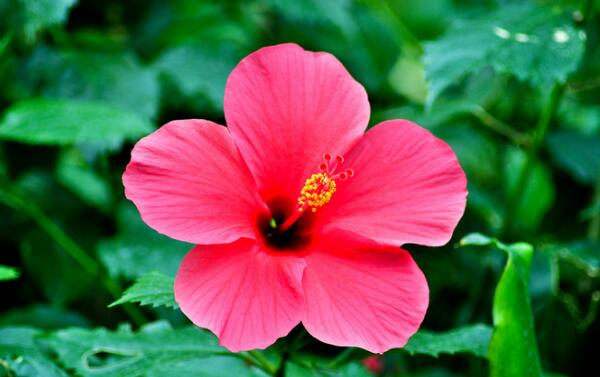
The hibiscus comes in rich colors with beautiful flowers, and the scene when it blooms can captivate people, so many people ask: when does the hibiscus bloom? Regarding this, the editor found through research that the hibiscus's peak blooming period is from June to October. If cared for properly, the hibiscus can bloom all year round!
2. How long is the hibiscus blooming period? All year round / 1 day
The hibiscus gets its name from its dark green, slightly astringent leaves and its branches that lean on and support each other, and it is a plant with a very long blooming period. As for how long the hibiscus blooming period is, there are two explanations:
1. Blooming period of 1 day: Friends who have grown hibiscus probably know that although its blooming period is long, the blooming period of a single flower is very short. It is understood that a single hibiscus flower generally opens in the morning and withers in the evening. So the hibiscus blooming period is 1 day.
2. Blooming period of all year round: For ordinary flower enthusiasts, growing hibiscus means they can enjoy its flowers for a very long time. But for experienced growers, once cultivated correctly, it can bloom continuously all year round. So the hibiscus blooming period is all year round. Very few flower enthusiasts achieve this, and as for exactly how to do it, let's read on.
3. Does the hibiscus bloom all year round? Yes
Regarding this question, based on the personal experiences of flower enthusiasts, the answer is yes. In the hibiscus growing methods, we introduced in detail its requirements for various aspects, such as slightly acidic soil, sufficient light, appropriate water and fertilizer, etc. However, to make the hibiscus bloom all year round, the requirements are even higher, as follows:
1. Light
To make the hibiscus bloom all year round, light must be strictly controlled. Normally, the hibiscus must receive 8 hours of light per day, with appropriate shading when the light is too strong; in winter, it should receive no less than 4 hours of light per day.
2. Watering
Over the course of a year, watering can be said to be what flower enthusiasts do most. Water once a day in spring and autumn, once each in the morning and evening in summer, and once a week in winter. All of this must be done for the hibiscus to bloom all year round. As for how to water the hibiscus and how to control the amount, this was introduced in detail earlier, so I won't say more here.
3. Fertilizing
Plants need to consume a large amount of nutrients to bloom, and to make the hibiscus bloom all year round, you cannot be careless with nutrients, that is, fertilizing. During the growth and blooming periods, a fertilizer combining nitrogen, phosphorus, and potassium should be applied once every 7-10 days. When fertilizing, it must be diluted with water and not too concentrated, to prevent root damage.
4. Temperature
Although the hibiscus blooming period is long, the blooming period of each flower is very short. In hot weather, it can only bloom for 1 day; on cloudy and rainy days or in late summer and early autumn, it can bloom for 2-3 days. To make the hibiscus blooming period long, even lasting a year, temperature is extremely important. Everyone should keep the plant at 15-20°C all year round for care.
5. Pruning
To make the hibiscus bloom all year round, proper pruning is very important. When the main stem of the hibiscus grows about 10 cm out of the soil, you should prune it, keeping 3-5 main branches cut short, and keeping 2-3 branchlets on each main branch, and prune it into a bush shape; in addition, after the beginning of spring, buds should be removed in time.
6. Pest and disease control
If you want the hibiscus you grow to bloom all year round, the first thing to do is to prevent it from being attacked by pests and diseases. Because once insects such as aphids and scale insects climb onto the branches, the plant will be harmed, and then the leaves will lose their green color and the flowers will not open. So pest and disease control for the hibiscus is very important, and everyone must pay special attention.
How to prune the hibiscus, pictures of hibiscus pruning methods / beautiful after pruning
The hibiscus is a common ornamental plant. It has large flowers, bright colors, and a long blooming period, and is deeply welcomed and loved by everyone, often grown indoors in pots. However, the hibiscus grows very fast, and if you are not careful, its branches and leaves will grow very densely, becoming bloated and unattractive, so it needs pruning. So how do you prune the hibiscus? Below is a complete picture guide to hibiscus pruning methods. Let's take a look together.
1. How to prune the hibiscus, timing / methods
The hibiscus has a long blooming period, and with proper care it can bloom all year round, so its ornamental value can be said to be very strong. However, the hibiscus grows fast, and if not pruned, it will grow very unattractively, so proper pruning is very important. As for how to prune the hibiscus, the editor will explain from two aspects: timing and methods.
(1) Hibiscus pruning methods
After the beginning of spring, we need to prune the hibiscus. In winter, the hibiscus is in its dormant period. After the beginning of spring, as the temperature gradually rises, the hibiscus begins to sprout. And every bud the hibiscus sprouts can develop into a flowering branch, so at this time you must remove buds in time!
Bud removal standards: The buds removed are generally diseased and weak buds, while well-grown and strong ones are kept; in addition, remove overlapping buds and keep sparse buds; remove inner buds and keep outer buds.
Notes: If you do not remove buds and instead let them grow freely, it will cause the branches to grow chaotically and thinly, with leggy growth dispersing nutrients, resulting in fewer and smaller flowers.
To make the hibiscus bloom more, pruning should also be done around the time it is brought out in early spring. Keep 2-3 buds at the base of each branch and cut off all the rest. After doing this, the hibiscus's plant shape will be more attractive.
Notes: After pruning at this time, because the above-ground part consumes less, water and fertilizer should be appropriately controlled.
In addition to bud removal, in the hibiscus pruning methods, pinching also has techniques. ① When the hibiscus seedling grows to 15 cm tall, the first pinching should be done, thereby encouraging the lower part to send out axillary buds. During the process of the lower buds growing into branches, select and keep 3-4 new shoots as framework branches. ② When the framework branches grow 4-5 leaves, do the second pinching, and in that same year a tree shape with 5-7 side branches can be formed.
(2) When to prune the hibiscus, after it becomes dense
Regarding this question, it actually depends on the overall growth form of the plant. If your hibiscus has grown too tall, with many long branches that look messy, then it needs pruning. You can cut it at a point slightly below the bare, leafless area, and then use the cut branches for cuttings. As for the hibiscus cutting method, this was introduced earlier, so I won't say more here.
When to prune the hibiscus? To control unnecessary vegetative growth and promote fuller tissues, the hibiscus needs pruning once from half a month after it is brought indoors until before it is taken outside the following spring.
Pruning method: To make it easier to control the growth direction of the hibiscus branches later, when pruning, pay attention to the inner and outer orientation of the retained buds; after pruning, the wounds should promptly be coated with a callus and antiseptic membrane to protect the pruning cuts, help them heal quickly, and prevent viral infection.
In addition to pruning after the beginning of spring, pruning should also be done after each flowering, cutting off leggy branches, diseased and pest-infested branches, thin and weak branches, crossing branches, and overlapping branches, to encourage it to sprout new branches and bloom more.
How to propagate the hibiscus, how to prune the hibiscus
The branches of the hibiscus have strong sprouting ability and must be pruned and shaped in good time to maintain a beautiful plant shape. How do you propagate the hibiscus? How do you prune the hibiscus? Let's take a look together below.
Hibiscus propagation methods:
Cutting and grafting propagation are commonly used. Cuttings can be taken at any time except winter, but the survival rate is higher during the plum rain season. The best cuttings are one-year-old semi-lignified ones, 10 cm long, with the top leaves retained and the cut made flat, inserted into a sand bed, and rooting about 3 weeks after insertion.
1. Cutting propagation: carried out from May to October, with the highest survival rate during the plum rain season. In winter, carry it out in a greenhouse. The best cuttings are current-year semi-lignified branches, 10 cm long, with the lower leaves removed and the top leaves retained, the cut made flat, inserted into a sand bed, maintaining relatively high air humidity, with a room temperature of 18-21°C, rooting 20-25 days after insertion. Treating the base of the cuttings with 0.3%-0.4% indolebutyric acid for 1-2 seconds can shorten the rooting period. When the roots are 3-4 cm long, transplant them into pots.
2. Grafting propagation: carried out in spring and autumn. It is mostly used for hibiscus varieties that are difficult to root from cuttings or root slowly, especially double-petaled varieties with a low cutting survival rate. Use branch grafting or bud grafting, with single-petaled hibiscus as the rootstock. Grafted seedlings send out branches and bloom in the same year.
Hibiscus pruning methods:
1. When the hibiscus seedling grows to 15 cm tall, pinch it to encourage the lower part to send out axillary buds. During the process of the basal buds sprouting into branches, select and keep 3-4 new shoots as framework branches; when the new shoots grow 4-5 leaves, do the second pinching, and in that same year a tree shape with 5-7 side branches can be formed. Afterward, the plant can be pruned each spring when repotting.
2. Generally, after each flowering, thin out leggy branches, diseased and pest-infested branches, thin and weak branches, crossing branches, and overlapping branches, to encourage it to sprout new branches and bloom more. For plants that have already bloomed, heavy pruning can be done, cutting off the upper part down to the base of the side branches and keeping the differentiated buds to encourage new branches to sprout; in this way, growth will be more vigorous and the flowers more numerous and brightly colored.
3. If the plant's shape is relatively good, the branches are not too long, and the leaves have not fallen off, you may skip pruning, and simply trim away some unreasonably growing branch tips and diseased or dead branches. After flowering, to control the tree from becoming too large, appropriate pruning should also be done. For old hibiscus plants, heavy pruning should be done once every 1-2 years, generally keeping 2-3 basal buds on each side branch; this can, first, promote the sprouting of robust new branches; and second, make the plant shorter. Branch tips that have undergone heavy pruning bloom later than old branches. But after heavy pruning, if water and fertilizer are sufficient and care is proper, the plant will grow very vigorously, with many flowers, large blooms, and bright colors.