What to do when Agave leaves turn yellow? Do these 4 things well, give more sun and water less
Agave, a very special plant, has firm leaves and stays evergreen all year round, and many flower lovers like to grow it. However, during the growing process, for various reasons, the symptom of yellowing leaves can appear, so what should be done when Agave leaves turn yellow? First we have to calmly find the cause, then solve it accordingly. Below are 4 causes of yellowing Agave leaves and their solutions, let's take a look together.
1. What to do when Agave leaves turn yellow, find the cause
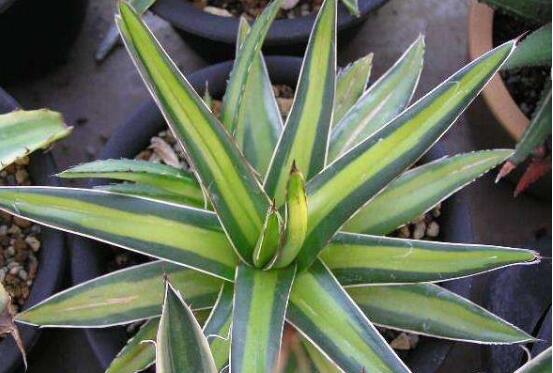
In the Agave growing methods, we introduced its requirements for the environment, and once these requirements are not met, the phenomenon of yellowing and drying leaves will appear. At this time, flower lovers should not be anxious, but should carefully find the cause, to see whether it is natural yellowing, or overwatering, or disease. Below are 4 causes of yellowing Agave leaves and their solutions, let's continue reading.
2. Causes of yellowing Agave leaves and their solutions
1. Environmental change
Online, some flower lovers reported that their Agave was fine when first bought, but not long after growing it, the leaves turned yellow, and they all want to know the cause of yellowing Agave leaves. For this, the editor suggests that you first consider the problem of environmental change, because when the growing environment changes greatly all at once, the Agave may not be able to adapt, thus showing the symptom of yellowing leaves.
Solution: Find out about the Agave's growing environment before it was bought, and try to keep the environment unchanged after buying it. Once the yellowing Agave leaves are caused by environmental change, flower lovers should appropriately change the environment, let the Agave gradually adapt, and believe it will recover its health before long.
2. Natural yellowing
As for the causes of yellowing Agave leaves, besides environmental change, everyone should also look at the time. Because in the Agave's natural growth, every autumn and winter, its old leaves will naturally turn yellow.
Solution: At this time, because the yellowing Agave leaves are not caused by improper care, flower lovers only need to cut off the withered yellow leaves, control the temperature, give a bit more sun, and then spray some chemicals to sterilize.
3. Overwatering
If the environment has not changed, and it is not autumn or winter, then for yellowing Agave leaves you need to consider the watering reason. It is understood that Agave dislikes heavy watering; if watered too much, causing the soil to always stay wet, it easily leads to root rot, thus showing the symptom of yellowing leaves.
Solution: At this time, the soil is no longer suitable for the Agave to grow. So flower lovers should immediately pull the Agave out of the soil, remove any rotten roots they see, and then air-dry it outside for a day. Finally, plant the plant in fresh sandy soil, and afterward just keep the potting soil lightly moist, and before long the Agave can recover.
4. Disease: anthracnose
If all the above points are ruled out, then the yellowing Agave leaves may be caused by anthracnose. Because the symptoms of this disease are: the spots initially appear light green or dark yellow-brown, then gradually turn black-brown, and finally the entire leaf rots away.
Solution: After finding that the yellowing leaves are caused by anthracnose, flower lovers should immediately remove the rotten leaves to prevent the spread of the pathogen. Then spray with chemicals: 70% thiophanate-methyl at 800 times dilution, or copper green at 100 times dilution, spraying once every 7 to 10 days, and before long the plant will recover its health.
What to do when Agave leaves go soft and droop, give more sun and water less / fertilize appropriately
Agave, a plant with extremely strong ornamental value, and because it blooms only once every few decades, its beauty is shown in its evergreen leaves. However, during the Agave's growth process, due to improper care by flower lovers, its leaves will go soft and droop, so what should be done when Agave leaves go soft and droop? Below are 5 causes of soft, drooping Agave leaves and their solutions, let's take a look together.
1. Agave leaves going soft and drooping, light is the main cause
In the Agave growing methods and precautions, we learned that Agave has requirements for soil, light, water, etc., especially if light is insufficient, symptoms such as yellowing Agave leaves and soft, drooping Agave leaves will appear, seriously affecting its ornamental value. To solve the troubles of flower lovers, the editor has brought 5 causes of soft, drooping Agave leaves and their solutions, let's continue reading.
2. Causes of soft, drooping Agave leaves and their solutions
1. Environmental change
Some flower lovers, when first seeing an Agave, find it so beautiful that they directly dig it up to plant themselves, yet they do not consider the problem of environmental change. Because although Agave has very strong vitality, if the growing environment changes greatly all at once, the symptom of soft, drooping leaves will appear.
Solution: Before digging up an Agave, flower lovers should understand its growing environment, and after taking it back, they should ensure the environment does not change too much. If the yellowing Agave leaves are caused by environmental change, flower lovers should appropriately change the environment, let the Agave gradually adapt, and believe it will recover its health before long.
2. Soil deterioration
For Agave leaves going soft and drooping, besides environmental change, the first thing to consider should be the soil problem. During the Agave's growth, soil has a great influence on it. But for some reasons, the soil can deteriorate, and the Agave's growth will then have problems, thus showing soft, drooping leaves.
Solution: If it is caused by the soil, flower lovers should dig the Agave out, put it in a cool place to air-dry until half wilted. Then change the soil, replacing the old soil with fresh, clean sandy soil, and finally replant the Agave, keep it moist, and before long it will recover.
3. Insufficient light
During the Agave's growth process, water, light, and soil are all very important, but the most important is still light. In daily care, especially during the growing season, once the Agave gets insufficient light, the phenomenon of soft, drooping leaves will appear.
Solution: If it is caused by light, what flower lovers should do is: in spring and autumn, while ensuring sufficient light, avoid direct sunlight; in summer when the sunlight is strong, shading is also needed; by doing these, the phenomenon of your Agave leaves going soft and drooping will be greatly improved.
4. Overwatering
No matter what plant it is, it has requirements for water, and Agave is naturally no exception. However, when watering Agave you must be careful, because although it needs water, once watered too much it will cause root rot, thus causing the leaves to become soft and droop, affecting its ornamental value.
Solution: If watered too much, move the Agave to a ventilated place to air out; in severe cases the soil also needs to be changed, and afterward just keep the potting soil moist. Besides this, when watering, do not splash water on the leaves, to prevent brown spot disease. As time goes on, your Agave will recover its health, and the leaves will become firm again.
5. Lack of fertilizer
During the Agave's growth process, although it has strong adaptability to the environment and does not need much fertilizing, if the soil is severely lacking in fertilizer, the phenomenon of soft, drooping Agave leaves will also appear.
Solution: If the soft, drooping leaves are caused by lack of fertilizer, flower lovers should fertilize appropriately; during the growing season, apply liquid fertilizer 1 to 2 times a month, and stop fertilizing in late autumn and winter. Fertilizing once a year is appropriate; do not spray fertilizer often, otherwise it easily causes fertilizer burn.
What to do when Dracaena fragrans leaves turn yellow, control watering, supplement light / changing soil can solve it in one step
Dracaena fragrans, a plant with a sturdy, handsome form, has emerald green leaves that grow like Agave leaves, looking extremely ornamental. In daily life, many people grow Dracaena fragrans, but during the growing process, many flower lovers, due to improper operation, cause the appearance of yellowing Dracaena fragrans leaves, thus seriously affecting its ornamental value. So what should be done when Dracaena fragrans leaves turn yellow? Today the editor will solve this problem.
1. Dracaena fragrans leaves turning yellow, find the cause
As a beautiful foliage plant, the growing methods for Dracaena fragrans are very simple, but because there are many beginners, they will inevitably be negligent, causing yellow leaves to appear, thus affecting the plant's ornamental value. So what should be done when Dracaena fragrans leaves turn yellow? At this time everyone only needs to calmly find the cause and do the remedial measures well, and the Dracaena fragrans can still be saved.
2. Causes of yellowing Dracaena fragrans leaves and their solutions
1. Sudden environmental change
There are many causes of yellowing Dracaena fragrans leaves, and everyone can first consider whether there is a problem with the growing environment. Because in modern times, many flower lovers' potted Dracaena fragrans are bought online, which may cause a relatively large environmental change, and the plant cannot adapt for a while, thus showing the symptom of yellow leaves.
Solution: Very simple, ask the shop about the Dracaena fragrans's previous growing environment, then at home we change it to a similar environment. Because Dracaena fragrans has strong adaptability, it will recover before long, and afterward slowly change it until it adapts to the current environment, then just care for it normally.
2. Overwatering
Speaking of yellowing Dracaena fragrans leaves, the most likely cause is overwatering. It is understood that Dracaena fragrans likes a moist environment, but it dislikes waterlogging, and beginners find it hard to control that degree when watering, and the result is watering too much, causing waterlogging, thus leading to the appearance of yellow leaves.
Solution: Take the plant out of the pot, sun it for a while, and after the potting soil dries, replant it. Afterward, pay attention to controlling the amount of water, and pay attention to ventilation, keeping the soil permeable.
3. Insufficient light
The growth of Dracaena fragrans requires maintaining sufficient light; once the light is too little, the symptom of yellowing Dracaena fragrans leaves will appear, thus losing its ornamental value. The cause of this phenomenon is generally that flower lovers place the Dracaena fragrans in a position with poor light; this situation is fine in the short term, but problems will appear over time.
Solution: Very simple, move the Dracaena fragrans to a place with sufficient sunlight for care, and after a period of time move it back, so that care and viewing do not interfere with each other. Of course, if it is summer and the light is strong, appropriate shading is also needed.
4. Not pruning in time
When Dracaena fragrans grows indoors, if water and fertilizer are appropriate, it will grow very fast. When the Dracaena fragrans grows very vigorously and flower lovers do not prune it in time, it will cause the problem of insufficient light for the inner branches and leaves, and the result is that the Dracaena fragrans leaves turn yellow.
Solution: When encountering this situation, we should prune the branches and leaves in time, and add fertilizer, carrying out careful care, and believe that before long it can regain green leaves.
5. Soil and water on the alkaline side
Dracaena fragrans is suitable for growing in slightly acidic soil; if the soil is on the alkaline side, or long-term watering with purified water causes the soil to become alkaline, the plant will show the symptom of yellow leaves because it cannot absorb iron.
Solution: Do not overthink it, directly change the potting soil, replace it with suitable soil, and alleviate it by watering with some special fertilizer.
Overall, Dracaena fragrans is very easy to grow, but because many flower lovers are beginners, the symptom of yellow leaves will inevitably appear. However, after reading the whole article, I believe everyone has a clearer idea now; when the yellow leaf problem appears, just remedy it according to the above methods. Regarding yellowing Dracaena fragrans leaves, the editor will introduce it here, hoping it can help everyone.