What to Do When Rose Leaves Turn Yellow? 6 Causes Including Insufficient Light and Overwatering
Roses are surely familiar to everyone. They are not only beautiful in flower shape and color, but also carry a wonderful symbolic meaning, making them popular and favored by a wide range of flower lovers. However, during cultivation, rose leaves may show yellowing symptoms for various reasons. So what should you do when rose leaves turn yellow? First, you need to find the cause of the yellowing, then address it accordingly. Below are 6 causes of yellowing rose leaves and their solutions. Let's take a look together.
I. What to Do When Rose Leaves Turn Yellow: Find the Cause
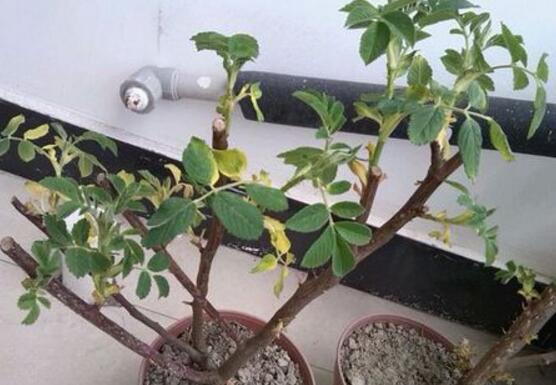
In the methods for growing roses, it was mentioned that roses have requirements for light, watering, temperature, and more. Once these requirements are not met, the leaves will turn yellow. So when rose leaves turn yellow, we need to find out which aspect is causing the yellowing, and then address it accordingly. Below are 6 causes of yellowing rose leaves, along with solutions. Let's continue reading.
II. Causes of Yellowing Rose Leaves and Solutions
1. Environmental Changes
Online, many flower lovers report that their roses were fine when they first bought them, but not long after keeping them, the leaves turned yellow. They all want to know what to do when rose leaves turn yellow. In this regard, you should first consider the issue of environmental changes. If the growing environment changes drastically, the rose will not be able to adapt, resulting in yellowing leaves.
Solution: Before buying flowers online, communicate with the seller and try to ensure that the growing environment for the rose remains unchanged after purchase. If the yellowing is caused by environmental changes, flower lovers can slowly change the environment to let the rose gradually adapt. It should recover to health before long.
2. Too Much or Too Little Light
When it comes to the causes of yellowing rose leaves, light is the first thing to consider, because too much light (direct strong summer sun) can easily cause the leaf tips and margins to dry out, ultimately resulting in yellow spots on the side facing the sun; while insufficient light prevents the rose from forming chlorophyll, and the entire plant's leaves will also turn yellow, or even drop off.
Solution: When light is too strong, provide appropriate shade or move it to a shaded area; when light is insufficient, move the plant to a place with plenty of light, but remember not to expose it to direct blazing sun.
3. Overwatering or Underwatering
Roses are drought-tolerant but not waterlogging-tolerant, so when considering the causes of yellowing rose leaves, you should also consider whether you have been overwatering. Overwatering can easily cause root rot, leading to yellowing leaves; however, long-term water deficiency can also cause rose leaves to curl and turn yellow.
Solution: What to do when rose leaves turn yellow? If you have watered too much, stop watering immediately, loosen the soil, and then move the tulip to a well-ventilated place; if it is water deficiency, it is simple, just make sure to water thoroughly and adequately.
4. Overfertilizing or Underfertilizing
Overfertilizing or underfertilizing is also one of the causes of yellowing rose leaves. Overfertilizing makes the soil concentration too high, and the old leaves cannot absorb nutrients, thus turning yellow, curling, and withering; underfertilizing causes new roots to turn yellow, and leaf color becomes lighter, gradually turning yellow and drying up.
Solution: When overfertilizing, stop fertilizing immediately, and wait until spring when a large number of new shoots emerge to supplement with additional fertilizer based on growth conditions; when underfertilizing, apply an appropriate amount of fertilizer, but do not overfertilize.
5. Temperature Too High or Too Low
In addition to the above points, temperature being too high or too low is also one of the causes of yellowing rose leaves. When the temperature is too high, the leaves curl and turn yellow, and the whole plant wilts; when the temperature is too low, the plant enters dormancy, the leaves turn yellow and drop off, and in severe cases it may even become completely bare.
Solution: When the temperature is too high, place the plant indoors in a cool, shaded area; when the temperature is too low, provide appropriate insulation, and the temperature must not drop below 8 degrees. If conditions permit, you can turn on the air conditioner.
6. Pests and Diseases
What to do when rose leaves turn yellow? Besides the above, pests and diseases should not be overlooked. It is known that when the plant suffers from leaf spot disease and root rot, yellowing leaves will appear; also, when attacked by aphids or red spiders, yellowing leaves will also occur.
Solution: Buy the relevant pesticides from a flower market, then dilute them in water according to the ratio and spray. For specific information on which pesticide to use, there is a detailed introduction in rose pest and disease control, so we won't go into it here.
What to Do When Desert Rose Leaves Turn Yellow: Figure Out the Causes of Yellowing Desert Rose Leaves
Desert rose is named for its origin near deserts and its plant form resembling a rose. It is a very popular plant to cultivate. During artificial cultivation of desert roses, yellowing leaves are a common symptom. So what should you do when desert rose leaves turn yellow?
Introduction to Desert Rose:
Desert rose (Latin scientific name: Adenium obesum) is actually not a rose that grows in desert regions, and it has no close relationship or resemblance to roses. Also known as: Tianbao flower, Apocynaceae. This is a plant in the Apocynaceae family. Adenium is a genus of succulent plants, also called succulent plants. It is a succulent shrub or small tree, reaching up to 4.5m tall; the trunk is swollen. Leaves are simple, alternate, clustered at the branch tips, obovate to elliptic, up to 15cm long, entire, with an obtuse apex bearing a short mucro, fleshy, nearly sessile. It prefers high temperatures, dry conditions, and full sunlight. It tolerates extreme heat but not cold. It is named desert rose because its origin is near deserts and its flowers are red like roses; its native origins are Kenya and Tanzania in Africa. The flowers are beautiful when in full bloom and it is often cultivated for ornamental purposes.
What to Do When Desert Rose Leaves Turn Yellow:
1: Not Yet Adapted to the Environment
A newly purchased desert rose is in an adaptation period. A small amount of yellow leaves is very common and perfectly normal. After some time, once it adapts on its own, it will be fine.
2: Root Rot
Plant roots need to breathe. Keeping the soil loose is important. A flower pot with poor ventilation can easily cause root rot. Once the roots rot, the plant naturally cannot absorb enough nutrients. The solution is to cut away the rotted parts, loosen the soil. If the entire root system has rotted, then there is no saving it.
3: Overwatering
From the name "desert rose," you can tell it is relatively drought-tolerant. Do not water too much each time, otherwise it can easily cause root rot, which leads to yellowing leaves. After cutting away the rotted roots, control watering.
4: Temperature Too Low
In winter when temperatures are low, the desert rose enters dormancy. The leaves turning yellow, drying up, or even dropping are all to reduce water evaporation and nutrient consumption. This is a self-protection mechanism, so there is no need to worry. If you want the desert rose to stay vibrant in winter, move it into a greenhouse.
5: Insufficient Light
Desert rose is a sun-loving plant. Sufficient light is necessary for its normal growth. If you currently have it in a shaded place, hurry and let it enjoy a sunbath.
6: Poor Ventilation
Poor ventilation will inevitably cause yellowing leaves, and in severe cases, the entire plant may rot and die. The solution is to take it out to “get some breeze,” that is, move it to a well-ventilated location, such as a balcony or near a window.
7: Overfertilizing
Overfertilizing on one hand makes the soil impermeable, and on the other hand, the extracellular solution concentration becomes too high, causing root cells to lose water and die. The result in both cases is root rot, leading to death. So fertilize in moderation, and remember not to overfertilize.
8: Pests
The main pest of desert rose is scale insects. When the infestation is severe, it can cause all leaves to drop, the growing points to die, and even the plant to die. Once discovered, immediately wipe them off with a cotton swab dipped in water. You can also use 40% omethoate emulsifiable concentrate at 1000—2000 times dilution, or 50% fenitrothion emulsifiable concentrate at 1000 times dilution, spraying 1—2 times during the egg-laying and hatching periods.
9: Diseases
Desert rose is mainly harmed by leaf spot disease and root rot. When leaf spot disease occurs severely, it can cause a large number of leaves to drop. It can be controlled with 25% carbendazim wettable powder at 500 times dilution, or 50% thiophanate at 1000 times dilution. Root rot often causes the plant's roots to rot and die. It can be controlled by drenching with 50% thiophanate wettable powder at 500 times dilution or agricultural streptomycin at 1000 times dilution.
Finally, special note: Whether in the adaptation period or dormancy period, watering should be controlled and fertilizing should be suspended. Wait until spring when a large number of new shoots emerge, then supplement with additional fertilizer based on growth conditions. In winter, place it in a sunny location and keep the potting soil dry, with the minimum temperature not below 8℃. In other seasons, it can be placed in a sunny area. Do not keep it in a dark place, otherwise even with normal watering and fertilizing, the leaves will turn yellow and drop due to insufficient light.
What to Do When Mountain Rose Leaves Turn Yellow: Treatments for Yellowing Mountain Rose Leaves
During the growth of mountain rose, leaves turning yellow and rotting is due to pest and disease damage, so we need scientific methods to solve this problem. So what should you do when mountain rose leaves turn yellow? Below, Hot Agricultural Materials Network shares with you the treatments for yellowing mountain rose leaves.
What to Do When Mountain Rose Leaves Turn Yellow: Treatments for Yellowing Mountain Rose Leaves
I. Determine Whether It Has Entered Dormancy.
Whether a mountain rose has entered dormancy can generally be determined through several aspects. First, look at the climate temperature. Above 30℃, most mountain roses will enter dormancy; then look at the mountain rose's condition. A mountain rose entering dormancy has withered and yellowed leaves at the bottom, and the leaves begin to wrap inward, forming a shape like a rose.
If it has entered dormancy, yellowing mountain rose leaves are a normal phenomenon. No need to worry; after dormancy ends, it will still be full of vitality.
II. Overwatering Causing Root Rot.
Mountain rose fears waterlogging and stuffy, humid conditions. It easily goes dormant in high-temperature seasons and can easily die at zero degrees. Therefore, among succulents, it is considered one of the more difficult ones to grow. Yellowing outer leaves may be caused by watering too frequently.
The solution is to stop watering for the time being, place it in a well-ventilated indoor area away from strong sunlight, and after it fully recovers, resume normal watering and care. Additionally, note that when watering mountain rose, do not sprinkle water on top of the flower; instead, water from the edge of the pot toward the center. This way, you will not get water accumulating on the leaves and causing rot.
Key Points for Growing Mountain Rose
This overall plant state resembling a rose bud only appears during the summer dormancy season. During dormancy, the leaves at the bottom of the plant wither, and the root color darkens, like dead wood. In the other three seasons, its leaves, like those of other Aeonium plants, open normally in a rosette shape. If you observe carefully, you will find that the flower bud formed by all the leaves curling toward the center during mountain rose dormancy is very similar in appearance to the leaf center of many Aeonium plants in summer.
Also, a reminder: in actual cultivation, try not to let water accumulate in the center of the leaves, otherwise it can easily cause heart rot, especially in indoor environments with poor ventilation. If water accidentally accumulates in the leaf center, use a cotton swab to absorb it dry and then try to increase ventilation as much as possible.
The above is a brief introduction to what to do when mountain rose leaves turn yellow and the treatments for yellowing mountain rose leaves. Mountain rose is not the rose we usually see; it is a succulent plant named for its shape resembling a rose. Mountain rose sometimes develops yellowing leaves. In this case, you should first determine whether it has entered dormancy. If not, it may be root rot. The editor of Hot Agricultural Materials Network has introduced the causes and solutions for yellowing mountain rose leaves in this article, hoping it will be helpful to you.