What to do when the leaves of the ponytail palm turn yellow? 5 methods to easily solve insufficient light
The ponytail palm (Beaucarnea recurvata) is a fairly common plant in people's daily lives. Because its shape is rather distinctive and clearly different from ordinary plants, it gives people a novel feeling, and it is therefore loved by many. Of course, yellowing can ruin the overall beauty even of a good-looking plant. As for what to do when the leaves of the ponytail palm turn yellow, too much standing water and insufficient sunlight are among the causes, so how exactly should yellowing leaves on the ponytail palm be dealt with? This is the key point the editor wants to discuss, so let's take a look below.
1. What to do when the leaves of the ponytail palm turn yellow / the growing method matters a lot
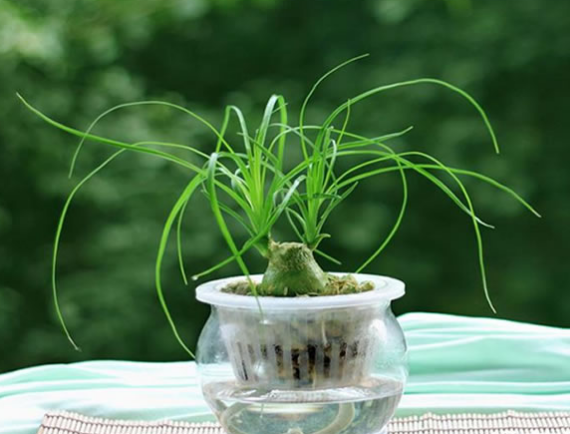
As for what to do when the leaves of the ponytail palm turn yellow, this question is closely related to how the ponytail palm is normally grown, and it was also covered in the article on how to grow the ponytail palm, so the editor will not say much about it here. What the editor wants to talk about today is how to deal with yellowing leaves on the ponytail palm. The 5 methods below give you the answer.
2. Yellowing leaves on the ponytail palm / 5 methods to help you solve it easily
If you want to solve the problem of yellowing leaves on the ponytail palm, you first need to know what is causing it. Insufficient sunlight, overwatering, and long periods of direct sun exposure are all reasons that make the leaves of the ponytail palm turn yellow. Just deal with the problem according to the different situations that cause it.
1. Standing water
The ponytail palm is a fairly drought-tolerant plant and does not need much water. Even in the dry summer weather, it only needs watering once every 2-4 days, so when growing a ponytail palm, remember not to water it too much. If overwatering causes standing water, it will make the leaves of the ponytail palm turn yellow.
Solution: If overwatering of the snake plant causes standing water, be sure to stop watering for the time being and water again only after the soil has dried out completely. Only in this way can it be remedied.
2. Insufficient sunlight
The ponytail palm is a plant that quite likes sunlight. If it does not get enough light, its leaves will also turn yellow. When growing this plant, it is best to put it on a windowsill, so it can be well nourished by the sunlight. Of course, remember to bring it in on rainy days to avoid standing water.
Solution: Put the ponytail palm in a place with good light. Do not keep it indoors for a long time. Even if it needs shade, it is best to put it in partial shade.
3. Not repotting for a long time
Many people may find this point surprising. The ponytail palm is a growing plant, and as it grows, the nutrients it needs increase accordingly. If it is not repotted for a long time, the nutrient supply will be insufficient, which will make the leaves of the ponytail palm turn yellow.
Solution: During the growth of the ponytail palm, be sure to remember to repot and change the soil in time. When changing, remember to clean up the ponytail palm's old roots and residual roots. This can effectively ensure the normal growth of the ponytail palm.
4. Long periods of direct sun exposure
Although the ponytail palm likes sunlight, there must be a limit. In a dry season like summer, it is best not to leave the ponytail palm in direct sunlight for a long time, as this is also one of the main causes of yellowing leaves on the ponytail palm.
Solution: At noon in summer when the sun is strong, you can move the ponytail palm to partial shade. This avoids direct sun exposure without depriving it of sunlight.
5. Cold damage
In winter, when the weather is relatively cold, leaving the ponytail palm outdoors for a long time will cause cold damage, which in turn makes the leaves of the ponytail palm turn yellow. So when the weather is cold, be sure to take frost-protection measures for the ponytail palm.
Solution: In winter, it is best to place the snake plant indoors in a bright and warm place to grow. If it is not convenient to put it indoors, wrap it with plastic film and remember to replace it once every 2-3 days.
Having said all this, I believe everyone will now know how to handle problems like what to do when the leaves of the ponytail palm turn yellow. In fact, yellowing leaves on the ponytail palm are a fairly common problem during cultivation. As long as everyone keeps these points from the editor in mind, such problems will not be so troublesome next time.
Main causes of yellowing leaves on the ponytail palm and remedies
When growing every kind of flower, yellowing leaves often occur. The causes differ according to the plant's growth habits, and the ponytail palm is the same. The main causes of yellowing leaves on the ponytail palm are the following. When yellowing leaves appear, you must first promptly determine what is causing it, so that you can promptly remedy the ponytail palm, rather than blindly taking measures. For the specific causes, refer to the following points:
1. Because the ponytail palm is averse to standing water, overwatering can cause standing water and thus yellowing leaves. In this case, watering should be stopped for the time being, and afterward it should be watered in moderation; water only when the soil is dry and let it dry out between waterings.
2. Yellowing leaves caused by insufficient light. The ponytail palm is a light-loving plant and should be given plenty of sunlight. Do not keep it in a shaded indoor place for a long time. Even if it needs shade, it should be placed in partial shade.
3. As the ponytail palm grows, if it has not been repotted, this can also cause yellowing leaves. Because as the ponytail palm grows, the nutrients it needs also increase. If it is still in a small pot at this time, the nutrients in the potting soil will be insufficient; at this point, repot it into a larger pot and change the soil in time.
4. Applying concentrated fertilizer can also cause yellowing leaves, so when fertilizing the ponytail palm, follow one principle: apply thin fertilizer frequently. Likewise, a lack of fertilizer can cause insufficient nutrients and also lead to yellowing leaves. In this case, change the soil and fertilize appropriately.
5. During the seedling stage, the ponytail palm must not be exposed to direct sunlight. Direct sun exposure will likewise cause yellowing leaves; therefore, during the seedling stage, place it in partial shade, and pay special attention to shading at noon.
6. In winter, temperatures in the north are relatively low. If it suffers cold damage, this can also cause yellowing leaves. Therefore, in winter, keep it appropriately warm and place it indoors by a window or at the foot of a wall.
How to grow the ponytail palm
Soil
The ponytail palm is relatively tolerant of poor soil and drought, so potting soil should have good drainage. It is suitable for growing in sandy loam rich in humus. The soil can be made by mixing fertile garden soil, leaf mold, and river sand.
Temperature
The ponytail palm likes warmth, and a growing environment of 20-28°C is most suitable. It can survive in a high-temperature environment of 33°C, but it is not cold-tolerant. Generally, it stops growing at around minus 13°C. In winter, the temperature should be kept at a minimum above 10°C, otherwise the base will rot and the plant will wither.
Light
The ponytail palm is suitable for growing in an environment with sufficient light. Because it grows vigorously, it also tolerates a certain amount of shade. Insufficient light will cause the leaves to become thin and weak, which is not good for the plant's survival and development.
Except in summer, the ponytail palm needs to receive sufficient sunlight to ensure its vigorous growth. During the summer growing period, it needs to be shaded, with the shaded area reaching more than half of its own area, so that the leaves do not turn yellow and wither.
When receiving light, move it regularly so that the light is even. This can give the plant a graceful shape. It is best to turn the flowerpot once about every month and a half.
Water
The ponytail palm likes moisture. Therefore, the relative humidity of the air should be kept at 70%-80%. If it is too low, the leaves will turn yellow, wither, or fall off and lose their luster, affecting the overall ornamental value.
The ponytail palm has thick rhizomes, so it has good drought tolerance. It can still grow and develop without water for about half a year. As long as you manage the humidity for the ponytail palm well, you can keep the potting soil slightly dry, reduce watering in autumn and winter, and there must be no standing water in the pot.
Fertilizing
Generally, the ponytail palm is mostly given a compound fertilizer or liquid fertilizer containing nitrogen, phosphorus, and potassium. Stop fertilizing in winter.
Repotting
As long as it is cared for properly, the ponytail palm will grow very fast. When it grows to a certain size, consider giving it a larger pot so that it can continue to grow vigorously. For the potting soil and component ratio used for repotting, you can choose one of the following: vegetable garden soil: cinder = 3:1; or garden soil: medium-coarse river sand: sawdust (mushroom residue) = 4:1:2; or one of paddy soil, pond mud, or leaf mold.
Removing from the pot
Place the flower to be repotted on the ground. First, lightly pat the sides of the pot with your palm so that the root system is shaken and separates from the pot wall. Turn the flowerpot upside down and place it on your left hand, with the index and middle fingers of your left hand gently holding the plant, your wrist and fingertips against the rim of the pot, and your right hand patting the bottom of the pot. Then use your thumb to push the root soil downward from the bottom hole so the plant comes out. After it comes out, gently pat the potting soil with both palms so that excess soil falls off.