What to do when azaleas drop their leaves? Too little fertilizer, too much watering, and soil turning alkaline are the main causes
The beauty of the azalea needs no lengthy description; anyone who has seen one knows it. Its flame-like flowers are truly delightful. However, during cultivation, azaleas can develop various problems for all sorts of reasons, such as yellowing leaves and leaf drop. So what should you do when an azalea drops its leaves? Below are 5 causes of azalea leaf drop and their solutions. If you love flowers, you absolutely must take a look.
1. What to do when an azalea drops its leaves: find the cause
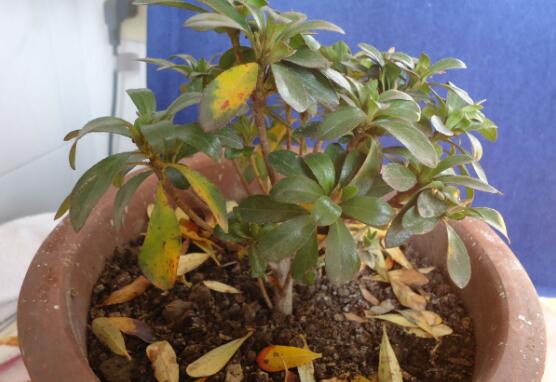
In our guide to growing azaleas, we covered their requirements for soil, light, watering, fertilizing and more. Once we fail to meet those requirements, azaleas will develop various problems, such as leaf drop. As for what to do when an azalea drops its leaves, you first need to find the cause and then address it accordingly.
2. Causes of azalea leaf drop
Although azaleas are beautiful, poor care easily leads to the phenomenon of flowers in the first year, yellowing in the second year, and completely bare branches in the third year. As for the causes of azalea leaf drop, the editor has summarized 5: too little fertilizer, too much watering, soil turning alkaline, pests and diseases, and environmental change. The specific causes and solutions are as follows:
1. Too little fertilizer
In the process of growing azaleas, fertilizing is a very important step, as it promotes plant growth. So once too little fertilizer is applied, the leaves cannot absorb nutrients and will drop over time. In addition, too much fertilizer can cause root burn, which also leads to azalea leaf drop.
Solutions: Too little fertilizer: gardeners should adopt the method of applying light fertilizer frequently, fertilizing once every 7-10 days, and preferably not when the midday sun is at its harshest. Too much fertilizer: gardeners are advised to solve it by watering or replacing the potting soil.
2. Too much watering
No matter what flower you grow, watering is crucial, and this is equally true for azaleas. However, azaleas have very fine, fragile roots, so they tolerate neither drought nor waterlogging. Once watered too much or too little, both will cause azalea leaf drop.
Solution: When watering azaleas, you can neither give too much nor too little. Experienced growers naturally know what to do, while beginners need to master a method: you can use a thin wooden stick and insert it into the potting soil. If the stick picks up a lot of fine soil, the soil is moist and you can water less; if the stick barely clings to any soil, you need to water more.
3. Soil turning alkaline
As we introduced earlier, azaleas prefer loose, fertile, slightly acidic soil. However, during watering, if gardeners use tap water for irrigation over the long term, the soil will gradually become alkaline. In such a growing environment, azalea leaf drop is very common, and in severe cases it can even cause the plant to die.
Solution: Follow the azalea's preferences. Normally water with alum-fertilizer water, or add a little ferrous sulfate to the water when applying it, to keep the soil slightly acidic. If the leaf drop is caused by the soil, gardeners can choose to repot with fresh soil, replacing it with a clean, airy, slightly acidic soil, and your azalea will recover its health before long.
4. Pests and diseases
When it comes to the causes of azalea leaf drop, besides considering water, fertilizer and soil, pests and diseases cannot be ignored either. Because once an azalea is diseased or infested with insects, its leaves dropping off is very common.
Solution: If diseased leaves are found, remove them promptly and burn them in a centralized manner. In the early stage of disease onset, spray with 0.5% Bordeaux mixture. Of course, different pests and diseases have different control methods; the specifics are covered in the pest and disease control section for azaleas, which was introduced earlier, so we won't say more here.
5. Environmental change
Regarding azalea leaf drop, if the above points are ruled out, then only one cause remains: environmental change. In daily life, even people feel unaccustomed to a new environment, let alone plants, so a sudden change in environment can also cause azalea leaf drop. If it cannot adapt to the environment in time, the azalea may well die.
Solution: If the azalea was bought online, gardeners should communicate with the seller and try to keep the azalea's growing environment unchanged. After a change to a new environment, do not rush to repot or fertilize; in most cases, placing it in a cool, shady spot for 1-2 weeks will bring some improvement.
What to do when an azalea drops its leaves; what to do when azalea leaves turn yellow and black
What to do when a carefully tended azalea drops its leaves, what to do when azalea leaves turn yellow and black, and what to do when azalea leaves dry up. Below, let the editor explain the causes of these conditions and their solutions.
What to do when an azalea drops its leaves
Azalea leaf drop is often caused by improper care, usually due to inappropriate temperature and humidity, light, or water and fertilizer.
1. Unsuitable temperature and humidity. Azaleas grow best at temperatures of 15-30°C, with humidity requirements above 60%. Any other environment is unsuitable for azalea growth, and leaf drop is then normal.
Solution: Adjust the environment's temperature and humidity by regulating light, watering and other means, keeping it in conditions suitable for azalea growth.
2. Long-term lack of light. If an azalea is placed in a dark corner for a long time, its leaves easily wither and then drop. Although azaleas like shade, they still need normal photosynthesis to grow, so sufficient light is required.
Solution: Move the azalea to a spot with ample light, and after the weather warms up in spring and summer, move it to a semi-shaded spot.
3. Improper water and fertilizer. Excessive drought, water accumulating in the pot, and too much fertilizer will all cause azalea leaf drop.
Solution: Azaleas have fibrous roots and poor drought tolerance, so during cultivation you must water promptly, but also be careful not to give too much; an appropriate amount is enough. If water accumulates, pour it out promptly or replace the potting soil.
What to do when azalea leaves turn yellow
1. Improper water and fertilizer. Azalea roots are delicate, fearing waterlogging and heavy fertilizer. If watering is insufficient or excessive, or if fertilizer is too concentrated or raw, undecomposed fertilizer is applied, it will cause leaves to turn yellow and in severe cases kill the whole plant. Water and fertilizer should be appropriate; when there is too much of either, you can repot and change the soil.
2. Soil and water on the alkaline side. Azaleas like loose, slightly acidic soil. If the potting soil is on the alkaline side or is watered with alkaline water over the long term, it will affect the plant's absorption of iron, causing iron deficiency and thus yellowing leaves. You can buy some ferrous sulfate and water the azalea daily with a 0.2% solution, or add a few drops of edible vinegar to the watering water to increase soil acidity.
3. Poor root absorption. When summer temperatures are high, the yellowing is especially obvious, and after the autumn cool it improves somewhat or returns to green. Although the symptoms resemble iron deficiency, supplementing iron has no effect on it. For this kind of yellowing, measures to protect and care for the roots must be taken. In winter, maintain a relatively high temperature; in summer's high heat, provide shade and spray water around the environment to cool it down, maintaining good ventilation to promote healthy root growth and development.
What to do when azalea leaves turn black
Azalea leaves turning black may be due to brown spot disease or black spot disease, often caused by the azalea's growing environment being too shady and damp or poorly ventilated.
Brown spot disease is one of the main diseases of azaleas. It causes affected leaves to turn yellow and drop off, affecting that year's blooming and the development of next year's flower buds. It strikes easily during the plum rain season when air humidity is high.
Treatment: Normally ensure the plant gets ventilation and light, do not let humidity get too high, and apply more organic fertilizer and mixed nitrogen-phosphorus-potassium fertilizer to strengthen the plant's resistance to infection and its growth capacity. If diseased leaves are found, remove them promptly and burn them in a centralized manner. In the early stage of disease onset, spray 0.5% Bordeaux mixture or 0.4 Baume lime sulfur mixture, adding 4% flour to increase adhesion. Leaf spot disease and black spot disease can be treated the same way.
What to do when azalea leaves dry up and wilt
The most likely cause of azalea leaves drying up and wilting is improper watering. Azaleas like water but dislike long-term waterlogging. If water accumulates in the pot for a long time, the plant cannot bear it; the roots will first rot, and then the plant wilts and may even die. It is recommended to first pour out any standing water in the saucer, place it in a cool, ventilated spot, and care for it in a semi-shaded environment. Do not water or spray until the soil in the pot is on the dry side, then water appropriately. If watering is too little, leaf wilting will likewise occur, and timely watering will let the azalea regain its vitality.
[Azalea leaf drop] Causes of azalea leaf drop and solutions
Growing flowers or plants in pots easily leads to leaf drop, failure to bloom, yellowing leaves and so on, which troubles many gardeners. Flowers like azaleas, which are rather particular about their growing environment, are prone to leaf drop. Next, Xiao Qi will share what to do when an azalea drops its leaves.
What to do when an azalea drops its leaves
Causes of azalea leaf drop
1. Improper water and fertilizer: During the azalea's growth period, excessive water and fertilizer lead to no blooming or very few blooms; even if it does bloom, it easily drops flowers and buds. During the flower bud differentiation stage, pay attention to applying more phosphorus-rich fertilizer, which helps flower bud formation and budding. Applying fertilizer too concentrated during the budding stage, or watering now too much and now too little, easily causes flower and bud drop. During the growth period, a lack of fertilizer and water leads to poor plant growth, thin and stunted plants, and also easily causes few blooms or small flowers of poor quality. Azaleas do not like heavy fertilizer; once raw or concentrated fertilizer is used, leaf scorch and even leaf drop will occur, the so-called fertilizer burn. Azalea roots are fine; if the potting soil has poor permeability or if it is watered too much and too often over the long term, plus poor ventilation, the roots are damaged and rot, causing leaf drop. If you are careless and forget to water, or water without soaking through over the long term, leaf drop will also occur. Be sure to "water until it soaks through," and normally spray water on the leaves and around them to raise environmental humidity.
2. Unsuitable light and temperature: Every flower has its own suitable growing environment. If their respective light and temperature conditions do not meet the standard, problems such as flower and leaf drop easily occur.
3. Soil on the alkaline side: The growing medium for azaleas must be an acidic soil with good aeration and rich in humus; a pH of 5.5 to 6.5 is most suitable. Using alkaline soil will cause leaves to yellow and drop.
4. Pruning: If an azalea is not pruned and shaped for a long time, the branches become messy, which not only affects its appearance but also, because many unnecessary branches consume a great deal of nutrients, affects flower bud formation. This is also one of the reasons for no blooming or few blooms.
5. Strong wind and fierce sun: Azaleas like light but fear blazing sun; they like ventilation but fear strong wind. Placing them under the blazing sun in summer, or in a drafty spot in spring and autumn, will cause heavy leaf drop.
6. Indoor temperature too high in winter: Most flowers are in a dormant or semi-dormant state in winter. If the room temperature is too high, it affects the plant's full dormancy or causes it to sprout buds and leaves prematurely, consuming a great deal of nutrients, so that the next year's growth is weak, with no blooming or thin, small flowers that drop easily. Therefore, the winter room temperature is best kept at around 5°C.
7. Pest and disease attack: During the azalea's growth and development period, it is often vulnerable to damage from pests and diseases. Growth is disrupted and nutrient accumulation is affected, which is also one reason for flower and bud drop.
Solutions for azalea leaf drop
1. Water appropriately: Azaleas have fibrous roots and are not drought-tolerant, so during cultivation you must water promptly, but also be careful not to give too much; an appropriate amount is enough.
2. Fertilize appropriately: Add an appropriate amount of slow-release fertilizer to the azalea's potting soil: safe, clean, long-lasting, with bright flowers and lush leaves. This fertilizer is often used in horticultural production; it is both convenient and clean, and the azaleas grown with it have lush leaves and bright flowers.
3. Reasonable sunlight: Azaleas need reasonable light. You can place the flower in a spot with ample light, and after the weather warms up in spring, move it to a semi-shaded spot, growing the azalea where it gets morning and evening sun and is sheltered from wind.
4. Keep the soil acidic: Normally apply some alum-fertilizer water to azaleas, or add a little ferrous sulfate to the water when applying it, to maintain the acidity of the soil in which the azaleas are grown.
Azalea leaf drop pictures
The above iswhat to do when an azalea drops its leavesthe related introduction. Azaleas are rather delicate, so special care is needed when growing them, especially paying attention to the acidity and alkalinity of the soil.