What to do when calla lily leaves turn yellow? 6 solutions for overwatering and low temperatures
Calla lily, with its lovely flower shape and pure white blooms, is a flower of extremely high ornamental value, deeply loved by gardening enthusiasts. However, during cultivation, for various reasons, calla lily leaves can develop yellowing symptoms. So what should be done when calla lily leaves turn yellow? Gardeners need to find the cause of the yellowing leaves and then address it accordingly. Below are 6 causes of yellowing calla lily leaves and their solutions, read on to find out!
I. What to do when calla lily leaves turn yellow, water and fertilizer are key
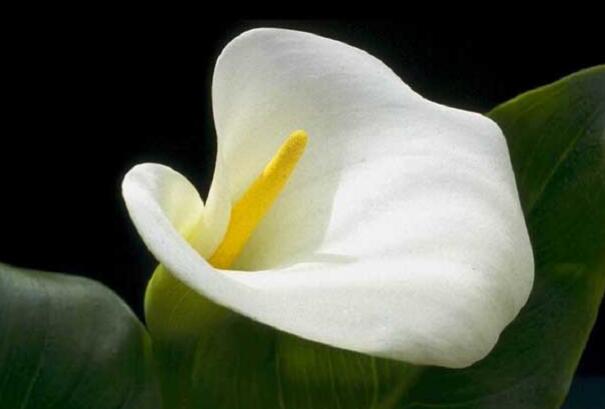
In the cultivation methods for calla lily, its requirements for soil, light, water and fertilizer have already been introduced. Once these fall short, the calla lily will develop problems, and yellowing leaves are just one of them. As for what to do when calla lily leaves turn yellow, it is actually very simple: find out which specific cause is responsible, then address it accordingly. There are many causes of yellowing calla lily leaves, summarized into the following 6 points, with solutions attached.
II. Causes of yellowing calla lily leaves and solutions
1. Environmental change
According to many gardening enthusiasts, when they first bought their calla lily, it looked perfectly fine, but after keeping it for a short while, yellowing leaves appeared. They all want to know what to do when calla lily leaves turn yellow. For this, everyone should consider the issue of environmental change. The calla lily may have difficulty adapting because its growing environment changed too drastically all at once, thus developing yellowing leaves.
Solution: When buying a calla lily, communicate more with the shop and ask about its growing environment. After bringing it home, try to keep the calla lily's growing environment unchanged. If the yellowing leaves are caused by environmental change, gardeners can slowly change the environment to let the calla lily gradually adapt. Believe that before long, its leaves will return to health.
2. Overwatering or underwatering
What to do when calla lily leaves turn yellow, the first thing we should consider is the water issue. Calla lily likes a moist environment, so it needs frequent watering, but overwatering will cause yellowing leaves; however, you also cannot water too little, because once there is a lack of water, calla lily leaves will also turn yellow. What gardeners need to do is: water when the soil is dry, and water thoroughly when watering.
Solution: When overwatered: immediately stop watering, then move the calla lily to a well-ventilated place. Or even simpler, directly repot and change the soil, letting the calla lily become fresh again; when underwatered: water appropriately, and after a period of time, your calla lily will return to health.
3. Overfertilizing or underfertilizing
Besides watering, fertilizing is also crucial during the calla lily's growth process, and improper fertilizing is also one of the main causes of yellowing calla lily leaves. Too much fertilizer: it will cause concentrated fertilizer to burn the roots, leading to yellowing calla lily leaves; calla lily is a heavy feeder, and a lack of fertilizer will also cause yellowing leaves.
Overfertilizing: immediately stop fertilizing, water appropriately to dilute, so the fertilizer flows out through the drainage holes at the bottom of the pot; underfertilizing: fertilize appropriately according to the growth stage, generally applying decomposed liquid fertilizer once every 10-15 days, with phosphorus fertilizer as the main type during the flowering period.
4. Humidity too low
What to do when calla lily leaves turn yellow, besides considering watering, air humidity is also something gardeners need to take into account. It is understood that during the calla lily's growth process, it has requirements for air humidity, best controlled at 70-85RH, and once it drops below 50RH, yellowing will appear.
Solution: When watering the calla lily, spray water on its surrounding environment to keep the potting soil and environment moist, and ventilate moderately to keep the air fresh and circulating.
5. Temperature too low
During the calla lily's growth process, temperature is also very important, so when asking what to do when calla lily leaves turn yellow, you should first think about whether there is a temperature problem. It is understood that the calla lily's optimal growing temperature is 20-25°C. It is afraid of cold, and when the temperature is below 10°C, yellowing leaves are prone to appear.
Solution: When the temperature is too low, pay attention to moving it indoors for insulation; if conditions permit, you can turn on the air conditioner.
6. Improper placement location
After considering the above factors, as for what to do when calla lily leaves turn yellow, everyone should also pay attention to its placement location. It is understood that calla lily is easily harmed by smoke. If it is placed near the kitchen, frequent smoke exposure will cause leaves to turn yellow and affect flowering.
Solution: Calla lily cultivation should pay attention to air environment issues, ensure air circulation, and prevent smoke exposure. The best approach is to place the calla lily far away from the kitchen.
How to grow calla lily in pots, what to do when calla lily leaves turn yellow
Calla lily, also known as cigu flower, calla, etc., is a perennial robust herbaceous plant of the genus Zantedeschia in the Araceae family, native to northeastern and southern Africa. In China it is cultivated for ornamental purposes in Beijing, Jiangsu, Fujian, Taiwan, China, Sichuan, Yunnan and the Qinling region, often used for bouquets and wreaths, and can be used medicinally with the effect of clearing heat and detoxifying. Now let's take a look at how to grow potted calla lily!
Calla lily's growth habits
Calla lily is native to southern Africa and likes a warm, moist environment with plenty of sunlight, and is not tolerant of cold or drought. The optimal growing temperature is 15-25°C, with nighttime temperature not lower than 13°C. If the temperature is higher than 25°C or lower than 5°C, it is forced into dormancy. It likes water, and the soil should be kept moist during the growing period. After the tubers enter dormancy during the high-temperature summer period, watering should be controlled. The soil should be fertile, clay loam with good water retention, with a pH value between 6.0-6.5.
Calla lily's propagation methods
1. Division: When the old leaves gradually wither after flowering in May-June and new leaves grow, or when repotting in mid-September, peel off the small tubers around the mother plant and pot them by grade. Generally, they bloom 3 months after planting.
2. Sowing: Mainly done indoors in pots, with an optimal germination temperature of 18-24°C. They germinate 15-20 days after sowing, and seedlings need 3-4 years of cultivation before they can bloom.
How to grow potted calla lily?
1. Soil: For calla lily cultivation, the potting soil should preferably be sandy acidic soil with good aeration and drainage. It is best to place a layer of coarse sand at the bottom of the pot to benefit the calla lily's growth, then mix in one-third garden soil and leaf mold, and add a small amount of organic fertilizer. The pot for planting calla lily is best chosen as a shallow pot.
2. Temperature: Calla lily likes a semi-shaded environment, so avoid placing it under strong light. The optimal growing temperature for calla lily is 22-30°C. When the temperature is below 20°C, the calla lily's growth rate will slow down, or even stop growing. Calla lily likes a warm, moist environment, so when overwintering, special attention should be paid to keeping the calla lily warm.
3. Watering: Calla lily should be watered according to the dryness of the potting soil. Before watering, first check the condition of the potting soil. Normally, you can spray water on the surface of the potting soil and the flowers to keep the potting soil moist. During the calla lily's growing period, it likes sufficient water, so frequently sprinkle water on the leaves and ground, and pay attention to keeping the leaves clean.
4. Light: Calla lily is relatively tolerant of shade in the early growth stage. During its vigorous growth, it must have very sufficient light, and during the flowering period it needs even more sufficient light to ensure abundant flowers and lush leaves. If the calla lily does not get enough light during the flowering period, it is very easy for the buds to turn green or fail to bloom.
5. Fertilizing: During the calla lily's growing period, fertilize once every 20 days, using decomposed soybean cake water. During the peak growing season, apply light fertilizer frequently, once every 10 days. When fertilizing, do not pour the fertilizer water in from the leaf sheath, to avoid causing the calla lily to rot and die. Too little fertilizer may cause the leaves to yellow and become malnourished, while too much fertilizer can also easily cause yellow leaves on the calla lily.
6. Pests and diseases: Calla lily tubers are prone to rot disease during dormancy or storage. You can spray the tuber surface with a 1000-fold dilution of antibacterial agent 401 acetic acid solution, dry it, and then store it. Pests include red spider mites and thrips, which can be killed by spraying with 1000-fold dilution of 50% dicofol and 4000-fold dilution of 2.5% deltamethrin emulsifiable concentrate respectively.
What to do when calla lily leaves turn yellow?
1. Overwatering: Calla lily likes moisture, and from sprouting it cannot lack water, so it is suitable to water daily. But overwatering will cause yellowing leaves. Calla lily should be watered when the soil is dry, and watered thoroughly when watering, never too much.
2. Underwatering: Calla lily is a wetland flower, and drought and lack of water can also easily cause yellowing leaves. Pay attention to keeping up watering and maintaining sufficient water, but also be careful to avoid water accumulating in the leaf center, to prevent soft rot disease.
3. Humidity too low: Calla lily growth has certain requirements for air humidity, best controlled between 70-85%, and when below 50%, the leaves will also show yellowing. Water and spray frequently to keep the potting soil and environment moist, and ventilate moderately to keep the air fresh and circulating.
4. Overfertilizing: Overfertilizing calla lily will cause concentrated fertilizer to burn the roots, which is the most common cause of yellowing calla lily leaves. Calla lily should be fertilized appropriately according to the growth stage.
5. Underfertilizing: Calla lily is a heavy feeder, and too little fertilizer will cause yellowing leaves. Generally, apply decomposed liquid fertilizer once every 10-15 days, with phosphorus fertilizer as the main type during the flowering period.
6. Temperature too low: Calla lily cultivation should pay attention to temperature, best kept between 20-25°C. It is afraid of cold and averse to saline-alkali soil. In winter, the nighttime temperature should not be lower than 10°C. If too high or too low, the plant is prone to yellowing leaves. When the temperature is too low, pay attention to moving it indoors for insulation.
7. Smoke exposure: Calla lily is easily harmed by smoke, and frequent smoke exposure will cause leaves to turn yellow and affect flowering. Calla lily cultivation should pay attention to air environment issues, ensure air circulation, and prevent smoke exposure.
What varieties of calla lily are there? What to do when calla lily leaves turn yellow, curl and soften
Calla lily is a flower with extremely high ornamental value, and its meaning is very auspicious, representing good fortune and prosperity, deeply sought after and loved by everyone. The calla lily's flowers are shaped like a calla, with rich colors. Different varieties of calla lily also have different flower colors. Now let's learn about some varieties of calla lily together!
What varieties of calla lily are there
1. Silver Star calla lily. Silver Star calla lily, also known as spotted-leaf calla lily, has a plant height of about 60 cm, with large leaves bearing white spots, a yellow or creamy-white spathe with purple-red spots at the base, and a natural flowering period from July to August, going dormant in winter.
2. Black-throated calla lily. The Black-throated calla lily has deep yellow flowers with black spots in the throat.
3. Red calla lily. The Red calla lily has rose-red bracts, lanceolate leaves, is short-growing, and blooms in June.
4. Yellow calla lily. The Yellow calla lily has slightly smaller golden-yellow bracts, bright green leaves with white transparent spots, blooms from July to August, and goes dormant in winter.
5. White-stemmed calla lily. The White-stemmed calla lily has smaller tubers and slower growth, but blooms early with many flowers. Its flower stem is white, the spathe is large and round, the leaf stalk base is white-green, growth is slow, the spathe is white, and tubers only 1-2 cm in diameter can bloom.
6. Red-stemmed calla lily. The Red-stemmed calla lily has a flower stem base slightly tinged with red, blooms slightly later than the White-stemmed calla lily, has a relatively round spathe, medium growth vigor, leaf stalk base tinged with red, white spathe, and a flowering period between that of the white-stemmed and green-stemmed types.
7. Green-stemmed calla lily. The Green-stemmed calla lily has thick large tubers, vigorous growth, and late flowering. Its flower stem is thick and slightly triangular, the spathe tip is pointed and curls backward, yellow-white, smaller in size than the previous two types, the leaf stalk base is green, the plant is tall, the flowers are yellow-white, and the tubers must reach 5-6 cm or more in diameter before they can bloom.
What to do when calla lily leaves turn yellow, curl and soften
1. Temperature too high. When keeping calla lily indoors, the temperature must be controlled, as it will grow poorly when the temperature is above 30°C. Many households place it next to the TV or on the coffee table in the living room. In winter, when the indoor temperature is too high, ventilation is improper, the surrounding temperature is too high, and the air is dry, it is very easy to cause the plant's growth to slow down.
2. Virus attack. When leaves turn yellow, curl severely, and become distorted and deformed, another cause is fungal infection, which hinders the plant's growth.
3. Lack of oxygen. Calla lily survives by its stem and roots. During growth, moisture and oxygen in the air are the main nutrient elements. Actually, plants are just like people: to have rosy skin and be healthy, you need to frequently breathe fresh air and see sunlight. If you were shut in a room all day, you too would become sluggish.
How to force calla lily to bloom in winter
1. Insulation
To force calla lily to bloom in winter, the most important thing is to maintain temperature. In winter, the temperature is relatively low, and calla lily is a plant that is not tolerant of cold, so potted plants should be insulated in winter, only then can they bloom. In winter, the maintenance temperature for calla lily is best kept between 13°C——17°C, not lower than 5°C, and the nighttime temperature is best kept at a relatively high level as well.
2. Light
Light is an important factor in promoting calla lily blooming. In winter, because the sunshine duration is short and the intensity is insufficient, resulting in insufficient sunlight, the calla lily may grow flower buds but be unable to bloom.
Therefore, in winter, let the calla lily get as much sufficient light as possible. Potted calla lilies can be placed in indoor spots where they can be exposed to more sunlight.
3. Ventilation
Air circulation is also an important factor in promoting calla lily blooming. In winter, because of the temperature, people like to keep the doors and windows of their homes tightly closed, and at this time, ventilation becomes relatively poor. Under poor ventilation, the indoor temperature is relatively high, which may breed pests, causing poor growth of the calla lily and failure to bloom.
Precautions for growing calla lily
Calla lily is afraid of smoke exposure. In winter, be careful not to place the flowerpot near the kitchen where there is cooking fumes, otherwise it will very easily drop leaves.
Dwarfed calla lilies have even more ornamental value, and this can be achieved with just a little extra treatment during care. In summer, when the calla lily enters dormancy and is being repotted, mix paclobutrazol with a small amount of fine soil, sprinkle it around the plant, 10-15 grams per pot, then water and it's done! In about a week, your plant will become small and delicate!
When fertilizing, do not pour the fertilizer water onto the leaves. When it grows too fast, promptly remove the outer aged leaves. In summer, don't worry even if all the leaves turn yellow and wither. Take out the tubers, dry them, store them, and replant in autumn.
As mentioned above, the calla lily we usually see most is the white-flowering one, with pure and dignified flowers and large, beautiful green leaves, looking very elegant and generous placed in a room. Friends who want to grow flowers in their rooms might as well try growing calla lily. It is not only beautiful but also especially easy to grow!