What to Do When Bromeliad Leaves Turn Yellow? 6 Solutions for Too Much Fertilizer and Too Little Light
Bromeliads, with their neat plant shape and brilliant flower colors, are excellent for indoor cultivation and are deeply loved by flower enthusiasts. However, during cultivation, due to improper care and other reasons, bromeliads may develop various symptoms, such as yellowing leaves. So what should you do when bromeliad leaves turn yellow? First, stay calm, then find the cause, and ideally solve it. Below are 6 causes of bromeliad leaf yellowing and their solutions. Follow along with the editor to learn more.
I. What to Do When Bromeliad Leaves Turn Yellow: Find the Cause
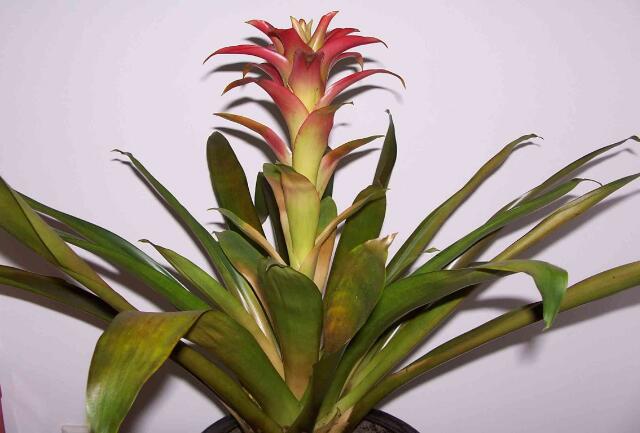
In our guide on bromeliad cultivation methods, we introduced its requirements for soil, light, temperature, and more. Once these requirements are not met, bromeliad leaves will turn yellow. What should you do then? It is actually quite simple: find out which specific cause is responsible, then address it accordingly. Below are 6 causes of bromeliad leaf yellowing and their solutions. Keep reading.
II. Causes of Bromeliad Leaf Yellowing and Solutions
1. Environmental Changes
Many flower enthusiasts buy their bromeliads directly from stores. At first they look fine, but after a while, the symptoms of yellowing leaves appear. At this point, you should consider the issue of environmental changes. The bromeliad may have difficulty adapting because its growing environment changed too drastically all at once, resulting in yellowing leaves.
Solution: If you bought it online, ask the seller about the bromeliad's growing environment, then slowly change the environment to let the bromeliad gradually adapt. It should not take long before its leaves return to health.
2. Improper Placement
Before considering soil, light, and other factors, we should first check where the bromeliad is placed, because improper placement is also one of the causes of bromeliad leaf yellowing. It is known that bromeliads do not absorb radiation. If placed near an air conditioning vent or beside a television, excessive radiation will cause leaves to turn yellow.
Solution: Place the bromeliad away from radiation sources, preferably on a ventilated windowsill with light, which also ensures sufficient light. In about a week, your bromeliad should basically recover.
3. Overwatering or Underwatering
Bromeliads prefer moist environments, so watering is very crucial. Improper watering can also cause bromeliad leaves to turn yellow. Overwatering causes a lack of oxygen in the soil, hindering normal respiration and the absorption of water and nutrients, leading to yellowing and dropping of leaves. Underwatering causes the soil to become too dry, and the tips of old leaves will turn yellow.
Solution: When overwatered: immediately stop watering, loosen the soil, then move the bromeliad to a ventilated area to air out. Or more simply, directly repot and replace the soil to make the bromeliad fresh again. When underwatered: water appropriately and add a small amount of water to the leaf cup. After a period of time, the bromeliad will return to health.
4. Insufficient Light
Bromeliads originally grow under trees in tropical forests and prefer semi-shaded environments, but appropriate light is also necessary. So when some flower enthusiasts do not let them receive sufficient light for a long time, this is also one of the causes of bromeliad leaf yellowing.
Solution: If you find that the yellowing leaves are caused by insufficient light, flower enthusiasts should ensure the plant receives sufficient light every day. In summer when the sun is too strong, shade can be provided. In winter, at least 4-5 hours of light is also needed. A period of time will suffice.
5. Overfertilizing or Lack of Fertilizer
During the growth process of flowers, appropriate fertilizing is very crucial, and this is also true for bromeliads. However, improper fertilizing is also troublesome and can cause bromeliad leaves to turn yellow. Overfertilizing: new leaves become thick and fleshy, while old leaves show yellowing symptoms accompanied by dropping. Lack of fertilizer: bromeliad stems and branches become thin and weak, leaves become thinner, and yellowing symptoms appear.
Solution: Overfertilizing: immediately stop fertilizing, water appropriately to dilute, and let the fertilizer flow out through the drainage holes at the bottom of the pot. Underfertilizing: promptly repot, replace with new loose and fertile potting soil, and gradually apply diluted decomposed liquid fertilizer or compound flower fertilizer. After doing this for a period of time, the bromeliad will return to health.
6. Temperature Too High or Too Low
Besides the above causes, there is another cause of bromeliad leaf yellowing, which is temperature. This is easily overlooked. When the temperature is too high, bromeliad growth slows down and leaves gradually turn yellow. When the temperature is too low, yellowing also occurs.
Solution: The optimal growing temperature for bromeliads is 21-28°C. When the temperature is too high, ventilate promptly to cool down and water appropriately. When the temperature is too low, spray anti-freeze and cold-protection agents and appropriately raise the temperature.
What to Do When Bromeliad Leaves Turn Yellow: Introduction to Causes of Bromeliad Leaf Yellowing
Speaking of bromeliads, people may be a bit unfamiliar, but when you mention pineapple, everyone is very familiar with it. In order to admire bromeliad flowers up close, people developed ornamental bromeliads. However, various problems arise during cultivation, such as bromeliad leaves turning yellow. So what should you do when bromeliad leaves turn yellow? What causes bromeliad leaves to turn yellow? Follow the editor from Shengduoduo Decoration Network to take a look! Photinia treeCauses of Bromeliad Leaf Yellowing
Yellowing and withering of leaf tips may be caused by irrigation water being too alkaline or containing high calcium and sodium; air humidity being too low; excessive fertilizing or liquid fertilizer concentration being too high, causing salts to accumulate at leaf tips, resulting in salt damage, plasmolysis and dehydration; poor substrate drainage leading to root rot, making it impossible to adequately supply water to leaf tips, etc.
Because the bromeliad's native state is epiphytic under trees in tropical rainforests, its habits favor semi-shade. It should be protected from scorching sun and is best placed in a semi-shaded spot or in a bright indoor area or window. Therefore, the bromeliad's demand for sunlight is not particularly high. So when it is exposed to sunlight for too long, some leaves will become chlorotic, and then the flower tips will begin to dry out and turn yellow.
What to Do When Bromeliad Leaves Turn Yellow
Apply fertilizer 1-2 times per month. The potting soil can be kept moist. Do not let the water in the leaf cup run dry, and increase the frequency of misting the leaves to raise environmental humidity. After winter begins, move indoors for warmth, maintaining room temperature at 5°C. If extremely cold weather occurs, you can cover the pot with a plastic bag for warmth.
Repot and change soil every 1-2 years. For potting soil, use 5 parts mountain soil, 4 parts sand, and 1 part rice husk ash or decomposed wood chips, mixed together. Adding a small amount of bone meal to the soil is even better. Use deionized water or mineral water. Tap water has a higher pH. Golden Melon cultivation
The day before watering, it is best to store the water in the greenhouse for a day. You can also use a thermometer to measure its water temperature, ensuring it is above 20 degrees.
When mixing fertilizer, directly use deionized water to mix it. Generally, the nitrogen-phosphorus-potassium ratio in it is about 20-10-20, because bromeliads do not like too much phosphorus fertilizer. If there is too much phosphorus fertilizer, it will affect the growth of their root system.
Then, they quite like nitrogen and potassium, but if there is too much nitrogen fertilizer, it will also cause leaf etiolation. Generally, the ratio of nitrogen fertilizer to potassium fertilizer is about the same, with an NPK of 20-10-20. The general fertilizing cycle is about half a month. You can also, during its growth process, take it out of the pot to observe the color of its root system. If the root color is relatively dark, it proves that the fertilizer concentration is suitable for its growth. If the roots are somewhat whitish, you can appropriately increase the concentration a bit, or shorten the interval. When fertilizing, pay attention to applying more potassium and magnesium fertilizer, reducing phosphorus fertilizer application, and strictly controlling copper and boron application.
Bromeliad Cultivation Methods and PrecautionsLight
Different genera of bromeliads tolerate different levels of light. Some can withstand full tropical sunlight, while others may scorch quickly. However, in general, bromeliads prefer bright windowsills with plenty of light rather than direct sunlight. A south, west, or east window is often perfect. Yellow plants may be receiving too much light, while plants that are dark green or elongated may be receiving too little light.
Temperature and Water
Bromeliads are very resistant to drought conditions. In a normal house, it is not necessary to keep the central cup filled with water, but if light intensity, temperature, and humidity are high enough, this is an option. If you do keep water in the bromeliad's central cup, make sure to rinse the central cup periodically to remove any built-up salts. However, in general, it is sufficient to water these plants weekly through the soil during the growing season and reduce watering during the winter rest period. Do not let your plant sit in standing water.
Potting Soil
Although they are epiphytes, bromeliads can grow in a fast-draining potting soil. A mixture of 2/3 peat soil and 1/3 sand is one of the best methods. Bromeliads can also be grown planted in other soils. These plants need frequent watering.
Bromeliad Leaves Turning Yellow: What to Do When Bromeliad Leaves Turn Yellow, How to Grow Bromeliads Well
?`?.??.?′′ˉ`?Related Recommendations:
?Mucuna birdwoodiana
?Ash tree price
?Scutellaria barbata pictures and benefits
?Magnolia zenii picture appreciation collection
?When does osmanthus bloom
?`?.??.?′′ˉ`?Decorate your small home, enjoy every minute of life! This article originates from Aiyouwo!
..........................................................................................
Bromeliad, namely pineapple, is a perennial herbaceous plant of the Bromeliaceae family. Among bromeliad varieties, there are those whose flowers bloom but are not beautiful yet can produce edible fruit, which people call edible bromeliads, or pineapples; and there are varieties whose flowers and leaves are both bizarre and novel but cannot bear fruit, which people call ornamental bromeliads or pineapple flowers. So that is how bromeliad flowers came about. So when cultivating bromeliads, what should you do when leaves turn yellow, and how do you grow bromeliads well?
Bromeliad Introduction
Bromeliad, of the genus Billbergia, is native to Mexico, with more than 50 varieties. The leaves are sickle-shaped, with the upper half sloping downward, arranged in 5-8 leaves forming a tube-shaped rosette. The leaf color is dark green with horizontal stripes or brown with green water-ripple patterns. The central leaves turn glossy dark red or pink, with the foremost part red; the flowers are mostly sky blue or light purplish-red. In recent years, bromeliads have gradually become one of today's most popular indoor ornamental plants. Because bromeliads have bizarre shapes and beautiful patterns, people all like them very much.
How to Grow Bromeliads Well
There are several reasons why bromeliad leaves turn yellow and wither:
1. The irrigation water may be too alkaline or contain high calcium and sodium.
2. Indoor air humidity is too low.
3. Excessive fertilizing or liquid fertilizer concentration being too high, causing salt damage, plasmolysis and dehydration.
4. Poor drainage, causing bromeliad roots to rot.
Bromeliads are native to tropical regions and are sensitive to cold, so in winter the temperature must be above 5°C to avoid disease. Because the bromeliad's native state is epiphytic under tropical rainforests, its need for sunlight is not too high. On the contrary, too much sunlight can cause leaves to turn yellow and flower tips to dry out. So the best place to keep bromeliads is in a semi-shaded, ventilated area, protected from scorching sun.
The conditions for growing bromeliads well also require moisture. Generally, we grow bromeliads as potted plants at home, so the potting soil should be kept slightly dry on the surface and must not be too wet. If it is too moist, the roots can easily rot. How do you maintain this moisture level? The bromeliad has a leaf cup at the base of its leaves, and inside the leaf cup there is a water reservoir. As long as there is water in the reservoir, it is fine. However, the water inside is best changed every half month to prevent it from becoming foul. Usually, also sprinkle some water on the leaves.
SummaryThe editor has shared the tips on how to grow bromeliads well here. I believe after reading the causes of bromeliad leaf yellowing, you will certainly know how to grow bromeliads well. I believe friends can definitely do it!
?????You may be interested in:
?Palace mosquito net ?Leather sofa cushion ?Ginkgo bonsai ?White cockscomb ?Wallpaper manufacturer ?Fabric toy
?Glass ornament ?Bletilla striata cultivation ?Shell ornament ?Dafen oil painting ?Jadeite ornament ?Soft decoration style
?Fan-shaped wall clock ?Floral wallpaper ?Electronic wall clock ?Huishan clay figurine ?Lace trim ?Curtain matching