Propagation, Cultivation and Management Methods for the Dahlia
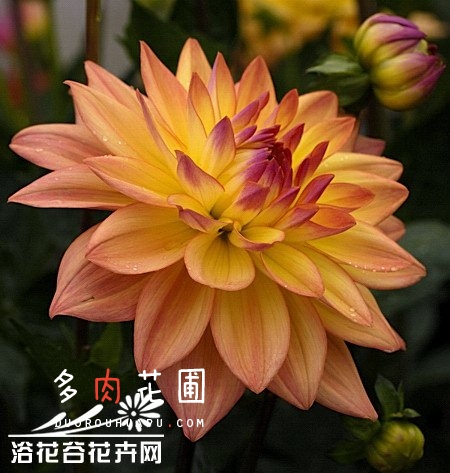
The dahlia originates from Mexico, where Mexicans regard it as a symbol of generosity and magnificence, and therefore honour it as the national flower. At present, it is planted in most countries around the world, and new cultivars are continually being bred and released. According to statistics, there are now more than 30,000 dahlia cultivars, making it one of the species with the greatest number of flower cultivars in the world. With its many celebrated names reflecting its rich and varied flower colours and forms, the dahlia is one of the world's famous flowers.
Propagation and Management of the Dahlia
1. The dahlia's propagation methods include:
1. Tuber division: In March of spring, take out the tubers stored from autumn and cut them into sections; each section must retain more than 3 eyes to ensure a high survival rate. For speed, the tubers can be planted directly into pots or a seedbed.
2. Cuttings: This can be done in spring, summer and autumn. Spring cuttings: after the first leaf has unfolded, cut off the shoot leaving 1 node—2 nodes at the base as the cutting, and insert it into a sand bed; it will flower in the autumn of the same year.
3. Sowing: This method is generally not used in ordinary horticultural cultivation; it is mainly used for research and trial planting of new cultivars.
1. The dahlia's propagation methods include:
1. Tuber division: In March of spring, take out the tubers stored from autumn and cut them into sections; each section must retain more than 3 eyes to ensure a high survival rate. For speed, the tubers can be planted directly into pots or a seedbed.
2. Cuttings: This can be done in spring, summer and autumn. Spring cuttings: after the first leaf has unfolded, cut off the shoot leaving 1 node-2 nodes at the base as the cutting, and insert it into a sand bed; it will flower in the autumn of the same year.
3. Sowing: This method is generally not used in ordinary horticultural cultivation; it is mainly used for research and trial planting of new cultivars.
2. Cultivation and Management
1. Potting and planting out: When seedlings from sowing or cuttings reach 15 cm-20 cm in height, divide and pot them up; after they have established, pinch out the growing tips promptly to encourage branching and control plant height.
2. Repotting: From May to July. To control plant height, keep the seedlings healthy and let them recover, and to ensure large flowers later by controlling excessive vegetative growth, repot or slip-pot 2 times-3 times during this period.
3. Water and fertiliser: The dahlia likes water and fertiliser. During the bud-setting stage in July-August, apply phosphorus and potassium fertiliser; later, apply a liquid fertiliser every 3 days, combining watering with fertiliser, and mix a certain amount of phosphate fertiliser into the growing soil.
4. Breaking the flowering branches to encourage a second flush: After the flowers on the set buds have finished blooming and faded, break the branches (break them in the morning but do not cut them off, only let the branches droop so that they stop growing, causing new shoots to sprout from the lower part of the branches). They can flower again in September-October.
Cultivation of the Dahlia
The dahlia's cultivation technique is simple, and with its countless forms, splendid colours, fairly long flowering period, strong adaptability and ease of cultivation, it is widely grown everywhere. Besides being used for flower beds and borders, it can also be grown in pots for ornamental display and used as a cut flower; it is one of the world's famous flowers.
1. Morphological Characteristics and Cultivars
A perennial bulbous flower, with large spindle-shaped fleshy tuberous roots, mostly clustered at the base of the root crown, storing a large amount of water internally so that they do not dry out over time. Plant height varies with cultivar, ranging from about 40 cm to 200 cm. The leaves are opposite and 1-3 times pinnately divided. The flower head is a capitulum with a long, upright peduncle; flower colour and form are variable, and the flowering period varies with cultivar, flowering in summer and autumn; it generally does not set seed.
There are about 15 species in the same genus as the dahlia. Among the commonly cultivated ornamental original species are the red dahlia, the curled-petal dahlia and the smooth dahlia. After long-term breeding, their flower types, flower colours and plant heights have changed greatly. Today there are about 14,000 or more horticultural cultivars, which can be roughly divided by flower type into: single, collar, waterlily, peony, fimbriated, honeycomb, decorative, waterlily-form, cactus, chrysanthemum, ball and other types, 11 types in all; by plant height they can be divided into tall (about 200 cm), medium (10 cm-150 cm), dwarf (80 cm-90 cm) and very dwarf (20 cm-40 cm), 4 types in all.
2. Ecological Habits
Native to the highlands of Mexico, it is neither cold-hardy nor tolerant of intense summer heat. In summer it should be grown under dry and cool climatic conditions, and each year there must be a period of low temperature to satisfy its dormancy. The summer temperature conditions in places such as Liaoning and Jilin in China are quite suitable for dahlia growth, whereas in the south, because of high summer temperatures and abundant rain, growth is not as good as in the north, but in autumn and winter the dahlia grows normally, with large and brightly coloured flowers.
The dahlia likes sunshine and a warm, well-ventilated environment, and dislikes heavy clay soil; a sandy loam rich in humus and with good drainage is suitable. When grown in pots, particular attention must be paid to drainage and aeration of the potting soil.
3. Propagation Methods Root division propagation
This method is the most commonly used. Because the dahlia can only sprout from the root crown, when dividing it must include part of the root crown, otherwise it cannot produce new plants. To make identification easier, the pre-burial method of rooting is often used to force sprouting, and once the adventitious buds on the root crown have sprouted, the pieces are divided and planted. The root division method is simple and easy to carry out, gives a high survival rate and strong seedlings, but the number of plants propagated is limited.