How to grow Impatiens balsamina? Planting method: plenty of sunlight and maintaining the ambient temperature
Impatiens balsamina is a fairly common flowering plant in people's daily lives, and many people grow it all over the country. There is a lot to pay attention to when it comes to how to grow Impatiens balsamina; sunlight, soil, watering and other aspects all need attention, so what exactly is the planting method for Impatiens balsamina? Below, the editor will walk everyone through it.
I. How to grow Impatiens balsamina
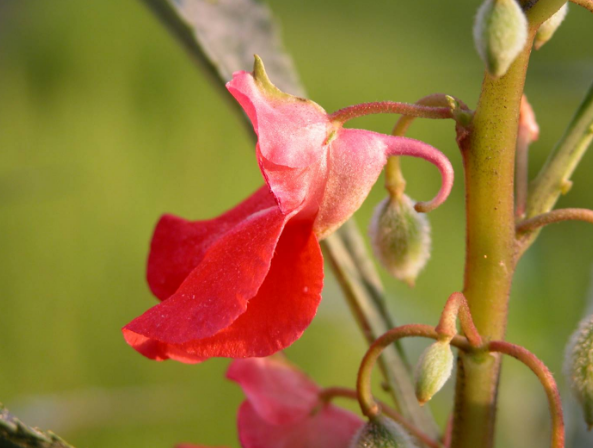
If you want to grow Impatiens balsamina well, from choosing the soil to sowing, raising seedlings and management, not a single step can be done carelessly. Only when all these aspects meet the requirements can you grow Impatiens balsamina well. Of course, the growing environment is also very important for growing Impatiens balsamina well. As for how to grow Impatiens balsamina and what its planting method is like, the editor will walk everyone through it below.
II. The planting method for Impatiens balsamina
1. Soil
In the planting method for Impatiens balsamina, choosing the soil as the first step is truly of the utmost importance. If you want to grow it well, it is best to choose soil with good drainage, so that it can better absorb nutrients; sandy loam is the best.
2. Sowing
To sow Impatiens balsamina, you first need to put soil into a pot, press it flat with your hand, then place the selected seeds in the soil. After placing them, cover them with another layer of soil and water promptly; this will benefit the growth of Impatiens balsamina. Once this is done, the sowing process for Impatiens balsamina is basically complete.
Note: Depending on the region, the timing for sowing Impatiens balsamina is also different. If you are in the south, it is best to sow in March, while in the north it is April. Also remember that after sowing you must keep the soil moist, and the growing environment is best at around 18-25°.
3. Raising seedlings
Generally, about 5-6 days after sowing is done, Impatiens balsamina will sprout. Once it has 3-4 true leaves, it can be planted out into flower pots. If planting on a large scale, it is best to keep the spacing at around 30 cm.
Note: When raising Impatiens balsamina seedlings, you can spray nitrogen fertilizer 2-3 times, which will benefit its growth. When planting on a large scale, remember that the density of the seedlings must not be too high, otherwise growth will be greatly affected.
4. Light
During the planting process of Impatiens balsamina, daily sunlight had best not be less than four hours. Sufficient sunlight is an extremely important point for the growth of Impatiens balsamina, because Impatiens balsamina is a plant that greatly loves sunlight and is a plant that tolerates heat but not cold.
Note: Although Impatiens balsamina likes sunlight very much, when the summer sunlight is too intense, such as at noon, it is best to move it indoors to a semi-shaded place to prevent sunburn. In winter, pay attention to keeping it warm; the growing environment temperature for Impatiens balsamina had best not be lower than 10°.
An introduction to African Impatiens, its planting methods and techniques, and points to note
African Impatiens offers a wide range of bright colors and has vigorous growth and simple management. The colors of its leaves and flowers are very gorgeous and richly varied. So how do you grow African Impatiens? Come learn about it with the editor.
Morphological characteristics
The flower stem is 40-100 cm tall, fleshy, stout and upright. The upper part is branched, with soft hairs or nearly smooth. Leaves are alternate, broadly or narrowly lanceolate, up to about 10 cm long, with acuminate tips, sharp teeth along the edges, and wedge-shaped bases; there are several pairs of glands near the petiole. Its flowers resemble butterflies, and the flower colors include pink, bright red, purple, white-yellow, sprinkled gold, and so on, and it readily varies. Some varieties can bear flowers of several colors on the same plant. Impatiens balsamina is mostly single-petaled; the double-petaled form is called Fengqiu flower. According to ancient flower records, there were more than 200 varieties of Impatiens balsamina, and many varieties have now been lost. Because Impatiens balsamina readily varies, artificial cultivation and selection have already produced some good varieties, such as Wuse Dangtou Feng, whose flowers grow at the top of the stem and are large and brightly colored, as well as Shiyangjin and others. According to differences in flower shape, it can also be divided into rose type, camellia type, dianthus type, and so on. The flowering period of Impatiens balsamina is June-August. It bears capsule fruits; the capsules are spindle-shaped, have white downy hairs, and when mature split elastically into 5 coiled valves; the seeds are numerous, spherical, black, peach-shaped in appearance, and when mature the outer shell bursts open on its own, ejecting the seeds and reproducing by self-sowing, so seeds must be collected in time.
Annual herb, 60-100 cm tall. Stem stout, fleshy, upright, unbranched or branched, hairless or sparsely pubescent when young, base up to 8 mm in diameter, with many fibrous roots, lower nodes often swollen. Leaves alternate, the lowest leaves sometimes opposite;
Leaf blades lanceolate, narrowly elliptic, or oblanceolate, 4-12 cm long and 1.5-3 cm wide, apex acute or acuminate, base wedge-shaped, margins sharply serrate, often with several pairs of stalkless black glands toward the base, both surfaces hairless or sparsely pubescent, lateral veins 4-7 pairs; petiole 1-3 cm long, with a shallow groove on the upper side and several pairs of stalked glands on both sides. Flowers solitary or in clusters of 2-3 in the leaf axils, without a common peduncle, white, pink, or purple, single or double; pedicel 2-2.5 cm long, densely pubescent; bracts linear, located at the base of the pedicel; lateral sepals 2, ovate or ovate-lanceolate, 2-3 mm long, lip deeply boat-shaped, 13-19 mm long and 4-8 mm wide, pubescent, base abruptly acute into a 1-2.5 cm incurved spur; standard petal round, hooded, apex slightly concave, with a narrow keel-like projection on the midrib of the back, tip with a small point, wing petals with short stalks, 23-35 mm long, 2-lobed, lower lobe small, obovate-oblong, upper lobe nearly round, apex 2-lobed, outer margin near the base with small auricles; stamens 5, filaments linear, anthers ovoid, apex obtuse; ovary spindle-shaped, densely pubescent. Capsule broadly spindle-shaped, 10-20 mm long: both ends pointed, densely pubescent. Seeds numerous, globose, 1.5-3 mm in diameter, blackish brown. Flowering period July-October.
Growing environment
African Impatiens likes a warm and humid environment, is not cold-tolerant, fears frost, and avoids exposure to strong sun and rain. Semi-sunlight or retaining 60-70% of sunlight is the best lighting condition, and the optimal growing temperature is 15-25°C; maintaining an ordinary temperature level is sufficient.
African Impatiens is native to the tropical regions of eastern Africa. It likes a warm, humid, and sunny environment. It is not tolerant of high temperatures or blazing sun exposure. African Impatiens is relatively sensitive to temperature; the optimal growing temperature is 17-20°C, while for New Guinea Impatiens it is 21-23°C. In winter, the temperature should not be lower than 12°C. Below 5°C, plants suffer cold damage. If the room temperature exceeds 30°C during the flowering period, it will cause flower drop. To date, heat-resistant varieties that have been bred can withstand high temperatures above 30°C.
African Impatiens has relatively strict water requirements. During the seedling stage, the potting soil must be kept moist, and dehydration and drought must be strictly avoided, as they are unfavorable to root and leaf growth. When the air is dry in summer and autumn, water should be sprayed frequently to maintain a certain air humidity, which is very beneficial to stem and leaf growth and branching. However, water must not accumulate in the pot, otherwise the plant will die from waterlogging.
During the growth process of African Impatiens, especially during the high-temperature period in summer and the flowering period, direct strong light must be prevented, and a shade net should be set up to prevent strong sunlight exposure. When cultivated indoors in winter, sufficient sunlight is needed, but appropriate shading during strong midday light is beneficial to the growth of African Impatiens leaves and prolongs the ornamental flowering period.
The soil should preferably be loose, fertile, and well-drained leaf mold or peat soil, with a pH of 5.5-6.0 being most suitable.
The cultivation method for African Impatiens
For cultivation management, the potting soil should use loose, fertile sandy loam. For example, using 1/2 peat soil or leaf mold mixed with 1/2 sandy loam plus some decomposed cake fertilizer powder or commercially available chicken manure is even better. Such soil is loose and fertile, more suitable for plant growth, and also beneficial to the growth of young plant roots. At the 2-leaf stage of the seedlings, they can first be pricked out once, and when about 4 cm tall they can be planted into flower pots. When planting, it is best to choose a cool and humid environment for placement, to help the seedlings recover and survive, and also to help them bloom earlier. After the plants survive planting, they can be pinched once to encourage side branches, which helps produce more branches and more flowers. Seedlings grow slowly, but they have the characteristic of being able to bloom as small plants. As the seedlings grow, fertilizer and water management should be strengthened; a dilute organic liquid fertilizer or 0.3% compound chemical fertilizer can be applied once every 10 days. This flower likes warmth and humidity and avoids strong light. It is best to place it where there is half a day of sunlight or 70% light, and spray water around it frequently; this can keep the plant full and blooming continuously. Large African Impatiens likes half-day sunlight conditions, and sun-tolerant varieties have now been successfully bred, such as the Exhibition series, which can also grow well under full sun, so it is also suitable for flowerbed planting.
Because African Impatiens has the characteristic of liking semi-shade, it is very suitable for planting on a home balcony or windowsill, or under the shade of trees in a courtyard. Old plants show degeneration in flowering and the plant also becomes less attractive, so new plants should be replaced through cuttings, and pruning should also be paid attention to.
The above is all the content I have learned today about African Impatiens. I hope flower lovers will find this article helpful after reading it. If you want to learn more about African Impatiens, please continue to follow Duorou Huapu, and we will provide you with more related knowledge!
The planting method for Camellia Impatiens
Camellia Impatiens suitable germination temperature: 22-30°C, suitable growing temperature: 15-32°C. Sow the seeds broadcast on the growing medium, lightly cover with about 0.3 cm of soil, and they will germinate after 5-6 days. When there are 3-4 true leaves, they can be planted into flower pots or flowerbeds, with a plant spacing of 30 cm. The cultivation soil is best if it is fertile and well-drained sandy soil. With sufficient sunlight, pinch the tips when the plants are about 10 cm tall after planting, and appropriately apply more compound fertilizer, organic fertilizer, and so on during the growth period.The specific planting method is as follows:
Camellia Impatiens can be sown in all four seasons, either by broadcasting or by dibbling. For dibbling, use a 128-cell plug tray; the suitable sowing temperature is around 20°C, and seedlings emerge in about 1 week. When the sown seedlings are 5 cm tall, carry out the first transplanting, moving them into 8 cm nutrition pots; when about 12 cm, plant them into 15 cm pots. The soil used is a mix of 2 parts turf soil, 1 part vermiculite or river sand, and 1 part furnace slag, and an appropriate amount of sheep manure and so on can be added as base fertilizer.
For the few species and varieties with poor branching, such as New Guinea Impatiens, the seedlings should be appropriately pinched during the seedling stage. High temperature and dryness will make Impatiens leaves thicker and not spread out, and the internodes shorter, affecting plant shape and even stopping growth in severe cases. Therefore, during the summer, the environment should be kept cool and appropriately shaded. Too strong sunlight will scorch the leaves, while too weak light will make the plant grow spindly, with thinner leaves and light green leaf color.
To have flowers for "National Day", besides choosing more heat-tolerant varieties, you can also sow in June, and in July and August place the young seedlings on a mountain at an altitude of about 800 m to spend the summer. In winter and spring, Impatiens needs sufficient light, so no shading is needed.
During the growth period, ensure the supply of water. Especially in summer, watering should be timely and sufficient, keeping the potting soil moist but not waterlogged. If the potting soil dries out, the plant easily wilts; watering only after wilting appears can easily cause rot. Waterlogging easily causes root rot. Throughout the growing season, maintain a certain air humidity; in summer, water can be sprayed on the leaves and ground to increase air humidity. Apply a thin fertilizer once every 10 days. To control plant height and plant shape, besides applying more nitrogen fertilizer in the early stage, the application of nitrogen fertilizer should be controlled before and after flowering.
Camellia Impatiens can also be propagated by cuttings throughout the year. Select robust growing branches, cut off about 8 cm as cuttings, maintain the temperature at 20°C, and they will root in about 20 days. Water cuttings in summer also root easily.
Through the detailed introduction in this article, I hope everyone can gain something from it! Everyone is welcome to continue following Zuihua Wang to learn more of the latest information about herbaceous flowers!